
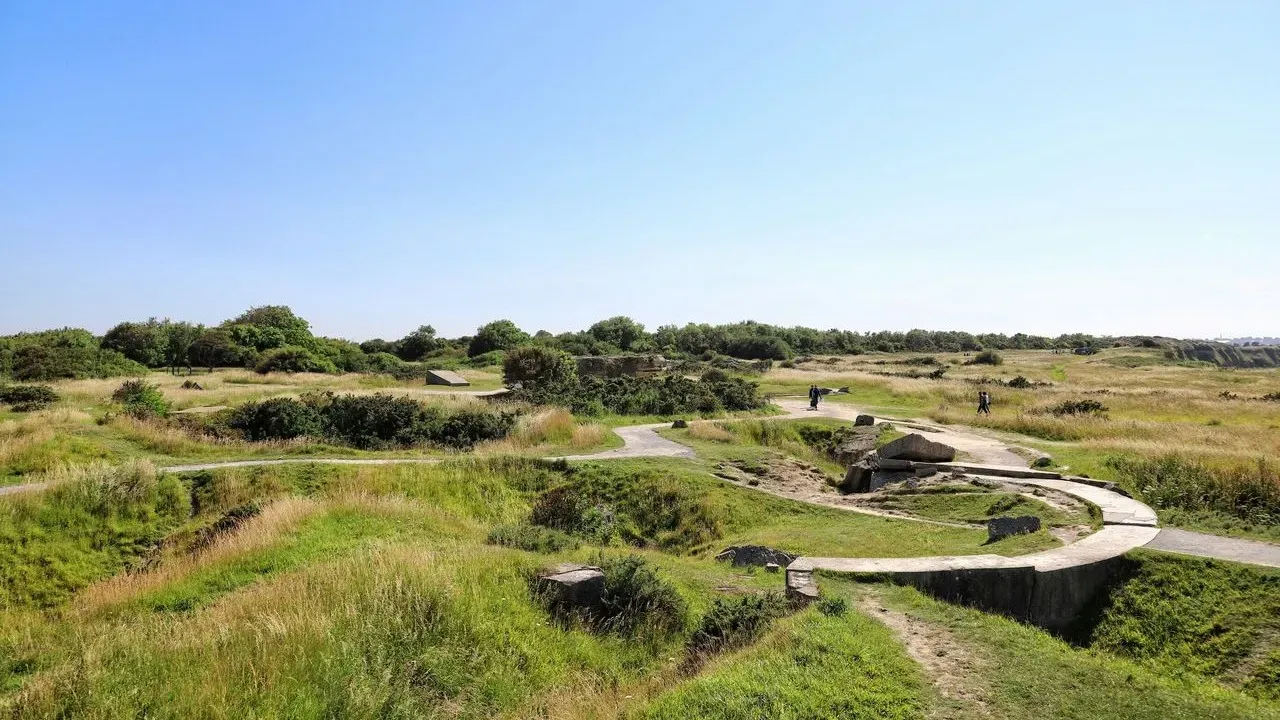

Fauquier County, Virginia, sits just an hour from Washington, D.C., yet its rolling farmland feels worlds away from the capital’s pace. On one quiet stretch of that countryside, a working winery now occupies ground that once served as a closely guarded military outpost during World War II. The site’s natural ability to capture distant shortwave signals made it invaluable for intelligence work tied directly to the planning of the Normandy invasion.
A Landscape Built for Listening
The terrain at Vint Hill possesses an unusual quality known as a natural receiver. Radio waves from across the Atlantic and beyond arrive here with remarkable clarity, a feature that drew military attention long before the winery’s vines took root. Engineers and operators recognized the advantage early and established a secure facility to monitor transmissions that ordinary locations could not reliably intercept. That geographic edge proved decisive as Allied forces prepared for the largest amphibious operation in history. Analysts at the installation processed intercepted messages that helped shape the timing and tactics of the D-Day landings. The work remained hidden from public view for decades, its contribution recognized only after the war’s end.
From Classified Outpost to Open Vineyard
Today the same acres welcome visitors for tastings and tours. Rows of grapevines trace the contours once patrolled by sentries, and the former operations buildings have been thoughtfully adapted for public use. Guests can walk the grounds while learning how a rural Virginia property supported codebreaking efforts that included Japanese communications as well as European signals. The transition from secrecy to hospitality has been handled with care. Interpretive displays and guided walks highlight the site’s wartime role without overshadowing the peaceful present. Many visitors arrive expecting only wine and scenery, then leave with a deeper appreciation for the quiet countryside’s unexpected place in history.
Planning a Thoughtful Visit
Travelers interested in the story can combine a winery stop with broader exploration of Fauquier County’s preserved landscapes and small-town character. The location’s proximity to the capital makes it an easy day trip or a convenient overnight for those seeking a slower pace after time in the city. Reservations for tastings are recommended, especially on weekends when local residents and out-of-town guests alike gather. Those who linger often find the contrast between past and present most striking at dusk, when the fields fall quiet once more. The experience rewards travelers who value context and connection over hurried checklists, offering a tangible link between a pivotal moment in the 1940s and the living landscape of today.
AI Disclaimer: This article was created with the assistance of AI tools and reviewed by a human editor.