
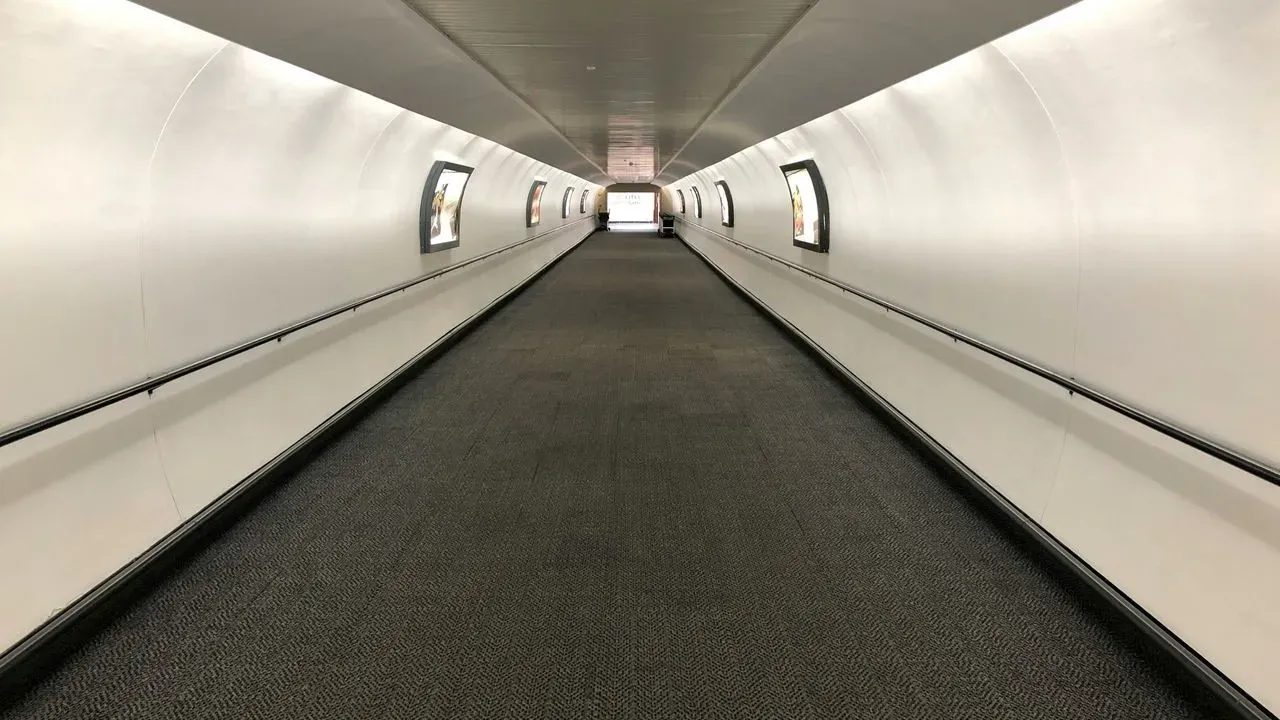

Denver International Airport is preparing to transform sections of its long-unused underground infrastructure into pedestrian pathways that will connect the main terminal with its concourses. The project draws on tunnels originally constructed for an automated baggage system that never fully operated. Officials see the change as a practical way to ease movement for the millions of passengers who pass through the facility each year.
The Limits of the Current Train Network
The airport’s Automated Guideway Transit System carries travelers from the Jeppesen Terminal to Concourses A, B, and C. While the trains operate reliably more than 99 percent of the time, occasional mechanical issues have required temporary shuttle buses, most recently in May 2026. Between the concourses themselves, the train remains the sole option, leaving passengers with no alternative during disruptions. Airport leaders have examined several ideas for redundancy, including surface bridges, but settled on underground routes after weighing cost, construction time, and passenger flow. The decision reflects the airport’s broader “Vision 100” effort to prepare for up to 100 million annual passengers.
Turning Abandoned Infrastructure to New Use
The tunnels in question were built in the early 1990s as part of the airport’s original baggage-handling system. That system’s technical problems delayed the airport’s opening and left large portions of the network idle for decades. Planners now view the existing concrete corridors as a ready-made foundation for pedestrian routes. Converting the spaces will require removing leftover equipment, installing proper flooring and walls, adding ventilation, and addressing vertical circulation between levels. Moving walkways may also be included to shorten walking distances. The tunnels are already wide enough to accommodate two-way foot traffic once finished.
Support From Airlines and City Leadership
Denver Mayor Mike Johnston described the plan as a significant improvement for travelers. United Airlines, American Airlines, and Southwest Airlines, all major operators at the airport, have endorsed the concept. Executives from each carrier noted that additional walking options would increase flexibility during peak periods and reduce the impact of any future train interruptions. The project aligns with recent terminal upgrades, including expanded security lanes and new amenities, that aim to improve the overall passenger experience without relying solely on mechanical systems.
Timeline, Cost, and Next Steps
Early estimates place the total investment between $300 million and $700 million, a range that accounts for the conceptual stage of planning. Detailed design work is expected to narrow those figures. Construction could begin as early as 2027 once final plans are approved. The effort forms part of a larger capital program that already includes a $75 million upgrade to the train fleet and infrastructure. Together, the improvements are intended to give the airport greater operational resilience as passenger volumes continue to grow. Travelers who have long heard stories about the airport’s underground spaces may soon have the chance to experience a portion of them in an entirely practical way. The new walkways will offer a quiet, weather-protected route between gates while the airport continues to expand its capacity for the years ahead.
AI Disclaimer: This article was created with the assistance of AI tools and reviewed by a human editor.