
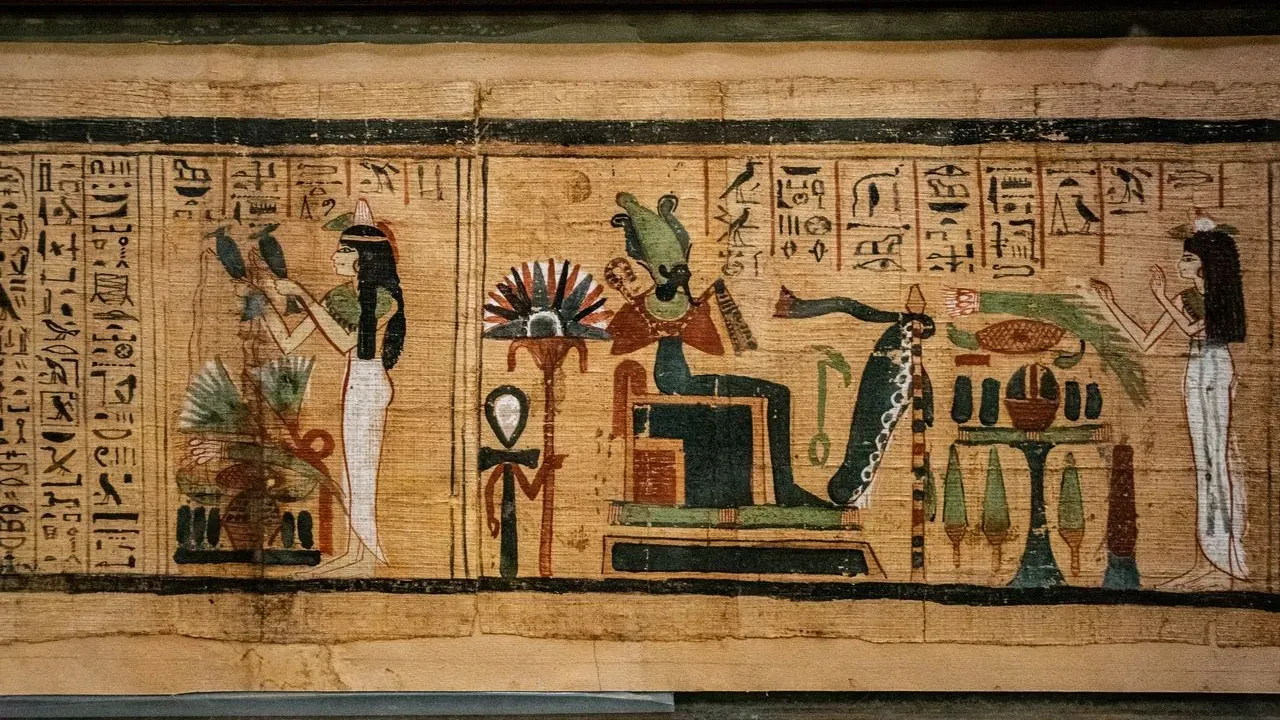

Archaeologists often find the most revealing evidence in places nobody meant to preserve. A rubbish deposit beside a temple in Thebes has yielded a small group of burned papyrus scraps that may change how scholars picture a well-known ritual. The discovery has drawn attention from outlets including the New York Post ([1]), and the material is worth a closer look for anyone who cares about Egypt’s history. ([1])
Scraps from a temple refuse pile
The find came during excavations at the mortuary temple of Thutmose III, on the west bank of the Nile in Thebes, a site that is today part of the Luxor area. Professor of Egyptology Fredrik Hagen from the University of Copenhagen and his colleagues discovered 40 charred and pierced papyrus fragments in a trash deposit. Each is no larger than half a postage stamp. Their small size makes them easy to overlook, which is part of why the team regards the recovery as unusual.
The pieces were linked to the Apophis ritual, a practice aimed at Apophis, the serpent of chaos in Egyptian myth. Researchers say people would perform the ritual by drawing the snake and writing its name in red ink, then piercing or burning the papyrus while speaking magic spells. Because the rite demanded destruction, the survival of recognizable pieces is itself notable. Hagen calls it fortunate that any pieces survived in recognizable condition.
A ritual that reached beyond the temple
The most striking aspect of the find may be what the fragments suggest about scale. Rather than one-off works made for a single ceremony, the pieces appear to be standardized copies. According to Egyptologist Fredrik Hagen, signs of mass production suggest the ritual was widespread and commonly practised in ancient Egypt. That observation changes the picture of who may have taken part, and how often.
Hagen’s team also weighed the broader context. Their reading points to several conclusions:
- The ritual was carried out inside temples, as the fragments from the Thebes site show.
- These ceremonies were regularly performed in temples but were also widely practiced outside religious institutions.
- References in other contexts show wide use outside temples too.
Hagen summed up the significance in a statement. “These tiny fragments give us a new indication of how widespread curse rituals were in ancient Egypt.” Researchers should still treat that view as a working interpretation, since forty fragments represent a single site and a limited sample.
Why the evidence took so long to surface
Until now, scholars relied mainly on written sources. Egyptologists had only one copy of the ritual, the Bremner-Rhind Papyrus, copied at the end of the 4th century BC, around 305 BC. The new fragments push the physical record far earlier. The postage-stamp-sized fragments found by Hagen and his team are about 3,400 years old. That places the ritual in the New Kingdom, roughly a thousand years before the surviving written copy.
The team believes the absence of physical traces is partly a matter of attention. “The reason physical remains of this ritual have never been found before is probably also that few people have paid much attention to such rather unglamorous rubbish dumps,” says Fredrik Hagen. Hagen has argued that new excavations with different priorities, including rubbish dumps outside the temple, can show how temples actually functioned and how a priest lived. The study was published in the Zeitschrift für Ägyptische Sprache und Altertumskunde, written by Fredrik Hagen, Carina Kühne-Wespi of Heidelberg University, and Myriam Seco Álvarez of the University of Seville, who directs the excavations.
Reading the past with a traveler’s eye
For visitors to Luxor, the find offers a useful reminder that some of the most meaningful stories in Egyptian heritage sit beside the grand monuments rather than on top of them. Temples at Thebes were working places where priests, scribes and workers lived and carried out daily duties, and the everyday remains they left behind, including the refuse, help bring those communities into focus.
Travelers who want to connect with this history can approach it slowly. Reading about temple life before a visit, following guidance from local guides who know the sites well, and respecting the conservation rules that protect fragile remains all make a visit more rewarding. Discoveries like this one show how much remains to be understood, and how much a careful, patient approach to the past can still reveal.
AI Disclaimer: This article was created with the assistance of AI tools and reviewed by a human editor.