


Road trips are having a genuine moment right now. Travel on U.S. roads in 2024 increased to 3.28 trillion miles, setting a new yearly record and topping pre-COVID levels for the first time. With millions of families piling into cars every summer, the question of how to actually survive the hours between exits is as relevant as it’s ever been.
Families and groups are the most common road trip participants, comprising roughly three quarters of all travelers. That means a lot of backseats, a lot of restless kids, and a lot of the same games that grandparents probably played too. These five classics have outlasted every screen and gadget thrown at them, and there’s a reason they keep showing up.
1. I Spy: The One That Started It All

Whether you’re on a long drive or heading to the store, I Spy is a classic car game that doesn’t require any unique materials – all you need is your eyes, ears, and imagination. One player quietly picks something visible from the car and issues the familiar prompt: “I spy with my little eye, something beginning with…” and gives either the first letter or the color.
One player chooses something they can see and says “I spy with my little eye something that is [color/shape],” and others take turns guessing until someone gets it right. Simple and timeless. What makes it work is the observation element. Kids genuinely start looking out the window instead of at a device, which is its own quiet win.
I Spy can be a little tricky to play when you’re in a moving car, but works great if you find yourself sitting in a parking lot or rest area. One person looks for something that everyone is able to see, and the other players look around and try to guess what it is. Straightforward, no setup needed, and somehow still fun after all these decades.
2. 20 Questions: The Guessing Game with Real Staying Power

20 Questions offers endless opportunities for road trip entertainment and is a great choice for games on long car rides. The concept is almost absurdly simple: one person thinks of something, and everyone else has exactly twenty yes-or-no questions to figure out what it is.
Pick out a person, place, or thing. Everyone in the car can take turns asking yes-or-no questions about what it is or who it is. No two people should ask the same question, and no one can answer more than 20 questions. Whoever guesses the mystery object first goes next. The strategy layer is real. Starting broad with categories, then narrowing down, teaches logical thinking without feeling like a lesson.
You have 20 questions to figure out what somebody else in the car is thinking. Start broad and get more specific as you go. It scales surprisingly well across age groups too. A six-year-old thinking of a dog and a teenager thinking of a historical figure can share the exact same game structure.
3. The License Plate Game: Geography Lesson in Disguise
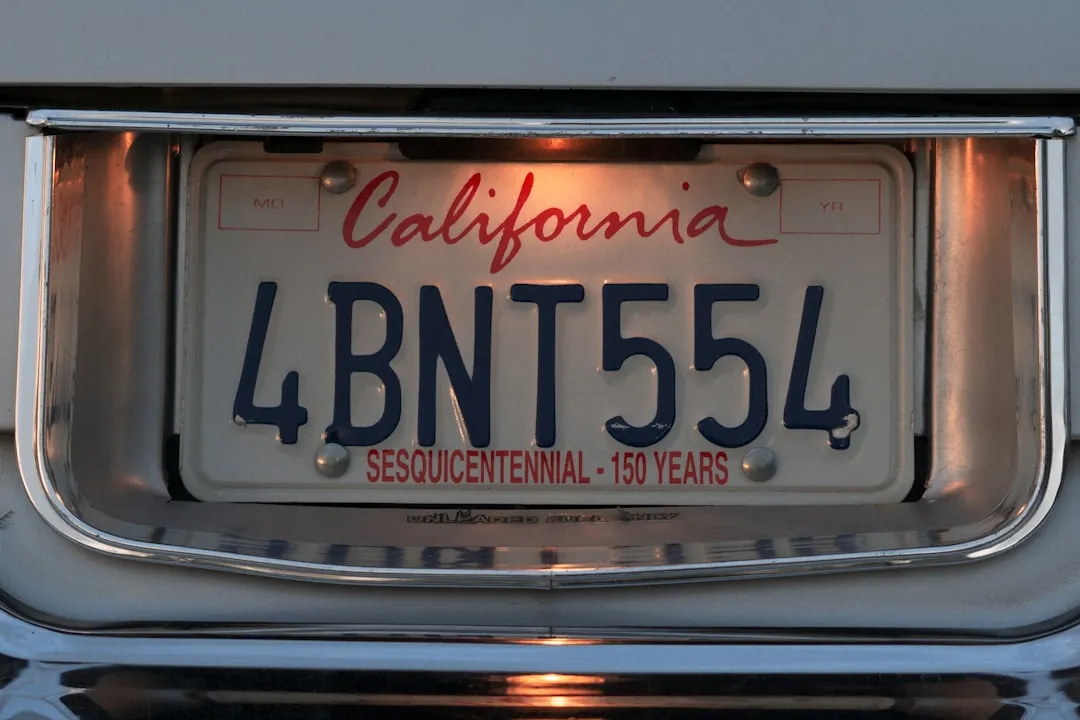
The License Plate Game turns spotting cars from different states into a cross-country challenge, perfect for long hours on the road. Each player keeps track of how many different state plates they spot, and the person with the most unique states at the end wins. It sounds simple until you realize how genuinely difficult it is to find Alaska or Hawaii.
The goal of this famous game is to find license plates from each one of America’s 50 states. Since the winner is decided based on who spotted the most, keep track as you go along. There are plenty of variations too. Some families add a rule that you have to name the state capital to count it, which quietly turns the game into something educational.
Another fun license plate game involves pretending the letters on license plates you pass by are actually acronyms and coming up with the funniest version of what the acronym stands for. That variation tends to produce the most laughter, and the most creative nonsense, of any game on this list. Worth trying at least once.
4. The Alphabet Game: Signs, Billboards, and a Little Competition

This classic road trip game is played by finding all 26 letters of the alphabet on things you pass as you go down the highway, in order, from A to Z. Check out billboards, roadside signs, license plates, restaurant signs – anything! The catch is that you have to find them in sequence, which makes Q, X, and Z genuinely hard to spot.
The Alphabet Game invites players to find words on signs starting with each letter from A to Z. Players either compete individually or work as a team, depending on how cooperative the car’s general mood is. Team mode tends to keep things calmer on very long stretches.
The game rewards attention to the landscape in a way that keeps passengers genuinely engaged with the world outside the window. You start noticing signs you’d normally blur past entirely. That’s not a bad side effect for any game, especially one that costs nothing and needs no equipment at all.
5. The Story Builder: A Collaborative Game That Gets Silly Fast

Story Builder is especially fun – each person adds a sentence to a growing tale. It’s great for all ages and helps pass time without needing anything but imagination. One player opens with a sentence, any sentence at all, and the next person continues the story from exactly where it left off. The results are almost always unexpected.
This game is a progressive story with a catch: each person adds a sentence to the story, but must start that sentence with “fortunately” or “unfortunately,” alternating as you go. That alternating version adds a satisfying structure that keeps the narrative swinging between disaster and rescue, which tends to produce the most memorable car-ride stories.
Story Builder and similar games challenge memory, creativity, and vocabulary. Unlike most games on this list, it genuinely produces something original every single time. No two Story Builder games are alike, which means it never quite gets old, no matter how many miles you’ve got left to cover.
Why Screen-Free Games Still Win on the Road

These tried-and-true road trip staples are easy to play, require no special equipment, and work for kids and adults alike. That accessibility is exactly why they’ve persisted across so many generations. There’s no battery to charge, no app to download, no signal required.
Each of these road trip games is family-friendly and convenient to play – they don’t require a special deck of cards or any game pieces in order to have fun. In a travel environment where everything else seems to require a subscription or a power outlet, that simplicity is genuinely refreshing.
Road trips were the most popular form of travel in 2024 at roughly two in every five trips taken. With road travel continuing to climb, over three quarters of American adults intending to take a road trip in a given summer, accounting for nearly 196 million people, these games are reaching more people than ever. The open road and a good game are, it turns out, a combination that holds up.
The Multigenerational Magic of These Games

Road trips are most popular among people aged 25 to 44, who represent roughly two in five road trippers in the U.S., while the second-largest age group is 45 to 64, accounting for about a third of road trippers. That spans at least two or three generations sharing the same car, which is precisely why these games work so well.
A grandparent who played 20 Questions in 1975 can play it today with a grandchild and the rules won’t have changed by a single word. That continuity is rare and genuinely worth something. It’s one of the few things about family travel that hasn’t been disrupted, updated, or replaced by a newer version.
Multi-generational travel, including family reunions and group vacations, is more popular than ever. These classic games, which ask nothing more of players than attention and a willingness to participate, are perfectly suited to that reality. They create shared moments that tend to be remembered long after the destination itself fades.
The Rise of the Road Trip and What It Means for Game Culture

Road trips are one of the most popular travel choices in the U.S., with an estimated 1.95 billion road trips taken in 2024. That’s a scale that’s hard to fully absorb. It means that on any given day, a significant portion of the population is sitting in a car somewhere, looking for ways to make the hours pass.
Road trips were the most popular form of travel in 2024, topping even slow travel and multi-generational vacations in popularity surveys. The appetite for the open road hasn’t dimmed, and the games that fill that road have followed right along with it.
Driving remains the most popular way to travel, with nine in ten holiday travelers hitting the road. Classic games don’t need a revival campaign or a nostalgia trend to stay relevant. They persist because they’re genuinely useful, genuinely fun, and genuinely free – three things that matter more, not less, as travel costs continue to rise.
How to Introduce These Games to Kids Who’ve Never Played Them

The simplest approach is just to start. Pick the game that fits the age of the youngest passenger and launch it without ceremony. These tried-and-true staples are easy to play, require no special equipment, and work for kids and adults alike. No explanation-heavy setup needed.
For younger kids, I Spy is the natural starting point because it grounds the game in what’s visible right now, outside the window. For older kids and teenagers, 20 Questions tends to land better because it rewards cleverness and lateral thinking rather than simple observation. The Alphabet Game works well as a team effort for mixed ages.
Whether you have toddlers or teenagers on board, these games not only pass the time but help to make memories too. That last part matters more than it sounds. The games themselves are simple, but the context around them, stuck in a car together, going somewhere together, is where the actual memory gets made.
Variations Worth Trying on Your Next Trip

Every game on this list has evolved over the years through creative variations. The license plate acronym game, the “fortunately/unfortunately” story format, and the team version of the Alphabet Game are all variations that families developed on their own and passed along informally. That’s part of what makes these games feel personal rather than packaged.
You can make the License Plate Game more challenging by making up your own rules, such as only counting plates with certain letters or numbers. There are lots of fun variations, like finding specific types of vehicles or making up stories about where they’ve come from and where they are going. Tailoring the rules to your specific group makes the game feel owned rather than borrowed.
Geography Chain, where you name cities or countries that start with the last letter of the previous one, is another screen-free option worth adding to the rotation once the classics start to feel familiar. The best road trip game library is a small one, played often enough that everyone knows the rules by heart.
The Lasting Appeal of Something Simple

There’s something quietly reassuring about the fact that a game invented with nothing more than a window view and a group of people still holds its ground in 2026, against every device and streaming option available. These five games have never been updated, patented, or repackaged. They just kept working.
Road trips have long been a defining part of American travel culture, with millions hitting the open road each year. The games that fill those miles have become part of that culture too. They’re not accessories to the trip. They’re woven into it.
The next time you’re an hour into a drive with restless passengers and empty miles ahead, it might be worth skipping the playlist queue and just asking: “I spy with my little eye…” Something tells you the car will answer.
AI Disclaimer: This article was created with the assistance of AI tools and reviewed by a human editor.