
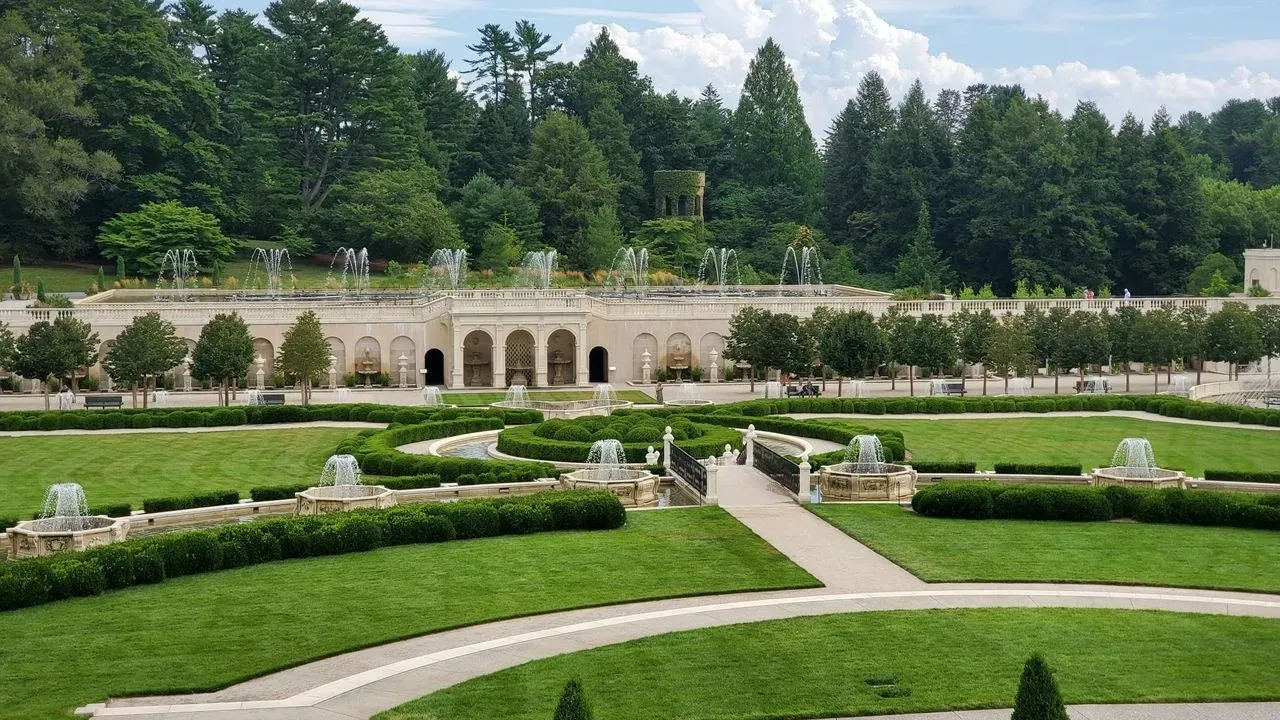

Near Philadelphia, an industrialist’s decision to protect a stand of trees set in motion one of the country’s most enduring garden legacies. Pierre S. du Pont purchased a modest farm outside the city specifically to prevent its trees from being cut for lumber. He then devoted decades to shaping the land into a place of beauty and learning. The result is the 1,700-acre Longwood Gardens, which recently completed a significant expansion while holding to its founding purpose of offering joy and inspiration through nature, conservation, and education. ([1])
The Purchase That Changed Everything
The story begins with a single, deliberate act of preservation. Du Pont saw value in the trees themselves rather than in the timber they could become. By acquiring the property, he halted the planned logging and opened the door to a far larger project.Over the years that followed, the farm evolved from a simple act of protection into a carefully designed landscape that still reflects his personal vision.
That early choice continues to shape how the gardens are managed today. Every addition and renovation still honors the original intent to safeguard natural beauty while making it accessible. The land’s history as a working farm remains visible in its layout and in the way staff approach both horticulture and conservation.
Decades of Careful Development
Du Pont spent the remainder of his life refining the property. He introduced fountains, conservatories, and formal gardens while preserving open meadows and woodlands. Each element was added with attention to how visitors would experience the space across seasons. The result is a layered landscape that feels both grand and intimate. The gardens grew steadily through the twentieth century. New features were introduced without erasing earlier ones, creating a living record of changing tastes in horticulture and design. This measured approach kept the site coherent even as its scale increased.
Recent Expansion and Its Purpose
The latest chapter involves a substantial expansion completed in recent years. New areas and improved facilities were added to accommodate more visitors while protecting sensitive plantings and habitats. The work was guided by the same principles that drove the original purchase: conservation first, then thoughtful public access.
These updates address practical needs such as circulation, education programs, and year-round programming. They also reinforce Longwood’s role as a place where people can connect with nature without compromising the integrity of the landscape. The expansion therefore extends rather than alters the founding mission.
What Matters Now
Longwood Gardens stands as a reminder that private land can serve a lasting public good when stewardship is placed ahead of short-term gain. Its continued operation demonstrates how one person’s decision to save trees can ripple outward for generations. Visitors today encounter both the scale of that original vision and the ongoing work required to maintain it.
The gardens remain open to the public as a living example of conservation paired with beauty. They invite travelers to consider how places shaped by care and patience can offer quiet renewal amid modern life.
AI Disclaimer: This article was created with the assistance of AI tools and reviewed by a human editor.