
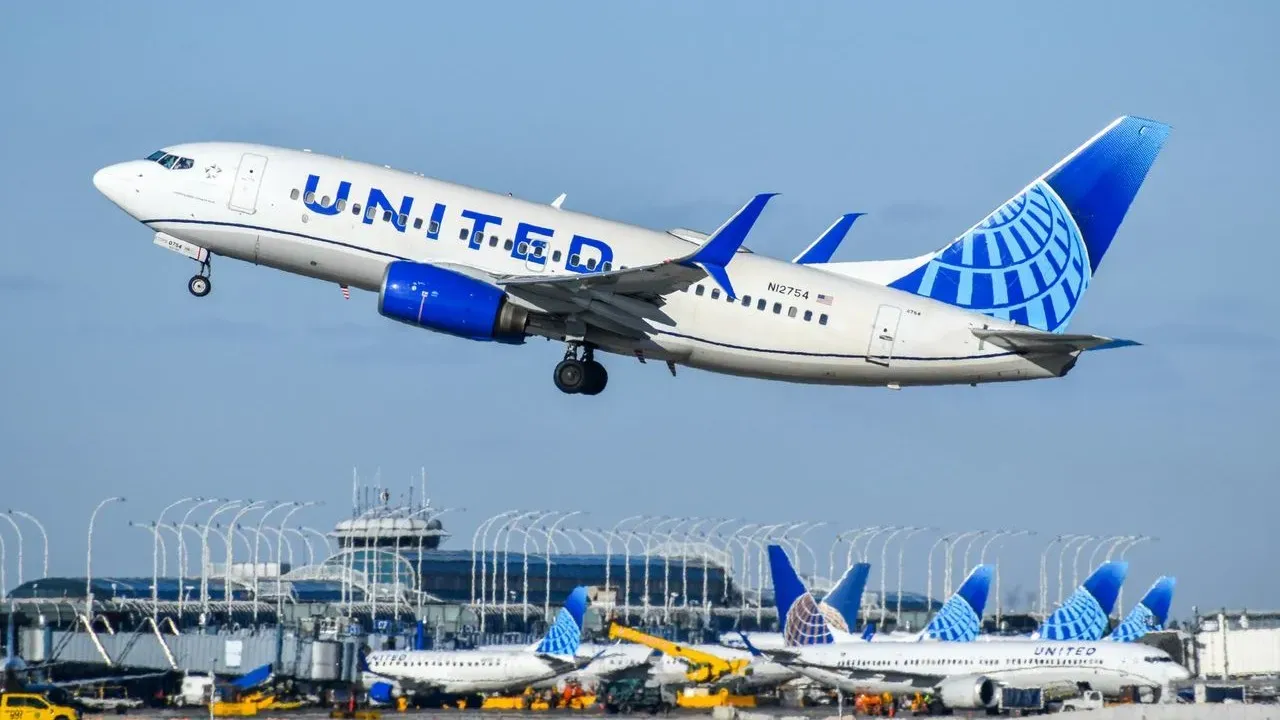

On Tuesday, passengers on United Airlines Flight 1252 to Chicago will be the first to depart from the new E Gates at Washington Dulles International Airport. The concourse is the first finished piece of a redevelopment plan worth more than $20 billion, and it will become the center of United’s hub operation at the airport. Details of the opening were reported in ([1]).
A first departure and a ribbon cutting
The ribbon cutting took place on Monday, and United’s chief commercial officer, Andrew Nocella, spoke about the new space. He said the gate hold areas are large, leaving plenty of seating and a wider choice of restaurants. For travelers who have spent years navigating tighter gate areas at Dulles, the difference is likely to be immediately noticeable.
Passengers reach the E Gates from the AeroTrain, and the concourse sits directly above the train station that serves Concourse C. The station was built in 2010 with the plan to eventually add a concourse above it, which explains the placement. Travelers arrive in a large atrium with a high ceiling, and the United Club sits immediately to the right of the train exit.
A lounge rooted in the capital region
The new United Club covers 40,000 square feet, making it the second largest lounge in the airline’s system. Only the lounge recently opened at Houston’s George Bush Intercontinental Airport is bigger. Its look draws on the Washington, D.C., area, from the vaulted entryway modeled on the Washington Metro’s subway stations to a cherry blossom mobile in the central seating area.
A Blue Ridge mountain mural covers one of the walls, and the airport’s design team kept a link to the past in the concourse signage. Dulles used Eero Saarinen’s original font for the gate numbers, a nod to the architect whose terminal remains the airport’s defining landmark. Nocella said that “no design detail was left untouched” in the lounge, a remark that reflects how much attention went into the interior.
A bigger plan for the airport
The E Gates are only the beginning. The redevelopment calls for extending the concourse far to the west with room for as many as 50 gates. Planners also intend to modernize and expand Saarinen’s terminal, extend the AeroTrain, and build a new international arrivals facility. The target for completing all of this is the mid-2030s.
Jack Potter, chief executive of the Metropolitan Washington Airports Authority, which operates Dulles, described the opening as an early milestone. He said it is “the first step to retiring Concourse C-D” and eliminating mobile lounges, though he added the word “someday.” The authority aims to complete Concourse E, along with the first phase of Concourse G to the south, by 2030.
What changes next for passengers and the hub
For now, the practical effects are clear, though many details remain in flux. Here is what the source reports:
- United will operate both international and domestic flights from the E Gates.
- The airline plans to lift departures from Dulles by about 20 percent next summer, to around 300 daily flights, up from 250 earlier this year.
- Schedule data from aviation analytics firm Cirium shows roughly 275 departures in November, rising to as many as 290 a day in June 2027.
- The six ground-level A gates, used by United Express regional jets, will remain open until construction allows them to be relocated.
- United expects its Dulles hub to reach around 400 daily departures once all the new gates are in service, though Nocella did not give a date.
Nocella said the E Gates will help ease pressure on Concourses C and D. The A gates will not be replaced by the new concourse, which departs from the original plan approved in the early 2020s. Travelers who use regional jets from the A gates may notice little change for now.
The opening is a first look at what Dulles plans to become, and the timeline stretches well into the next decade. For passengers passing through the new atrium and walking the concourse this week, the most immediate change is a calmer, more spacious place to wait for a flight.
AI Disclaimer: This article was created with the assistance of AI tools and reviewed by a human editor.