
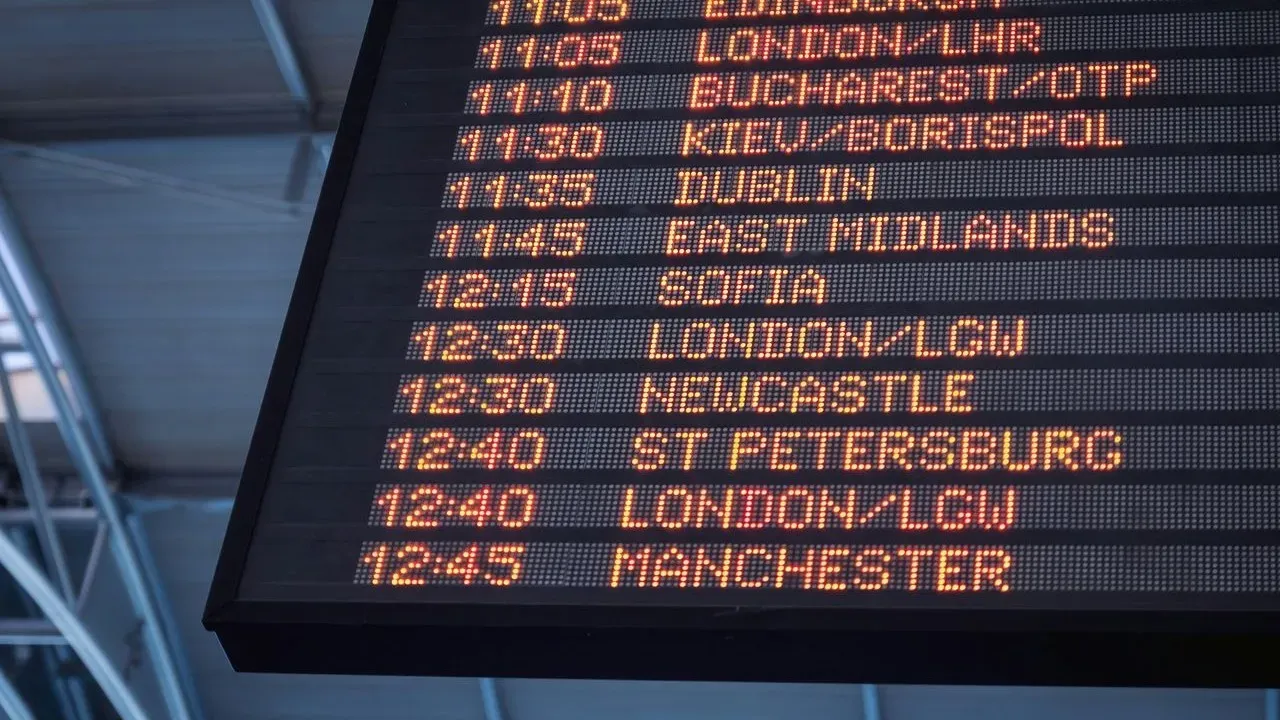

Roughly 2 percent of U.S. flights have been canceled so far in 2026, putting the year on pace for its highest cancellation rate since 2022, ([1])according to FlightAware. Delays are more common still, and weather, mechanical problems and scheduling issues can reshape a trip within hours. With holiday travel approaching, a few early decisions can make the difference between a short wait and a night stuck in an unfamiliar terminal.
Start tracking your flight before you leave home
Waiting for the airline to announce a problem often means starting late. Flight-tracking tools offer a wider view. FlightAware’s delay map shows where disruptions are building across the country, and the service can also send status updates for your specific flight. Checking your flight in the 24 hours before departure is worthwhile, too.
Look closely at where your aircraft is coming from. A plane held up by a snowstorm in another city can delay your departure even when skies are clear where you are. Your airline’s app often shows the location of the incoming aircraft and may carry more current departure information than the boards at the gate. Turning on notifications from your carrier ensures that updates reach you without a search.
Decide when to head to the airport
Timing is one of the harder calls. If the app still shows your flight as on time, plan to leave according to the original schedule. A delayed status can also change. Some travelers have seen flights leave earlier than their revised times, leaving passengers behind, so being at the gate when the flight was first scheduled to board is usually the safer choice.
Some signals are clearer than others. When a delay is confirmed well in advance and the aircraft is still far from arriving at an airport that is not a hub for that airline, the delay is more likely to hold. Even then, arriving early is a sensible precaution. Weather-related ground stops can lift quickly, and airlines move fast to get flights back in the air once they do.
Know when a refund is owed
Many travelers assume a disrupted flight leaves them with only a voucher or a rebooking. Federal rules are more specific. ([2])The Department of Transportation’s automatic refund rule, in force since October 2024, sets thresholds of three hours or more for domestic itineraries and six hours or more for international ones. When a flight is canceled or significantly changed and the traveler declines the rebooking, the airline must issue the refund automatically.
The source notes that a traveler who chooses not to fly is entitled to a refund regardless of the reason for the disruption. Refund timing is also set out in the rules, with credit card purchases refunded within seven days and cash payments within 20 days. Extra costs such as meals, hotel nights and ground transportation may be recoverable on an overnight stay, but that depends on the cause. A broad FAA ground stop is unlikely to qualify. The Department’s flightrights.gov dashboard lists these protections and what airlines promise in controllable situations.
Keep a record of every receipt during a disruption. Document each rebooking and refund request, and file a complaint with the Department of Transportation if an airline does not follow through on what it has promised.
Rebook quickly through every available channel
Standing in a long line or waiting on hold is often the slowest route to a new flight. Most major airlines let travelers rebook through a mobile app, sometimes for a new departure time or a nearby city. That makes the app the logical first stop. When the app cannot solve the problem, these options can help:
- Look for a ticket agent by checking uniforms and name tags, since baggage handlers and outsourced staff may not be able to rebook you.
- Try an international customer service number, which is often listed on the airline’s website, if U.S. phone lines have long hold times.
- Use live chat or text support, where offered, which can be faster than a phone call.
- Reach out on social media when phone and chat lines are swamped.
- Ask about options on another airline if your carrier has no workable itinerary, and bring any alternatives you have already researched.
One Points Guy managing editor offers a useful example. After a delay on an American Airlines flight before Christmas caused a missed connection, she contacted the airline on X and secured the earliest available rebooking. She still faced a long layover in Charlotte, but the outcome was less stressful than rushing to a service desk on arrival.
Use lounges and airport hotels for longer disruptions
If you have access to an airline lounge, it can offer a quieter place to regroup, charge devices and plan. Agents there may be able to help change or track a flight. Third-party lounges cannot provide airline-specific assistance, but they are often a calmer place to wait than a crowded concourse.
When a delay stretches overnight, airport hotels can fill quickly. Booking one early may be wiser than hoping for a late seat. Some travel credit cards include trip delay or cancellation coverage that can reimburse hotel costs, though a new flight home is rarely covered. Travelers should check the terms of their own cards before relying on them.
Most delays are brief, and a delay of an hour or two usually calls for patience rather than a major change of plans. For longer disruptions, acting early is the common thread. The sooner travelers check their options, the more choices remain available, and the calmer the next few hours can be.
AI Disclaimer: This article was created with the assistance of AI tools and reviewed by a human editor.