

Travelers who cross the King Fahd Causeway into Saudi Arabia often arrive after dark, their senses still adjusting to the shift from one country to another. A late-night check-in can follow a lengthy customs process, leaving visitors with a mix of relief and curiosity about what lies ahead. The drive through unfamiliar streets at that hour sets the stage for a quiet surprise once the hotel room is reached. ([1])
The Border Crossing Experience
The King Fahd Causeway serves as a vital link between Bahrain and Saudi Arabia, carrying vehicles across the water under the cover of night. Drivers pass through formalities that can feel extended, yet the moment the barrier lifts brings a tangible sense of progress. The landscape immediately changes, with the road leading into a new setting that feels both close and distinct from the departure point.
At this stage, the focus remains on reaching the destination safely. The causeway itself represents a practical route for regional travel, connecting communities and allowing for seamless movement when plans align with operating hours. Many who take this path do so as part of broader journeys across the Arabian Peninsula.
Settling In After Dark
Upon arrival at the hotel, the process of checking in proceeds efficiently even at late hours. Staff members handle the formalities with the steady pace typical of overnight operations. Luggage is settled, and the room offers a place to pause after the day’s movement.
The surrounding area at night presents a series of concrete structures and walled compounds, common in many urban zones near major transport routes. This initial impression gives way to rest, with the traveler ready to explore more in daylight. The choice of accommodation often reflects a balance between convenience and the chance to observe local rhythms.
The View That Emerges
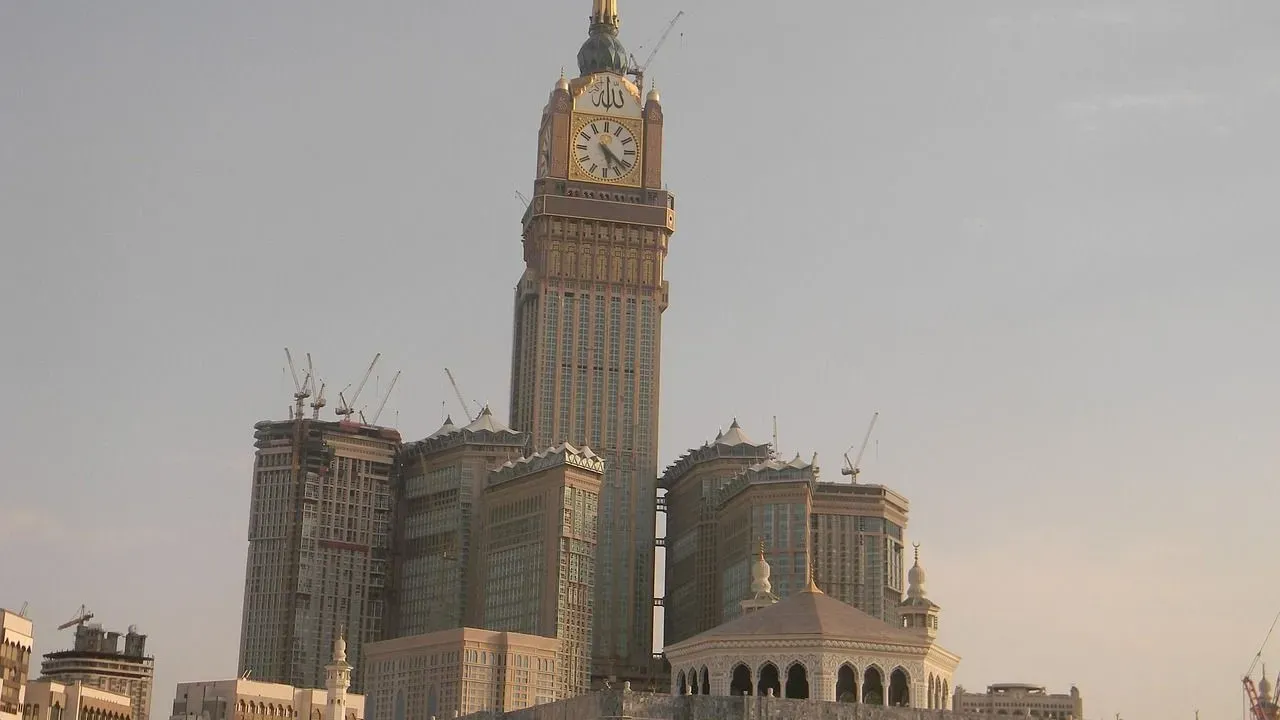
From the hotel window, the Makkah Royal Clock Tower rises prominently above the neighboring buildings. Its illuminated face and distinctive architecture stand out against the nighttime sky, creating a focal point that contrasts with the more utilitarian surroundings encountered earlier. The structure, part of the larger Abraj Al Bait complex, serves as a landmark visible from considerable distances.
This perspective highlights how a single vantage point can shift the sense of place. The tower’s presence connects the immediate location to the broader cultural and religious significance of the region. Travelers who witness it in this way often note the quiet power of such landmarks when encountered without prior expectation.
Reflections on Regional Travel
Journeys that incorporate the King Fahd Causeway and extend toward sites like the Makkah Royal Clock Tower illustrate the layered nature of movement across borders in this part of the world. Each segment, from the causeway crossing to the final view, contributes to a fuller appreciation of the landscape and its landmarks.
Responsible travelers approach these routes with attention to local customs and practical planning. The experience underscores the value of remaining open to what appears at the end of a long day on the road. Such moments reinforce the appeal of purposeful travel that respects both the journey and the destination.
AI Disclaimer: This article was created with the assistance of AI tools and reviewed by a human editor.