
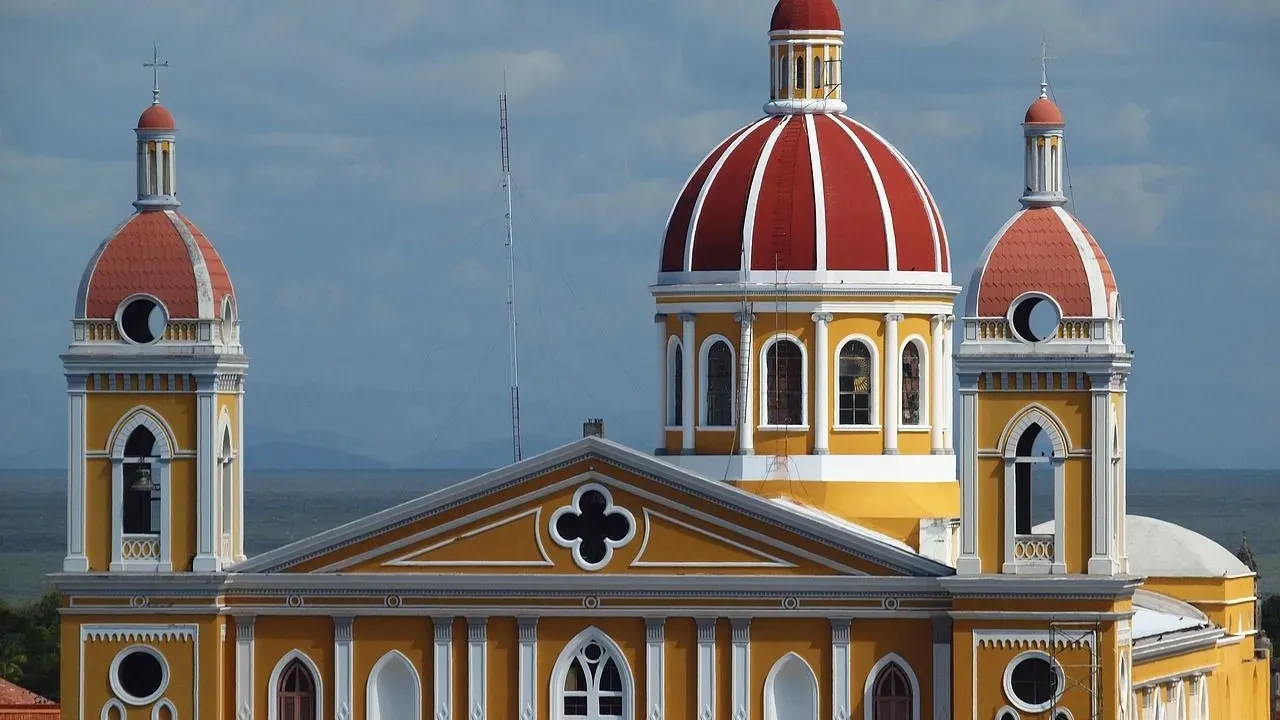

Granada sits on the northwestern shore of Lake Nicaragua, its streets lined with buildings painted in deep reds, sunny yellows, and soft pastels that catch the light throughout the day. Travelers arriving after time spent in quieter parts of the country often notice the shift immediately, as horse-drawn carriages share the road with modern vehicles and the pace slows to match the rhythm of the cobblestones. The city’s colonial core remains remarkably intact, offering a living record of centuries of Nicaraguan history shaped by trade, faith, and the lake itself.
Arrival Sets a Distinct Tone
The transition into Granada often begins with a sense of visual surprise. After winding through rural landscapes, the sudden appearance of ornate facades and open plazas creates an immediate contrast. Many visitors describe the moment as stepping into a scene that feels both preserved and alive, where daily life unfolds against a backdrop of arched doorways and wrought-iron balconies. The sensory details accumulate quickly. The clip of hooves on stone mixes with the murmur of conversations in Spanish, while the scent of wood smoke and tropical flowers drifts from nearby courtyards. This layered atmosphere rewards slow exploration rather than hurried sightseeing.
Colonial Buildings Tell Layered Stories
Granada’s architecture reflects successive periods of construction and restoration. Churches and former convents stand alongside merchant houses whose bright exteriors once signaled prosperity from lake commerce. Walking the grid of streets reveals repeated motifs: thick adobe walls, wooden shutters, and central courtyards that provide shade in the tropical climate. These structures continue to serve practical roles. Some house local businesses or family residences, while others have been adapted for visitors without losing their essential character. The result is a neighborhood that feels continuously inhabited rather than staged for display. Preservation efforts have focused on maintaining original materials and proportions, allowing the city’s history to remain legible in its built environment.
Lake Nicaragua Shapes Daily Life
The lake’s presence is felt throughout the city, not only as a scenic backdrop but as a defining influence on local rhythms. Breezes off the water moderate temperatures, and the shoreline offers places for quiet reflection amid the urban setting. Islands visible from the waterfront add depth to the horizon, hinting at the broader volcanic landscape that surrounds the region. Residents and visitors alike use the lakeside for both practical movement and leisure. Small boats still ply the waters, echoing older patterns of transport and trade. The interplay between the city’s compact streets and the open expanse of water creates a distinctive sense of place that changes with the light and weather.
Movement Through the Streets
Horse-drawn carriages remain a visible part of Granada’s street life, offering a gentle pace suited to the narrow lanes and historic scale. They share space with pedestrians and occasional vehicles, underscoring the city’s blend of eras. This coexistence encourages visitors to adjust their own tempo, noticing details that might otherwise pass by. The experience extends beyond transportation. Markets and plazas serve as gathering points where local crafts, produce, and conversations create an ongoing sense of community. Exploring on foot or by carriage allows time to appreciate how the colonial grid continues to organize daily activity in ways that feel both historic and contemporary. Granada rewards travelers who approach it with patience and curiosity. Its combination of preserved architecture, lakeside setting, and lived-in streets offers a window into Nicaragua’s cultural continuity that lingers long after departure.
AI Disclaimer: This article was created with the assistance of AI tools and reviewed by a human editor.