
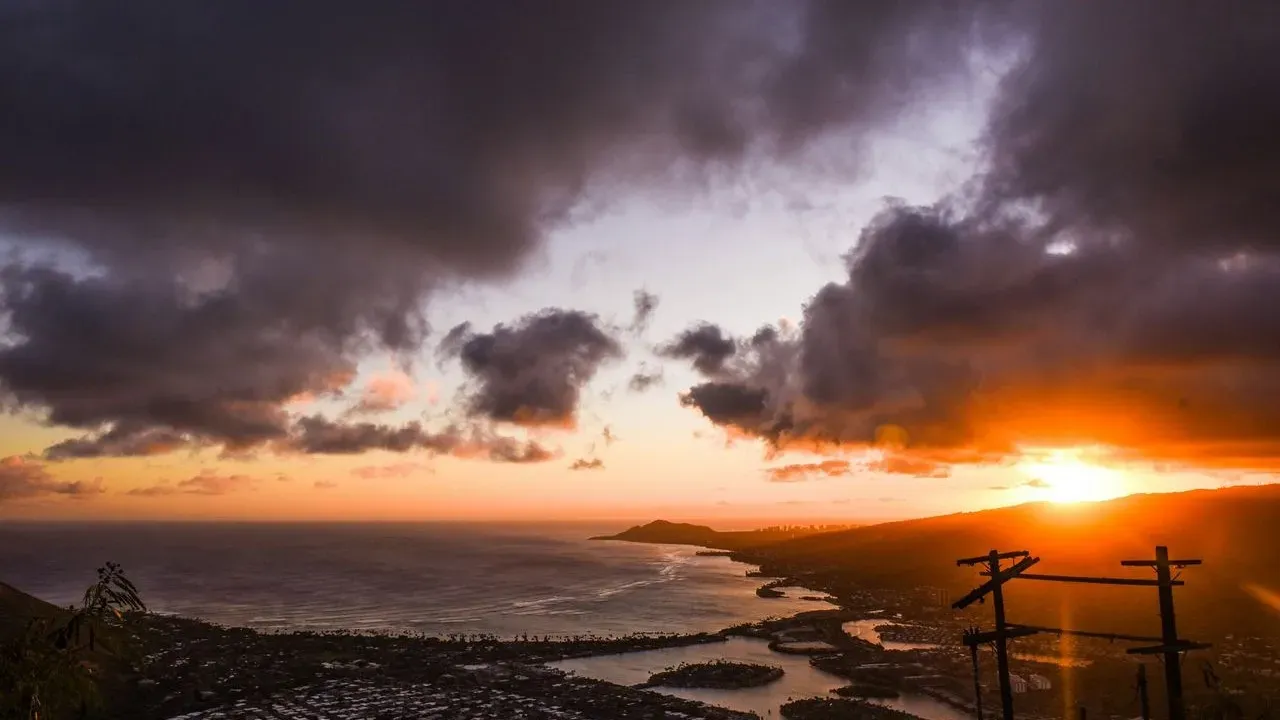

Honolulu – Tropical Storm Lala swept past Hawaii’s islands over the weekend, bringing intense rainfall and strong winds that left communities dealing with flooding, debris, and widespread power loss. The storm, which weakened from hurricane strength before reaching the state, caused one confirmed fatality and disrupted daily life for residents and visitors alike. Recovery efforts are now underway, with officials emphasizing the need for patience and support as cleanup proceeds.
Flash Flooding and Wind Damage
Heavy rains proved more destructive than the winds in many areas, particularly on the southern end of the Big Island. Communities such as Naalehu, Pahala, and Waiohinu saw floodwaters carry mud and rocks through neighborhoods, blocking roads and isolating some remote spots. Officials noted that the storm did not make direct landfall, yet its effects reached from downtown Honolulu to the island’s southernmost points.
Two cemeteries in Naalehu experienced significant disruption, with floodwaters affecting grave sites. State and county leaders have cordoned off those locations out of respect for the remains and are coordinating with local communities on next steps. The governor, after surveying the area by air and on foot, described the scenes as challenging yet noted that many structures held up better than initial fears suggested.
Power Outages and Service Disruptions
Nearly 104,000 customers remained without electricity Monday afternoon, according to Hawaiian Electric. Fallen trees, utility poles, and transmission towers contributed to the outages, with the Big Island’s transmission system sustaining extensive damage. Emergency services, including 911, experienced temporary interruptions on the Big Island before communications were restored later in the day.
Public schools across the state closed Monday, and many on the Big Island will stay closed Tuesday to allow for continued safety assessments. State offices followed similar closures, while crews began clearing debris and repairing bridges. The storm is expected to move farther west and may regain hurricane strength over open ocean by midweek, posing no additional threat to land.
Respecting Local Communities
Residents in the hardest-hit districts described scenes of isolation, with some small communities cut off by blocked roads. One representative highlighted the rural character of the southern Big Island, noting its distance from more familiar tourist areas. Officials urged people to avoid murky coastal waters and remain cautious of potential landslides in saturated areas.
The single reported death involved a 90-year-old woman found in Naalehu after being reported missing. Additional details are still emerging, and leaders have asked for sensitivity around affected families and sacred sites. Recovery is described as likely to move at a measured pace, with federal support requested to assist with debris removal and infrastructure repairs.
Practical Steps for Travelers
Visitors with upcoming plans should monitor airline and ferry updates closely, as service disruptions may continue in the short term. Nonessential travel to the most affected areas on the Big Island is best deferred until roads and power are fully restored. Those already in Hawaii can support local recovery by patronizing open businesses and following guidance from county officials.
Staying informed through official channels remains the most reliable approach. Conditions are improving, yet patience will help ensure resources reach communities that need them most.
What matters now: Travelers can best help by checking current conditions before travel, respecting closures around damaged sites, and choosing operators that prioritize local recovery efforts.
Recovery in Hawaii often draws on deep community ties and careful planning. As work continues, the focus stays on steady progress and the well-being of those who call these islands home.
AI Disclaimer: This article was created with the assistance of AI tools and reviewed by a human editor.