
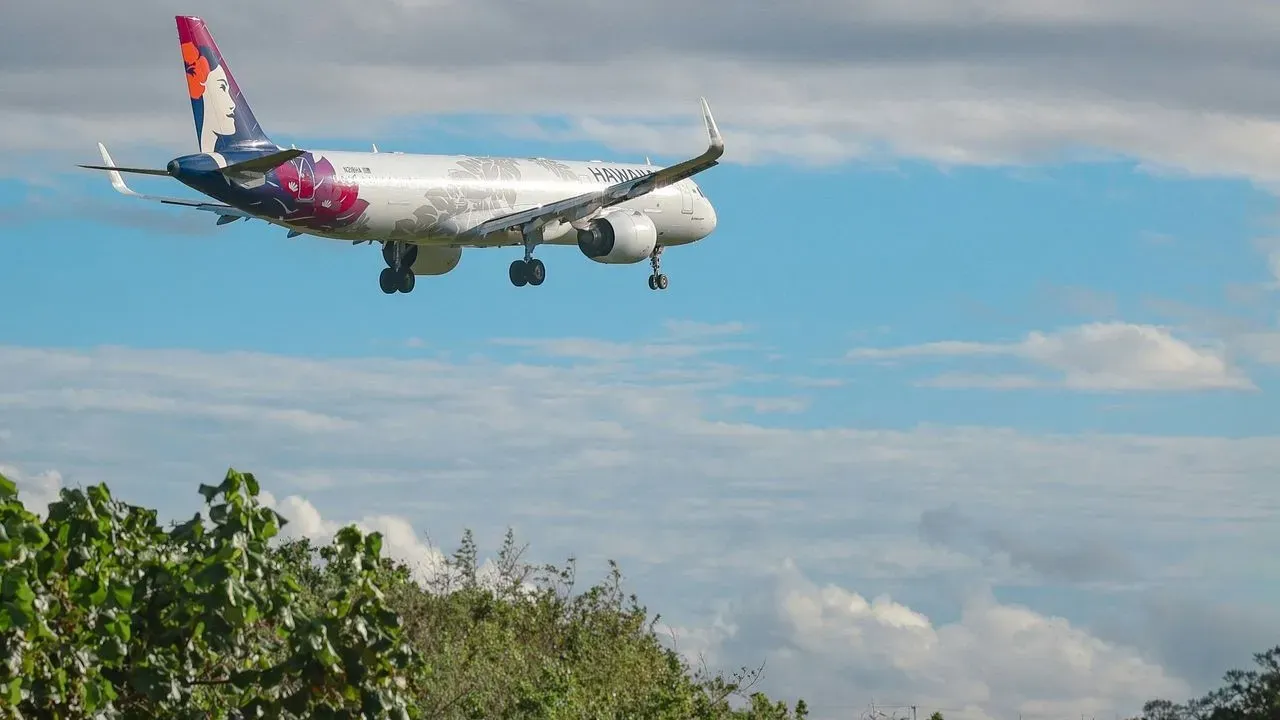

A card linked to Hawaiian Airlines might seem useful only for people planning regular trips to the islands. A recent review by The Points Guy [1] takes a different view. The reviewer, who has never flown Hawaiian, argues that the Hawaiian Airlines World Elite Mastercard can still deliver value for travelers who mostly fly Alaska Airlines, because both carriers share the Atmos Rewards loyalty program. That shared program is what turns a Hawaii-branded card into a practical tool for everyday travel. ([4])
One loyalty program, two airlines
Hawaiian and Alaska Airlines use the same loyalty currency, so the card’s points carry across both networks. Cardholders earn 3 points per dollar on Hawaiian and Alaska purchases, 2 points on dining, gas and groceries, and 1 point on other spending, according to the review. The card carries a $99 annual fee and offers a short set of benefits:
- Two free checked bags on eligible flights when the ticket is paid with the card, for the primary cardholder only
- An annual $100 companion discount on eligible round trips between Hawaii and North America
- No foreign transaction fees
- Atmos Rewards status points, earned at 1 point per $3 spent with no cap
The reviewer notes that the card does not include lounge access, priority boarding or statement credits. For some cardholders, that simpler structure is part of the appeal, since fewer perks also means fewer details to track against the annual fee.
Where the math becomes practical
The most concrete example in the review involves a short domestic flight. The reviewer redeemed 5,000 Atmos Rewards points plus $5.60 in taxes and fees for a trip between Portland and Spokane, where the cash fare was $184. The table below summarizes the comparison.
| Item | Detail |
|---|---|
| Cash fare | $184 |
| Points cost | 5,000 Atmos Rewards points plus $5.60 in taxes and fees |
| Implied value | More than 3.5 cents per point, compared with TPG’s valuation of 1.6 cents per point |
Checked bags offer a second route to savings. The reviewer pays $45 for a first checked bag and $55 for a second on Alaska flights within the continental United States and Alaska. A single round trip with one checked bag can therefore cover most of the annual fee. The companion discount can also offset the fee when a cardholder is already booking a trip to Hawaii, and the reviewer points out that the free bag perk does not transfer to companions. A traveler who books for two people may therefore need to check each person’s bag under their own name to take advantage of the benefit.
Limits to weigh before applying
The card is not a comprehensive airline product. The reviewer says it lacks priority boarding and a status boost at the start of the year, which makes it less well rounded than many newer airline cards. Travelers who carry several bags or travel in larger groups may find the bag perk narrower than they hoped.
The card’s availability and offers also deserve attention. The Hawaiian Airlines credit card is moving from Barclays to Bank of America under the new Atmos Rewards partnership. New applications for the Barclays-issued Hawaiian Airlines cards disappeared from Barclays’ website the same day. ([2]) Welcome bonuses have also varied between versions of the card. One Bank of Hawaii version has been listed with 80,000 Atmos Rewards points after spending $2,500 on purchases within the first 90 days. ([3]) Because terms and offers can change, anyone considering the card should confirm current details with the issuer before applying.
A fit for frequent Atmos flyers
The review’s central conclusion is measured. If a traveler flies with Hawaiian or Alaska at least a couple of times a year, or wants to earn Atmos Rewards points for use with partner airlines, the card deserves serious consideration. Those who rarely fly either airline may find that the annual fee is harder to justify. For travelers who value the Hawaii connection, the card offers a practical way to keep the islands within reach, whether the next trip is to Honolulu or a weekend in the Pacific Northwest.
AI Disclaimer: This article was created with the assistance of AI tools and reviewed by a human editor.