
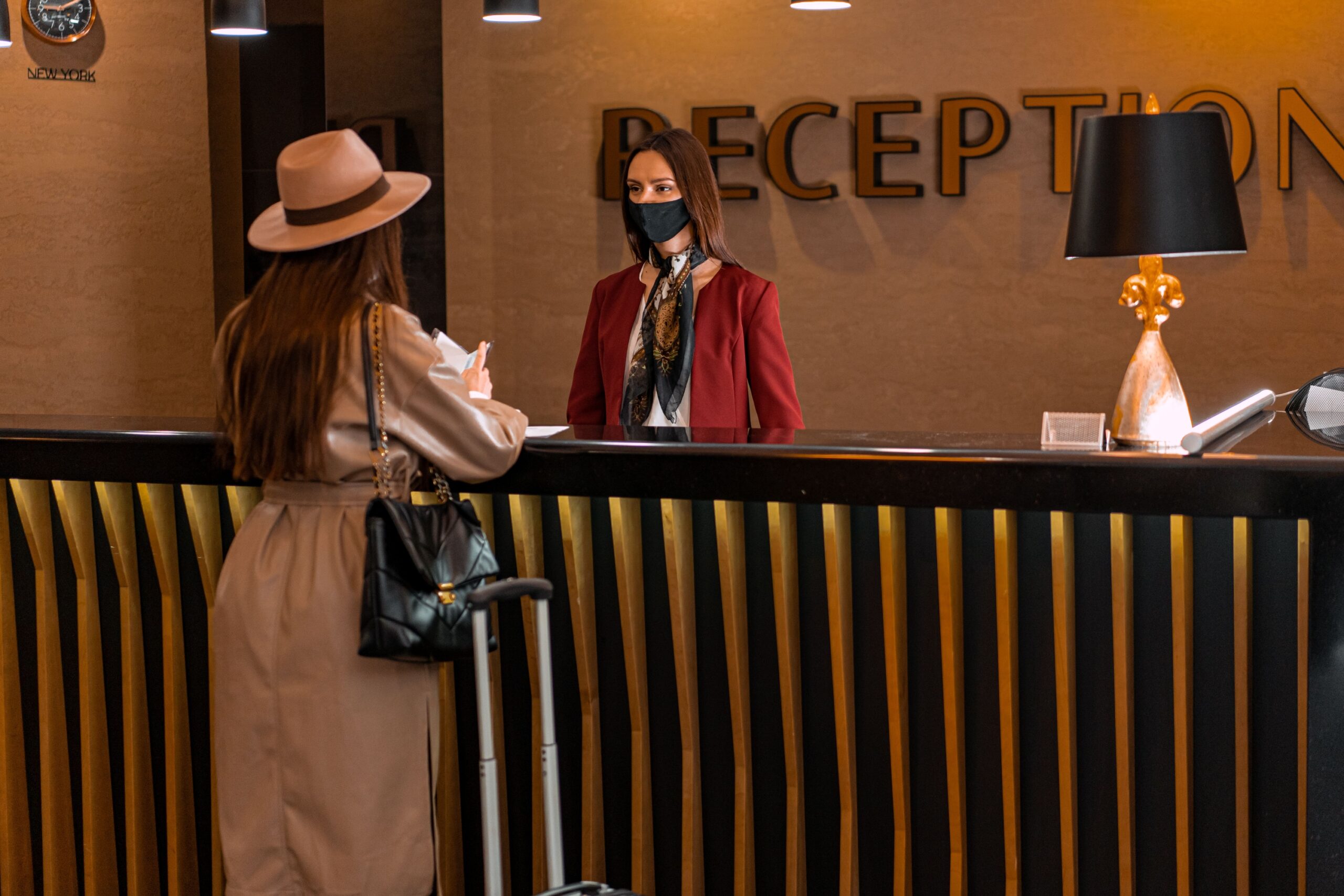

Every traveler has been there: a late afternoon flight, a gorgeous hotel room, and a checkout time of 11 a.m. staring you down like an alarm clock you didn’t set. The gap between when you have to leave your room and when your plane actually departs can feel like a strange hotel purgatory, spent dragging bags through a lobby and calculating how many hours you can reasonably sit in an airport lounge.
The good news is that late checkout is far more achievable than most guests realize. It doesn’t require status, luck, or a charming smile alone. Mostly, it comes down to one thing: timing. And the people who know this best are the ones standing behind the front desk.
Why Hotels Have Checkout Windows at All
Hotel check-in typically happens between 2 p.m. and 3 p.m., while checkout is set between 11 a.m. and 12 p.m. These times exist to ensure room turnover, housekeeping efficiency, and proper staff scheduling. It’s a system built around logistics, not guest inconvenience, even if it can feel that way when you’re the one scrambling.
A checkout room turnover in full-service hotels typically runs 25 to 35 minutes per room, depending on room size and soil level, based on ISSA Cleaning Industry Management Standard benchmarking data. At luxury properties, that window stretches longer. A standard checkout room takes 25 to 45 minutes to turn over, but this can vary dramatically based on your property type and room condition. Budget and select-service hotels average 20 to 30 minutes per room, full-service properties run 30 to 40 minutes, and luxury hotels or suites can require 45 to 60 minutes.
Understanding this is actually useful because it tells you exactly why the front desk can’t just hand out late checkouts to everyone who asks. Every extra hour you stay is an hour that housekeeping has to absorb before the next guest arrives.
The Core Timing Trick: Ask at the Right Moment
Request late checkout either the night before or the morning of your departure. This allows the front desk to assess the day’s occupancy with accuracy. That’s the core of the trick, and it works for a simple reason: staff making decisions in the evening or early morning have a clearer picture of the whole day’s schedule than they do in the rushed midmorning window.
The most effective time to request a late checkout is to call the front desk early in the morning the day of your checkout. Not at 11:45 a.m. when the lobby is full. Early, before the rush builds. Asking at the last minute is far less likely to succeed.
According to the hotel manager at Radisson Blu Mall of America, the earlier you ask for a late checkout, the better your chances will be. There’s a reason experienced travelers mention it at check-in itself. It plants a flag without being pushy, and it gives the property time to plan around your stay.
Why Occupancy Data Changes Everything

In the United States, full-year occupancy hovered near 63 percent in 2024, with industry forecasters projecting only a small uptick for 2025. That means that on many nights, a meaningful share of rooms simply go unoccupied. Your room might not be needed by anyone for hours after checkout, and the front desk often knows this by early morning.
U.S. hotels averaged roughly 53 percent occupancy in December 2024, showing moderate recovery in off-peak season. Traveling in shoulder season or a quieter month gives you a real structural advantage. Markets with the lowest occupancy for some months included Minneapolis at 50 percent and St. Louis at 52.4 percent. In those cities, a late checkout request during slower periods is often straightforward to grant.
The calculus flips completely when you’re in a high-demand market. Out of the top 25 largest cities in the U.S., New York City experienced the highest occupancy level at 86.6 percent in November 2024. In packed urban markets, the front desk has genuinely less room to maneuver, so your timing and status matter even more.
Ask During a Quiet Moment, Not a Rush
If possible, avoid peak check-in times at the front desk. Showing up right before everyone else arrives typically means the staff is pressed. Approaching them during a lull, perhaps in the late afternoon or very early morning, makes for a friendlier, more relaxed conversation about your needs.
This is practical psychology as much as hospitality strategy. A staff member handling a queue of six people and a ringing phone is not in the best position to do you a favor. One approached in a calm moment is far more likely to check room availability, think creatively, and say yes.
The nicer you ask, the more likely you are to get late checkout. Being friendly is an easy way to get your checkout extended. That sounds obvious, but it’s easy to forget when you’re stressed about a packed schedule. Warmth goes further than urgency at the front desk.
Ask for a Modest Extension, Not a Marathon
Asking for a short extra period of time may increase your chances of late checkout. For example, if checkout time is usually noon, asking for a checkout of 12:30 p.m. is a much easier yes than asking for 4 p.m. Smaller requests feel like simple accommodations rather than special exceptions.
Usually, checkout is around 12:00 or 1:00 p.m., and late checkout is likely anytime from 1:00 p.m. up to 4:00 p.m. Knowing that range helps you calibrate your ask intelligently. A one-hour extension rarely inconveniences housekeeping. A four-hour extension requires the hotel to actively hold a room offline, which is a different request entirely.
Being specific about what you actually need also helps. Letting the hotel know an approximate checkout time gives them a clearer picture of the full scope of your request. Vague requests are harder to approve than precise ones.
How Loyalty Status Changes the Conversation
Members of hotel loyalty programs often receive perks and prioritized benefits such as late checkout privileges. Joining these programs can increase your chances of getting a late checkout. You may be guaranteed a late checkout if you are a high-tier member of the hotel.
The strongest guarantee in the industry right now sits with Hyatt. Globalist 4 p.m. late checkout is guaranteed at non-resort hotels and subject to availability at resorts, still a meaningful operational benefit relative to Marriott and Hilton, which offer late checkout subject to availability at most properties. For frequent travelers who concentrate their nights at one chain, that benefit alone can justify the status chase.
Marriott Bonvoy Titanium and Ambassador members get a guaranteed 4 p.m. checkout at hotels that can offer it, and Platinum members get the same guarantee at most properties. Hilton Honors Diamond members get a guaranteed 4 p.m. checkout, and starting in January 2026 the new Diamond Reserve tier gets the same 4 p.m. guarantee plus faster customer service. The programs keep evolving, and the late checkout perks at the top tiers are genuinely worth knowing about.
The Credit Card Shortcut

The most surefire method to get late checkout guaranteed is to get elite status with a hotel program. Even some of the lower tier statuses that you can get automatically with credit cards will offer you late checkout. This is the often-overlooked path for travelers who don’t stay frequently enough to earn elite status through nights alone.
Certain cardholders may receive automatic status with a loyalty program, like what’s offered by Mastercard for GHA members, and the Hilton AMEX Aspire and Marriott AMEX Brilliant cards in the U.S. If you carry the right co-branded card, you may already have more leverage than you realize before you’ve even spoken a word to the front desk.
Hilton still offers the easiest shortcut in the industry: the Aspire credit card grants automatic Diamond status. That’s a guaranteed 4 p.m. checkout without a single qualifying night. For occasional travelers, it can be one of the more practical hospitality hacks available.
Repeat Guests Have a Quiet Advantage
The easiest way to get an earlier check-in time or later checkout is to call ahead and ask the hotel about their policies. Other ways to secure early check-in or late checkout include having elite hotel status or by being a repeat customer. That last point doesn’t get talked about nearly enough.
The advantage of this approach lies in the opportunity to engage with various front desk staff members on different days, emphasizing the importance of late checkout. By consistently inquiring throughout your stay, the staff may be more inclined to accommodate your request when they ultimately make the decision on your checkout day.
Hotels run on relationships more than travelers often realize. A guest who has stayed ten times at the same property, who knows the staff by name and is remembered warmly, is not treated the same as a first-time booker. That familiarity is social capital with real-world value at checkout.
When You Truly Need a Guarantee: Paid Late Checkout

Many hotels now offer formalized early check-in or late checkout for a fee. This could be an hourly rate, a flat fee, or a half-day rate. Always clarify the cost upfront to avoid surprises on your bill. This is the route to take when you genuinely can’t afford uncertainty, such as a business trip where you have a presentation scheduled after your usual checkout window.
A 2024 study by Booking.com found that roughly one in four travelers worldwide prefer the option to check out later and are willing to pay more for it, which helps improve guest experience and satisfaction. Hotels have noticed that demand, which is why paid late checkout has become increasingly formalized rather than handled case by case.
Late checkout options generate additional revenue from rooms with flexible availability. That means hotels have a financial incentive to offer the option. Asking about it directly, and framing it as something you’re prepared to pay for, often moves the conversation faster than hoping for a free pass.
What to Do If the Answer Is Still No

Hotels set checkout and check-in times to allow enough time to flip the room. Staff may want to accommodate your request but still have to say no due to circumstances beyond their control. A full house the night before your departure is simply a different situation than a quiet Wednesday morning in January. Sometimes, no genuinely means no, and the hotel is being straight with you.
If you cannot secure a late checkout in advance, it’s a good idea to follow up with the front desk staff on the day of checkout. Sometimes, last-minute accommodations can be arranged or adjustments made to free up a room for you to use until the early evening. Conditions can shift between 7 a.m. and 11 a.m. as cancellations come in and room assignments change.
Most hotels will also offer the use of a luggage room, a shower facility, or a lounge space even when they can’t extend your room access. It isn’t the same as having your own room, but it keeps you comfortable and mobile until your transport arrives. Asking about those alternatives, calmly and graciously, almost always gets a yes.
The Takeaway

The timing trick isn’t a loophole. It’s just an understanding of how hotels actually function: occupancy data, housekeeping windows, and the simple reality that a staff member who knows the day’s picture clearly is better positioned to help you. Ask the evening before or early the morning of your departure. Be specific, be warm, and keep your request proportionate to what the hotel can realistically offer.
Status helps, the right credit card helps, and familiarity with a property helps. Late checkout is one of the few benefits that is genuinely guaranteed rather than “subject to availability,” which makes it a good way to judge a loyalty program on its own terms. For travelers who stay frequently enough to build status, the late checkout question often answers itself long before arrival.
For everyone else, the front desk is more accommodating than most guests expect. The difference, more often than not, is simply knowing when to ask.
AI Disclaimer: This article was created with the assistance of AI tools and reviewed by a human editor.