
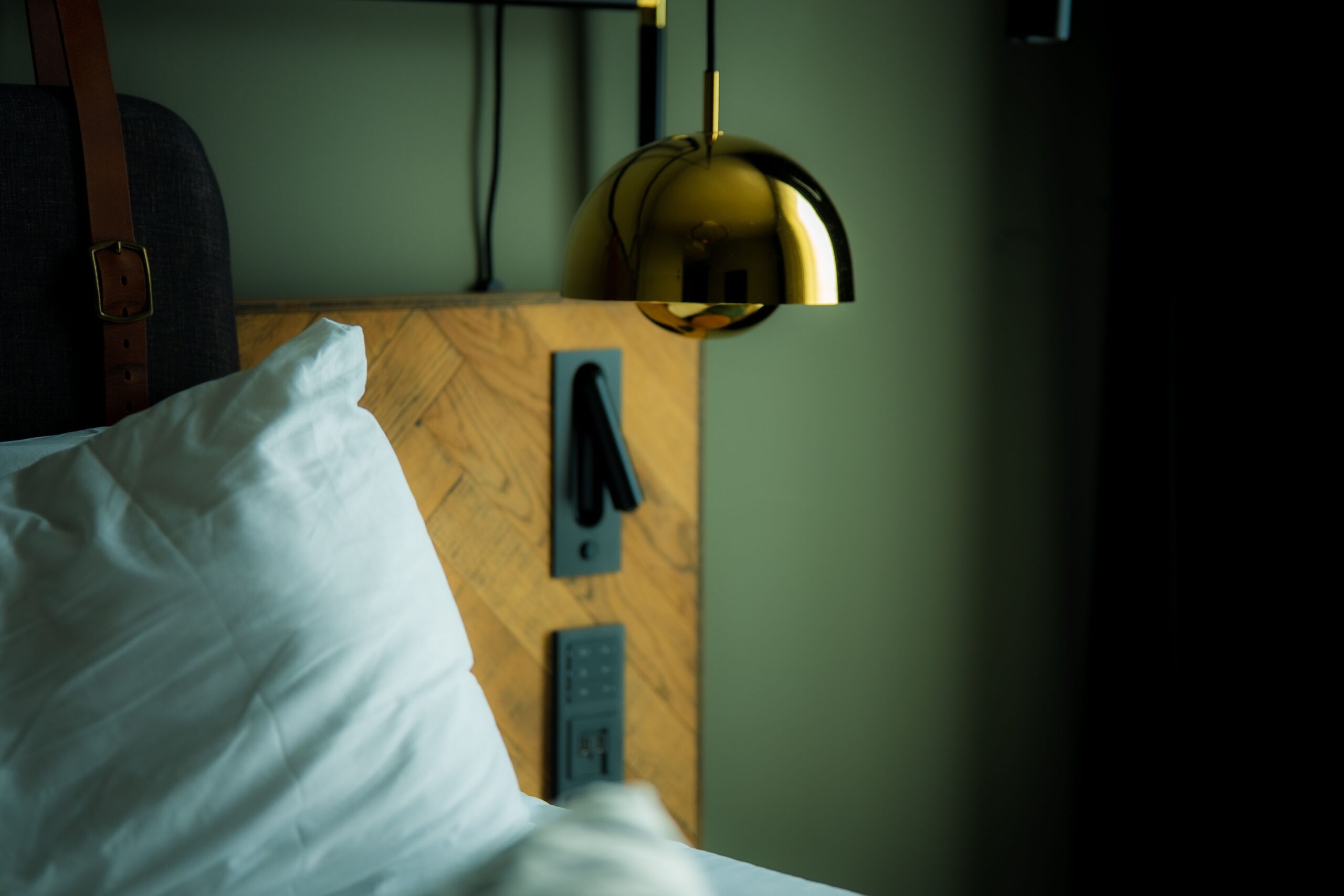

Overhead Lights Create the Wrong Emotional Starting Point
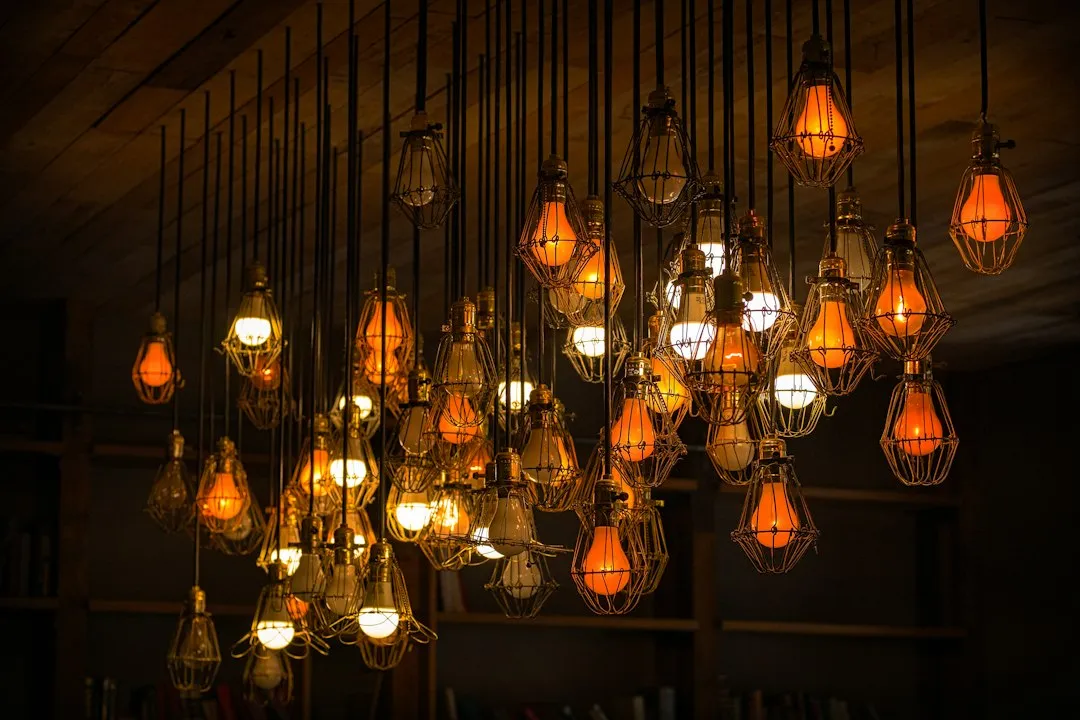
Lighting sets the emotional tone almost immediately. Most experts agree that to encourage relaxation, warmer and lower-intensity lighting is the right choice. The transition from bright office lighting, designed to keep people mentally alert, to something softer in a well-designed hotel helps guests slow their pace and feel less rushed.
A single ceiling fixture beaming straight down does the opposite of that. It signals “workplace” to the brain, not “retreat.” Harsh fluorescent lighting can make guests feel anxious and uncomfortable, while layered lighting with table lamps, floor lamps, and ambient lighting creates depth and warmth. That’s a meaningful distinction when a hotel’s primary job is helping people decompress.
The Layered Lighting Approach Is the Industry Standard
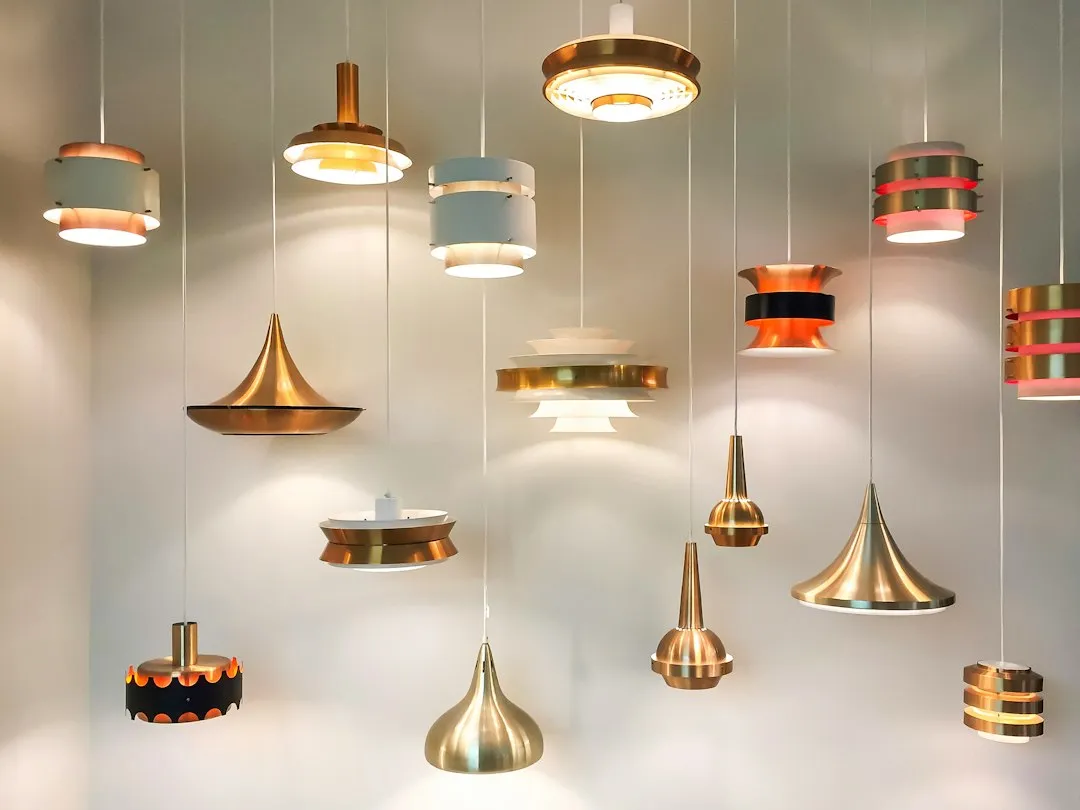
A successful hospitality space relies on layers of light. Ambient, accent, and decorative lighting work together to create depth and flexibility, and this layered approach allows the atmosphere to shift throughout the day, from brighter, more functional environments to softer, more intimate settings in the evening.
A successful lighting scheme can never be achieved with a single type of fixture. The secret lies in using three distinct layers of light that work in harmony, and this layered approach is the foundation of professional hospitality lighting design. A single overhead source simply can’t do what three carefully placed layers can do.
Warm, Indirect Light Protects Your Sleep Chemistry

Sunlight affects the body’s circadian rhythm, the biological mechanism that tells you when it’s time to be asleep or awake. Sunlight, while seemingly yellow, actually contains high amounts of blue light. This blue light decreases the production of the hormone melatonin, which helps us sleep.
Overhead fixtures, especially cooler-toned ones, mimic that blue-enriched light and interfere with the body’s wind-down process. Brightly lit rooms in the evening have been shown to adversely impact circadian rhythms and sleep. Designers who understand this deliberately choose warmer, lower sources to avoid disrupting the very rest their guests are paying for.
The “Security Cave Effect” Is Real, and Designers Use It
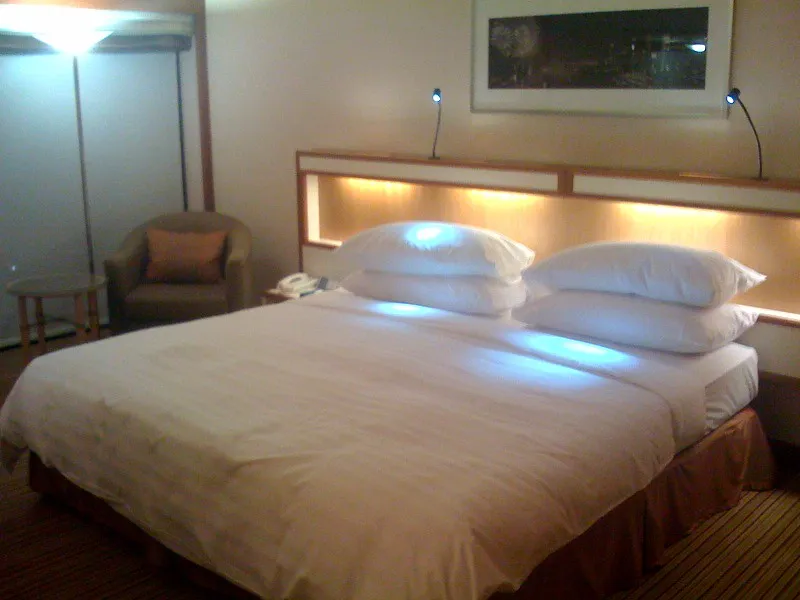
There is a term in psychology called the “security cave effect.” It explains that a dim environment can trigger ancient genetic memory in humans. The sense of enclosure brought by low light, much like a primitive shelter, suppresses the activity of the sympathetic nervous system and naturally reduces blood pressure and pulse.
This is not a fringe idea. Most hotel rooms adopt a non-main-light design. The soft, diffused warm light source is intended to make guests feel at home and relieve travel fatigue. Getting that balance right is one of the more nuanced challenges in hospitality design, because too dim reads as cheap, while too bright destroys the effect entirely.
Indirect Light Sources Don’t Stress the Eyes
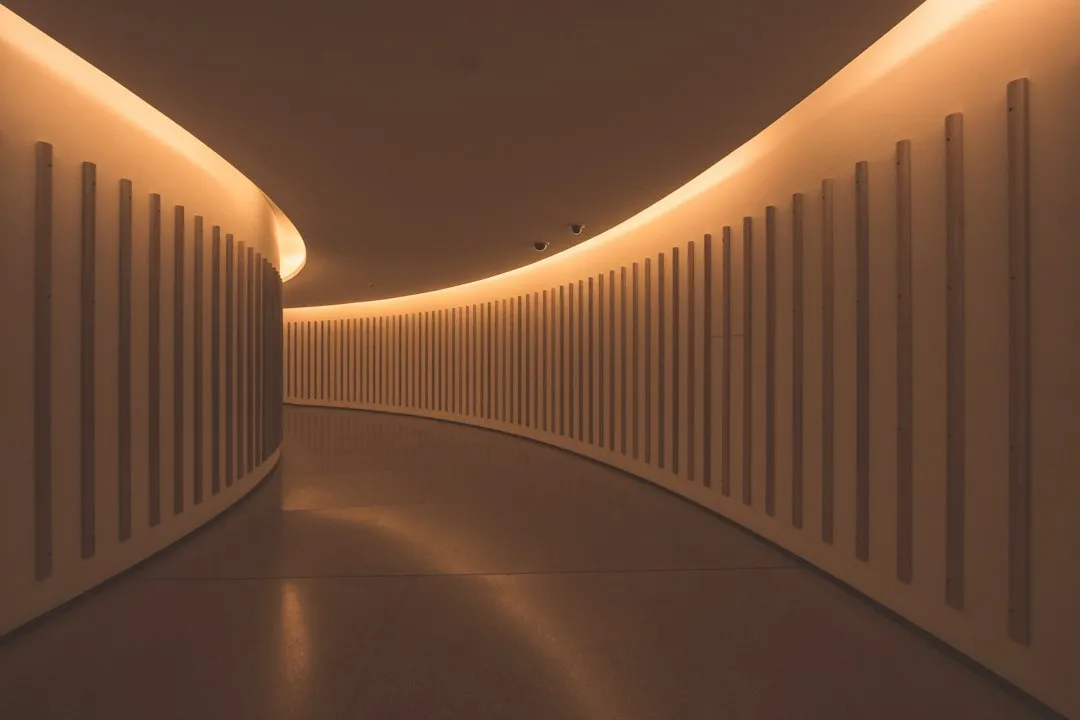
Indirect illumination behind headboards, built into counters, wall sconces, and side lamps compared with overhead lighting won’t stress the eyes, according to interior designers in the field. This matters more than it sounds. Guests arrive tired, often with strained eyes from screens and travel, and the last thing a good room should do is add to that strain.
Recessed downlighting remains common, but it’s layered with surface-mounted or pendant elements to soften uniformity. The Scandinavian approach, using multiple lower-output sources rather than fewer bright ones, is now industry standard for hospitality lighting because it reduces eye strain and improves perceived spaciousness.
Colour Temperature Is a Precision Tool, Not an Afterthought
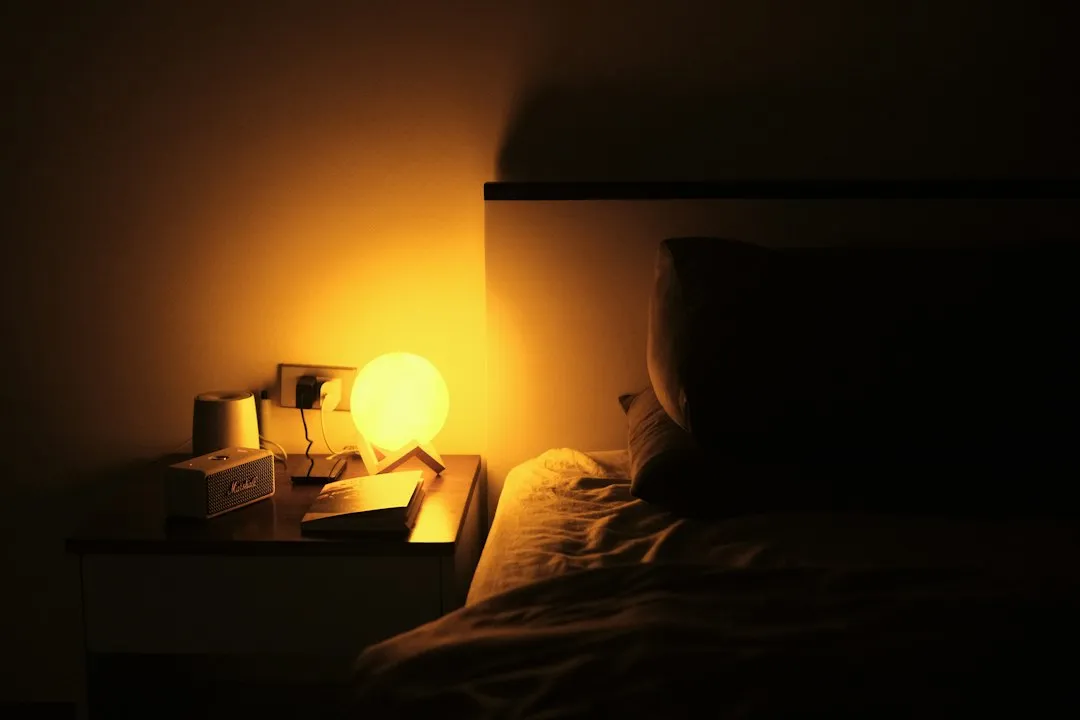
A significant shift toward warm colour temperature at 2700K or lower is now standard across hospitality lighting, moving away from the clinical 4000K that dominated previous specifications. That difference in Kelvin rating is invisible on paper but immediately felt in a room. Cooler tones read as institutional. Warmer tones read as welcoming.
According to Lumenture’s 2026 Lighting Trends report, hotel lighting is undergoing a decisive shift away from uniform brightness toward spatially intelligent, warmth-forward schemes that enhance guest experience without compromising operational efficiency. Overhead lights, by their nature, tend to broadcast uniform brightness. That’s exactly what the industry is moving away from.
Guest Room Lighting Is Designed Around Specific Behaviours
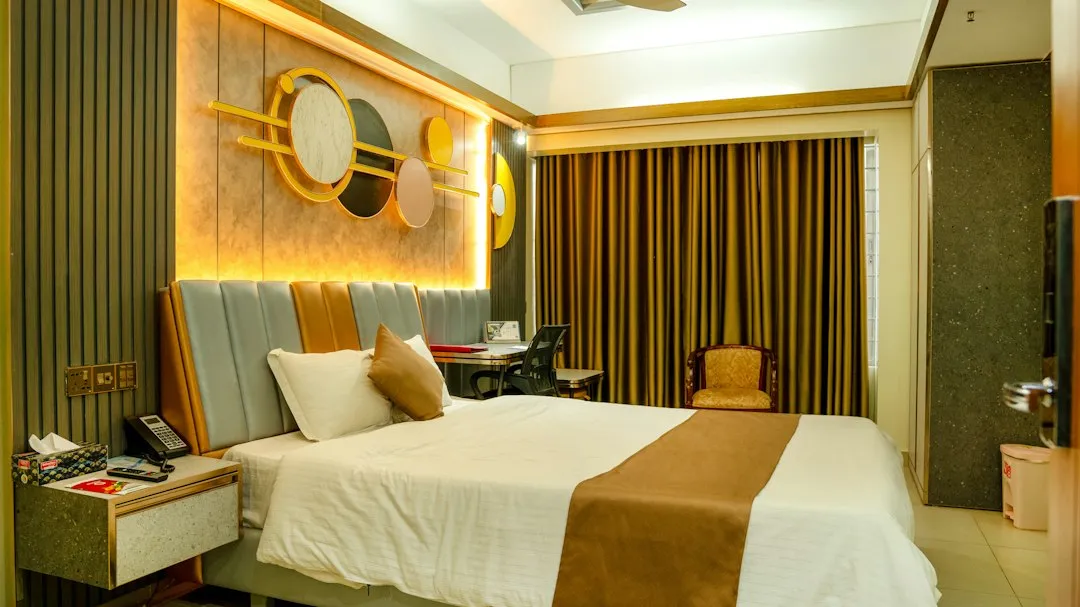
There are seven types of lighting considered necessary for optimal hotel lighting design: general ambient lighting to set the mood, task lighting for reading or working, mirror lighting, overhead lighting in the bath area for safety, accent lighting for atmosphere, closet lighting, and subtle night lights so guests can navigate safely without harsh lighting.
Designers carefully place lights to guide behaviour. Reception desks are brightly lit to attract tired travelers, while softer lights near beds and seating areas encourage relaxation. Many hotels also use hidden night lighting so unfamiliar rooms feel safer at night without needing bright overhead lights. Every fixture placement is a deliberate decision, not a default.
Smart and Circadian Lighting Is Reshaping the Room in 2026
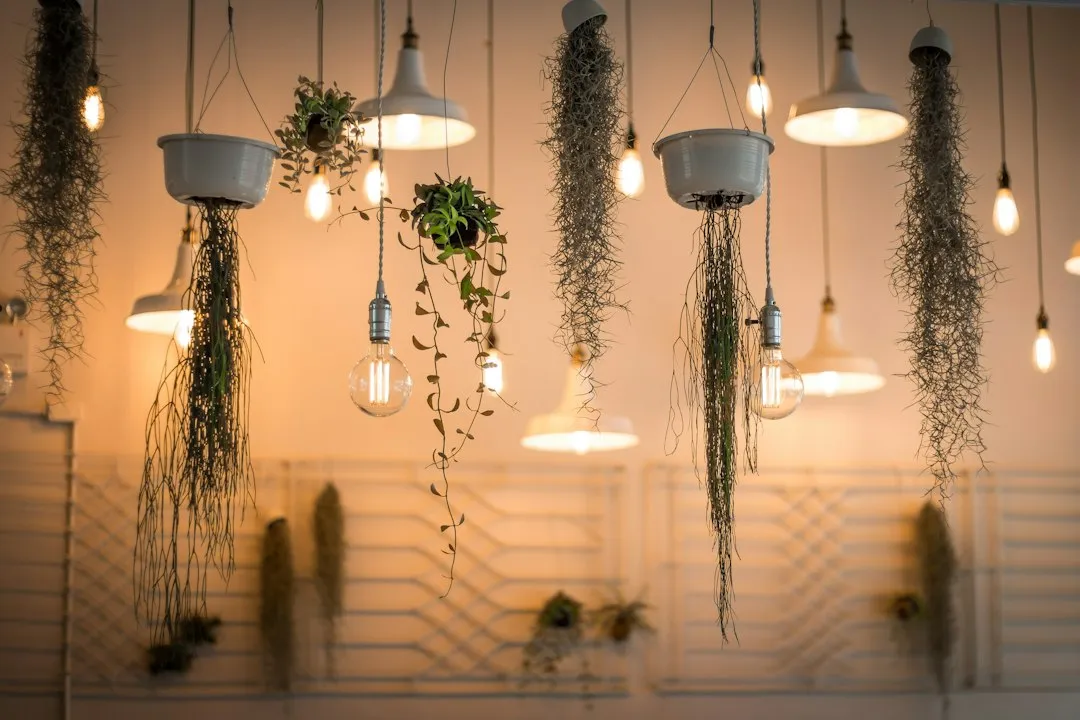
A significant 2026 trend is circadian tunable white lighting that automatically warms at night and cools at noon, paired with voice control integration. This takes the philosophy behind ditching overhead lights one step further, creating rooms where the light itself adapts to the human body’s natural rhythm across a full day without the guest needing to think about it.
Research confirms that the extended use of simulated sunrise lighting sequences leaves people feeling more refreshed and energized. Forms of bio-adaptive lighting like this support the body’s circadian rhythm and can be particularly important for guests who have traveled across several time zones. For frequent travelers especially, this kind of thoughtfulness is no longer a luxury add-on. It’s becoming an expectation.
The Perception of Quality Goes Up When Overhead Lights Go Away

Luxury hospitality is built on experiences rather than transactions. Guests rarely remember the exact wattage of a chandelier or the technical specifications of a pendant light. What they remember is how a space made them feel. Lighting influences mood, comfort, relaxation, and even the perceived value of a property.
Instead of matching the energy of the outside world, designers create a respite. They choose moodier lighting and use colour-drenching techniques to create a genuinely relaxing environment. The absence of a central overhead fixture contributes to that quality signal, often without guests being able to articulate exactly why the room feels elevated.
Energy Efficiency Runs Quietly Alongside the Aesthetics
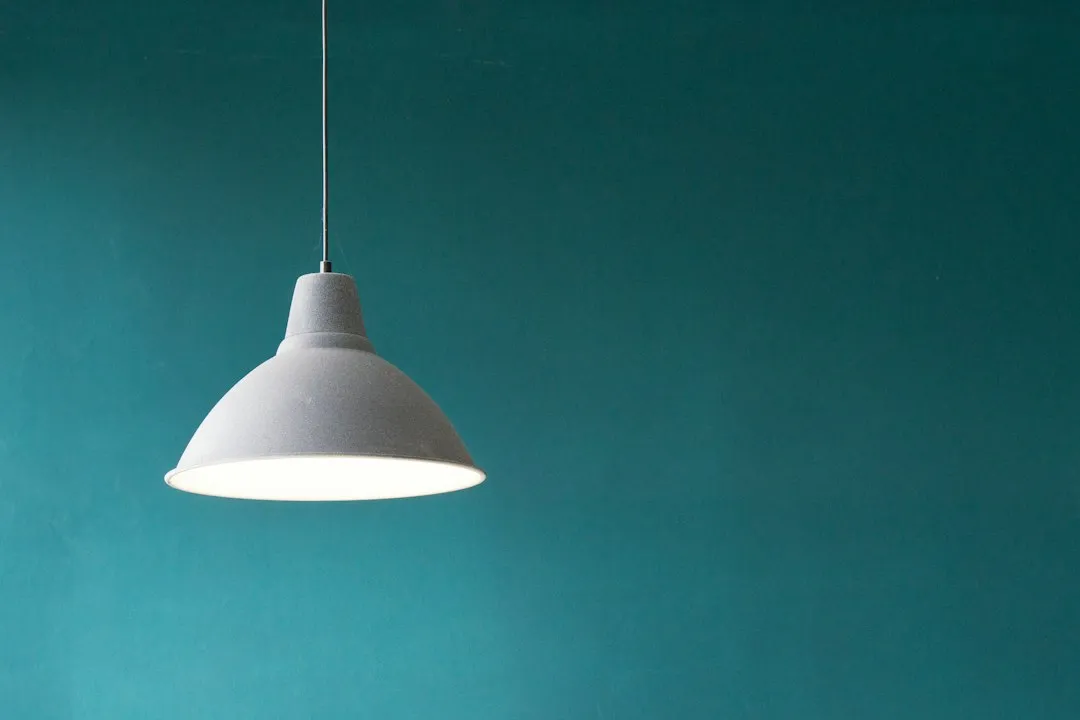
Sustainable lighting can reduce energy consumption by decreasing reliance on artificial lighting, leading to significant cost savings for resort owners. Multiple lower-wattage sources positioned strategically can illuminate a room effectively at a fraction of the energy cost of a single powerful ceiling unit running at full brightness.
Motion-sensor dimming to thirty percent during late-night hours in corridors saves between forty and sixty percent of corridor electricity without disturbing late-arriving guests. Daylight harvesting in atriums or naturally lit corridors can reduce operating hours by fifteen to twenty-five percent. These gains across an entire property are substantial, and they align neatly with the warm, distributed lighting philosophy that guests already prefer.
The Takeaway
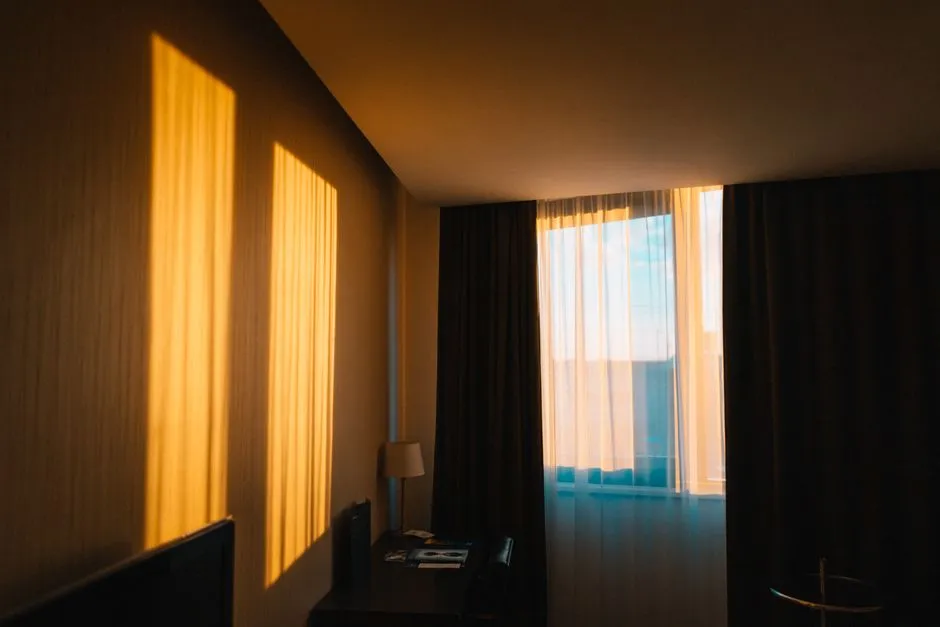
The absence of overhead lights in hotel rooms is one of those design decisions that most guests benefit from without ever consciously noticing. It’s a convergence of psychology, biology, and hard-won hospitality experience, all pointing toward the same conclusion: people sleep better, feel calmer, and perceive more value in spaces where light comes from multiple warm sources rather than a single fixture above their heads.
As circadian design and smart lighting systems continue to mature into 2026 and beyond, the hotel room is becoming an even more precise instrument for rest. The ceiling, it turns out, is best left in the dark.
AI Disclaimer: This article was created with the assistance of AI tools and reviewed by a human editor.