
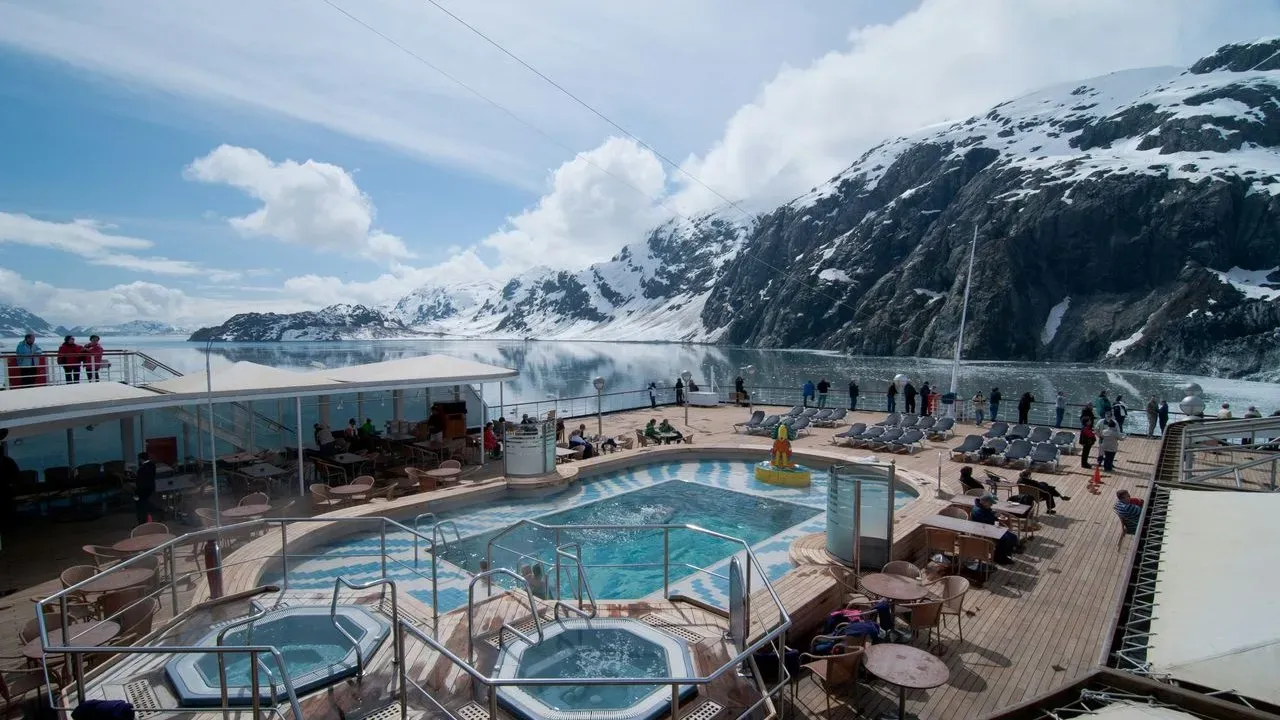

Alaska draws travelers who seek landscapes shaped by ice and sea, where wildlife moves freely and long-standing communities maintain deep ties to the land. Choosing a cruise allows visitors to reach remote stretches of the Inside Passage and the Gulf of Alaska without the need for multiple flights or overland transfers. The route selected determines which glaciers come into view, which ports welcome passengers ashore, and how much time remains for quiet observation of eagles, whales and bears.
The Appeal of Traveling by Sea
Cruising keeps the focus on the water itself. Many of Alaska’s most dramatic glaciers calve directly into fjords and channels that roads cannot reach. Passengers remain in one vessel while the scenery changes daily, from forested islands to snow-capped peaks that rise straight from the shoreline. Wildlife sightings often occur without leaving the deck. Humpback whales surface near the ship, sea lions haul out on rocky outcrops, and bald eagles circle overhead. On land, excursions can include visits to Alaska Native villages where totem poles and dance performances share stories that predate European arrival. The same journey also passes sites connected to the Klondike gold rush, offering context for the region’s more recent history.
When Conditions Favor a Northern Voyage
The cruise season runs from May into September, with shoulder months of April and October sometimes available on select ships. Early and late sailings tend to bring cooler temperatures and fewer crowds, while midsummer offers longer daylight and the chance of warmer afternoons. Rain remains possible throughout the season, so layered clothing and waterproof outerwear prove useful on most days. Travelers who prefer milder weather and lower rates often book the first or final weeks. Those hoping to combine a cruise with a land extension to Denali National Park usually choose one-way Gulf of Alaska itineraries that begin or end near Anchorage.
Comparing the Principal Itinerary Options
Most Alaska cruises follow one of several established patterns. The table below outlines the main choices and the experiences each tends to emphasize.
| Itinerary Type | Typical Length | Key Features |
|---|---|---|
| Inside Passage | 7 nights, round-trip | Calm waters, multiple ports, scenic cruising in Glacier Bay or Tracy Arm |
| Gulf of Alaska | 7 nights, one-way | Additional glacier viewing, flexibility for pre- or post-cruise land travel |
| West Coast departures | 10–11 nights | Extra sea days from San Francisco or similar ports |
| Cruisetour | 9–16 nights | Cruise plus overland segments to Denali and interior towns |
Inside Passage sailings keep the ship among islands and fjords for most of the voyage, which reduces exposure to open-ocean swells. Gulf of Alaska routes venture farther north and often include Hubbard Glacier or College Fjord in addition to Inside Passage stops. Longer West Coast itineraries suit travelers who enjoy relaxed days at sea, while cruisetours combine a coastal voyage with time inland at lodges and national parks.
Ports That Offer Distinct Character
Ketchikan stands out for its collection of standing totem poles and access to Misty Fjords National Monument. Juneau, the state capital, sits beneath Mendenhall Glacier and offers tram rides with sweeping views of the harbor. Skagway preserves buildings from the gold-rush era and serves as the starting point for the White Pass and Yukon Route Railway. Sitka reflects both Tlingit heritage and Russian colonial history through its cathedral and national historical park. Haines remains smaller and less crowded, with strong opportunities for eagle viewing and fishing. Icy Strait Point, owned and operated by the local Tlingit community, provides zip-line adventures and whale-watching excursions directly from a village setting. Smaller expedition ships sometimes reach quieter coves and islands not visited by larger vessels.
Thoughtful Preparation for the Journey
Bookings open roughly two years ahead, and early reservations secure a wider choice of cabins and dates. Shoulder-season sailings and flexible dates can reduce costs while still delivering the core scenery. Packing centers on layers, sturdy rain gear and binoculars for distant wildlife. Many lines now include naturalists who narrate scenic cruising days, helping passengers understand the geology and ecology unfolding outside. Respectful engagement with Alaska Native communities begins with choosing tours led by local operators and following guidelines for photography and behavior at cultural sites. An Alaska cruise rewards advance planning with days spent among mountains, ice and living cultures that continue to shape the northern coast. The right route turns the voyage into a measured progression through some of the continent’s most striking natural and human landscapes.
AI Disclaimer: This article was created with the assistance of AI tools and reviewed by a human editor.