
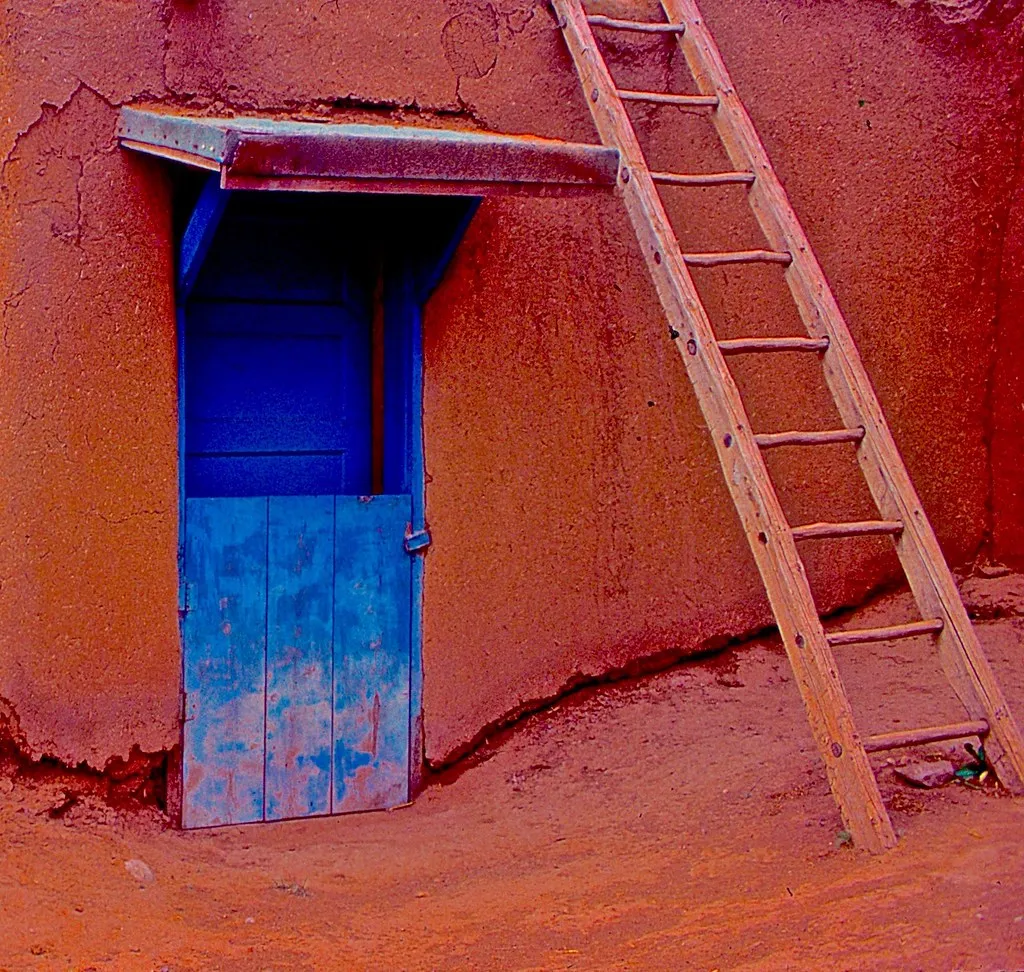

There’s a particular quality to the light in Taos, New Mexico, late in the afternoon. It falls across walls of sand-colored earth with an almost amber warmth, making centuries-old buildings look freshly shaped. That quality of light isn’t an accident. It’s partly a function of the material itself: adobe, a mix of earth, straw, and water that has been the dominant building substance in this valley for well over a thousand years.
What keeps this tradition breathing today is not a museum display or a preservation decree alone. It’s people. Skilled craftspeople, community builders, and cultural stewards who wake up and go to work every day with mud on their hands and a deep sense of purpose. Their stories are worth telling, and Taos is the right place to tell them.
A Living Settlement That Defines the Tradition
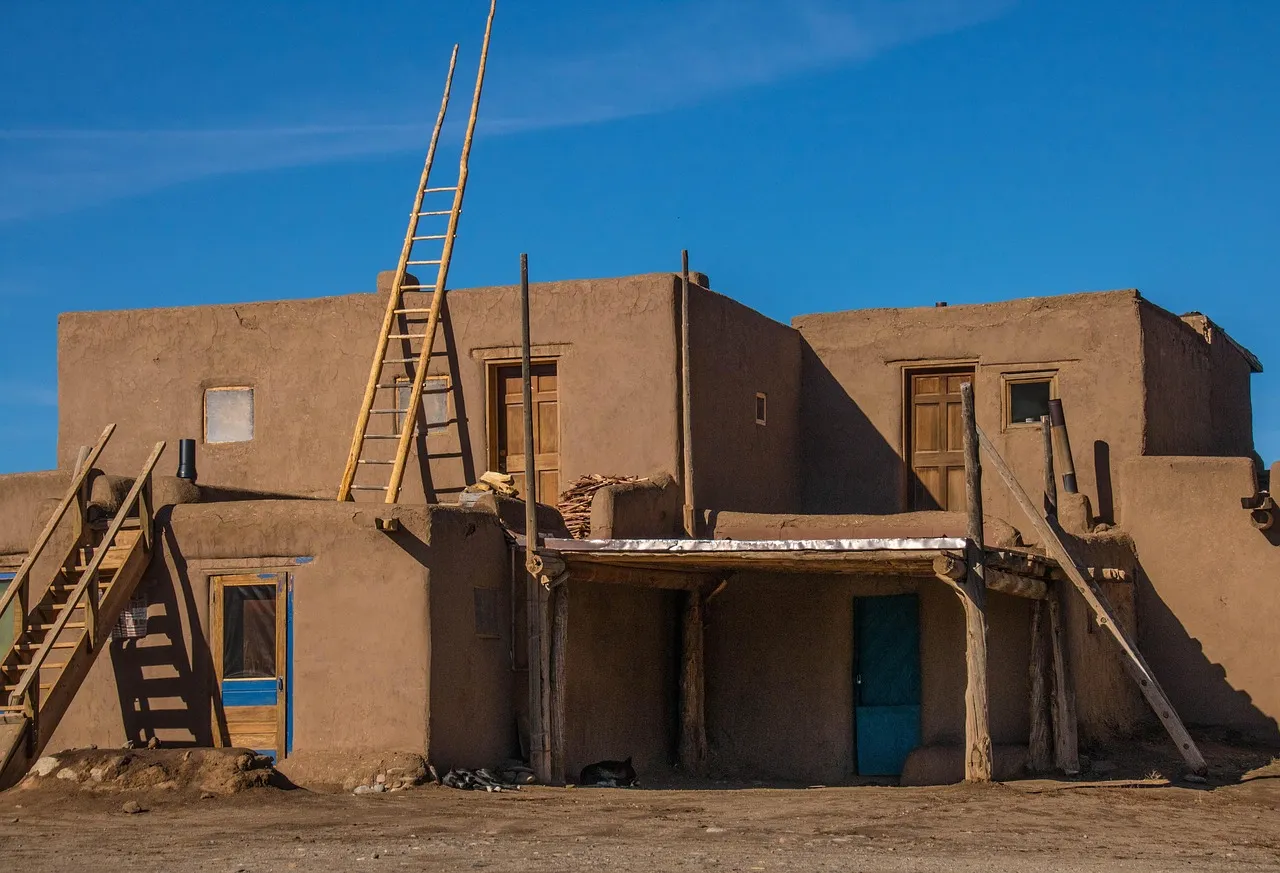
A visit to Taos Pueblo is a visit to the only living Native American community designated both a World Heritage Site by UNESCO and a National Historic Landmark, with multistory adobe buildings located three miles northeast of Taos Plaza that have been continuously inhabited for over 1,000 years. That alone is a staggering fact. This isn’t a recreation. Taos Pueblo displays the traditional method of adobe construction, with the Pueblo proper consisting of two clusters of houses, each built from sun-dried mud brick, with walls ranging from about 28 inches thick at the bottom to approximately 14 inches at the top.
The roofs of each of the five stories are supported by vigas, large timbers hauled down from the mountain forests, and on top of the vigas, smaller pieces of wood, pine or aspen latillas, are placed side by side with the whole roof covered in packed dirt. The outside surfaces of the Pueblo are continuously maintained by replastering with thin layers of mud. This ongoing maintenance is not routine upkeep. It is, in itself, a living craft practice passed from one generation to the next.
The Annual Ceremony of Replastering
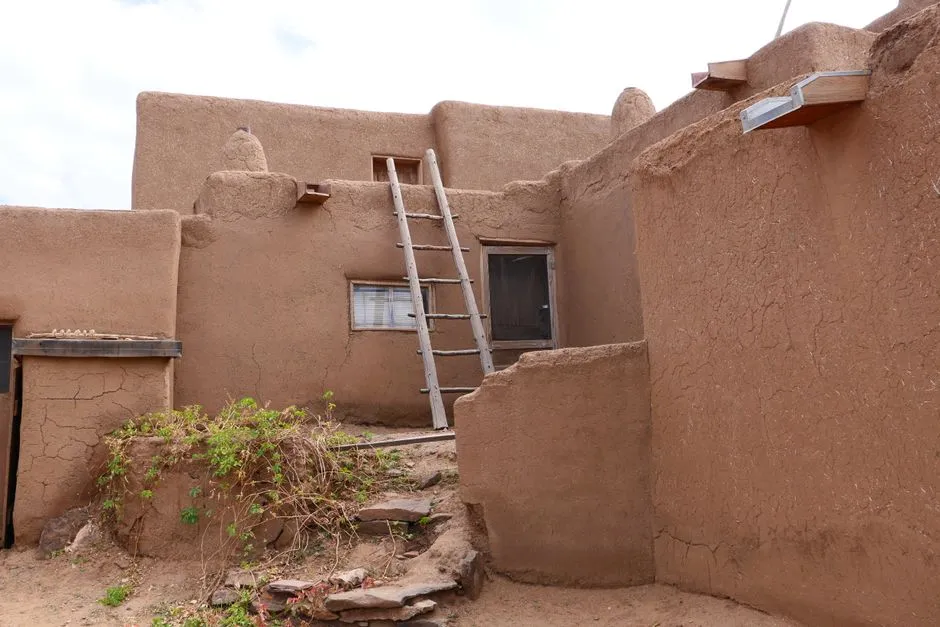
Each year, the walls of Taos Pueblo are still refinished with a new coat of adobe plaster as part of a village ceremony, making Taos the best preserved of the pueblos north of the borders defined by the Treaty of Guadalupe Hidalgo. It is unique to this region and has successfully retained most of its traditional forms to the present day. This annual act is both practical and deeply meaningful. It is community architecture, done together, by people who understand what they are preserving.
Thanks to the determination of the Native American community, members who have called this place home for the past 1,000 years, Taos Pueblo and its living culture have been successfully preserved. That determination doesn’t exist in the abstract. It shows up in the form of hands pressed against wet earth, smoothing walls that their grandparents smoothed before them.
The Enjarradoras: Craftswomen Who Carry a Thousand Years of Knowledge
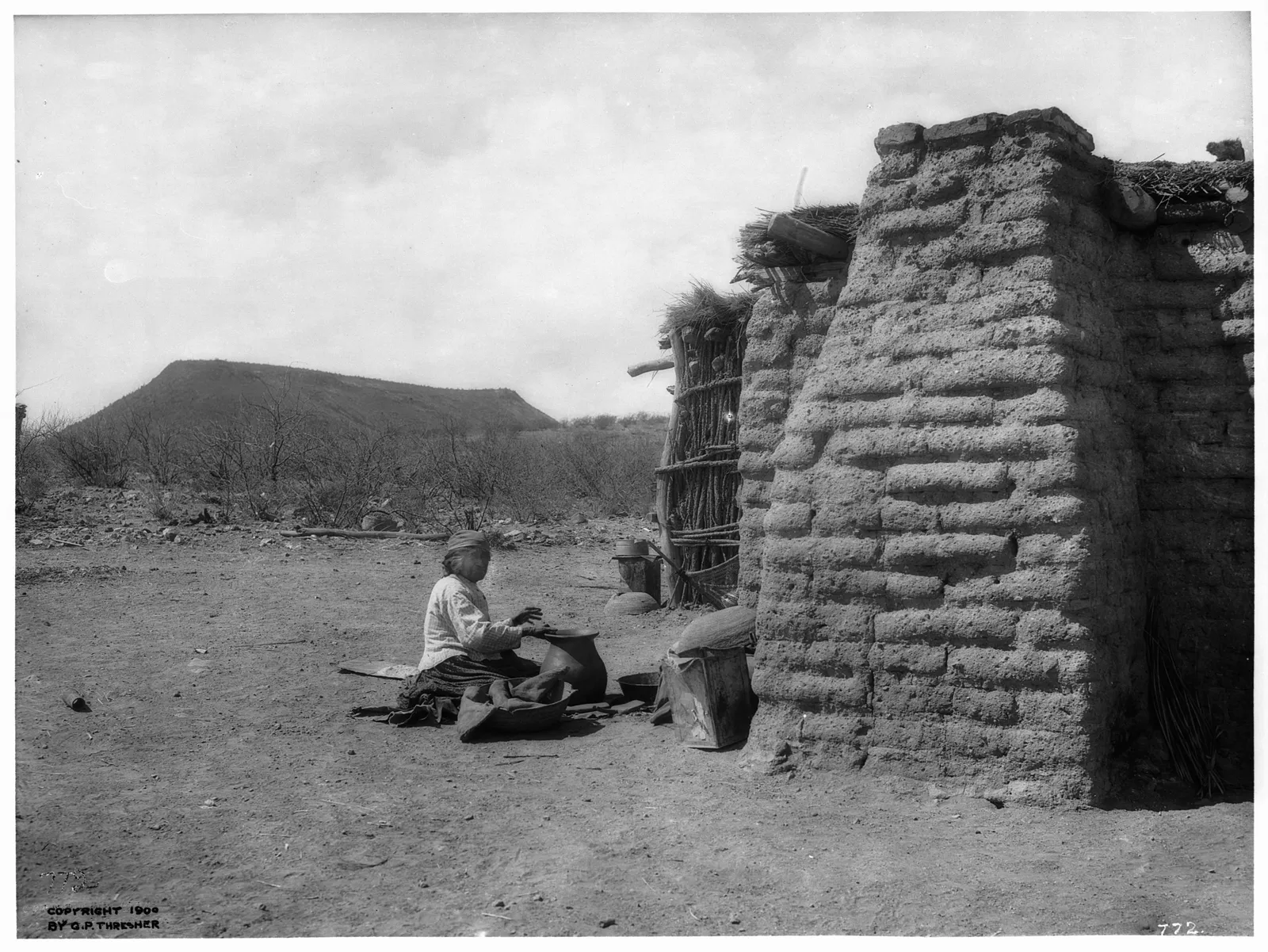
One of the most distinctive and under-recognized traditions in Taos adobe building belongs to the enjarradoras, the female mud plasterers of New Mexico’s Hispanic villages and Indigenous Pueblos. This traditional craft, called “enjarrando,” was learned from oral tradition in the Hispanic villages and Native Pueblos of New Mexico, and the enjarradoras of New Mexico kept a thousand years of religious and secular architecture standing.
Both Pueblo and Hispanic enjarradoras were the hearth-builders, and like in all earth-building cultures worldwide, women are the experts in all kinds of stoves, fireplaces, cooking structures, and in adobe embellishment and maintenance. This expertise was never trivial. At some pueblos, like Taos, women always “owned” the home and were the fashioners of its final form and coloring, and were also responsible for general maintenance of the entire village.
Anita Otilia Rodríguez and the Living Lineage
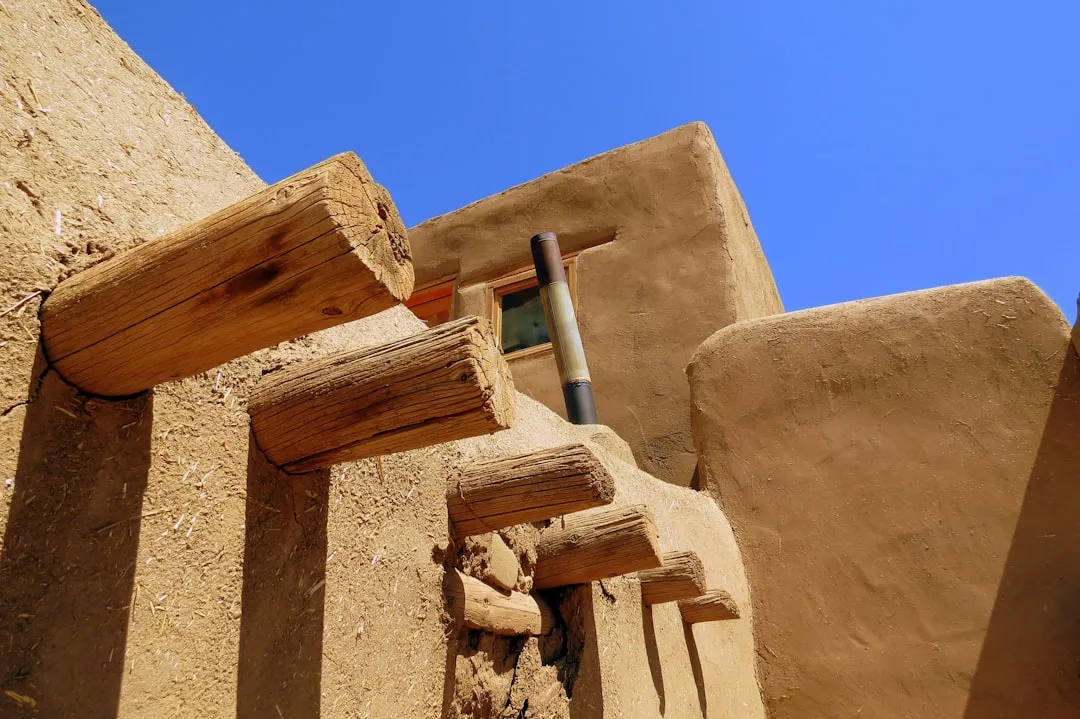
Few figures are more central to the survival of adobe craft in Taos than Anita Otilia Rodríguez. Rodríguez built her house out of adobe in the 1970s, using techniques she learned from enjarradoras, craftswomen in the Hispanic villages and Indigenous Pueblos of New Mexico. Her home became a testament to what those techniques could produce. There’s a dome above her entrance, hand-sculpted archways, and a wood-fired oven made of adobe on the back patio, its chimney tapering off above the traditional ceiling made of peeled logs and sticks. Inside, the walls are plastered with a micaceous red clay found nearby that sparkles like hammered copper.
Her daughter, Shemai Rodriguez, continues the work. Shemai learned the art of adobe finishing from her mother, as countless generations of daughters have done before her, and is an authentic practitioner of the distinctive adobe finishing traditions of northern New Mexico. From childhood, she was surrounded by her mother’s deep love for adobe, spending her formative years on job sites where she absorbed both skill and spirit. She has also done extensive restoration work, much of it on culturally significant landmarks such as Martinez Hacienda, Taos Pueblo, and the historic Ranchos Church.
San Francisco de Asís Church and the Art of Community Replastering
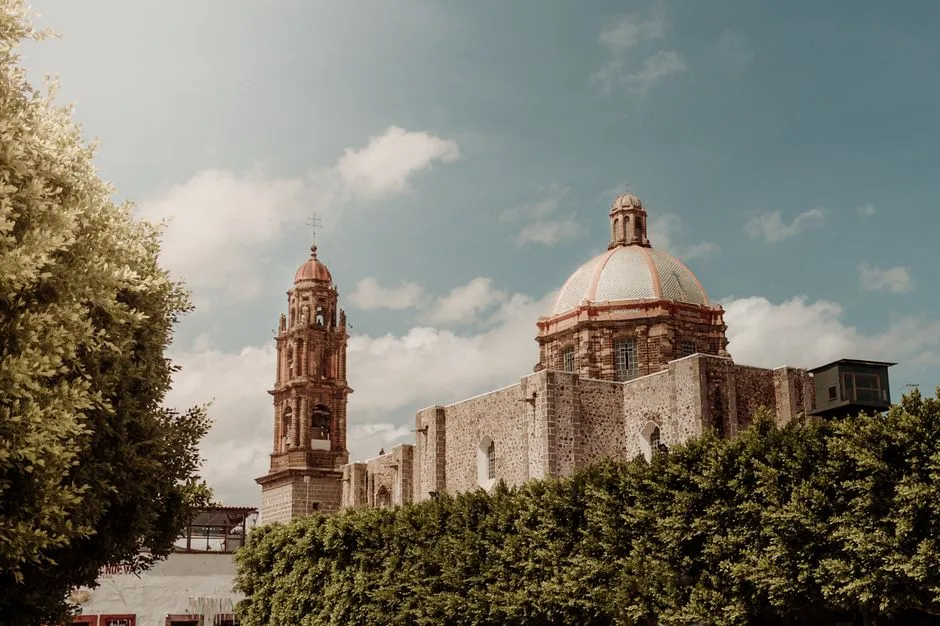
Ranchos de Taos is famous for its iconic San Francisco de Asís Mission Church, an adobe church built in the 18th century that is one of the most photographed buildings in the United States. The thick adobe walls and simple yet elegant design make it a must-see. The church’s survival into the 21st century has not come from passive admiration. It takes active, recurring effort from the community to keep it standing.
At San Francisco de Asís Mission Church in Taos, Guadalupe Tafoya, archivist and descendant of generations of enjarradoras, leads the community in an annual gathering to replaster the earthen walls. For an exhibition, Tafoya curated a gallery of devotional art and adobe architecture at the Harwood Museum, centered on the San Francisco de Asís church. The overlap between craft practice and cultural identity is clear here. Plastering a church wall is an act of belonging.
Mark Goldman and the Architecture of Education
Preserving building traditions isn’t only about maintaining old structures. It also depends on teaching new generations to build in old ways. Replicating community building models has proven difficult because of a labor shortage in the construction industry that’s especially pronounced when it comes to traditional building methods. Today, architect Mark Goldman is trying to remedy that by teaching adobe construction courses at the University of New Mexico, Taos.
The Dream Tree project was a turning point for Goldman, who started his career building luxury homes with Southwestern aesthetics. He became disillusioned with that work and saw an opportunity with The Dream Tree to bring together local artisans and more than 100 volunteers to build something for the community. The building used adobe bricks made on-site, with windows oriented precisely to the cardinal directions, walls sparkled with the same local red clay used by the region’s enjarradoras for centuries. Goldman also received recognition for this commitment: Mark Goldman, architect and coordinator of the UNM-Taos Construction Technology program, was honored as a 2023 Unsung Hero by the Taos News for his outstanding contributions.
Vigas, Latillas, and the Woodcraft of the Sangre de Cristo Mountains
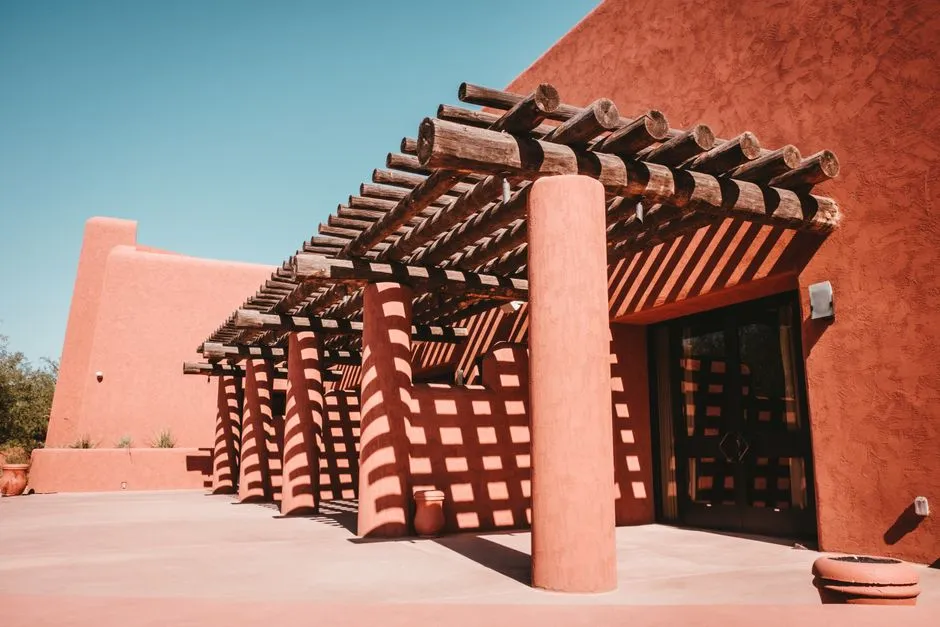
Adobe walls are only half the story. The ceilings of traditional Taos buildings tell their own tale of craft. Pueblo-style architecture is modeled after Taos Pueblo, where thousand-year-old dwellings are crafted from adobe bricks and tree-trunk beams the Spanish called vigas. Between the support beams are latillas, hewn from young saplings. Sourcing these materials required skilled hands and intimate knowledge of the surrounding forests.
Taos’ built environment reflects nearly a thousand years of human adaptation to landscape and light. The Taos Pueblo, built before 1400 and continuously inhabited since, remains the foundation for regional design, with massive adobe walls, flat earthen roofs supported by timber vigas, and stepped forms that mirror the Sangre de Cristo Mountains. Today, builders who work in this tradition still source and work timber carefully, understanding that the viga isn’t simply a structural beam. It carries the form of the forest into the room.
The Earthship Movement: Radical Innovation Rooted in Local Earth
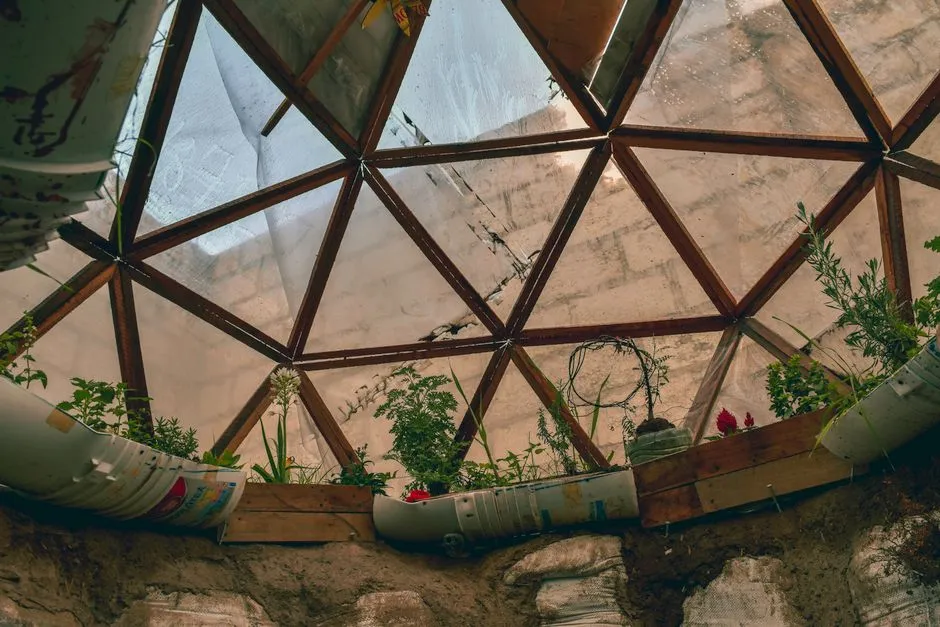
Taos is also where one of the most unexpected expressions of earthen building tradition took shape. An Earthship is a style of architecture developed in the late 20th and early 21st centuries by architect Michael Reynolds. Earthships are designed to behave as passive solar earth shelters made of both natural and upcycled materials such as earth-packed tires. These structures look unlike anything else, yet they share a fundamental kinship with adobe building in one key respect: they use local and recycled materials with minimal industrial input.
There are over 100 Earthships in the Taos area, forming the Greater World Community. The Taos versions are distinctive within the broader Earthship world. The design of Earthships is somewhat customized to the local availability of materials and design elements, and the Taos Earthships community features more Southwestern-style design elements like traditional vigas. Even in radical innovation, the local craft vocabulary endures.
Adobe as a Sustainable and Cultural Act
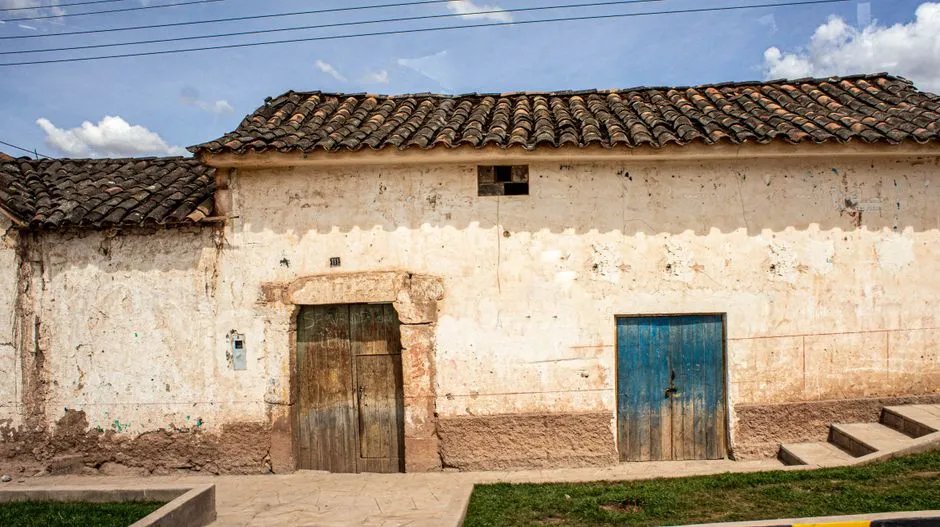
The word “adobe” comes from the Arabic, as do almost all words in Spanish that begin with “a,” and the Moors occupied Spain for 800 years. They were driven out the very year Columbus sailed, and the Hispanic culture imported to the New World brought with it a 6,000-year-old building technology which mixed with Pueblo culture over the ensuing five centuries. Thus, adobe architecture tells the story of the confluence of two earth-building peoples.
The process of mixing adobe, scraping sand, straw and clay into a muddy mixture to dry out in the sun, is the same process that was used half a century ago and the same process that Indigenous people used 1,000 years ago to make houses out of this same patch of earth. Adobe construction dramatically reduces the construction-related carbon footprint of housing, and adobe is non-polluting and readily available anywhere on earth. The fact that it’s also one of the most climate-responsive building materials in a high-desert environment, moderating temperature naturally through thermal mass, makes the case for its continued use that much stronger.
The Challenge of Keeping the Craft Alive
Preserving adobe plastering skills is an urgent matter. Only two large-scale operations for the manufacturing of adobe bricks exist in New Mexico, whereas once there were many. The labor challenge is real. Replicating community building models has proven difficult because of a labor shortage in the construction industry that’s especially pronounced when it comes to traditional building methods. This is not a small problem for a region where hundreds of historic structures depend on skilled earthen builders for their survival.
The Taos Pueblo Preservation Program has received significant grant support to hire more workers, especially those trained in traditional construction techniques for conservation work, as well as workshop assistants who help Pueblo homeowners with maintenance of traditional adobe homes. Supervisors teach trainees about traditional construction methods while rebuilding houses that have fallen into a state of near collapse. The main characteristics of the conservation effort aim to encourage a community-based approach, including the training of local people to manage their own property, as well as the establishment of partnerships with government and non-government entities, with the project resolving to preserve the traditional way of life in the community and sustain cultural traditions.
What holds this all together, ultimately, is not any single organization or policy. It’s the artisans themselves, people who have chosen to learn an old way of building and pass it on with the same care with which it was passed to them. Taos has always been a place where the land and the built environment feel genuinely connected. As long as there are hands willing to press wet clay into walls, that connection endures.
AI Disclaimer: This article was created with the assistance of AI tools and reviewed by a human editor.