
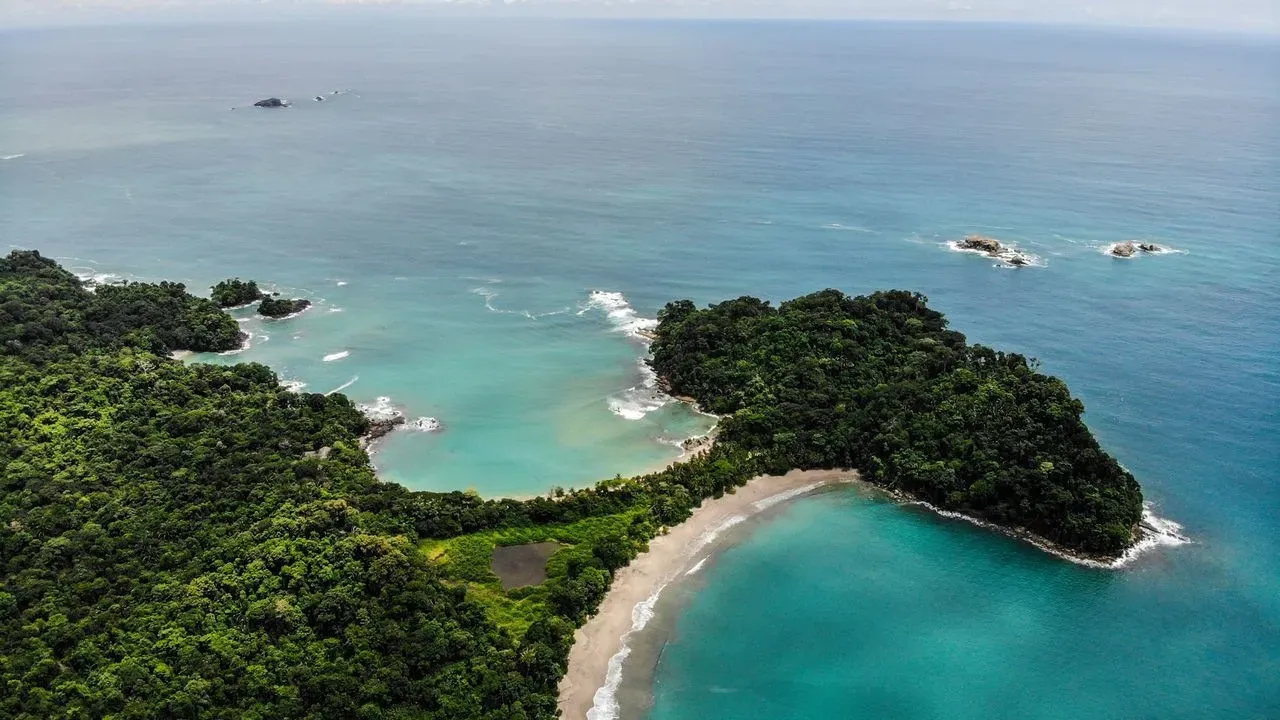

Manuel Antonio National Park occupies a modest footprint along Costa Rica’s Pacific coast, yet it packs together three distinct ecosystems that rarely appear side by side in a single protected area. Rainforest canopy, mangrove wetlands, and sandy shoreline meet within easy walking distance, creating layered habitats that sustain an unusually high concentration of wildlife. Travelers who arrive with patience and respect often encounter monkeys, sloths, and colorful birds at ranges that feel immediate rather than distant. ([1])
The Rare Convergence of Habitats
The park’s small size belies its ecological complexity. Dense rainforest rises from the interior, its tall trees filtering sunlight onto the forest floor. Just a short distance away, tangled mangrove roots anchor the tidal zones, while the coastline offers tide pools and open beach.
This tight arrangement of environments supports species that depend on multiple habitats throughout their life cycles. The result is a living laboratory where visitors can observe transitions between ecosystems in the span of a single morning. Morning light often reveals howler monkeys moving between the canopy and lower branches, while the mangroves shelter crabs and small fish that in turn attract wading birds.
The coastline adds another dimension, with occasional sightings of marine life near the shore. Such proximity encourages a slower pace of exploration, one that rewards quiet observation over hurried movement.
Wildlife Encounters That Reward Restraint
Many visitors describe the park as a place where animals appear on their own terms rather than on command. White-faced capuchins frequently forage along the trails, and three-toed sloths hang motionless in the trees above. Colorful toucans and parrots move through the canopy, their calls carrying across the mixed landscape. These sightings become more meaningful when travelers maintain distance and avoid flash photography or loud voices. The park’s management emphasizes low-impact behavior, recognizing that repeated close encounters depend on the animals feeling unthreatened.
Guides trained in local ecology often point out subtle signs of presence, such as fresh tracks or half-eaten fruit, helping visitors read the landscape without disturbing it. Over time, this approach builds a deeper appreciation for the animals as residents of a shared space rather than performers for an audience.
Practical Ways to Experience the Park Thoughtfully
Arriving early in the day allows visitors to move through the trails before peak numbers gather. The main entrance leads to a network of well-marked paths that wind through each ecosystem without requiring advanced hiking skills. Many travelers combine a park visit with time in the adjacent Quepos area, where local operators offer boat tours that extend the coastal perspective.
Staying in nearby lodges that follow sustainable practices further supports the region. Properties that limit single-use plastics, source food locally, and contribute to reforestation efforts align with the values that keep the park healthy. Packing reusable water bottles and wearing neutral-colored clothing reduces visual and material impact while still allowing comfortable exploration.
Looking Ahead for Visitors and the Landscape
Manuel Antonio continues to draw people who seek accessible nature without sacrificing depth of experience. Its compact scale makes it feasible for travelers with varying mobility levels, while the ecosystem mix offers repeated discoveries even on return visits. Local communities benefit when tourism remains measured and respectful, channeling revenue into conservation and education programs.
The park stands as a reminder that meaningful encounters with wildlife often hinge on the choices visitors make before they even step onto the trails. Those who approach with curiosity and care leave with memories that feel earned rather than guaranteed.
AI Disclaimer: This article was created with the assistance of AI tools and reviewed by a human editor.