
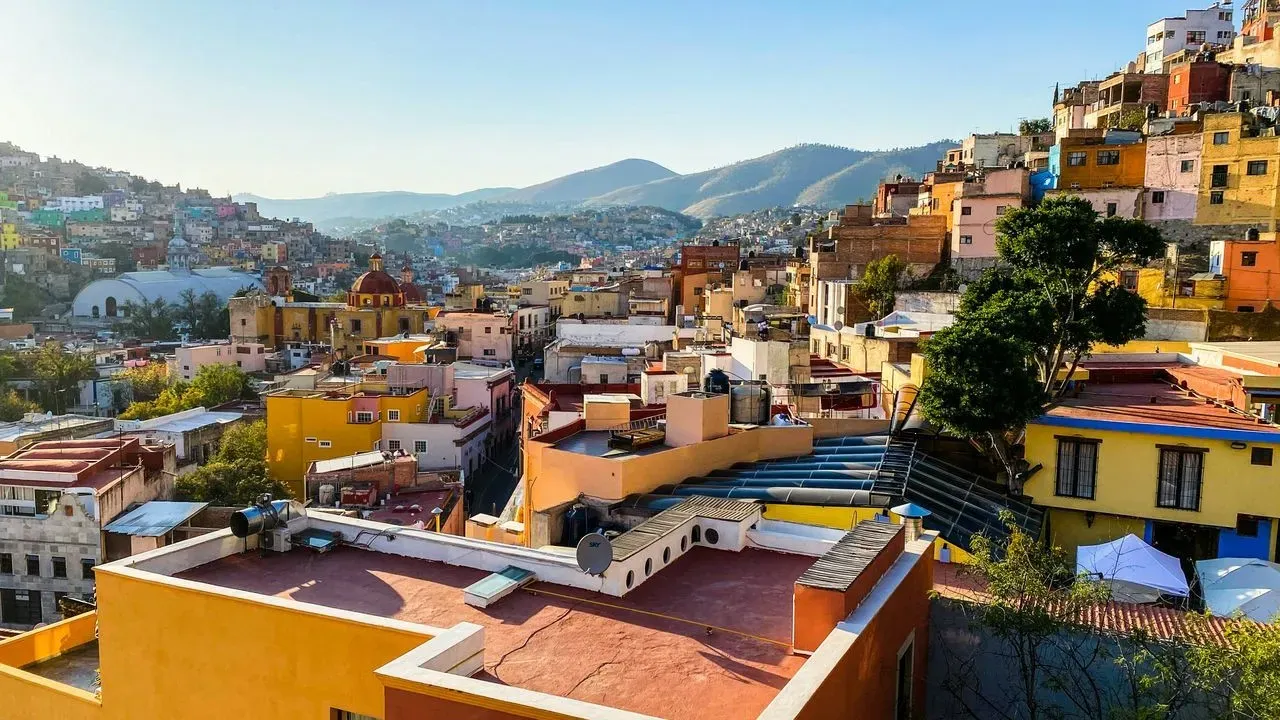

Guanajuato sits in the central highlands of Mexico, its buildings stacked along steep hillsides in layers of soft pink, warm terracotta, and muted yellow. Wrought-iron balconies overlook narrow lanes where bougainvillea spills across facades, and small plazas open unexpectedly between the rows of homes. The result is a city that feels both intimate and alive, shaped by centuries of local life rather than designed for visitors alone.
The Architecture That Shapes Daily Rhythms
The city’s most immediate impression comes from its hillside layout. Houses climb the slopes in tight clusters, their pastel exteriors catching the light at different times of day and creating a shifting palette against the surrounding hills. Balconies and window grilles add delicate detail, while the occasional burst of magenta bougainvillea softens the stone and stucco surfaces.
This arrangement is not merely scenic. The compact design encourages walking, with streets that narrow and widen in ways that slow the pace and invite observation of everyday scenes. Residents move between homes, shops, and gathering spots along routes that have evolved over generations, giving the neighborhoods a lived-in quality that rewards unhurried exploration.
Plazas That Anchor Community Life
Scattered throughout the city are compact squares where locals gather for conversation, markets, and quiet moments. These spaces serve as natural pauses in the hillside terrain, offering benches, fountains, and shade that draw people together without fanfare. The surrounding buildings frame each plaza in a consistent yet varied palette of colors, reinforcing a sense of continuity across different parts of town.
Visitors who linger notice how these plazas function as extensions of nearby homes and businesses. Morning light often finds older residents chatting on benches while vendors arrange goods, and evenings bring a gentler energy as families pass through on their way home. The squares remain central to the city’s social fabric rather than staged attractions.
Cultural Traditions That Give the City Its Depth
Beyond the visual charm lies a rich layer of local customs and history that residents continue to maintain. Festivals, music, and artisan practices reflect the region’s heritage, with events that blend indigenous roots and colonial influences into contemporary expressions. These traditions appear in street performances, seasonal celebrations, and the work of craftspeople whose skills have been passed down through families.
The city’s cultural life extends into its museums and performance spaces, where stories of mining history, independence movements, and artistic movements are preserved with care. Rather than existing as isolated exhibits, these elements connect to the living streets outside, where the same colors and architectural details appear in homes and public buildings alike.
Thoughtful Ways to Experience the City
Travelers seeking a meaningful visit often begin with simple choices that respect local rhythms. Staying in smaller guesthouses or family-run properties supports the community directly while offering a closer view of daily life. Walking tours led by residents provide context that guidebooks cannot, highlighting both architectural details and the stories behind them.
Public transportation and local markets offer additional ways to engage without overwhelming the city’s scale. Purchasing crafts or food from vendors who live and work in the area keeps economic benefits close to home. These approaches allow visitors to appreciate the city’s beauty while contributing to its ongoing vitality.
Guanajuato rewards those who arrive with patience and curiosity. Its hillside streets and colorful facades provide an immediate sense of place, while the deeper rhythms of plazas, traditions, and daily interactions reveal a city that continues to shape its own story. For travelers drawn to places where beauty and authenticity coexist, the experience lingers long after departure.
AI Disclaimer: This article was created with the assistance of AI tools and reviewed by a human editor.