
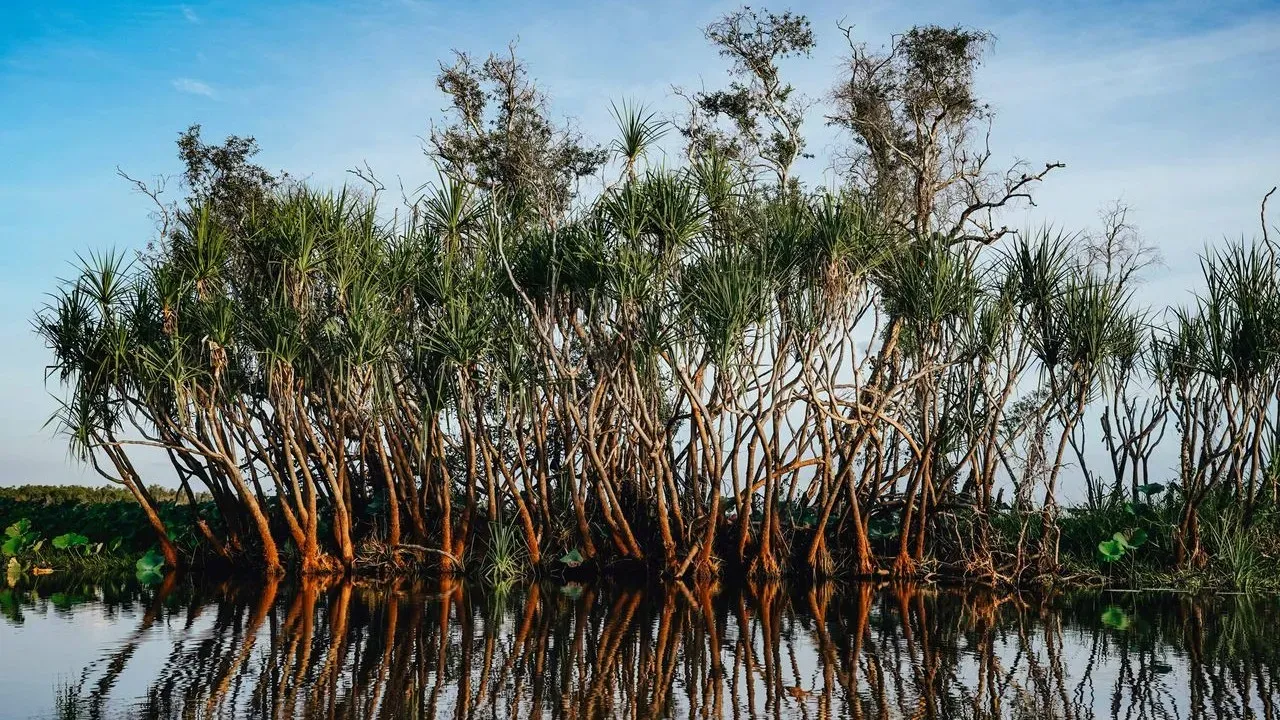

Kakadu National Park stands as one of the most compelling expressions of Australia’s remote interior. Its vast wetlands, sandstone escarpments, and living cultural traditions draw travelers seeking a deeper connection to the continent’s oldest landscapes. The region’s significance lies not only in its natural drama but in the continuous presence of Aboriginal people whose stories and practices have shaped the land for tens of thousands of years.
The Top End’s Distinct Character
The northern reaches of Australia’s Outback differ markedly from the arid stereotypes often associated with the interior. Kakadu lies within the monsoonal tropics of the Northern Territory, where seasonal rains create expansive floodplains and rich habitats. This environment supports an abundance of birdlife and plant species that thrive in the wet-dry cycle. Travelers arriving from Darwin quickly sense the shift from urban convenience to a landscape defined by water, rock, and sky.
The park’s scale and isolation have helped preserve both its ecological integrity and its cultural depth. Access often involves guided travel, which allows visitors to move respectfully through areas of deep significance to local Aboriginal communities. Such journeys highlight the practical realities of exploring remote country while supporting local operators who understand the terrain and its protocols.
Wildlife and Wetland Encounters
Early drives out of Darwin reveal the region’s surprising biodiversity. Wallabies appear near roadsides, and water monitors patrol the edges of billabongs. Further into the wetlands, lotus blooms and wattle trees frame scenes alive with birds.
These sightings underscore the productivity of the monsoonal ecosystem rather than any sense of barren emptiness. Boat excursions along rivers bordering Arnhem Land offer quieter perspectives. Guides share knowledge of traditional practices, including spear-throwing techniques passed down through generations.
The presence of saltwater crocodiles remains a constant reminder of the need for caution and local expertise. Camps set up by experienced operators provide screened accommodations that balance comfort with the realities of the bush.
Rock Art and Cultural Continuity
At sites such as Ubirr, visitors encounter rock paintings that reach back more than 40,000 years. These works function as living archives, recording creation stories, laws, and environmental knowledge. Aboriginal custodians continue to maintain and add to the art, treating the shelters as repositories of cultural memory rather than static relics.
Climbing the sandstone formations at day’s end reveals sweeping views across the Nardab floodplain. The layered landscape below reflects both geological time and ongoing human stewardship. Such moments invite reflection on the depth of connection between people and place that has endured through millennia of environmental change.
Traveling with Respect
Responsible visits to Kakadu emphasize learning from Aboriginal guides and supporting enterprises that operate with clear consent from traditional owners. The park’s UNESCO World Heritage status recognizes both its natural values and its outstanding cultural significance. Travelers who approach the region with patience and openness gain insights that extend far beyond a checklist of sights.
This approach aligns with the broader principles of purposeful travel in Australia’s north. By choosing guided experiences and remaining mindful of restricted areas, visitors contribute to the protection of both the environment and the living traditions that define Kakadu. The result is a journey that honors the land’s complexity while leaving it intact for future generations.
AI Disclaimer: This article was created with the assistance of AI tools and reviewed by a human editor.