
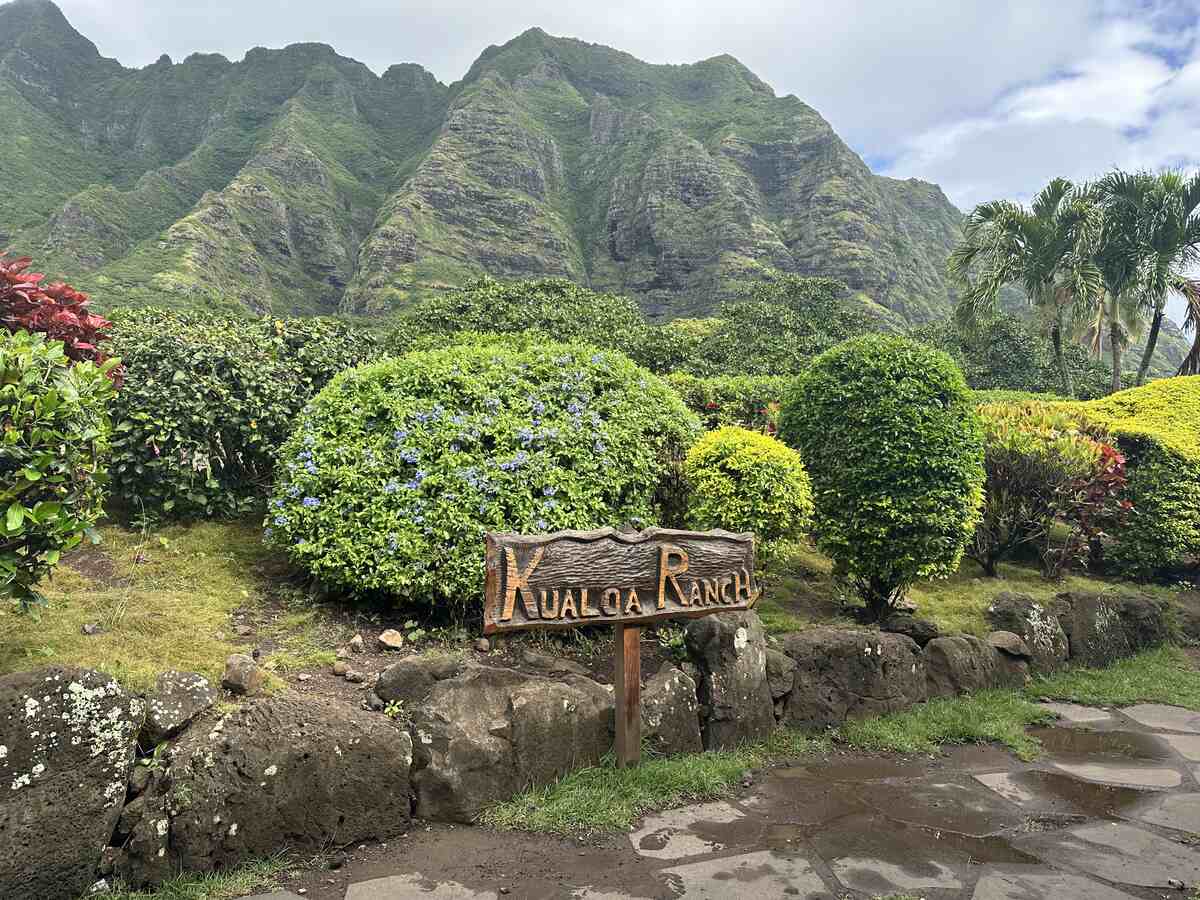

There are places in Hawaiʻi that feel instantly familiar, even when you have never been there before. Kualoa Ranch is one of them.
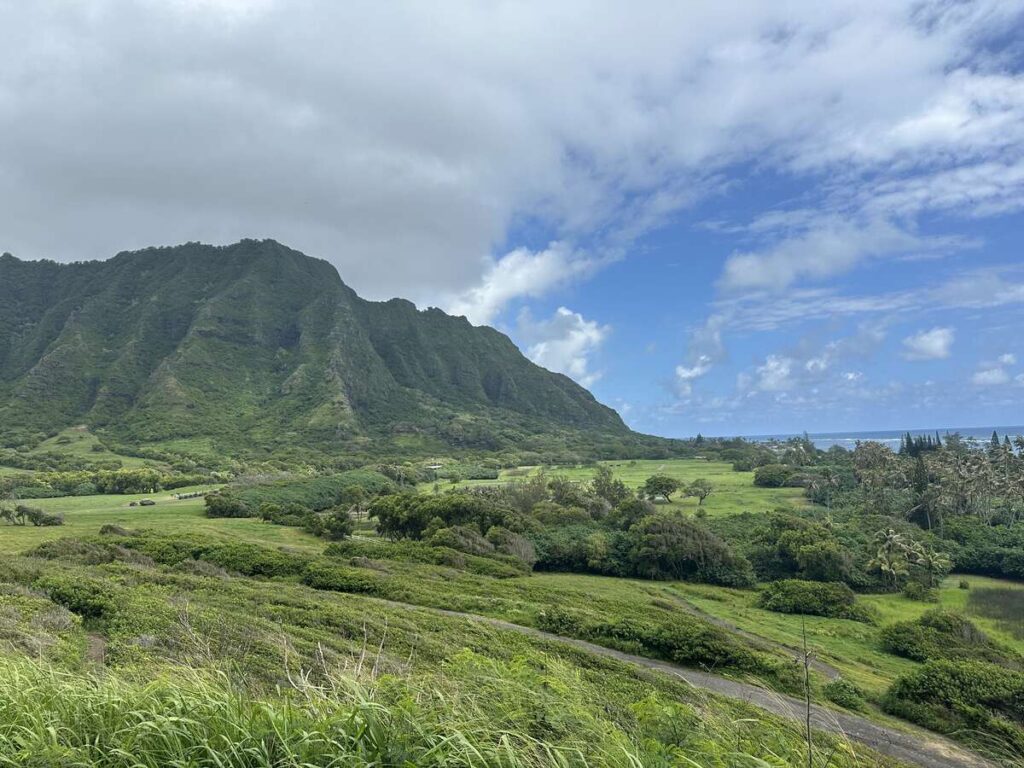
For movie lovers, especially anyone raised on the thunderous magic of Jurassic Park, the landscape comes with a jolt of recognition. The green cliffs, the wide valley, the dramatic ridgelines and those almost-impossible shades of emerald have appeared in some of Hollywood’s biggest productions. Kualoa’s Kaʻaʻawa Valley is often called “Jurassic Valley” and has served as a filming location for Jurassic Park, Jurassic World, Jurassic World: Fallen Kingdom, Kong: Skull Island, Jumanji, Godzilla, Lost, 50 First Dates and many more. Over 50 films and television shows have been filmed at Kualoa over the years.
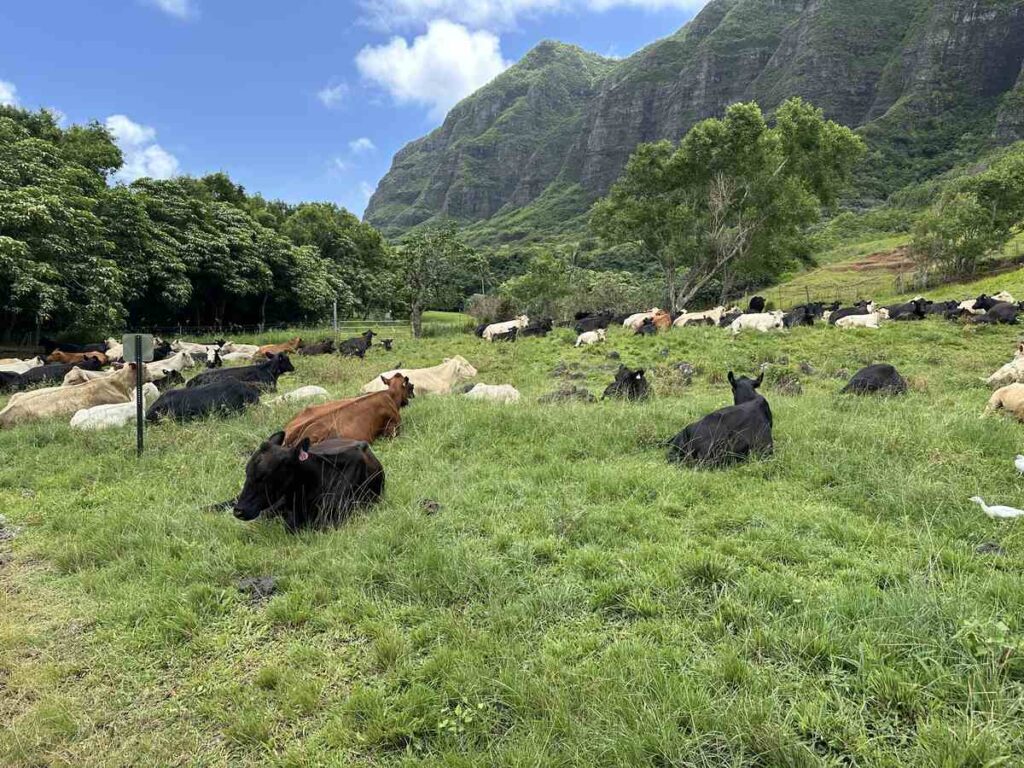
But Kualoa Ranch is not simply a movie backdrop. It is a 4,000-acre private nature reserve and working cattle ranch on Oʻahu’s windward coast, about 24 miles from Waikīkī. The land stretches from steep mountain cliffs to rainforest and open valleys, with agriculture, aquaculture, cattle, horses, pigs and sheep all part of its ongoing story.
And that is what makes the experience so memorable. You may arrive for the dinosaurs, but you leave thinking about the land.
Into Jurassic Valley
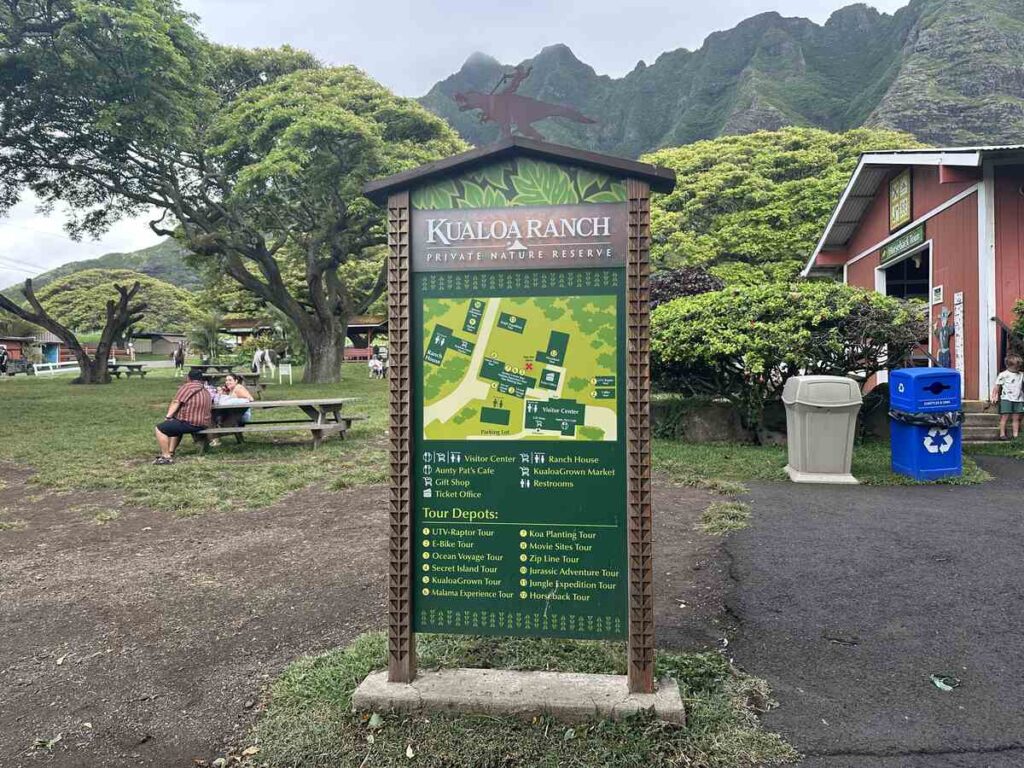
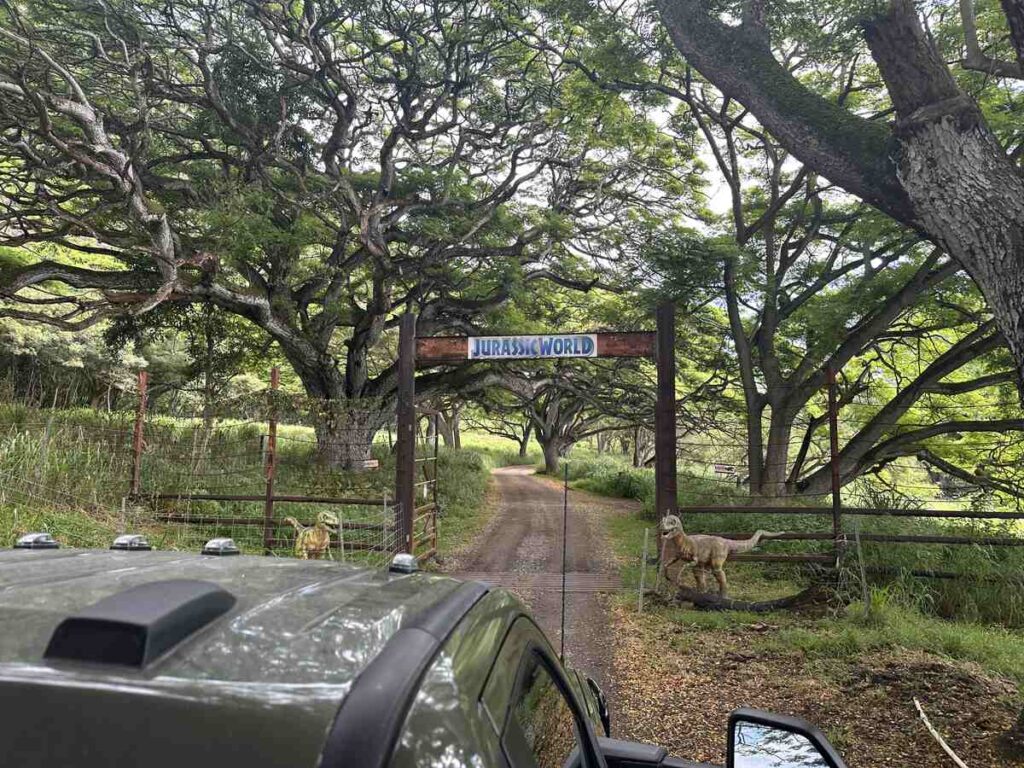
I visited Kualoa Ranch for the Jurassic Adventure Tour, a 2.5-hour driving tour that moves through Kualoa, Hakipuʻu, and Kaʻaʻawa Valleys, stopping at recognizable filming locations from the original Jurassic Park and the newer Jurassic World films. My itinerary described it as a deluxe, bumpy rainforest trek, with athleisure and closed-toe shoes recommended since guests may get dusty along the way. In my case, the ride was definitely a bit bumpy, but not dusty. Still, comfortable clothes and practical shoes are the way to go.
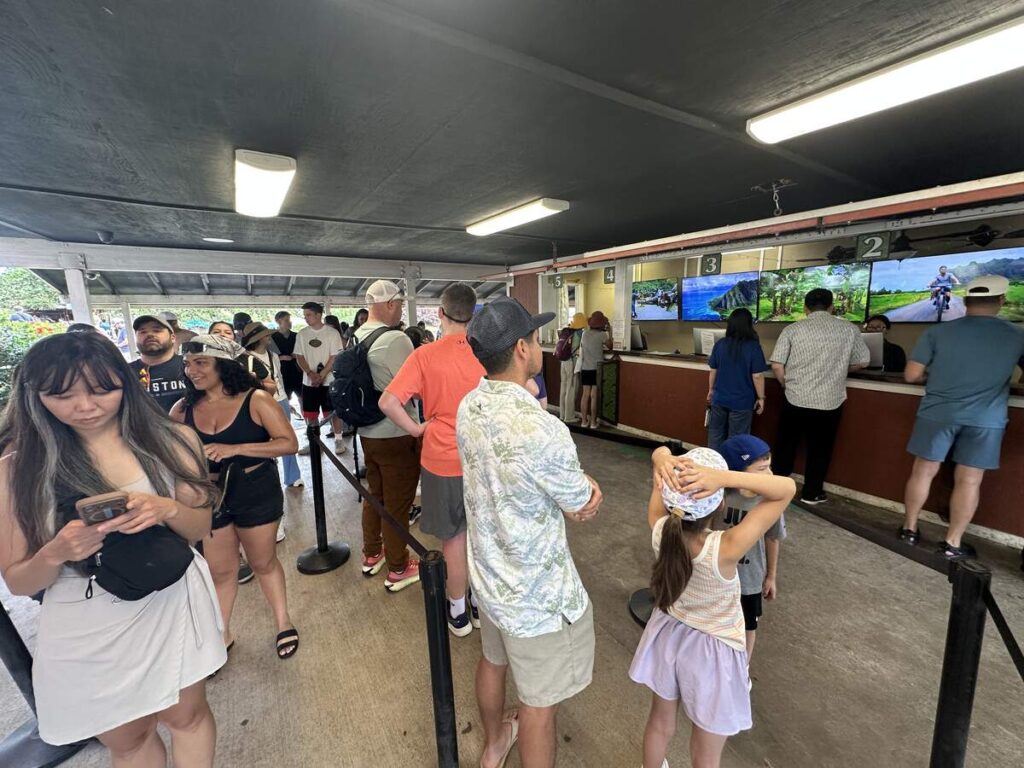
It is very well organized, and it needs to be. Kualoa brings in a lot of visitors, and the check-in area is busy. My pro tip: arrive at least 30 minutes before your scheduled tour. The line can look long, but it moves quickly, and you do not want to be rushing to the tour depot.
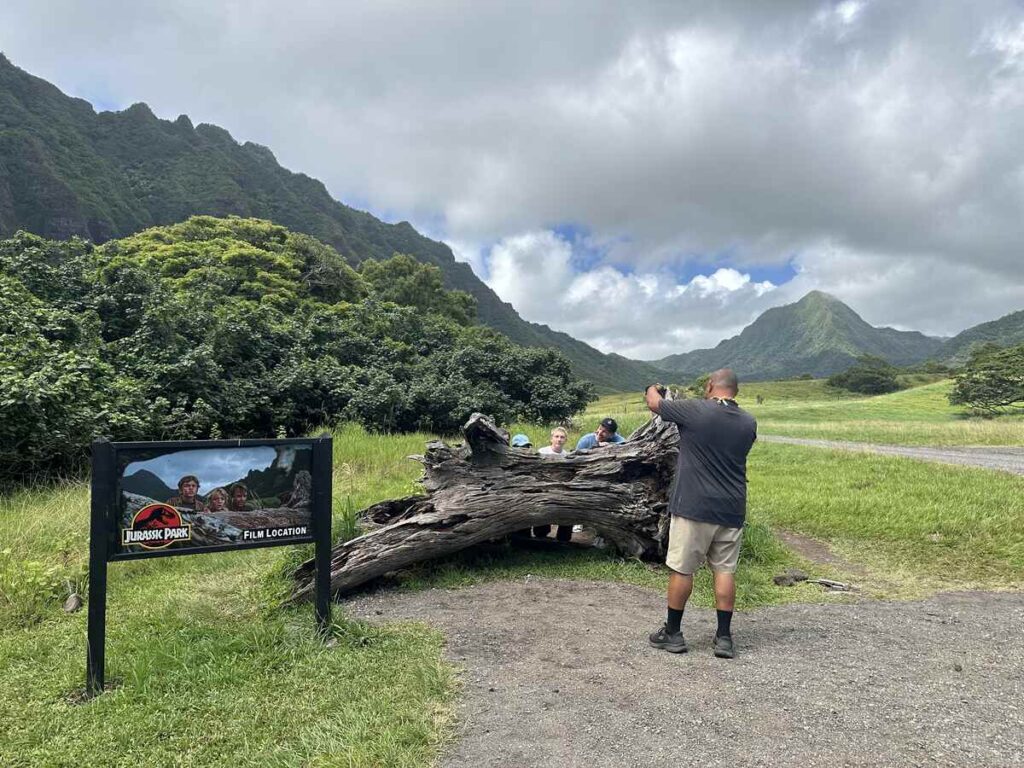
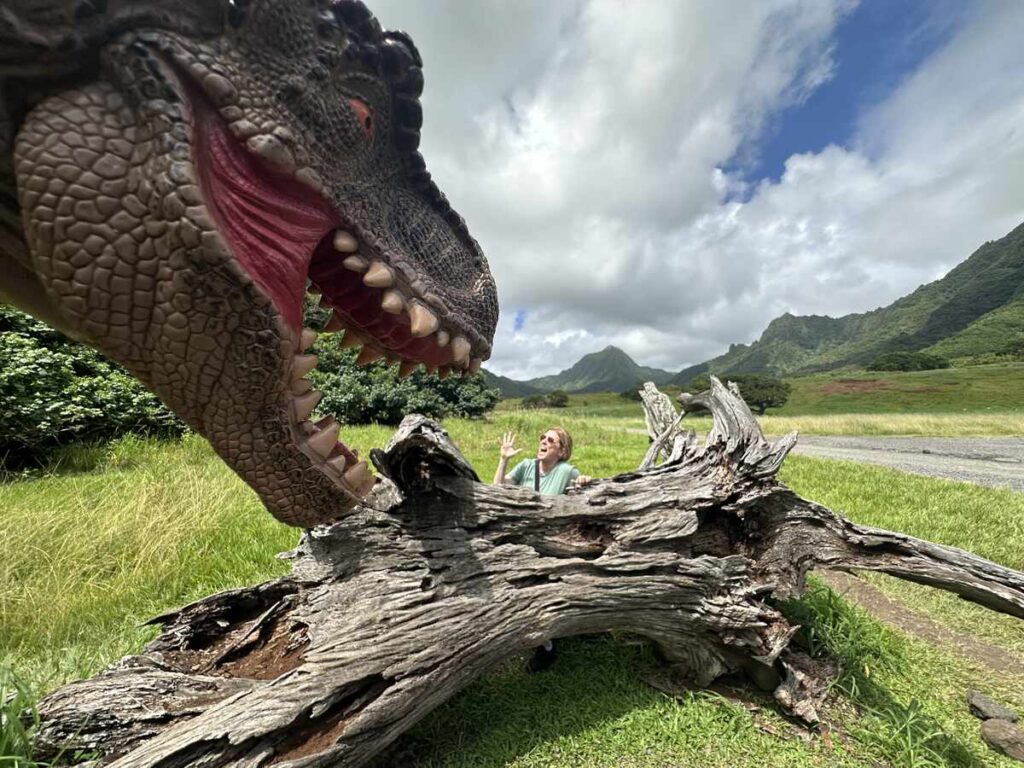
Once you are on the vehicle, the pace changes. The visitor centre bustle gives way to open air, mountain views and that unmistakable feeling of entering somewhere protected. The tour is fun, yes, with stops for photos at Jurassic-themed sets and locations, including the famous valley scenes that made movie history. But the real star is the ʻāina, the land itself.
There is a point on the drive where you stop thinking about movie trivia and simply take in the view. The mountains seem to fold into one another. The valley floor is lush and wide. The clouds move quickly over the ridges. It is cinematic because Hollywood used it, but it is sacred because it was never just scenery.
A Land With a Deeper Story
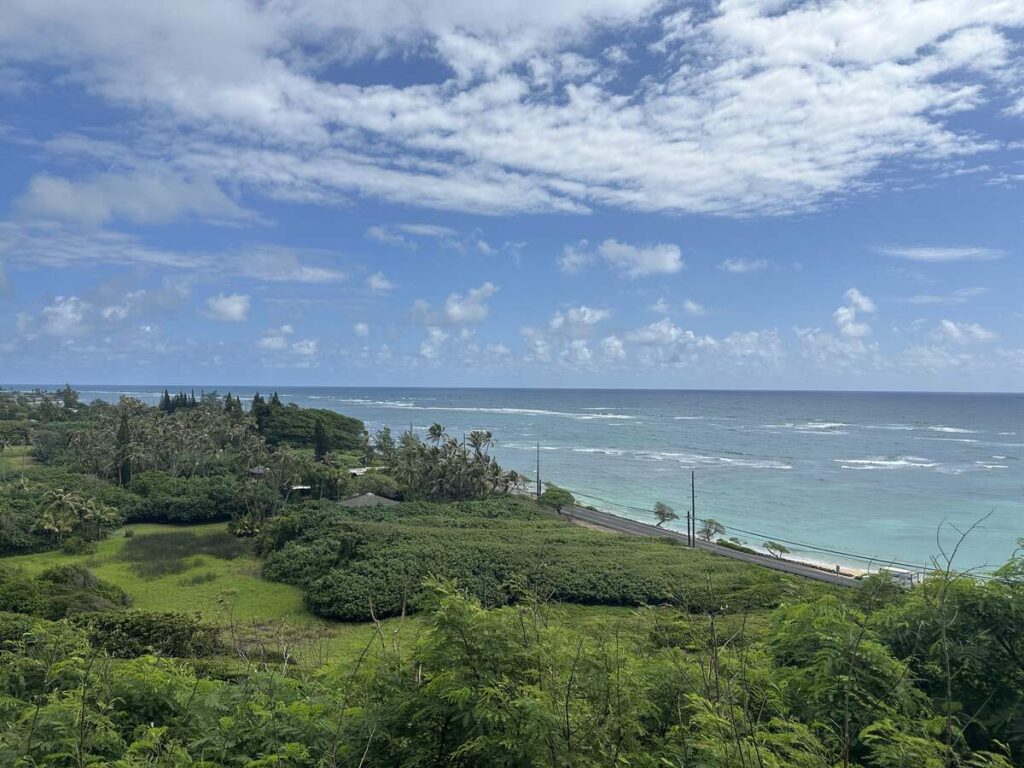
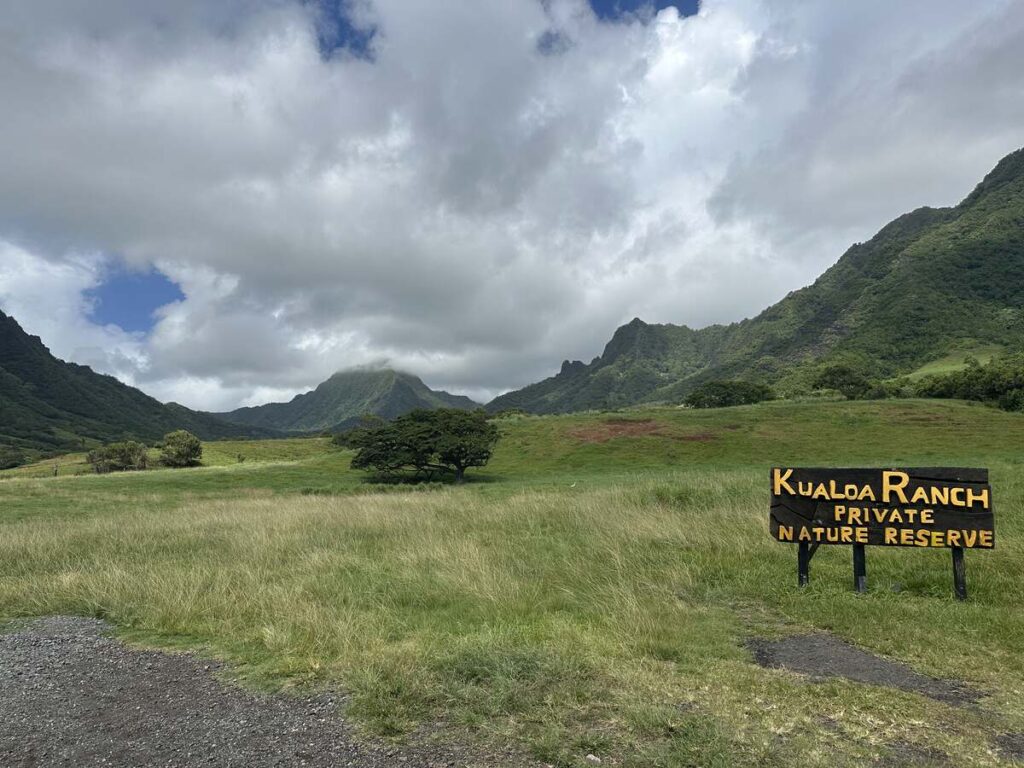
Long before Kualoa became associated with dinosaurs and blockbusters, it was considered one of the most sacred places on Oʻahu. According to Kualoa Ranch’s own history, ancient Hawaiians regarded Kualoa as a residence of kings, a place of refuge and sanctuary, and a training ground for Hawaiian royalty, where aliʻi were instructed in war, history and social traditions.
In 1850, King Kamehameha III sold approximately 622 acres at Kualoa to Dr. Gerritt P. Judd, a former missionary doctor who became a personal advisor to the king and translated medical journals into Hawaiian. The original land sale included ranch land and fishing rights, including Mokoliʻi, the small island offshore often known today as “Chinaman’s Hat.” Later purchases in Hakipuʻu and Kaʻaʻawa expanded the estate to the 4,000 acres it is today. The property remains with the Morgan family, descendants of Dr. Judd.
That continuity matters. On a heavily visited island where development pressures are real, Kualoa feels different. You feel what has not been done to it. The land has not been carved into resort towers or subdivisions. Kualoa Ranch states that one of its primary objectives is the preservation of its agriculture and conservation-zoned land, with sustainability focused on environmental preservation and stewardship.
That intention is palpable. The ranch may be a major visitor attraction, but it still feels rooted in protection.
More Than a Movie Tour
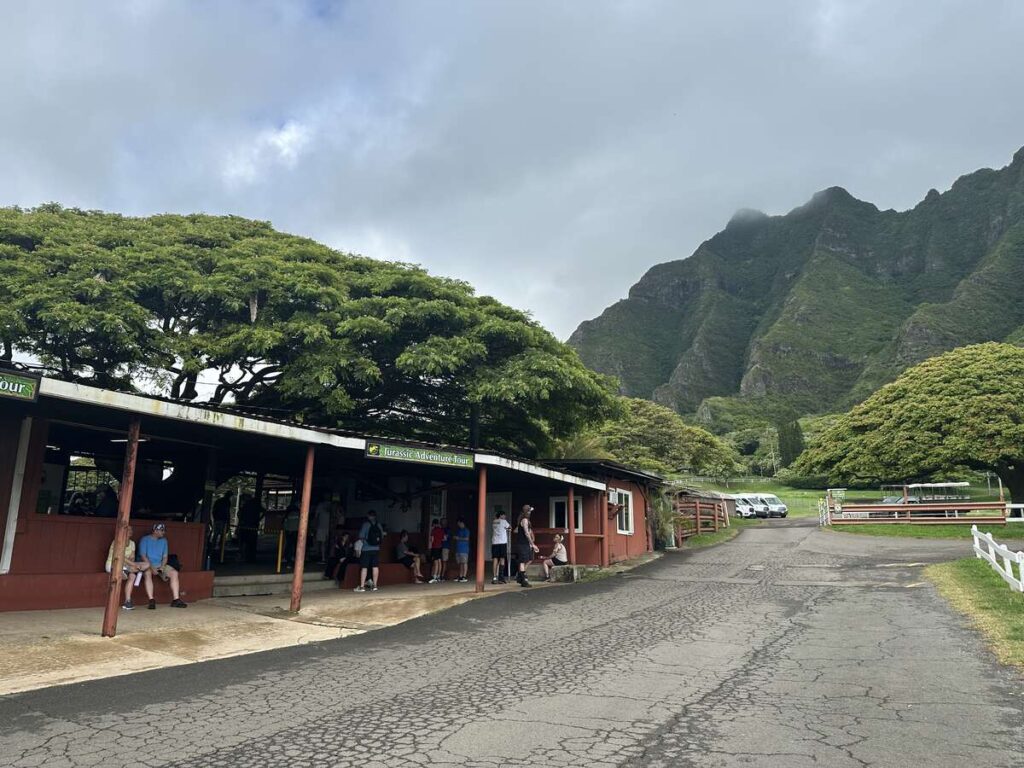
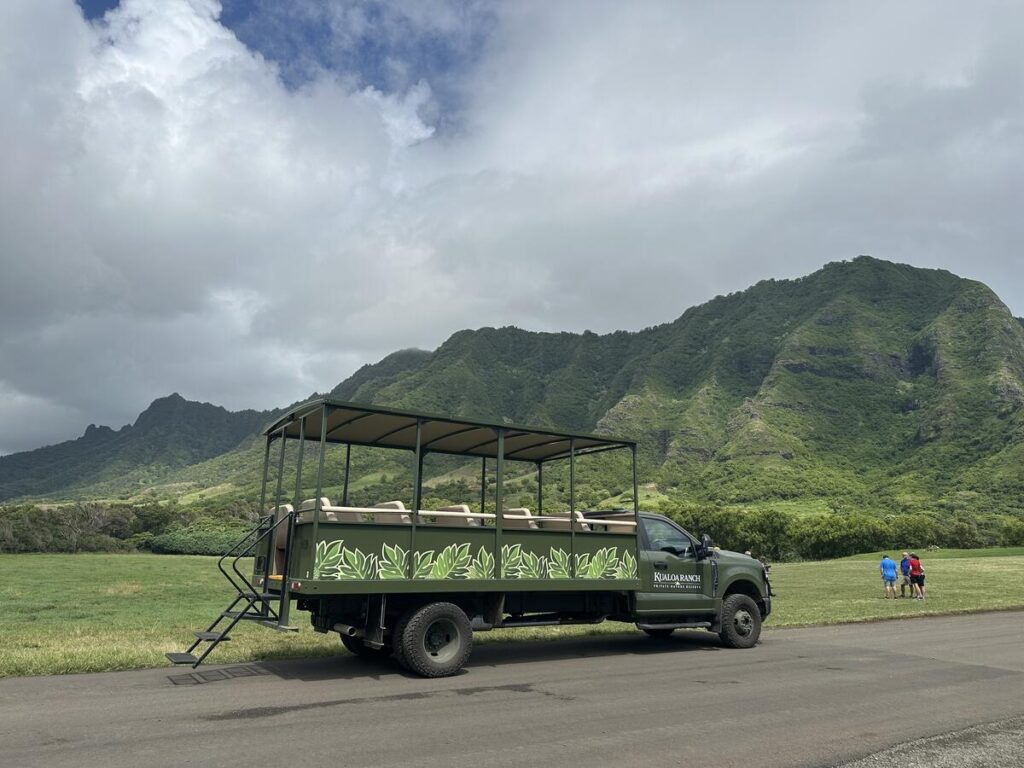
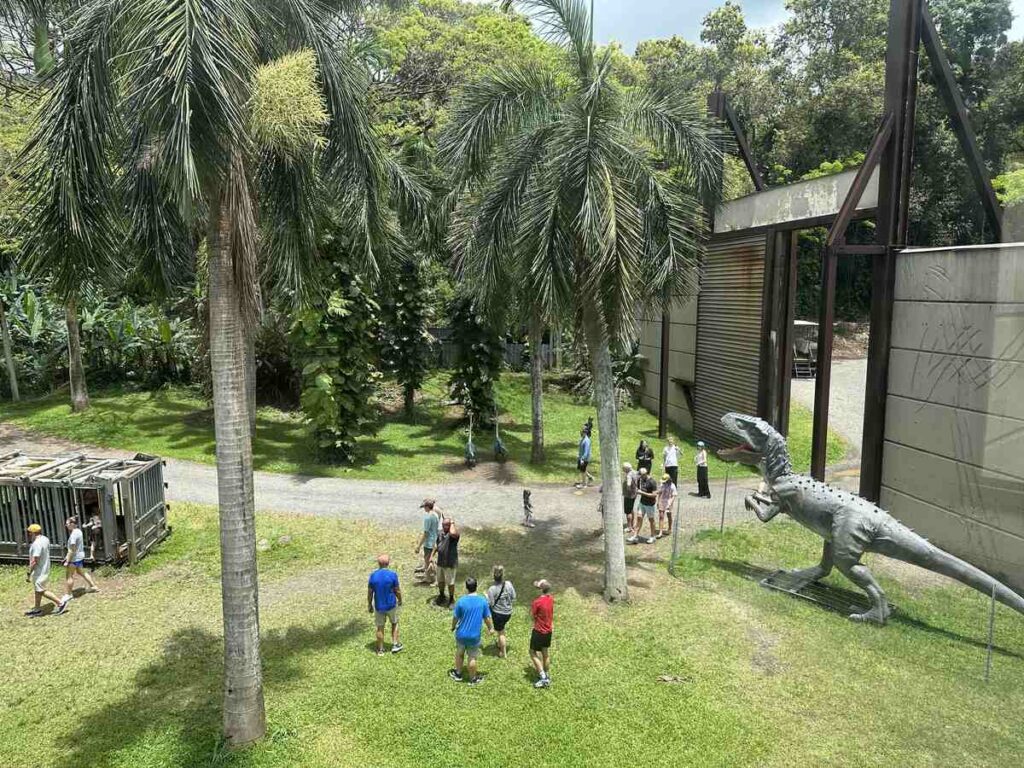
The Jurassic Adventure Tour is the obvious choice for film fans. You get the gates, the valley, the fun photo stops and the playful moments that make everyone on the vehicle grin. Kualoa describes the tour as visiting iconic film sites from Jurassic Park, Jurassic World and Jurassic World: Fallen Kingdom, including the Indominus Rex paddock, bunkers, dinosaur cages and the famous field associated with the gallimimus scene.
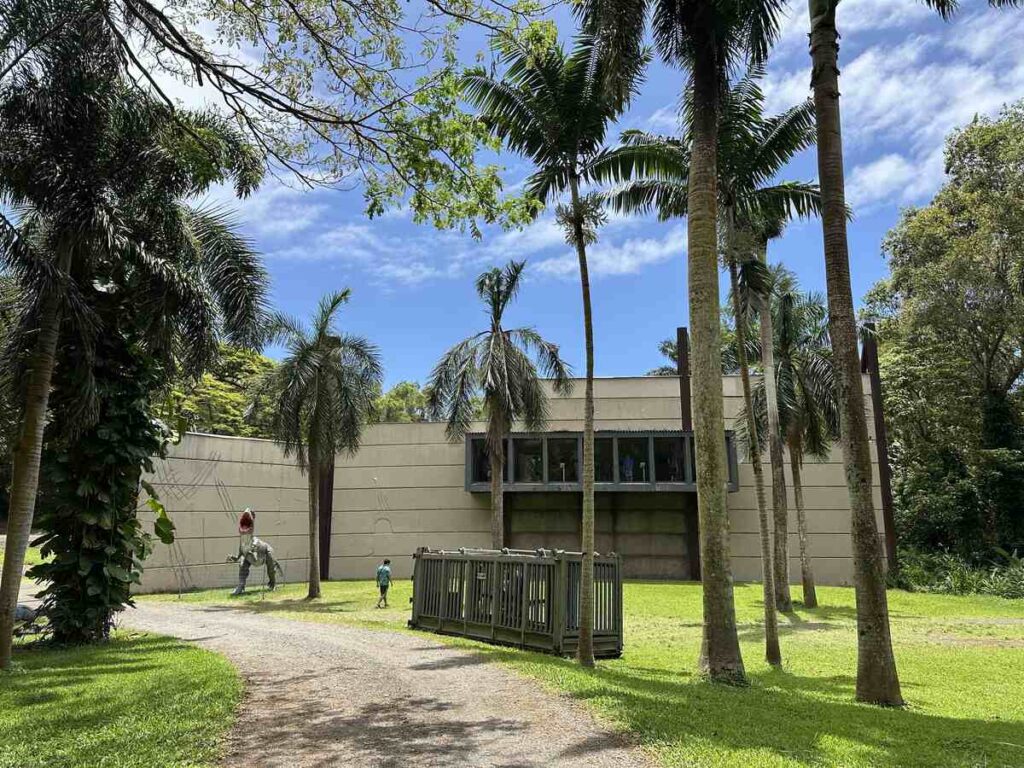
But Kualoa also offers experiences that go beyond the screen. There are tours focused on farming, culture, horseback riding, ocean voyaging, ziplining and land-based adventure. Its Kualoa Grown Tour explores Hakipuʻu makai, working farms, tropical fruit and flower gardens, sustainable practices and Mōliʻi Fishpond, an ancient Hawaiian fishpond estimated by Kualoa to be 800 to 1,000 years old.
That range is part of what makes Kualoa so interesting. It is a filming location, yes. It is also a ranch, a farm, a cultural landscape and a protected reserve. The best way to experience it is to let all of those identities exist at once.
Lunch at Aunty Pat’s
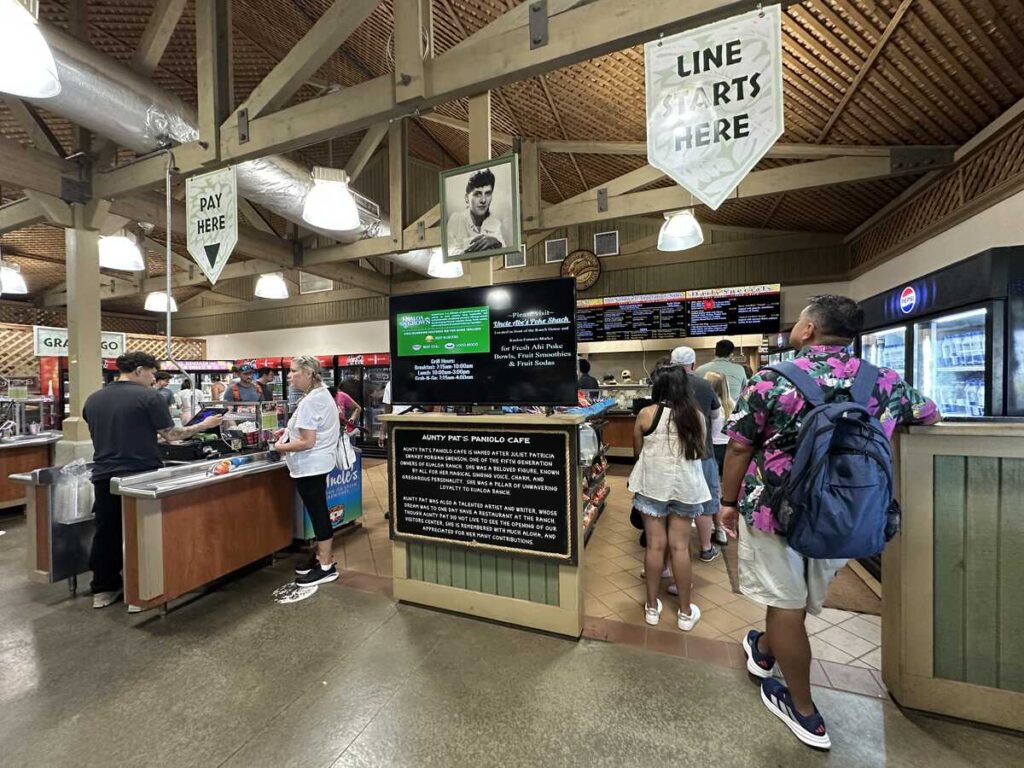
After the tour, I stopped for lunch at Aunty Pat’s Paniolo Café, located on property. It is a spot for Hawaiian-style homemade cooking featuring products grown on Kualoa’s 4,000 acres.
The story behind the name is lovely. A sign at the café shares that Aunty Pat’s is named for Juliet Patricia Swanzey Morgan Swenson, one of the fifth-generation owners of Kualoa Ranch. She was remembered for her singing voice, charm, artistic spirit and loyalty to Kualoa. Her dream was to one day have a restaurant at the ranch, though she did not live to see it open. Today, visitors are welcomed there in her memory.
It is a sweet pause after the tour — casual, busy and very much part of the ranch experience.
The Takeaway
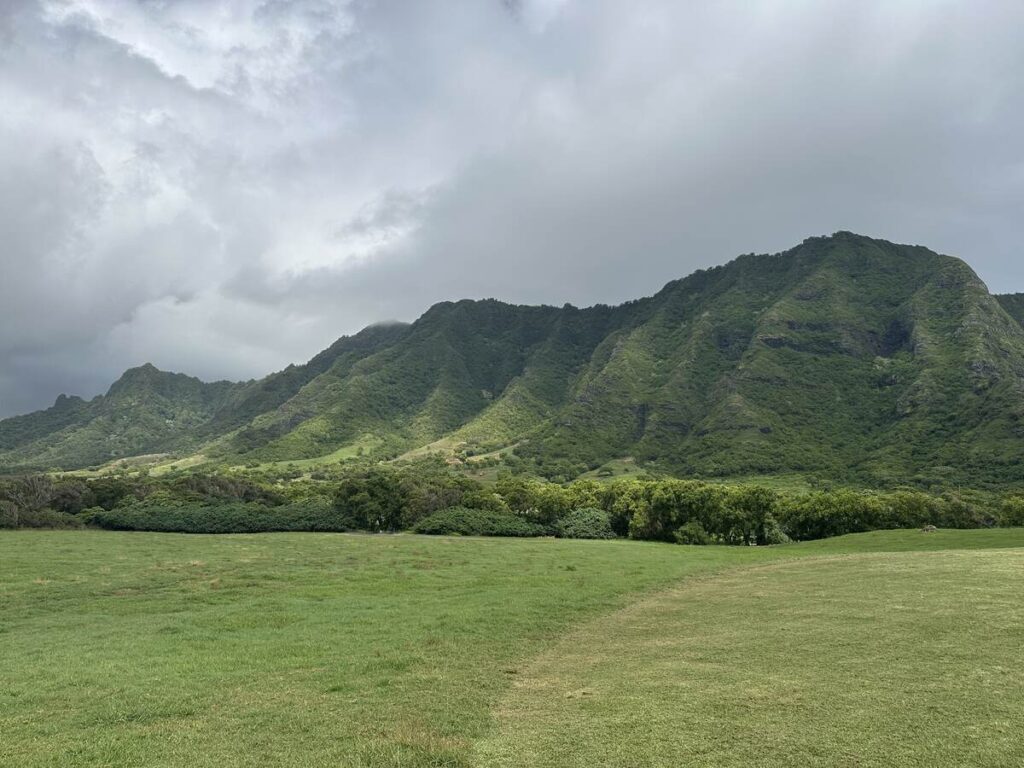
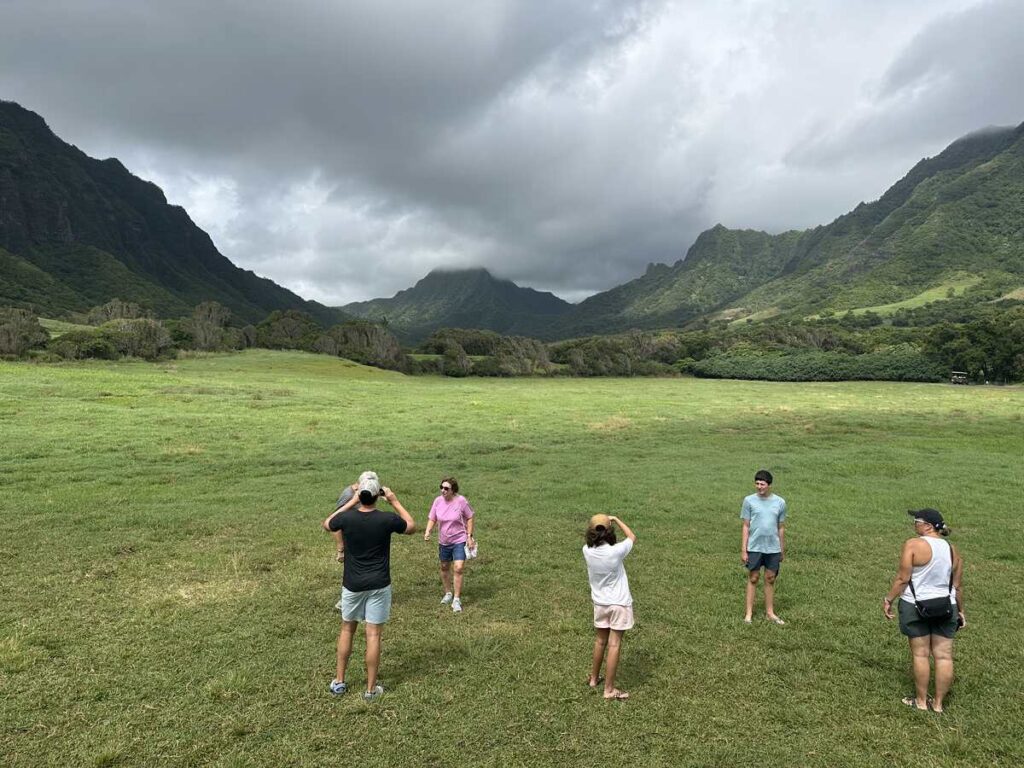
Kualoa Ranch is easy to recommend, especially for families, movie lovers and anyone who wants to step into one of Oʻahu’s most recognizable landscapes. The Jurassic Adventure Tour delivers exactly what visitors hope for: big views, film locations, photo moments and a playful brush with blockbuster nostalgia.
But the reason it stays with you is deeper than that.
Kualoa reminds you that land can be famous without being surrendered. It can welcome visitors without losing its story. It can be cinematic and sacred, entertaining and educational, busy and still breathtaking.
Come for Jurassic Park. Pay attention to everything else.
Know Before You Go
Location: Kualoa Ranch, 49-560 Kamehameha Highway, Kāneʻohe, Oʻahu
Best for: Movie lovers, families, nature lovers, first-time Oʻahu visitors
Tour taken: Jurassic Adventure Tour
Length: Approximately 2.5 hours
What to wear: Comfortable clothes and closed-toe shoes
Pro tip: Arrive at least 30 minutes before your scheduled tour. Check-in lines can be long, but they move quickly.
Lunch: Aunty Pat’s Paniolo Café is on-site and convenient after the tour.
As with every destination, I encourage travellers to tread lightly and leave places better than they found them. In Hawaiʻi, this philosophy is beautifully reflected in the concept of mālama ʻāina—caring for the land that cares for us. Respect cultural sites, support local businesses, stay on designated paths, observe wildlife from a distance, and remember that Hawaiʻi is not only a destination, but also home to vibrant communities, traditions, and stories that deserve our care and respect.
Follow us on Instagram at Trip_Jaunt
My visit to Hawaiʻi was hosted by the Hawaiʻi Tourism Authority through GoHawaii. While certain travel arrangements and experiences were provided, all opinions, reflections, and observations expressed in this article are entirely my own.
All photos by the author unless otherwise indicated.