
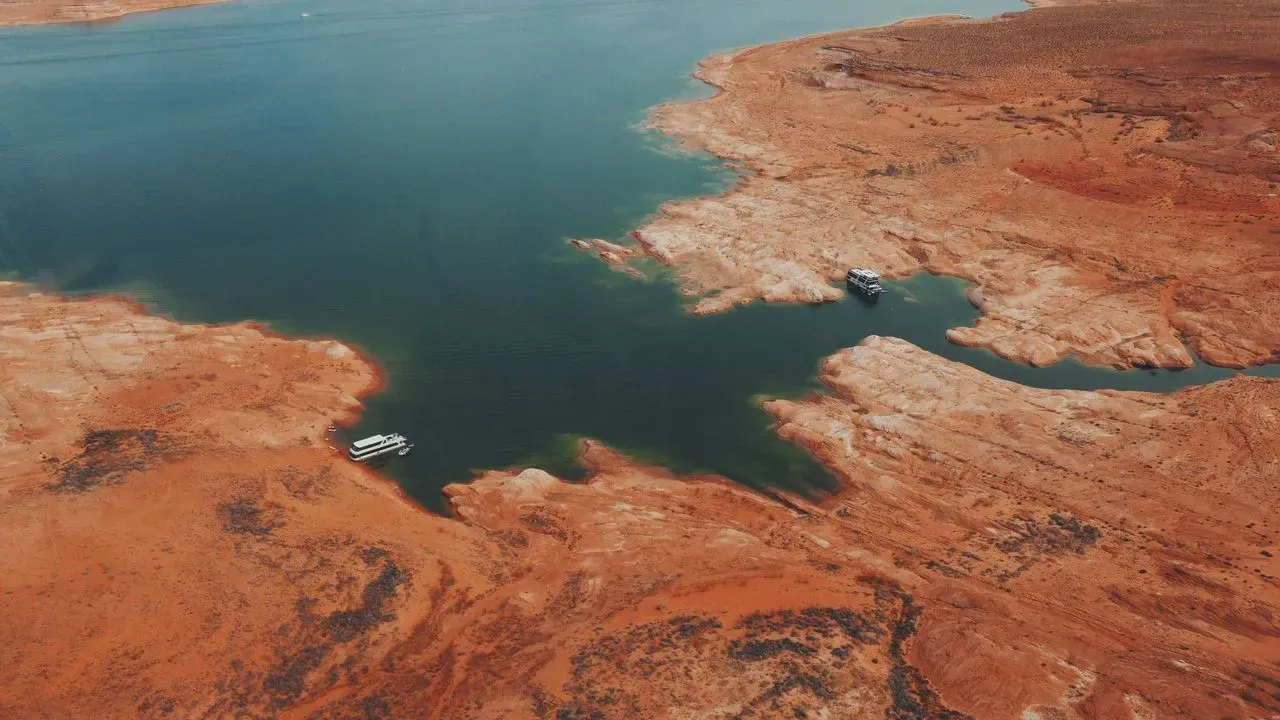

The second-largest reservoir in the United States has reached a new historic low, a development that directly shapes how travelers experience one of the American West’s signature destinations. Lake Powell, formed by Glen Canyon Dam on the Colorado River, now sits below the previous minimum set in 2023. This shift comes as the broader river system continues to adjust after more than two decades of reduced inflows.
Practical Effects on Daily Operations
Water levels at the reservoir fell to 3,519.91 feet on a recent Saturday, according to data from the U.S. Bureau of Reclamation. That reading edged past the earlier mark and left the surface roughly 30 feet above the elevation where hydroelectric generation at Glen Canyon Dam would stop. Power from the dam currently supports hundreds of thousands of homes across seven states.
Recreational users notice the change most immediately through altered launch ramps, longer walks to the water’s edge, and shifting houseboat routes. The reservoir still holds substantial volume, yet operators have begun discussing reduced releases from upstream sources to protect remaining storage through the coming months.
Revealing Glen Canyon’s Hidden Features
Lower water has begun to expose sections of the canyon floor and side canyons that remained submerged for decades. Visitors who return after several years often remark on the expanded shoreline access and the appearance of previously hidden rock formations and side channels. These newly visible areas offer fresh perspectives on the landscape that the reservoir has covered since the 1960s.
Antelope Canyon and other nearby attractions remain reachable, though boat tours and kayak routes now follow different paths around exposed obstacles. The visual contrast between the deep blue water and the newly uncovered sandstone creates striking scenes that photographers and hikers have started documenting.
Stakeholders Watching the Timeline
Seven states that rely on Colorado River water – Arizona, California, Colorado, Nevada, New Mexico, Utah, and Wyoming – await federal guidance on required reductions through 2028. Cities such as Phoenix and Tucson have already secured backup supplies, while smaller communities and tribal nations along the river evaluate longer-term options.
Experts note that even a strong winter snowpack would not immediately restore previous levels. The system moves slowly, giving managers and visitors time to adapt rather than face sudden restrictions. Current forecasts suggest the reservoir will stay above the most critical thresholds this year provided coordinated conservation measures continue.
Planning a Responsible Visit
Travelers can still enjoy houseboating, paddling, and hiking around Lake Powell with updated awareness of water levels and ramp conditions. Checking current elevations and contacting local marinas before arrival helps ensure smooth logistics. Many operators now emphasize low-impact practices that protect the exposed canyon features and surrounding desert ecosystem.
The reservoir’s role as a shared resource for water, power, and recreation continues, even as its appearance evolves. Those who visit now witness a landscape in transition, one that rewards careful planning and respect for the Colorado River’s long-term needs.
AI Disclaimer: This article was created with the assistance of AI tools and reviewed by a human editor.