
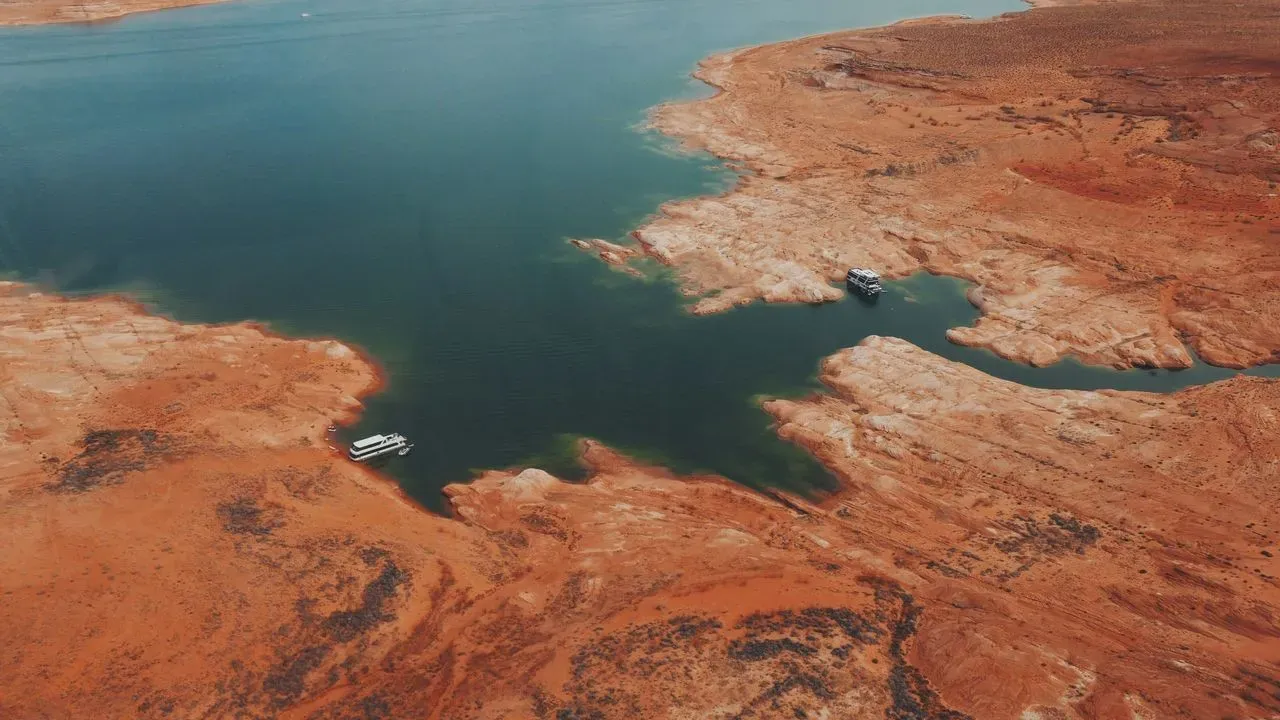

Lake Powell stands as one of the American Southwest’s most striking reservoirs, where red rock canyons meet vast blue water and draw visitors seeking quiet exploration by boat or kayak. A new study now points to the possibility that water deliveries to the reservoir could fall by more than half if drought conditions persist. The finding comes from researchers examining long-term stresses on the Colorado River system and underscores how natural variability continues to shape this landscape.
What the Research Shows
The study focuses on the mechanics of water movement through the Colorado River basin and how prolonged dry periods affect inflows to Lake Powell. Lead author remarks highlight the potential for continued drought to increasingly stress Lake Powell deliveries. Researchers emphasize that the projection reflects modeled scenarios rather than a fixed forecast, leaving room for shifts in precipitation patterns or management decisions.
Uncertainty remains around exact timing and severity, as the analysis accounts for historical variability while noting that future outcomes depend on many interconnected factors. The work adds to a growing body of evidence on how the river system responds to extended dry spells without claiming certainty about any single year ahead.
Connecting Drought Patterns to the River System
The Colorado River supplies water across multiple states and supports both human needs and the natural environment that surrounds Lake Powell. Extended drought reduces snowpack and runoff, which in turn influences how much water reaches the reservoir each season. The study places these dynamics in context, showing how cumulative dry years can compound effects on storage levels.
Travelers who visit the area often notice the dramatic interplay between water and stone that defines the region. Understanding these broader patterns can deepen appreciation for the reservoir’s role within a larger, living watershed that has sustained communities and ecosystems for generations.
Approaching the Destination with Care
Visitors to Lake Powell can engage with the landscape through low-impact activities such as paddling quiet side canyons or joining guided tours that highlight local geology and history. Choosing operators who follow leave-no-trace principles helps protect the clear waters and surrounding desert terrain for future seasons.
Staying informed about current conditions before travel allows for flexible plans that respect both safety and the environment. Many travelers find that spending time on the water, watching light shift across the cliffs, offers a direct connection to the forces researchers are studying.
Key points to keep in mind:
- Water deliveries could drop more than 50 percent under continued drought.
- The projection carries uncertainty tied to weather and management variables.
- Thoughtful visitation supports both enjoyment and long-term stewardship.
Responsible travelers who plan ahead and travel lightly can continue to experience the reservoir’s unique beauty while gaining a clearer sense of the natural processes at work.
AI Disclaimer: This article was created with the assistance of AI tools and reviewed by a human editor.