
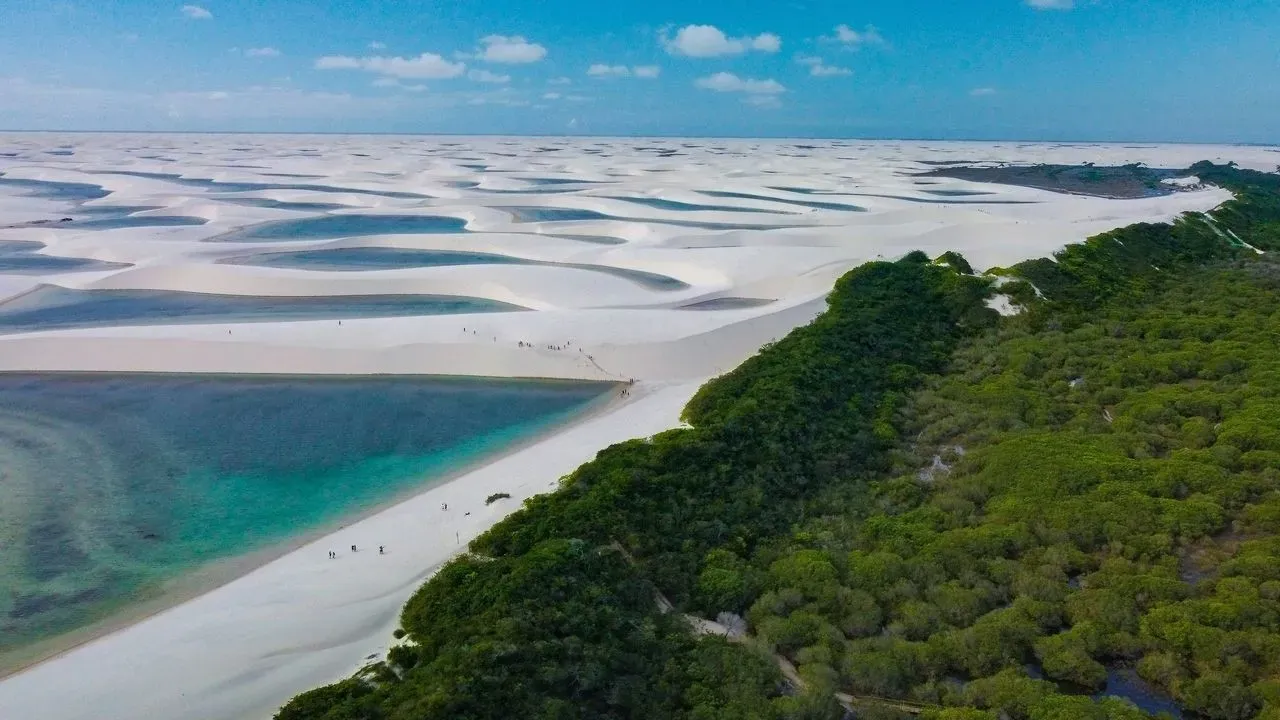

In the northeastern state of Maranhão, Lençóis Maranhenses National Park reveals a landscape shaped by wind, rain, and time. Expanses of pale sand rise and fall like frozen waves, yet the same terrain gathers clear freshwater each year once the rains arrive. The result is a setting where dunes and lagoons exist side by side, offering travelers a chance to witness seasonal change on a grand scale.
How the Landscape Takes Shape
The park’s dunes form through the steady movement of sand carried by Atlantic winds. Over centuries these grains settle into broad ridges that can reach more than thirty meters in height. Because the underlying rock prevents water from draining away, depressions between the dunes collect rainfall rather than letting it disappear into the ground.
This geological detail sets Lençóis Maranhenses apart from true deserts. The sand remains bright and fine underfoot, while the trapped water creates pools that reflect the sky. Visitors often notice how the light shifts across both surfaces, turning the same stretch of ground into two different experiences depending on the month.
The Annual Cycle of Water and Sand
From roughly January through June, regional rains replenish the lagoons that dot the dune fields. The water stays fresh because it comes directly from precipitation and has little time to pick up salts. By July the pools begin to shrink, and the dunes once again dominate the view until the next wet season returns.
Travelers who arrive during the height of the lagoon season find shallow stretches of turquoise water bordered by crisp white sand. Walking between these pools requires care to avoid disturbing the fragile edges where vegetation briefly takes hold. The contrast between dry ridges and standing water creates a rhythm that changes with every step and every hour of sunlight.
Approaching the Park Responsibly
Lençóis Maranhenses is protected as a national park, which means access follows clear guidelines designed to preserve both the dunes and the seasonal water bodies. Local guides familiar with the terrain help visitors move through the landscape without leaving lasting traces. Staying on established routes and carrying out all waste remain basic expectations for anyone entering the area.
Travelers also benefit from learning a few practical details before arrival. Lightweight clothing that covers the skin protects against strong sun and wind. Sturdy sandals or shoes with good grip make walking across shifting sand safer, especially when the surface is wet near lagoon edges. Planning around the rainy season requires flexibility, since water levels and trail conditions can vary from one week to the next.
Connecting With the Broader Region
Maranhão offers more than the park itself. Nearby communities maintain traditions tied to fishing, crafts, and seasonal agriculture that have adapted to the same rains that fill the lagoons. Spending time in these places before or after a dune visit provides context for how people have lived alongside this shifting environment for generations.
Many visitors choose to combine a park excursion with time in the state capital of São Luís, where colonial architecture and local markets add another layer to the journey. The transition from urban streets to open dunes underscores the range of experiences available within a single Brazilian state.
Carrying the Experience Forward
Time spent among the dunes and lagoons often lingers in memory as a reminder of how landscapes can hold opposing qualities at once. The same sand that appears stark and empty becomes a vessel for clear water, and the same sky that stretches overhead changes color in the reflections below. Travelers who approach the park with patience and respect return home with a deeper sense of how natural cycles shape both places and the people who care for them.
AI Disclaimer: This article was created with the assistance of AI tools and reviewed by a human editor.