
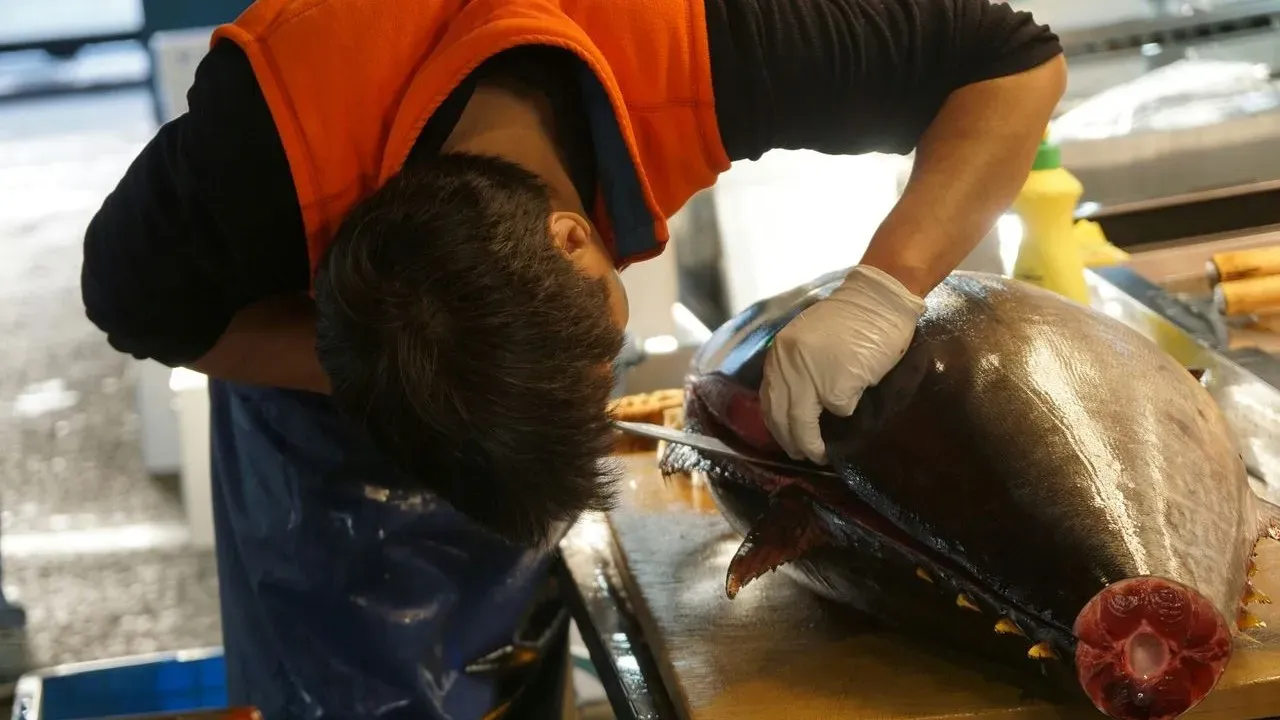

West Hollywood, California – On a patio shaded by the evening light, diners at Uchi gather around as a whole bluefin tuna arrives for its final preparation. The 216-pound fish, farm-raised and destined for the evening’s menu, becomes the quiet center of attention while Chef Joel Hammond begins the careful work of breaking it down by hand. What follows is both preparation and performance, a monthly tradition that turns routine kitchen labor into something guests can witness and then taste.
The Monthly Ritual on the Patio
Uchi has made the full-fish breakdown a recurring event rather than a behind-the-scenes task. Once a month the restaurant brings the process outdoors, where the chef removes scales, separates the head and collar, and divides the body into large sections that will soon become sushi and small plates. Guests watch the cuts emerge in real time, including the prized fatty otoro, before the pieces move to the kitchen for immediate use. The approach keeps the experience accessible. Hammond previously worked at Morimoto in New York, where similar demonstrations carried a much higher ticket price. At Uchi the event remains free, paired with extended happy hour pricing and a special menu built around the fresh tuna. One fish supplies the restaurant for roughly a week, so the carving serves both practical and communal purposes.
From Formal Tradition to Casual California Evening
Whole-fish butchery has deep roots in Japanese dining culture, where it is often conducted with formality and at considerable expense. Hammond has adapted the practice for a more relaxed setting, inviting people to sit outside with cocktails and small plates while the work unfolds. The result feels less like theater and more like an open kitchen extended into the open air. Diners who attend receive the fish at peak freshness. During one recent session the lean bluefin and the rich collar were served within minutes of being portioned, their texture and flavor reflecting the short journey from cutting board to plate. Handrolls range from twelve to sixteen dollars, nigiri from eighteen to twenty-four, and small plates from fourteen to twenty-six, keeping the focus on quality rather than spectacle.
Respect for the Ingredient
The decision to feature a farm-raised bluefin underscores a deliberate choice about sourcing. By working with a single large fish rather than multiple smaller ones, the kitchen minimizes waste and highlights every usable section. The public carving makes that respect visible, showing how a whole animal becomes a series of distinct cuts that each receive their own preparation. For travelers planning a visit to Los Angeles, the event offers a tangible connection to the craft behind high-end sushi. Reservations are recommended, as the patio fills quickly on carving nights, yet the experience itself remains unhurried and welcoming. It is one of those rare dining moments where the meal begins before the first bite.
AI Disclaimer: This article was created with the assistance of AI tools and reviewed by a human editor.