

Travelers flying into or out of Montreal now have a calmer alternative to the busy main gateway. Porter Airlines and regional carrier Pascan Aviation launched commercial service at the new MET-Montreal Metropolitan Airport on June 15. Located roughly 10 miles east of downtown, the facility gives passengers a quieter option without the crowds typical of larger hubs.
Practical Relief for Domestic Routes
The airport addresses long-standing capacity pressures at Montreal-Trudeau International Airport. Porter becomes the first airline to operate from both Montreal airports, offering greater schedule flexibility for passengers who prefer to avoid peak-hour congestion at the primary facility. The move revives a two-airport model for the city after commercial operations ended at the former Mirabel site more than twenty years ago.
Officials expect the new terminal to serve travelers from the south shore of the St. Lawrence River particularly well. Its location places roughly half the region’s population closer to departures than the existing main airport in many cases. Early operations focus entirely on domestic service, keeping the experience streamlined from the outset.
Eleven Nonstop Canadian Cities
Porter plans to reach 11 destinations across Canada from the new airport by late June using a combination of Dash 8-Q400 turboprops and Embraer E195-E2 jets. The initial network includes major centers such as Vancouver, Calgary, Edmonton, Winnipeg, Toronto Pearson, Billy Bishop Toronto City, Halifax, and St. John’s, along with several smaller provincial airports.
Pascan Aviation adds four additional regional routes, further expanding same-day connectivity options. All flights remain domestic for now, reflecting current regulatory limits on secondary airports in the Montreal area. This focused network prioritizes reliable connections within Canada rather than attempting broader reach immediately.
Design That Emphasizes Calm and Clarity
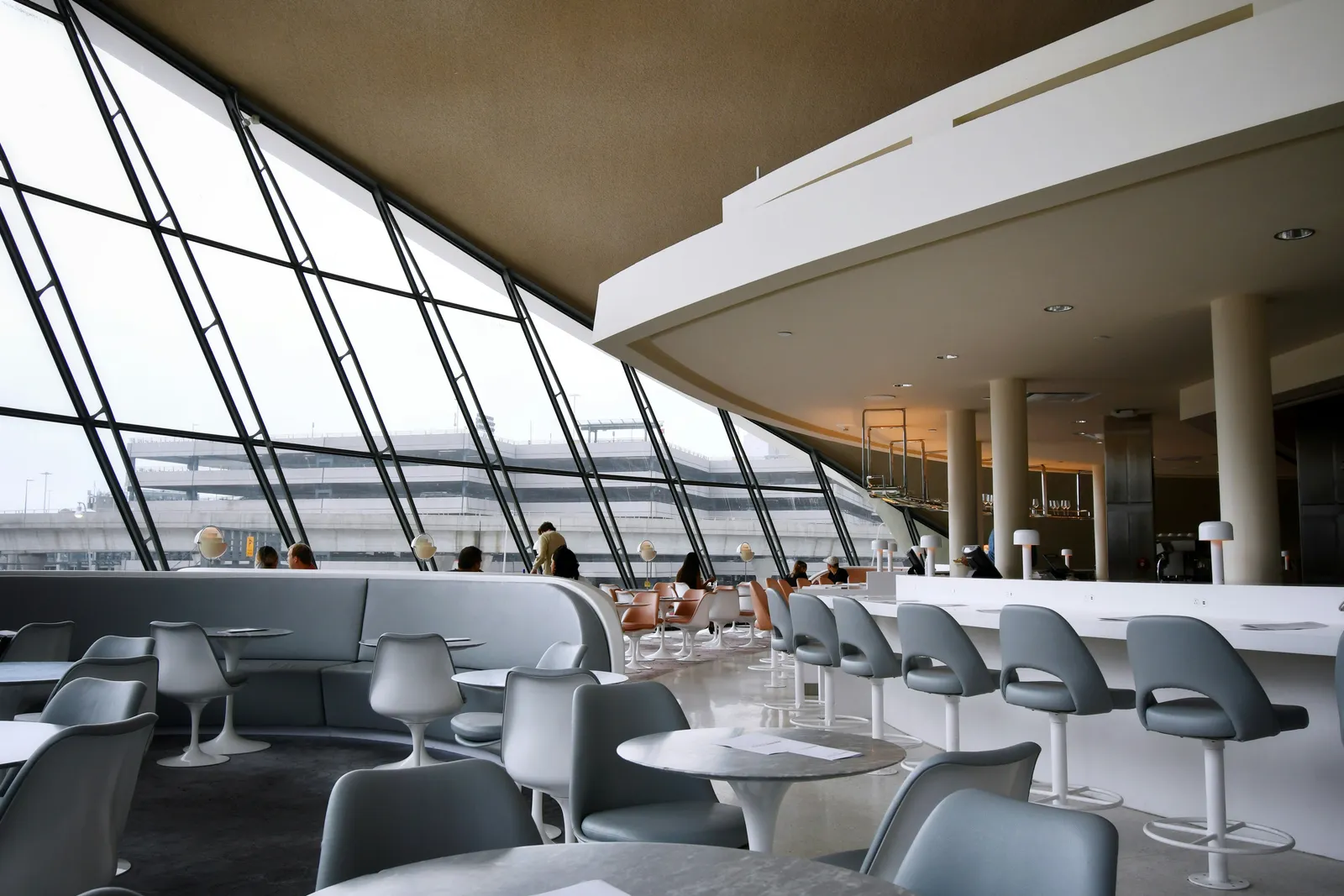
The single-story terminal avoids dramatic architectural statements in favor of straightforward navigation. Passengers move from check-in through security and into a spacious post-security area with varied seating, ample natural light, and direct views of the aircraft apron. Designers installed 900 power outlets throughout the departures space to support travelers who need to work or charge devices before boarding.
Architect David Scott described the intent as creating an intuitive environment rather than an imposing monument. The result resembles a contemporary airline lounge more than a conventional terminal, with open sight lines and minimal signage clutter. A café operates now, and a full-service restaurant is under construction to add dining choices over time.
Current Limits and Next Steps
An exclusivity clause tied to the main airport’s lease prevents international flights at the new facility for the time being. Porter executives have signaled willingness to pursue those routes once community support and regulatory conditions align. Airport authority leaders view the terminal’s measured start as a foundation for gradual growth toward a designed capacity of four million passengers annually.
Early feedback highlights convenience for Montreal-area residents who previously faced limited choices on the south shore. The airport’s measured approach allows operators to refine processes before scaling operations further. Stakeholders expect passenger volumes to build steadily as awareness spreads and additional frequencies are added.
AI Disclaimer: This article was created with the assistance of AI tools and reviewed by a human editor.