
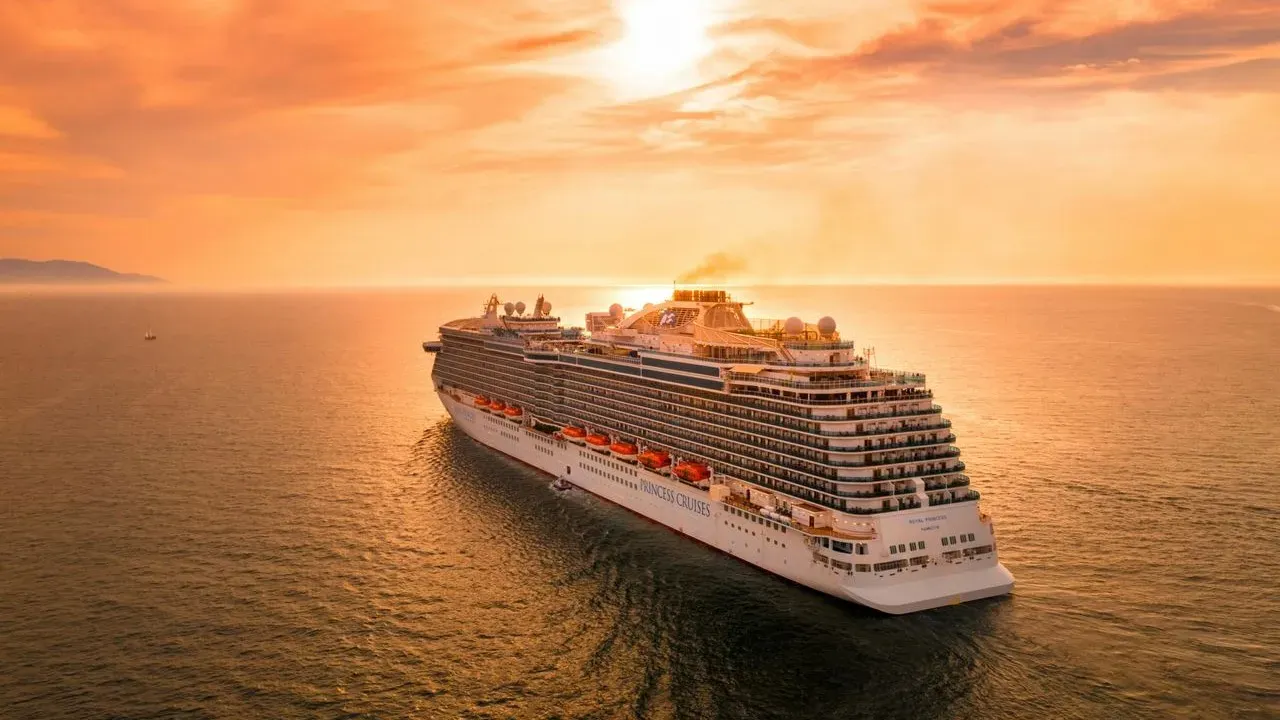

MSC Cruises has taken delivery of MSC World Asia, a 216,638-ton ship that now ranks among the largest passenger vessels ever constructed. The ship was handed over at Chantiers de l’Atlantique in Saint-Nazaire, France, the shipyard where it was built. Its arrival adds the third vessel in the line’s World Class series, and it brings a new mix of design, dining and entertainment to guests in the Mediterranean and, later, the Caribbean. Details of the delivery were reported by ([1]).
Scale That Places It Among the Largest Ever Built
The ship measures 1,093 feet in length and 154 feet in width, dimensions similar to its two World Class predecessors, MSC World Europa and MSC World America. It has nearly 2,600 rooms and can accommodate 6,758 passengers when every berth is filled, a figure that few passenger ships afloat can match. Among all cruise ships built by any line, it ranks tenth in size, trailing only three Royal Caribbean Icon Class ships and six Oasis Class ships.
MSC Group executive chairman Pierfrancesco Vago framed the vessel around a simple aim: giving every guest the best possible holiday. He noted that 60% of the spaces on board are either new or significantly redesigned compared with the earlier World Class ships. That figure suggests the company treated this ship as more than a larger copy of its siblings.
A Water Park, a Dry Slide and a Wider Table
The top decks are where much of the ship’s character shows. A decktop water park includes multiple waterslides, while a dry slide that drops 11 decks is described as a record-setting attraction. Guests will also find several pool areas, a swing ride suspended over the ocean called The Cliffhangar, and a ropes course.
Dining has also expanded in meaningful ways. Among the most notable additions are:
- MSC Cruises’ first pan-Asian restaurant
- A Venchi chocolate and gelato venue
- A sushi bar and a teppanyaki restaurant, which carry over from the earlier World Class ships
- An American-style steakhouse and a branch of the Italian chain Eataly
Those venues are part of 20 dining options in total. Indoors, a three-deck-high dining and entertainment zone called the World Galleria sits beneath one of the largest LED-lit ceilings at sea. Its outdoor extension, the World Promenade, features a suspended, illuminated Dragon sculpture that reflects the ship’s Asia theme.
From Dockside Ceremony to First Passengers
The delivery event took place in front of the ship’s bow, with shipyard and MSC officers marching into the ceremony. The French and Chantiers de l’Atlantique flags were lowered, and the MSC Cruises flag was raised alongside the flag of Malta, where the vessel is registered. Alexa Aponte Vago, MSC Group chief financial officer and the event’s godmother, cut a blue ribbon that released a bottle of Champagne against the hull.
The bottle smash was not the official naming. That will take place on Saturday in Le Havre, France, at a larger event. Passenger service begins soon after, with the ship sailing seven-night Mediterranean itineraries from Barcelona starting December 4. Those voyages call at France, Italy, Malta and Spain.
What matters now: the ship’s first paying guests board in early December, and the naming in Le Havre will formally mark its entry into service. In November 2027, the ship moves to the Southern Caribbean for seven- to 14-night sailings with stops including Saint Lucia, Grenada, Antigua and Barbuda, and Dominica.
A Fleet Growing at Pace
MSC Cruises now operates 24 ships, up from 13 as recently as 2017, and it has nine more on order. Five additional World Class vessels are scheduled for delivery by 2031. The line also plans a new class of four somewhat smaller ships, at about 180,000 tons each, known as the Frontier Class.
The Chantiers de l’Atlantique shipyard, founded in 1861, has built 20 vessels for MSC over the past 25 years. Its portfolio also includes the SS Normandie, the SS France, Cunard’s Queen Mary 2 and several Oasis Class ships for Royal Caribbean. For travelers, the delivery of MSC World Asia offers a clear look at where mainstream cruise design is heading, from larger public spaces to more varied dining and a stronger focus on destination-inspired experiences in the years ahead.
AI Disclaimer: This article was created with the assistance of AI tools and reviewed by a human editor.