

Few relics have held the attention of believers, historians and visitors for as long as the Shroud of Turin. A new claim now places it beside another cloth long associated with the burial of Jesus. The New York Post reported that researchers have put forward new evidence connecting the Shroud to the ancient burial cloth believed to have covered Jesus’ head ([1]). Because the claim is recent, it is best read as a proposal open to testing rather than a settled conclusion.
Two cloths, two cathedrals
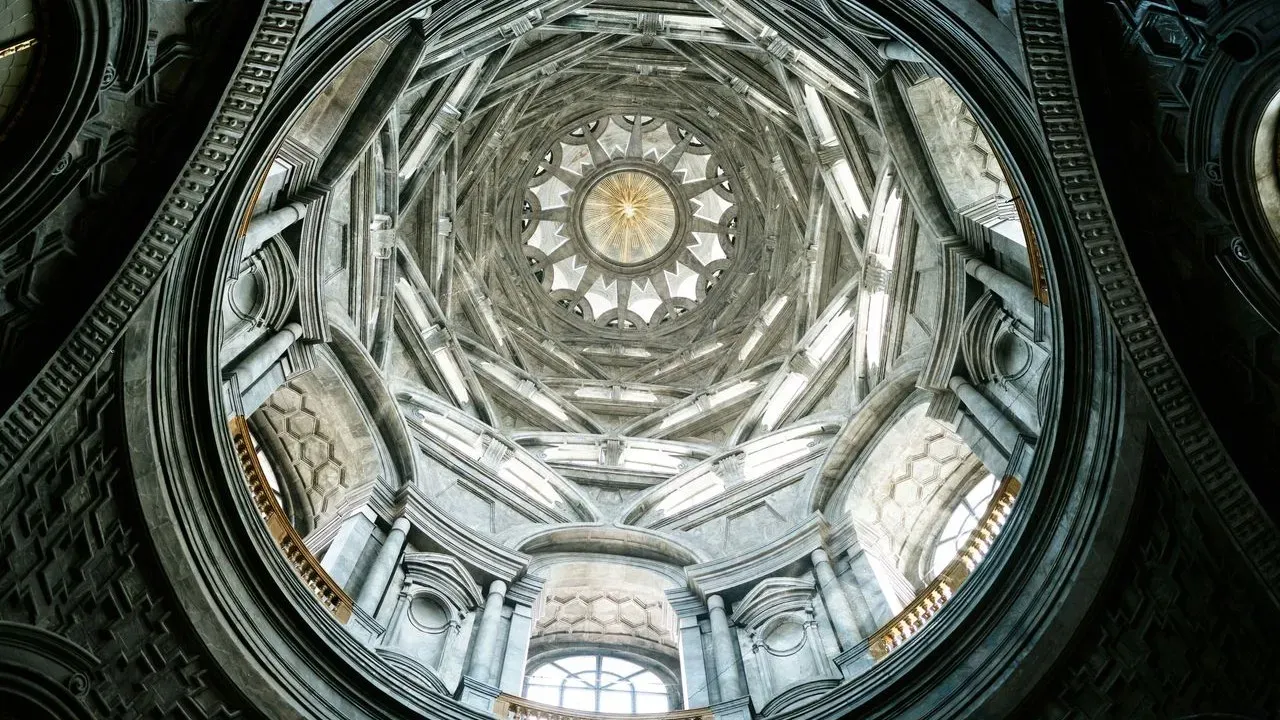
The Shroud of Turin is a length of linen that is traditionally regarded as the burial garment of Jesus, although that identification has never been universally accepted ([2]). It was moved to Turin in 1578, and it is now kept in the Cathedral of St. John the Baptist ([3]). Visitors who cannot see the original can learn about it at the Museum of the Shroud, where a replica is displayed.
The head cloth, known as the Sudarium of Oviedo, is a bloodstained piece of linen roughly 84 by 53 centimeters. It is kept in the Cámara Santa of the Cathedral of San Salvador in Oviedo, in northwestern Spain ([4]). Tradition holds that it covered the head of Jesus, but many people doubt that account. Each cathedral is both a place of worship and a long-standing center of devotion, and the cloths draw visitors who come for faith, history or both.
Earlier research and lingering questions
Scientific debate about the Shroud has continued for decades. In 1988, three laboratories radiocarbon-dated a sample of the cloth and placed its origin between 1260 and 1390. Some scientists questioned the methods used in that work. A 2022 study that used wide-angle X-ray scattering on a small piece of the cloth supported an older origin, but its authors reached no conclusion about whether the Shroud is an authentic relic.
The Sudarium has been compared with the Shroud before. A 2016 study led by Juan Manuel Miñarro, a sculpture professor at the University of Seville, concluded that the two cloths “almost certainly covered the cadaver of the same person” ([5]). Miñarro himself said the work did not by itself prove that the person was Jesus. Skeptics argue that the apparent matches may be coincidental. One critical analysis of the comparisons concluded that such coincidences do not show that one cloth maps onto the other ([6]).
Reading the new claim with care
The latest report is a starting point for discussion, and several points help frame it:
- The 1988 radiocarbon results remain central to the debate, and they have been challenged for decades.
- Earlier comparisons between the two cloths have produced both enthusiasm and strong skepticism.
- No study so far has settled whether either cloth belonged to Jesus.
Careful reading also means noting what a study does and does not claim. Researchers can report evidence that supports a hypothesis while stating that their results do not establish the conclusion. Readers who follow the next steps, including peer review and independent testing, will be in the best position to judge the strength of the evidence.
Visiting with context in mind
For travelers drawn to the story, Turin and Oviedo offer far more than a single object. Both cities hold historic cathedrals, and each relic is shown within a setting of worship and memory. Visitors should confirm current access and viewing arrangements with the cathedrals before they travel, since the display of sacred objects can change. Approaching these spaces quietly and with respect for the people who pray there makes the experience richer for everyone.
Whatever the outcome of the latest claim, the question of how these cloths relate to the burial of Jesus continues to draw people to northern Italy and northwestern Spain. Scholars, believers and curious visitors will likely keep weighing new evidence in the same careful way that has defined the debate for generations.
AI Disclaimer: This article was created with the assistance of AI tools and reviewed by a human editor.