
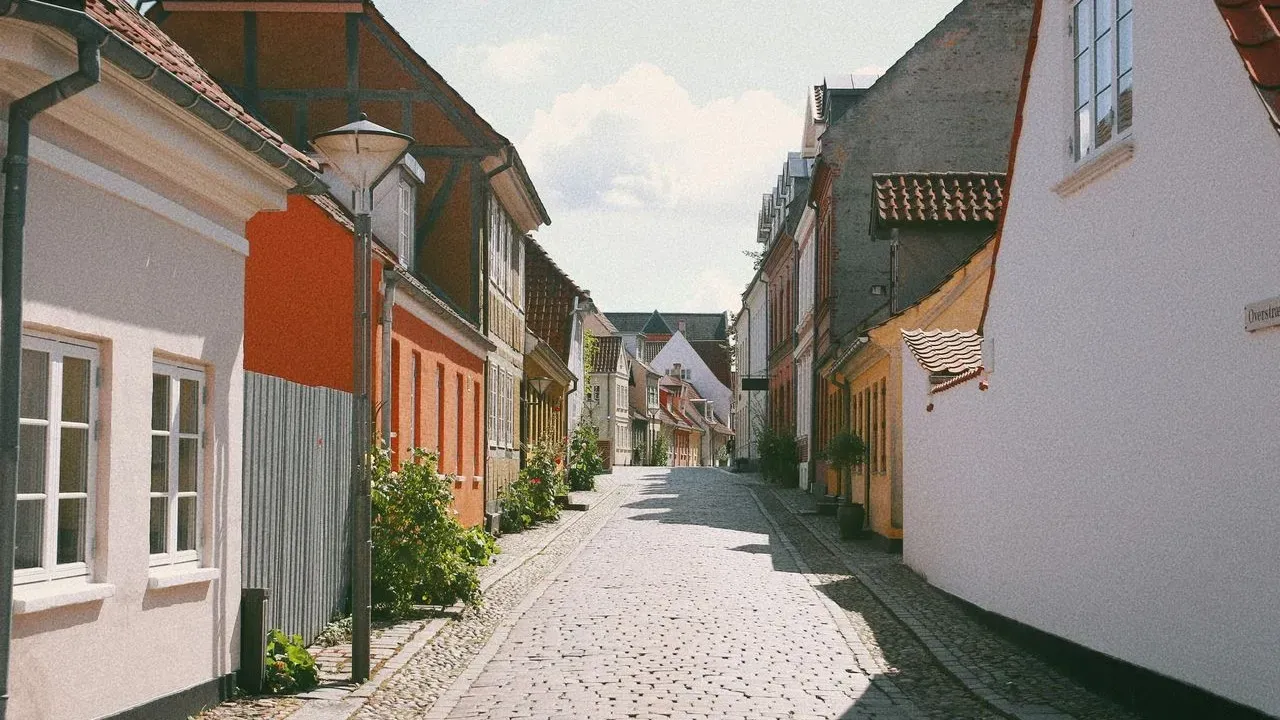

Odense sits quietly in the Danish countryside, yet its influence reaches far beyond its borders. This is the city where Hans Christian Andersen was born and raised, and where the ordinary scenes of his childhood became the foundation for stories known around the world. A single day spent here shows how those tales remain alive in the fabric of daily life.
Streets That Feel Like Storybook Pages
The old quarter draws visitors into narrow lanes paved with cobblestones and lined with houses painted in soft yellows, reds, and blues. These buildings have stood for centuries, their windows reflecting the same light that once fell on Andersen as a boy. Squares open unexpectedly, offering places to pause and watch residents move through their routines.
Every turn reveals another layer of continuity. Historic structures now house shops and cafés, yet the scale remains intimate. The result is a neighborhood that honors its past without turning it into a museum piece.
Inside the World Andersen Created
The Hans Christian Andersen Museum invites visitors to enter the stories themselves. Interactive displays bring The Ugly Duckling, Thumbelina, and The Princess and the Pea to life through sound, light, and movement. The experience highlights how Andersen drew from personal hardship and observation rather than pure invention.
Just outside, Påskestræde offers one of the city’s most picturesque walks. Colorful façades lead to the riverbank where Andersen’s mother once washed clothes and to the modest building that served as his school. In summer, the nearby Fairy Tale Castle hosts a midday parade of children dressed as familiar characters, followed by a brisk retelling of twenty-four tales in twenty-four minutes.
Landmarks That Anchor Daily Life
St. Canute’s Cathedral stands as a reminder of Denmark’s medieval past, its crypt holding the remains of Canute the Holy. Nearby, the City Hall continues to serve civic functions while its architecture speaks to centuries of local governance. These sites are not isolated monuments; they sit within neighborhoods where people still gather, shop, and commute.
Modern Odense extends this balance. Brandts Passage mixes street art with independent boutiques and open seating areas. Along the harbor, contemporary energy mixes with quiet waterfront paths where locals linger over coffee or conversation. The city’s third-largest status in Denmark gives it room to breathe while keeping everything within easy reach on foot.
Flavors Rooted in Danish Tradition
Café culture here rewards unhurried visits. Nær Mikrobageri produces oversized, flaky pastries filled with rhubarb that capture the season’s brightness. Café Deilig, beside the Hans Christian Andersen Garden, provides a calm setting for coffee and simple bites. Further afield, Café Fleuri and Café UNIKA offer classic and inventive options in equal measure.
For heartier meals, Storms Pakhus presents a range of shared plates, while Oluf Bager’s Gaard and Den Gamle Kro pair traditional dishes with interiors that date back to the sixteenth century. Each place reflects the same attention to craft that runs through the city’s storytelling heritage.
Practical Steps for a Visit
Trains from Copenhagen reach Odense in roughly ninety minutes, while scenic bus routes cross the Great Belt Bridge in about two hours. Once there, walking connects nearly every highlight. Local rail and car services cover any remaining distances when needed.
Even a short stay leaves a clear impression. Andersen drew inspiration from the people and places around him; visitors often find the same quiet spark in Odense’s streets today. The city continues to reward those who arrive ready to look closely.
AI Disclaimer: This article was created with the assistance of AI tools and reviewed by a human editor.