
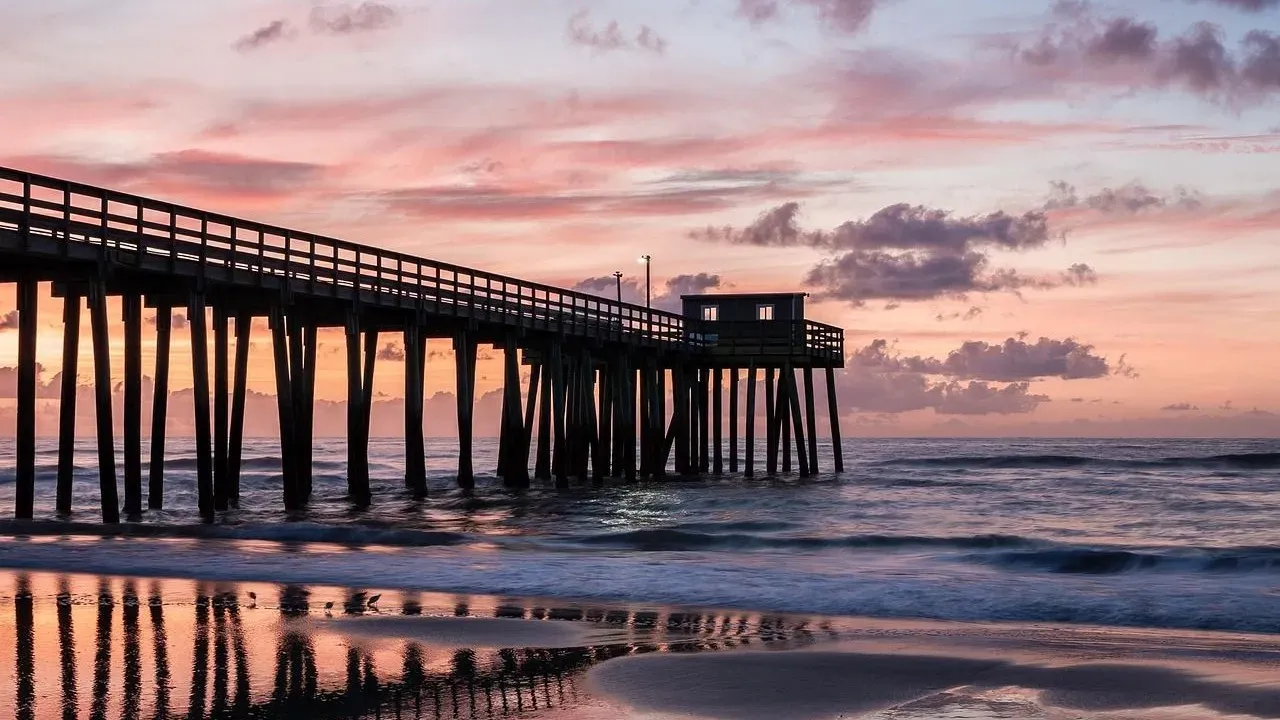

On Wednesday, November 25, 2026, a large wave knocked out the far end of Pacifica Pier in San Mateo County, and the moment was captured on video. The footage shows the entire end of the pier falling into the ocean as record-level king tides and surf larger than forecast battered the coast ([1]). For a community that has known this pier for decades, the loss arrived on a day when the sea was already pushing well past its usual limits.
A pier with a long working history
Pacifica Municipal Pier was built in 1973 and stretches roughly 1,140 feet in an L-shape over the water. It has long drawn anglers and crabbers, and its exposed position has meant repeated storm damage over the years ([2]). Locals and visitors alike have come to see it as more than a place to cast a line. It gives people a long, open view of a stretch of coast that is hard to appreciate from the road.
The pier had already been off limits for months. Earlier this year its entrance cracked and began to break apart, which led to the demolition of a popular cafe that stood nearby ([3]). Local outlets reported that the pier remained shut indefinitely as waves continued to strike the shoreline ([4]).
What king tides are and why they hit so hard
King tide is a informal name for the highest predicted astronomical tides of the year. A coastal hydrologist at the University of California, Santa Cruz explains that these tides occur when the monthly high tide lines up with perigee, the point in the moon’s orbit when it sits closest to Earth ([5]). Under typical conditions, the highest of these tides run about one to two feet above ordinary high tides ([6]).
Storms and swells can push water levels higher still. This week’s tides arrived while ocean levels along the California coast were already elevated by a strong El Niño and an ongoing marine heat wave, according to the National Oceanic and Atmospheric Administration ([2]). Scientists also stress that king tides themselves are not caused by climate change. They matter because they offer a preview of what everyday high tides could look like as sea levels rise ([7]).
The next windows are already on the calendar. The statewide schedule for the California King Tides Project lists the following dates.
| Statewide window | What to expect |
|---|---|
| November 24 to 26, 2026 | Current cycle, with record Bay Area tides reported this week |
| December 23 to 25, 2026 | Forecast to be even higher than the November tides |
| January 21 to 22, 2027 | Final winter window on the current schedule |
Those dates come from the California Coastal Commission, which notes that some northern locations may see tides on nearby days.
Water reached well beyond the shoreline
The damage was not limited to the pier. In the Sharp Park neighborhood, floodwater spread more than a block inland, and in some spots it reached at least 18 inches deep before high tide ([8]). Near Pacifica State Beach, water pushed over a parking lot and onto portions of Highway 1 ([3]).
San Francisco’s water level rose above 8 feet on Tuesday, a November record, and Wednesday’s high tides were expected to set another one ([9]). The beach and wharf in Capitola were temporarily closed because of dangerous surf and high water. Local officials also issued evacuation warnings and road closures along parts of the coast ([2]).
Visiting the coast with care this week
For travelers planning a stop along the San Mateo coast, the closures and warnings are the most important details right now. Pacifica Pier remains closed, and the beaches, roadways and low-lying neighborhoods nearest the water are under active monitoring. Visitors should follow posted signage and any instructions from local authorities, and they should stay well back from waves, even when the surf looks calm between sets.
The pier’s loss is real, and it will likely reshape how the community thinks about its waterfront. Still, the coast itself remains open to those who approach it with patience and respect. Watching the tides change, learning how they work and supporting local businesses once conditions settle are all meaningful ways to care for a place like this one.
AI Disclaimer: This article was created with the assistance of AI tools and reviewed by a human editor.