
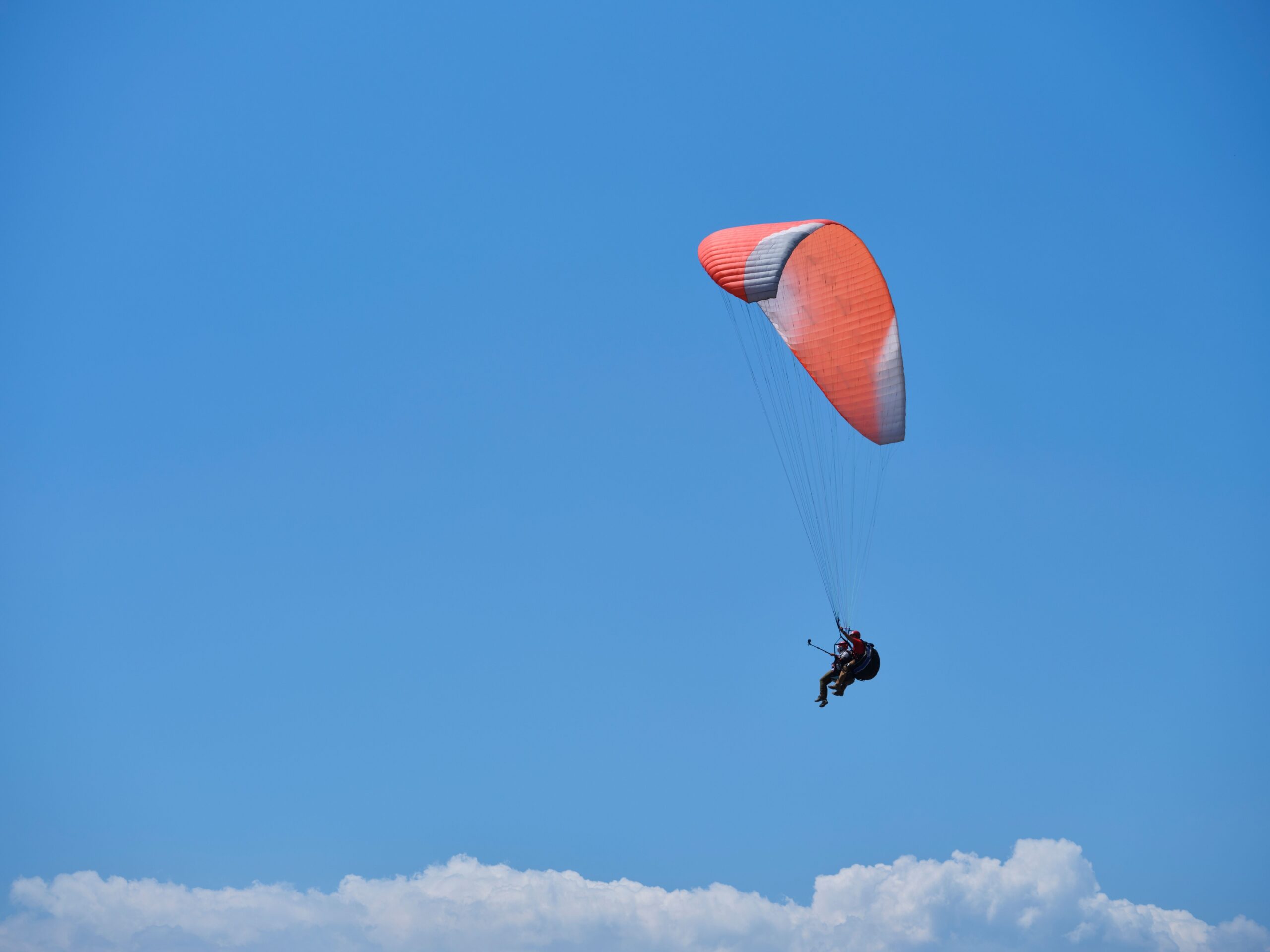

There’s a moment every paragliding instructor knows well. The wind gauge holds steady, the windsock hangs at just the right angle, and the air carries that particular stillness that isn’t actually still at all. It’s the moment they tell their students: now.
Reading wind for a perfect launch is not guesswork. It’s a skill built from thousands of flights, careful observation, and a deep respect for conditions that can shift in minutes. What follows is what experienced instructors actually look for before they ever say “go.”
The Magic Window: Why Wind Speed Is Everything
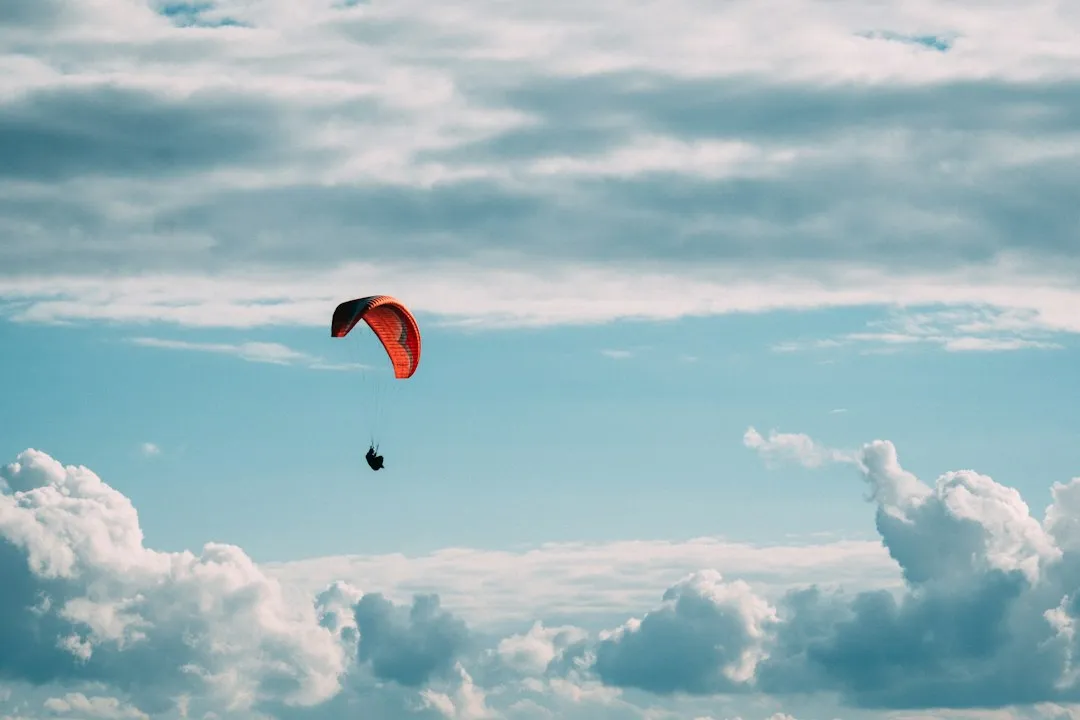
A stable wind blowing steadily and without gusts is ideal for takeoff and stable flying. In paragliding, a wind speed of between 5 and 15 km/h is generally considered favorable. That range is not arbitrary. It reflects the physics of a soft wing interacting with moving air. Too little, and the canopy struggles to inflate cleanly. Too much, and control becomes a battle.
Many pilots consider a light, smooth 6 to 12 knots ideal for soaring: enough to keep the wing pressurized and provide lift, yet gentle enough for a clean launch. For beginners specifically, the upper end of that range shrinks considerably. For beginner or intermediate experience, it’s best to stick with winds not exceeding 12 miles per hour.
The right wind speed for paragliding is a band, not a number, and it’s bounded much lower than other wind sports because you have to fly through the wind on a soft wing, near terrain. This distinction matters more than most newcomers realize.
Headwinds Are Your Friend at Launch
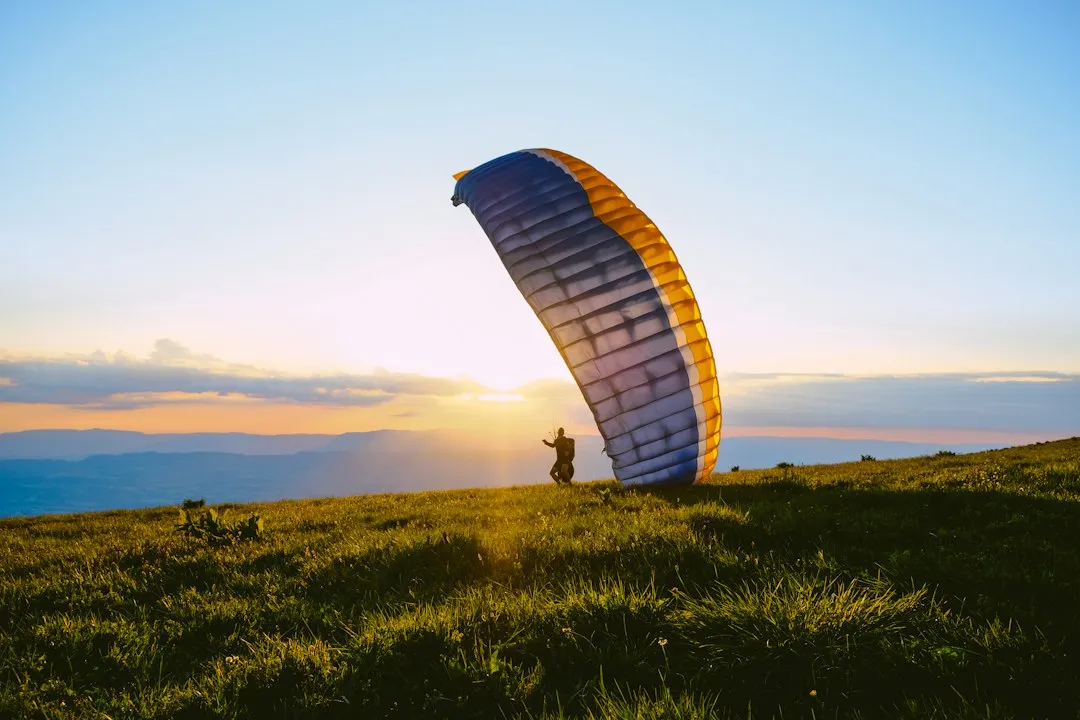
Always check the wind direction relative to your launch site. Headwinds are generally preferable for takeoff. A clean headwind fills the canopy evenly, reduces the ground speed needed to achieve lift, and gives the pilot more control during those first critical seconds off the ground.
A consistent and favorable wind direction is essential for a smooth takeoff and landing. Ideally, wind should be blowing directly into the face of the pilot during takeoff and landing to provide lift and control. Any meaningful crosswind component complicates the canopy inflation and can push a pilot sideways during the run-up phase.
Gusts Change Everything
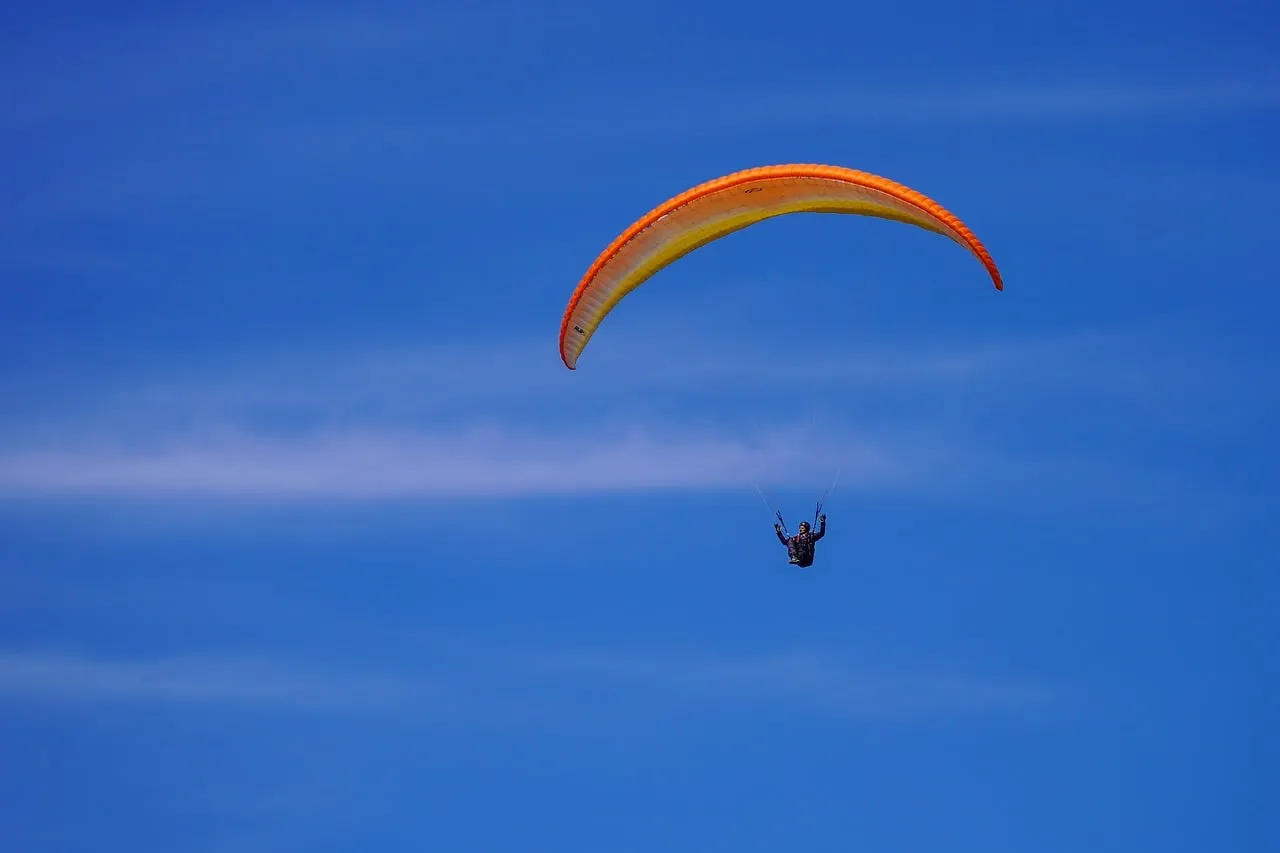
Before you commit to launch, the wind has to clear all three gates: speed, which should be steady within your wing’s safe band; gusts, with a gust factor under roughly 1.5 times the average with no big surges; and direction, on the site’s working bearing with no lee-side or crosswind component. Fail any one of the three and it’s a no-fly, even if the other two are perfect.
A beautiful 10-knot average means nothing if it’s gusting to 24 or blowing cross. Instructors repeat this constantly, and the data supports their caution. Wind over 15 km/h is linked to roughly two thirds of paragliding accidents. That number alone should make any pilot pause before dismissing a gusty reading.
The Gust Factor: What the Numbers Say
According to USHPA reporting, the leading causes of paragliding accidents are split between stall at around roughly a quarter of incidents and poor launch technique at roughly a third. Both categories are directly influenced by wind conditions at the moment of launch.
Strong winds above 25 km/h were involved in roughly two out of every five BHPA accidents recorded between 2021 and 2023. Meanwhile, over nine in ten paragliding accidents are linked to avoidable human factors, while equipment failure accounts for just a fraction of a percent of incidents. The wind doesn’t need to be catastrophic to be dangerous. Poor judgment in moderate gusts causes far more incidents than extreme weather does.
Thermal Conditions and the Launch Window
Thermals are columns of rising air formed due to uneven heating of the Earth’s surface. They begin developing in the late morning as the sun warms terrain at different rates. A thermal is a column or bubble of warm air rising through cooler surrounding air. The sun heats the ground unevenly, as dark surfaces, exposed rock, plowed fields, and parking lots heat faster than grass, water, or shaded terrain. The air directly above the warmer surface heats by conduction, becomes less dense, and rises.
For cross-country paragliding, thermal currents are essential. These updrafts of warm air provide lift and enable longer flights, and the best conditions for thermals are generally found on sunny days with gentle winds. The practical implication for launch timing is real: instructors often wait for the first thermal cycles to establish themselves before sending students into the air, because inconsistent early-morning thermals can produce unpredictable turbulence near the ground.
Reading Clouds Before You Even Walk to the Hill

If you plan on going cross-country paragliding, your ideal weather conditions are lots of white, puffy cumulus clouds. This means a cold front passed approximately 12 hours prior. Cumulus clouds form at the top of thermals, which you can think of as columns of rising air with clouds sitting at the top.
Learning to interpret cumulus clouds to predict where thermals will form and how they will evolve is a core skill instructors develop in their students well before they fly cross-country. A sky full of high, disorganized cloud cover or thickening altostratus tells a very different story than a clean blue sky dotted with small, well-spaced cumulus clouds. Knowing the difference is part of what separates a confident launch from a reckless one.
Why Poor Launch Technique Causes So Many Accidents
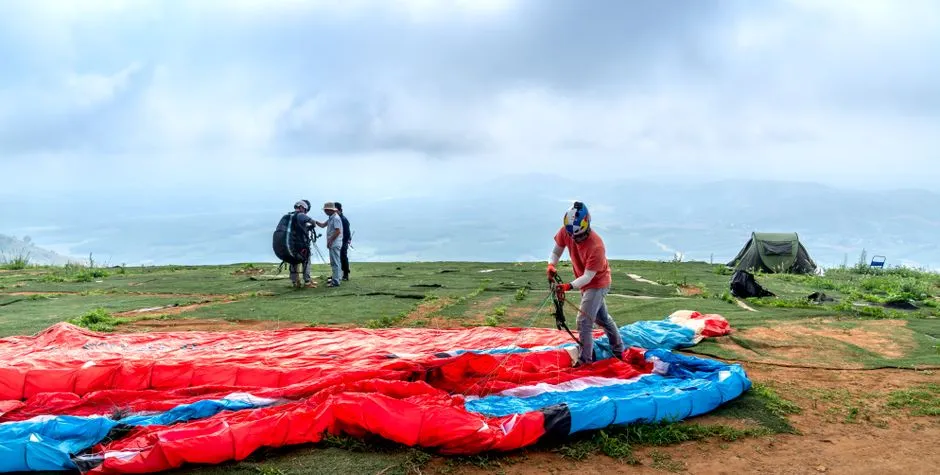
Poor launch technique accounts for roughly a third of paragliding accidents according to USHPA reporting. That figure consistently surprises people who assume most accidents happen mid-flight. In practice, the launch phase concentrates nearly every risk: an inflating canopy, variable surface wind, and a pilot who is moving, committed, and often not yet in full control.
Novice pilots with fewer than 50 flights are involved in the majority of paragliding accidents. This is precisely why instructors spend so much time on ground-handling drills before a student ever leaves the ground. Pilot-error accidents are largely preventable through proper training, conservative decision-making, and honest self-assessment. The pilots who get hurt most often are either beginners who haven’t yet developed situational awareness or intermediate pilots who’ve gained enough confidence to attempt conditions they can’t yet handle.
The Anemometer Is Non-Negotiable
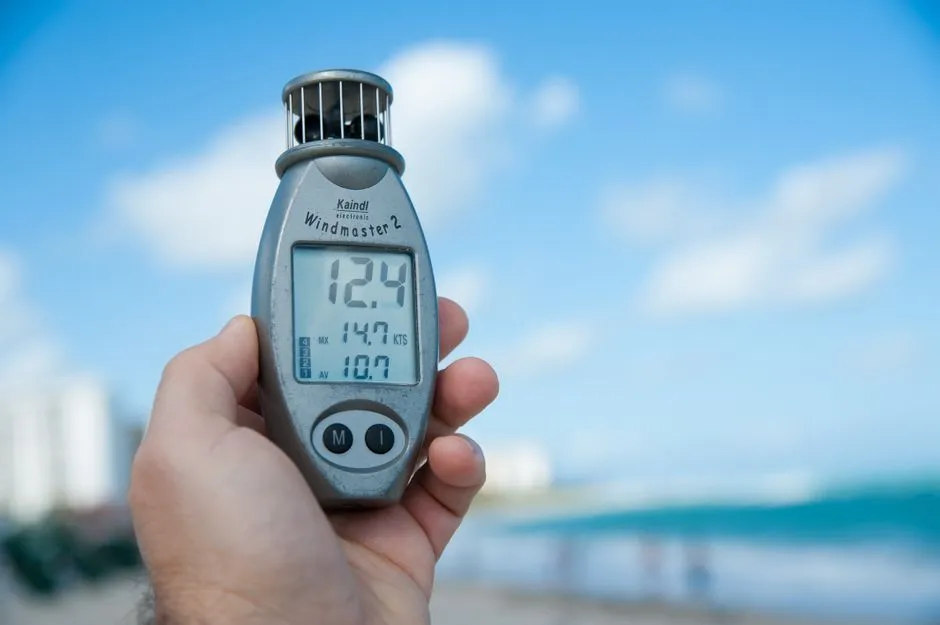
Wind speed and strength is tested by an anemometer. It’s a good idea to test wind strength before paragliding, as this will help you determine how to approach launching and landing, and whether you should postpone your flight. Experienced instructors carry one as a matter of habit, not caution. Eyeballing the windsock is useful context, but a number on a gauge removes the temptation to rationalize borderline conditions.
Wind speed is perhaps the most critical factor to consider before a flight. Ideal wind speeds vary depending on the pilot’s skill level, equipment, and specific flying sites. A site tucked behind a ridge behaves completely differently from an open coastal slope, which is why local knowledge combined with a measured reading gives the most reliable picture.
What “Stable Air” Actually Feels Like
Steady winds provide the necessary lift for takeoff and help maintain altitude during flight. However, variable or gusty winds can make controlling your paraglider challenging and increase the risk of accidents. Instructors often describe stable air as having a kind of rhythm, a consistent, predictable pressure in the canopy without sudden surges or collapses.
Paragliders fly at roughly 20 to 25 mph in still air. That means wind speeds approaching or exceeding your glider’s forward speed can leave you hovering in place or even flying backward. That’s the upper limit in practical terms, not just a theoretical concern. Flying into very strong headwinds eliminates your ability to navigate forward, which creates serious safety risks over terrain. The sweet spot is a wind that assists your wing without overpowering it.
The Decision That Isn’t Yours Alone to Make
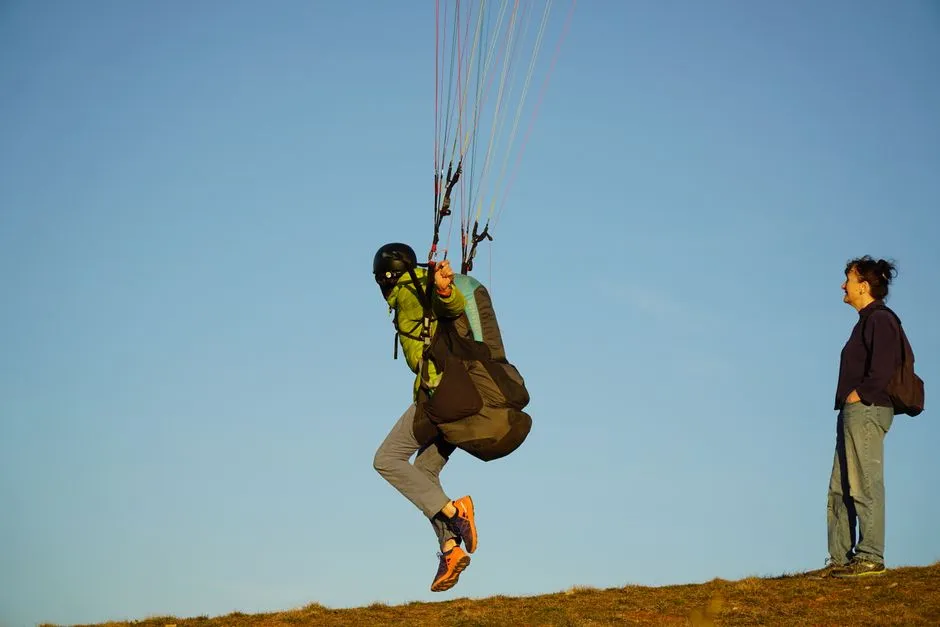
The go/no-go decision at launch is always yours, your instructor’s, and your site’s. This shared accountability matters. Experienced instructors cultivate a culture where calling off a flight is never seen as weakness. The statistics reinforce this culture firmly.
Experienced pilots set personal minimums for wind, gusts, and cloud cover, and they stick to those minimums even when it means packing up and going home. That discipline, built over hundreds of flights, is what keeps the sport’s overall safety record manageable. A study published in Wilderness and Environmental Medicine found an overall incident rate of approximately 1.4 fatalities per 100,000 flights across all paragliding types. That rate reflects not just conditions, but the cumulative effect of thousands of correct go/no-go decisions made by pilots who knew when to wait.
The Takeaway
The perfect launch condition is not a single dramatic signal. It’s the alignment of several quiet, measurable factors: a headwind holding steady in a safe range, a gust factor well below the danger threshold, a direction squarely on the site’s working bearing, and an air mass that carries a readable, predictable rhythm.
Instructors don’t rely on intuition alone. They rely on instruments, on patterns learned over thousands of flights, and on a willingness to wait for the right moment rather than force a launch in marginal air. The wind will come back around. Not every window will.
AI Disclaimer: This article was created with the assistance of AI tools and reviewed by a human editor.