
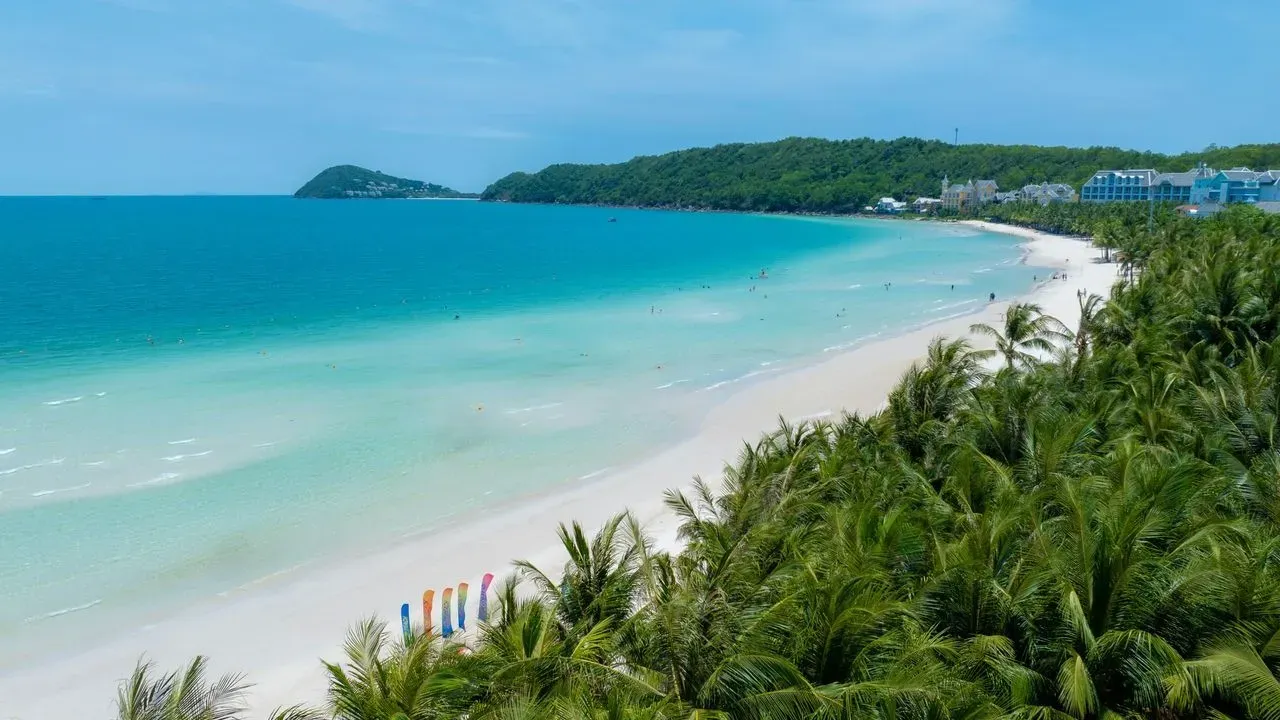

In southwestern Vietnam, Phu Quoc Island offers travelers a setting defined by its sea-meets-sand coastal scenery and a noticeably slower pace than much of the rest of the country. The island itself is large, requiring more than an hour to drive from north to south, which allows visitors to move between distinct areas at their own rhythm. Open roads connect beach towns, stretches of jungle, and working fishing villages, while larger developments sit nearby. ([1])
Understanding the Island’s Size and Everyday Rhythm
Phu Quoc covers enough ground that a single day rarely feels rushed. Travelers can start the morning near one shoreline and reach another landscape by afternoon without the pressure of tight schedules common elsewhere. This scale supports a measured approach to exploration, where stops along the way become part of the experience rather than interruptions. The island’s daily tempo reflects its mix of communities. Fishing villages continue their routines alongside areas shaped for visitors, creating a balance that many appreciate. Roads remain relatively open, making it straightforward to reach quieter stretches or return to more active spots as interests change.
Coastal Scenery That Shapes Daily Life
The meeting of sea and sand forms a consistent backdrop across much of Phu Quoc. Long stretches of shoreline invite walks at sunrise or simple pauses to watch the water. These coastal areas support both local livelihoods and moments of quiet reflection for those passing through. Beach towns along the edges provide places to settle in for a meal or an overnight stay. The scenery here feels integrated with the island’s working character rather than separated from it. Visitors often find that the same shores used by fishing boats also offer space for unhurried time outdoors.
A Landscape of Villages, Jungle, and Developed Areas
Phu Quoc holds a range of environments within its boundaries. Fishing villages maintain their traditional patterns, while jungle interiors offer shaded paths and natural cover. Beach towns sit between these zones, and larger theme parks occupy their own sections a short distance away. This combination allows travelers to move from one setting to another in a single outing. The presence of both longstanding communities and newer attractions gives the island layers that unfold gradually. Open roads make these transitions practical without requiring complex planning.
Practical Ways to Experience the Island’s Character
Visitors often find value in pacing their days around the island’s natural variety. A few approaches stand out for those seeking grounded encounters:
- Drive sections of the main roads to notice how fishing villages transition into jungle edges and then into beach areas.
- Spend time near working harbors to observe daily routines alongside the coastal scenery.
- Explore quieter inland routes where jungle cover provides contrast to the open shorelines.
- Include stops at developed sites to see how they sit within the larger island context.
These choices keep the focus on the island’s existing mix rather than a single type of experience. The island’s layout encourages travelers to notice how different elements coexist. Over time, that awareness can shape a more considered visit, one that respects both the pace of local life and the opportunities for personal discovery.
AI Disclaimer: This article was created with the assistance of AI tools and reviewed by a human editor.