
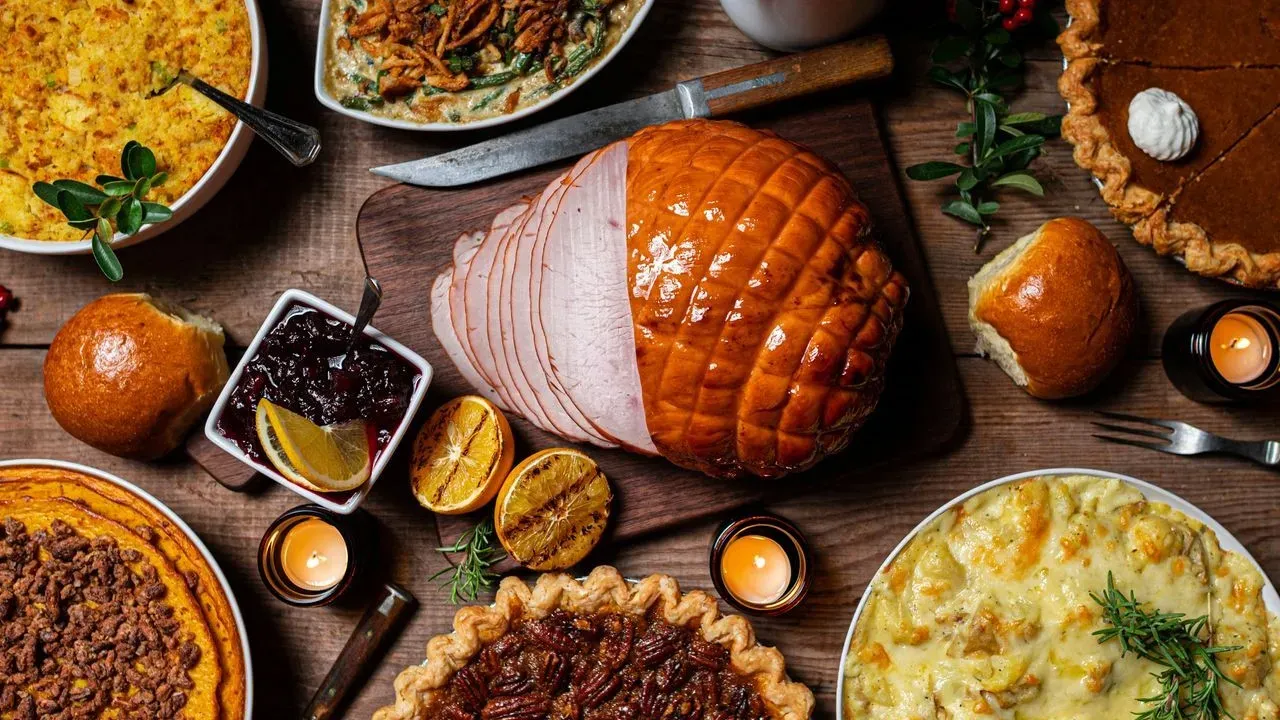

With Thanksgiving on November 26, many travelers are deciding whether the dishes they planned to bring along will clear the checkpoint. ([1])The answer depends largely on one question: is the food solid, or can it be poured, spread or spilled? Solid dishes generally travel in a carry-on bag. Anything that falls into the liquid or spreadable category usually belongs in checked luggage, and that distinction can save time at the security line.
Solid dishes generally fly in the cabin
Many of the centerpieces of the holiday table fall on the carry-on side of the line. ([2])Pies, turkey, ham, chicken and stuffing are generally permitted in carry-on bags. Whole pies are also treated as solid foods, provided they are wrapped or contained properly. ([3])
Solid food still gets a closer look. Officers may ask travelers to remove items and place them in a separate bin for X-ray screening, so packing dishes in an easy-to-reach spot can help. Frozen items have their own requirement. A frozen turkey must still be frozen when it reaches the checkpoint, and ice packs are allowed only if they remain frozen solid. The simplest approach is to keep a frozen bird in the freezer until the moment you leave for the airport.
Where liquids and spreads get stuck
The easiest way to sort foods is a rule TSA officers have long used: if you can “pump it, pour it, spray it or spread it,” it generally needs to go in checked luggage when it exceeds 3.4 ounces. Gravy and sauces fall squarely into that group. Jams, jellies, wine and spirits are subject to the same limit, and canned fruits and vegetables are typically a no-go because of the liquid in the can.
Cranberry sauce is the dish that surprises many holiday travelers. Whether it is homemade or from a can, it is treated as a spreadable item, so a large container belongs in a checked bag. A quick reference can make the decision easier.
| Thanksgiving food | Carry-on | Checked bag |
|---|---|---|
| Whole pumpkin or pecan pie | Yes, if wrapped | Also allowed |
| Cooked turkey or ham | Yes | Also allowed |
| Gravy in a jar or can | No, if over 3.4 oz | Yes |
| Cranberry sauce | No, if over 3.4 oz | Yes |
The 3-1-1 rule remains in place for now
The Transportation Security Administration’s 3-1-1 policy still governs liquids in carry-on bags. Each liquid must be in a container of 3.4 ounces or less, and all containers must fit in one clear quart-size bag per passenger. Anything that does not meet those limits needs to travel in checked luggage.
Change is being discussed, though it has not reached most travelers. Recent reports said TSA was considering letting PreCheck passengers carry water bottles through checkpoints at airports with newer scanning technology. ([4])Even so, the 3-1-1 rule still applies to most travelers, and the changes that have been introduced are tied to specific checkpoints rather than a nationwide repeal. ([5])Travelers should follow the rules that apply at their own departure airport.
Check before you pack
When a dish is borderline, a quick check can prevent a surprise at the checkpoint. The MyTSA app includes a “What Can I Bring?” section where travelers can type in an item and see whether it can be carried on or should be checked. Questions can also be sent to the @AskTSA account on X or Facebook Messenger, or travelers can text “Travel” to AskTSA at 275-872.
If a favorite side or sauce falls into the no-carry-on category, a checked bag is still an option. Packing those items in luggage that goes into the hold keeps them with the rest of the meal. Airports are expected to be crowded during the holiday week, so a few minutes of planning can make the trip smoother for everyone at the security line. Bringing a homemade dish to the table is a small gesture, and knowing the rules ahead of time lets it arrive as intended.
AI Disclaimer: This article was created with the assistance of AI tools and reviewed by a human editor.