
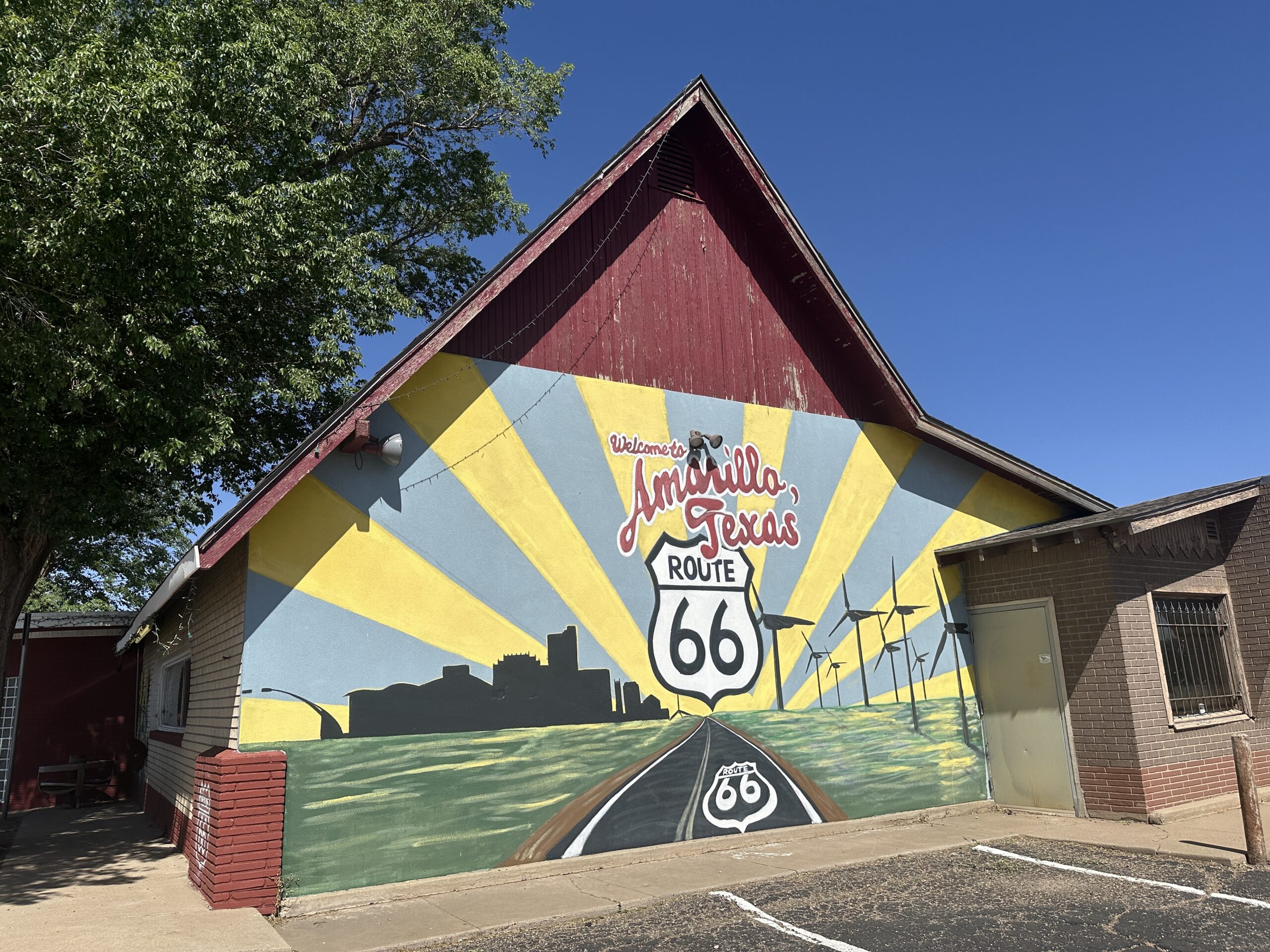

From painted Cadillacs and legendary roadside stops to working ranch culture and the unexpected wonder of Palo Duro Canyon, Amarillo revealed a side of Texas I did not see coming.
I had visited other parts of Texas before, but the Panhandle felt different: wider, windier, more open, and deeply connected to farming, ranching, and the long story of the American road. I arrived curious, without a fixed idea of what the city would be. By the end of the trip, each stop had left its own distinct impression — Route 66 in its centennial year, Cadillac Ranch in all its colourful chaos, The Big Texan with its larger-than-life hospitality, a rodeo I approached with hesitation, and Palo Duro Canyon rising unexpectedly from the flatlands.
Route 66
There are some roads that live in the imagination long before you ever stand on them.
Route 66 has always held a certain magic for me. It is more than a highway; it is a ribbon of American memory, stitched together with diners, neon signs, small towns, family road trips, and the promise that somewhere ahead there is another story waiting.
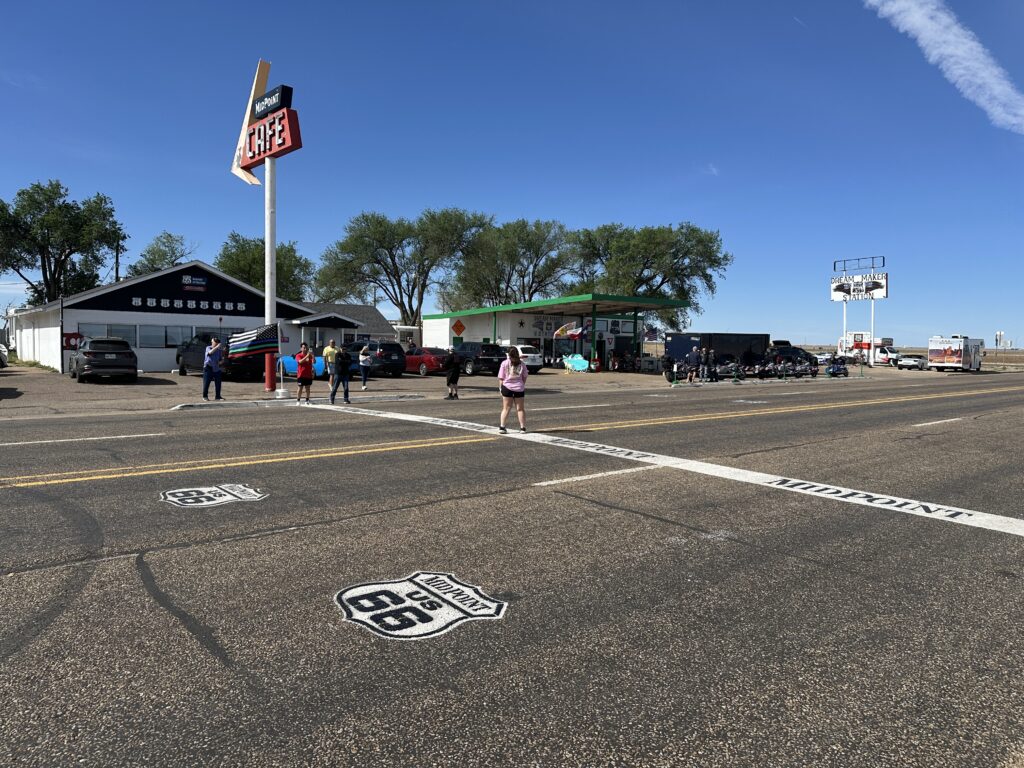
During this trip, I finally reached the midpoint of Route 66 in Adrian, Texas, a meaningful stop about a short drive from Amarillo. I have been to the beginning of the route in Chicago and many times to its end in Santa Monica, but standing at the halfway point made the dream feel more complete. One day, I would love to drive the full route from start to finish. For now, reaching the middle felt like a beautiful chapter in that larger travel wish.
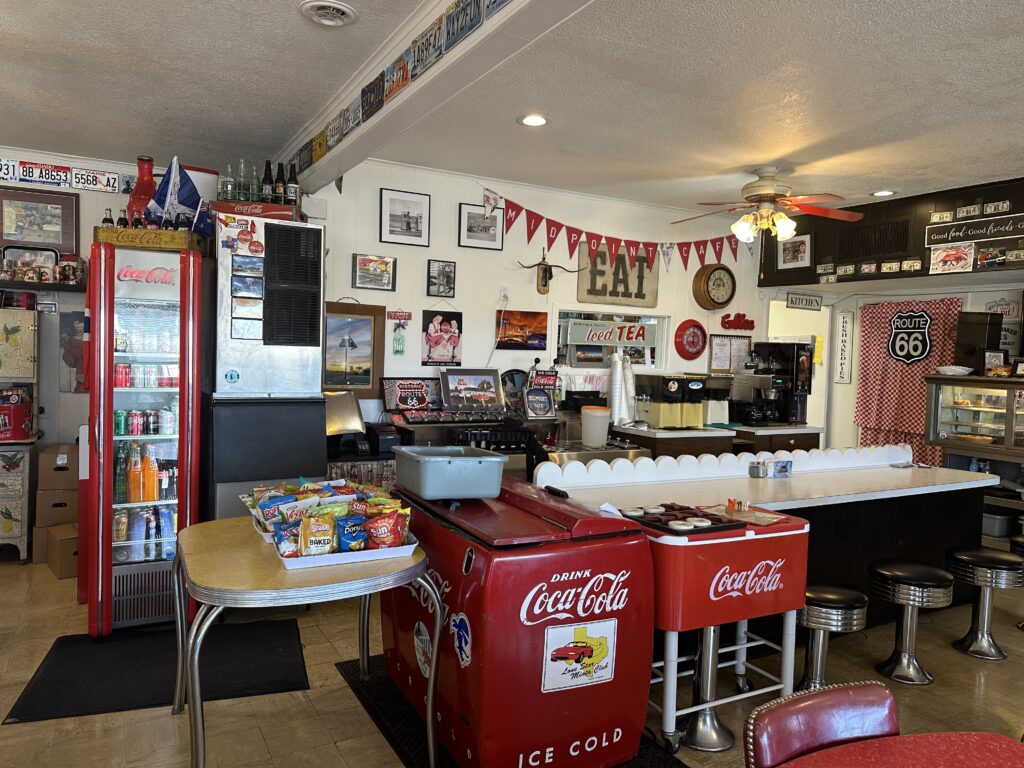
The Midpoint Café is the kind of place that invites you to slow down. Stop for a bite, take the photo, look at the signs, and let yourself sink into the nostalgia of the Mother Road. There is something wonderfully unhurried about it, as though the road is asking you to pause before moving on. For travellers who love classic Americana, road-trip culture, or the feeling of stepping into a place that has welcomed generations of people passing through, this little stop delivers.
It also brought back memories of the animated film Cars, with its love letter to roadside towns and the charm of places that highways once made famous. That is what Route 66 still does so well. It reminds us that travel is not only about arriving somewhere. Sometimes, the point is to pull over, order something simple, take in the view, and let the road tell you where you are.
Cadillac Ranch
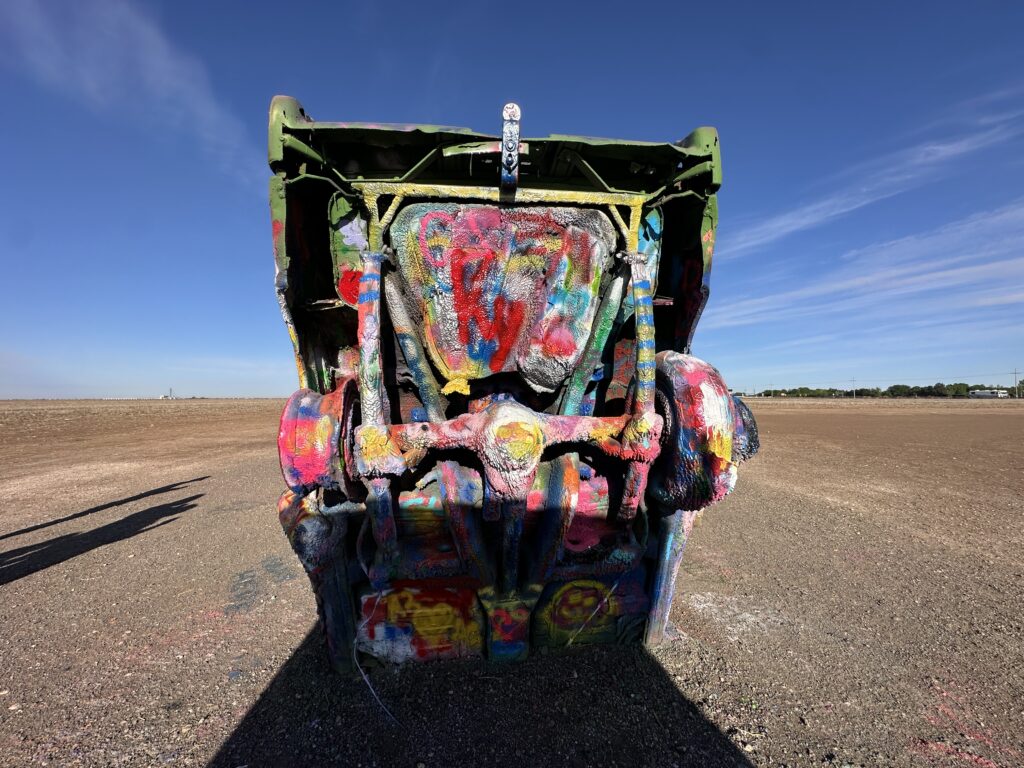
Cadillac Ranch is one of those places that feels almost impossible to explain until you are standing in the field, looking at ten Cadillacs buried nose-first in the Texas earth.
Created in 1974 by the art collective Ant Farm, the installation was imagined as a tribute to American automobile culture and the visual language of Route 66. The cars are not displayed in a museum or polished behind ropes. They are out in the open, exposed to wind, weather, travellers, spray paint, and time. That is part of what makes the experience so memorable. It feels less like visiting a finished artwork and more like stepping into one that is still being written by everyone who passes through.
I arrived with a small yellow spray can and added a sun to several of the cars. It was simple, joyful, and unexpectedly personal, like leaving a little burst of light behind on the Mother Road. I even recorded the moment and posted it to Instagram with “Texas Sun” playing in the background, because sometimes travel hands you the right soundtrack without trying too hard.
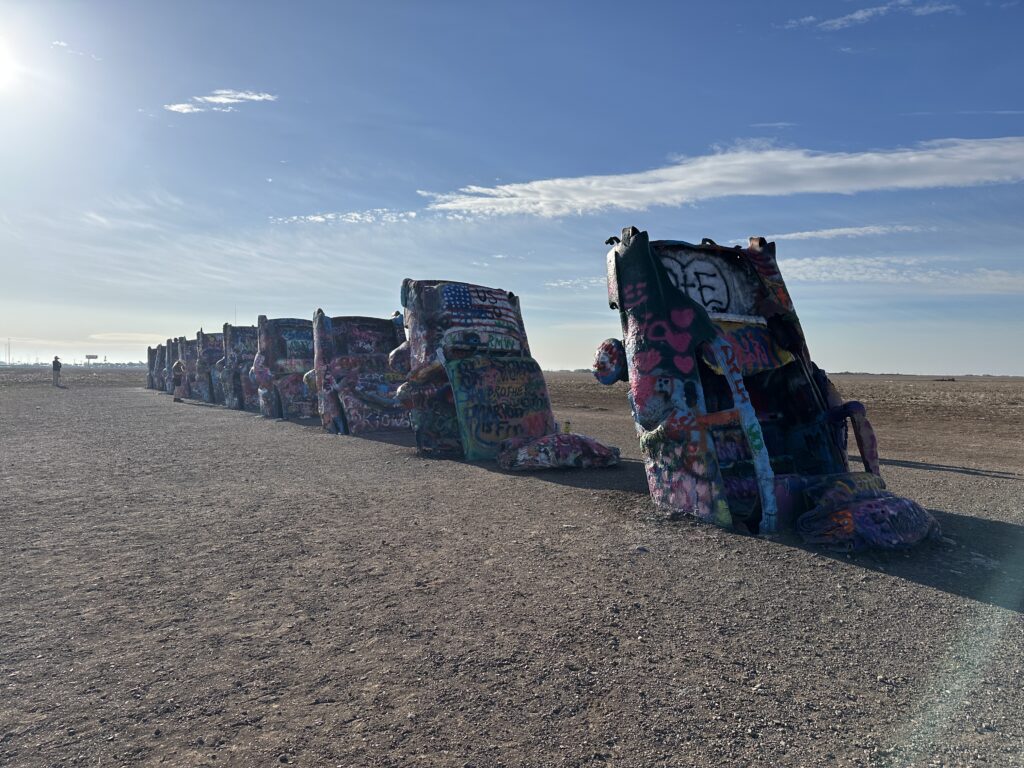
What makes Cadillac Ranch draw people from around the world is not only its strangeness, although that is certainly part of the fun. It is the invitation. Visitors are not just looking at the cars; they are adding to them. Names, flags, hearts, symbols, colours, and messages layer over one another until the cars become a constantly changing record of who has been there. By the next day, your mark may already be covered by someone else’s, and somehow that feels right. The point is not permanence. The point is participation.
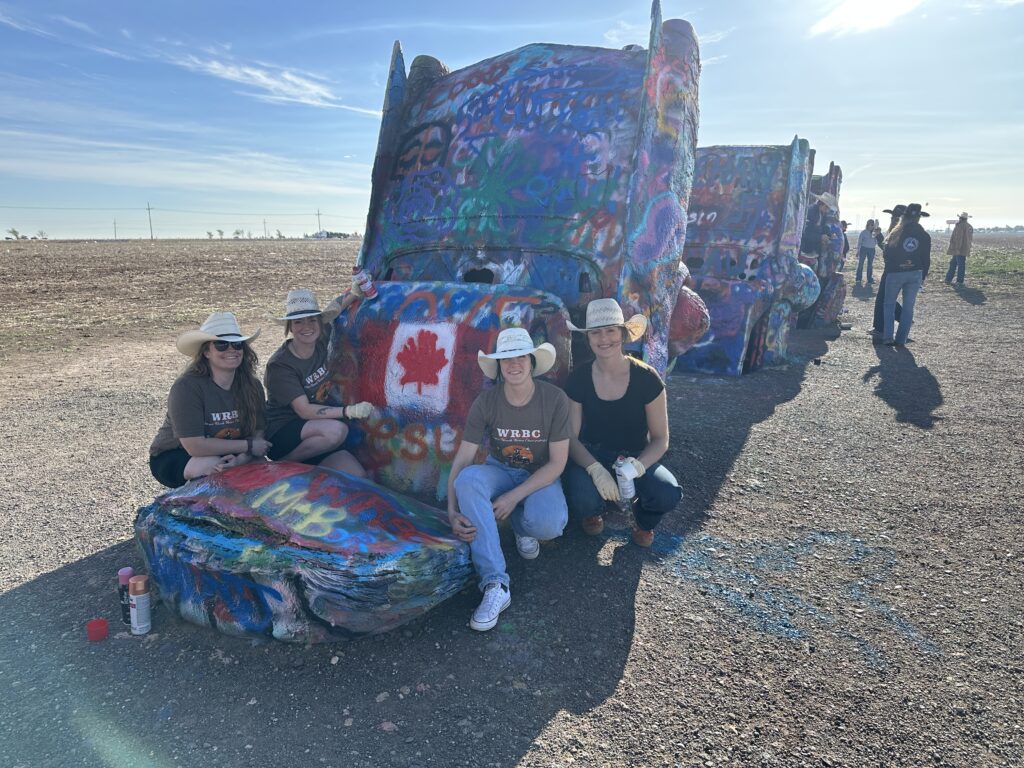
That spirit led to one of my favourite encounters of the trip. While I was there, I met fellow Canadians who had spray-painted a Canadian flag onto one of the cars. Later, I learned they were from Saskatchewan and Alberta and connected to the Women’s Ranch Bronc Championships Canada, part of the rodeo world I had glimpsed the night before. In the middle of a Texas field, beside a row of paint-covered Cadillacs, we had one of those unexpected travel moments that make a place feel smaller, warmer, and more connected.
Cadillac Ranch is playful, messy, colourful, and completely its own thing. It is also one of the best reminders that public art does not always ask us to be quiet. Sometimes it asks us to show up, take part, leave a little colour behind, and accept that the next traveller will do the same.
The Big Texan Steak Ranch
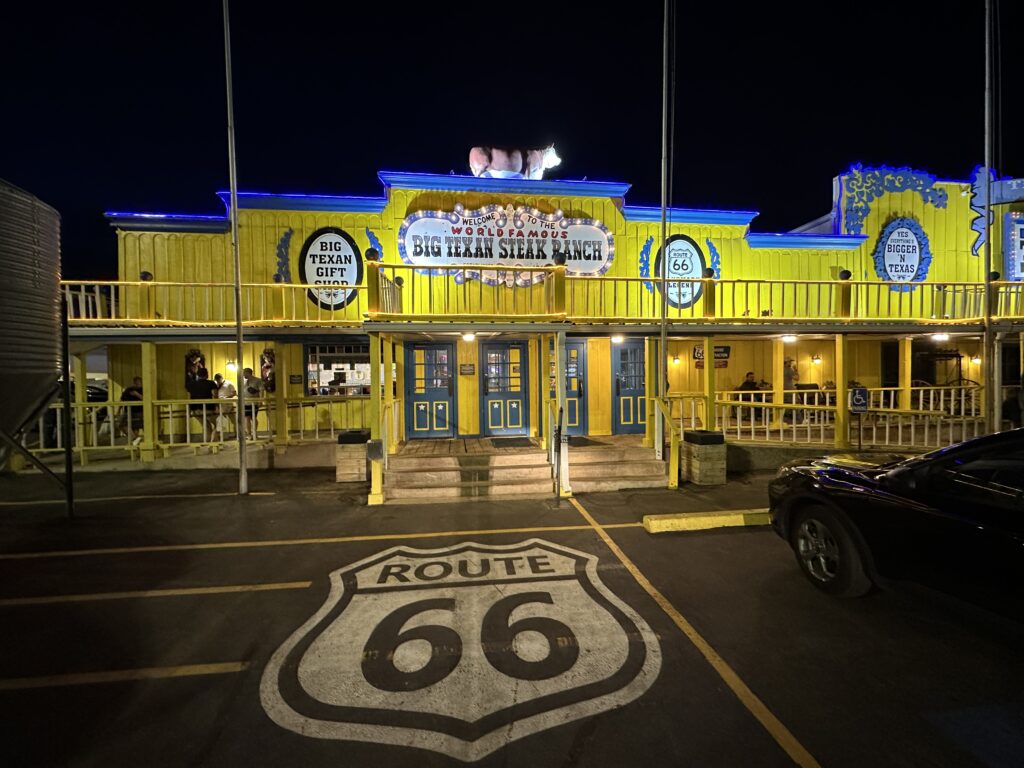
The Big Texan Steak Ranch is good steak meets spectacle, and that is exactly the point.
Opened in 1960, it began as a larger-than-life expression of Amarillo itself: beef country, cowboy country, Route 66 country. What interested me most was learning that its founder, R.J. “Bob” Lee, did not simply open a steakhouse because he wanted another restaurant on the road. His story began with a practical turn. After working in airline food service, he found himself looking for a new path and recognized something distinct about Amarillo: quality beef, Western heritage, and a Panhandle personality that deserved to be celebrated in its own way.
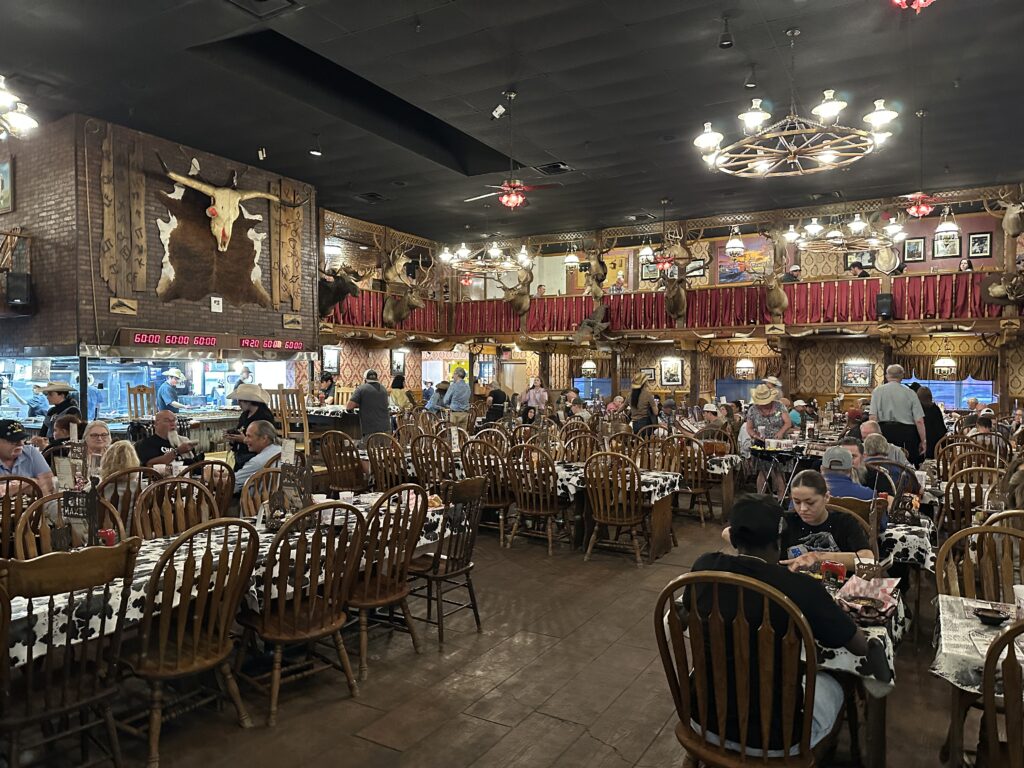
Decades later, that vision is still alive, now carried forward by the next generations of the Lee family. I had the pleasure of meeting Patrick, the founder’s grandson, who helps run The Big Texan with his brothers and cousins. That family connection gave the experience more heart. It is one thing to visit a famous roadside restaurant; it is another to see how a family has kept the story going, adapting it for new generations while holding on to the spirit that made people stop in the first place.
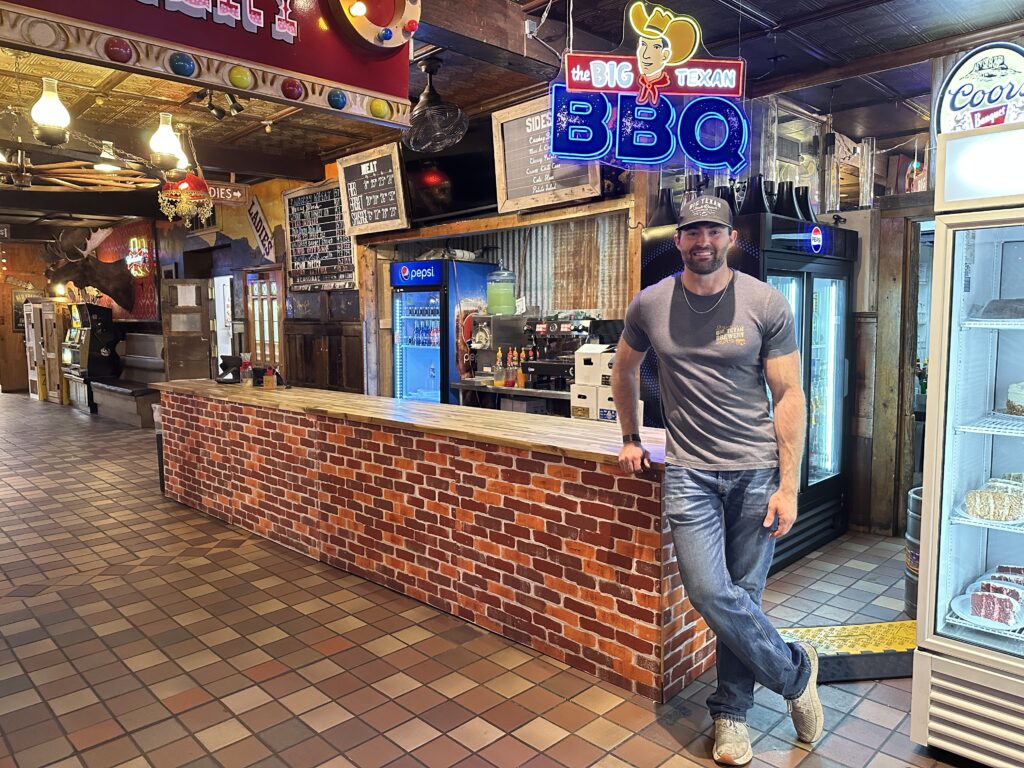
And people do stop. The Big Texan serves more than 600,000 guests a year, with visitors coming from around the world. Once you step inside, it is easy to understand why. The restaurant is not subtle, nor should it be. There are neon lights, a gift shop, country music, a dessert counter, a bar, outdoor space, and a sense that the entire building has been designed to make people smile before they even sit down. The official Big Texan site describes it as a generational family business that has been “feeding folks since 1960,” with its restaurant, gift shop, brewery, and famous 72-ounce steak challenge all part of the experience.
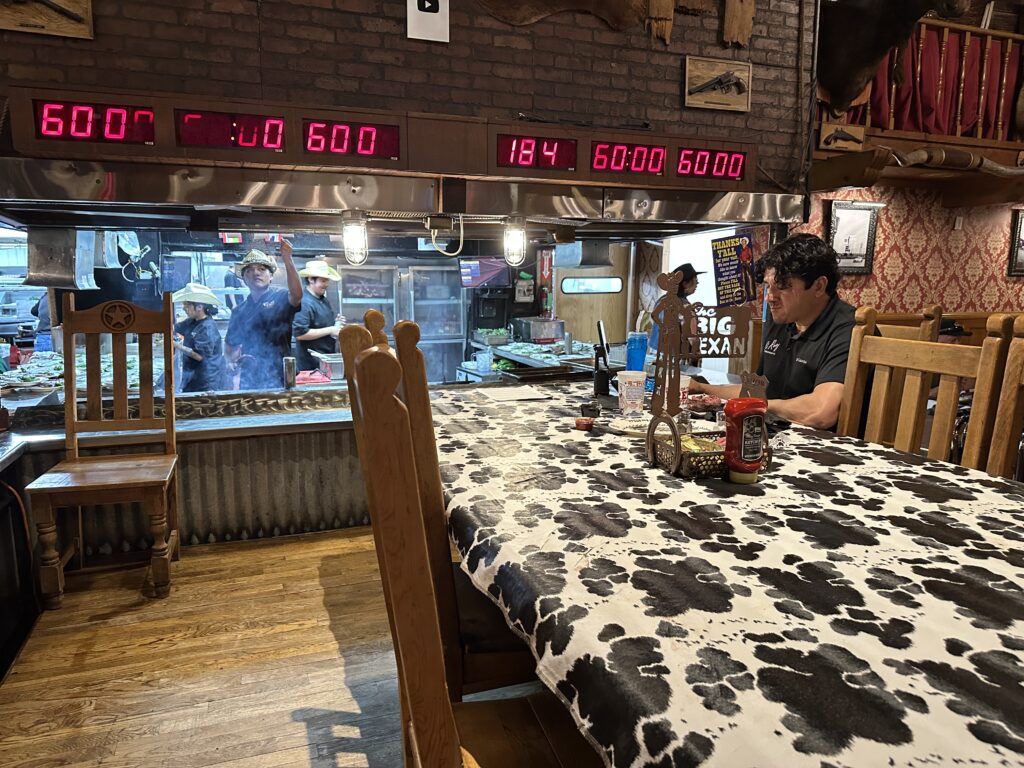
The 72-ounce steak challenge may be the headline, but for me, the real charm was the mix of theatre and sincerity. The Big Texan knows exactly what it is: bold, playful, welcoming, and proudly Amarillo. It offers visitors a taste of Texas that is part meal, part roadside attraction, part family legacy.
I also met Tony Love, better known as Dr. Love, who I was told has stepped in many times over the years to perform the Heimlich manoeuvre when excited diners ate too quickly. It was funny, slightly alarming, and very much in keeping with the personality of the place. At The Big Texan, even dinner seems to come with a story.
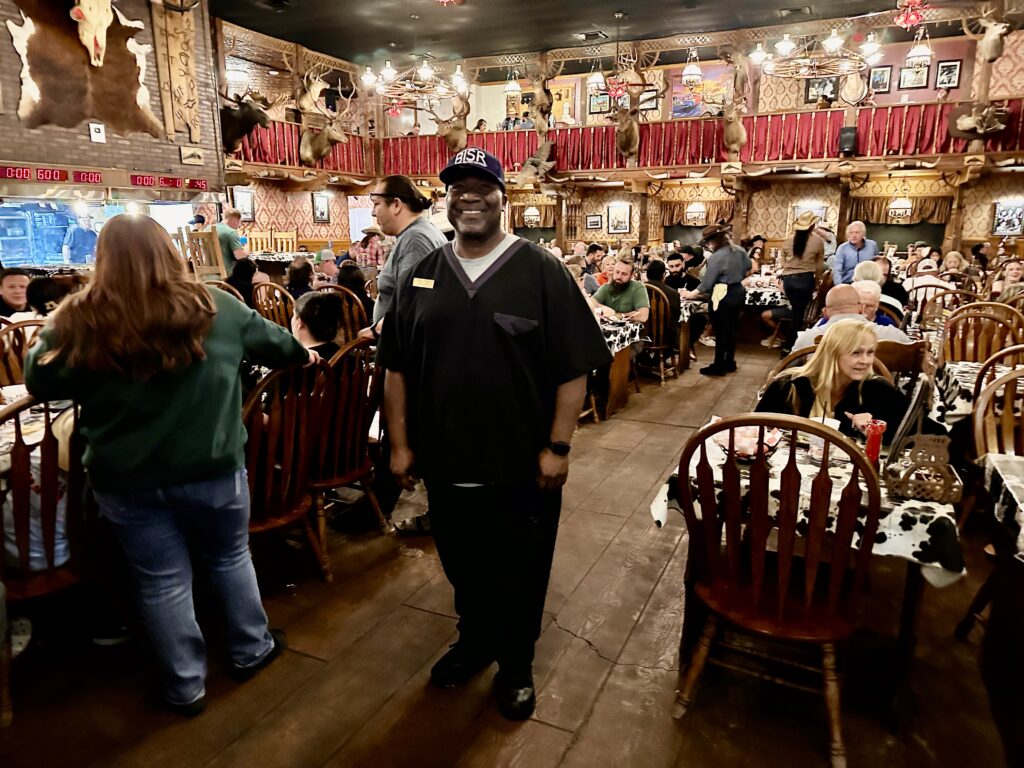
This was one of my most memorable meals in Amarillo, not only because the food was delicious, but because the restaurant feels like a living postcard from Route 66: bright, oversized, warm-hearted, and impossible to forget.
West Texas Ranch Rodeo and Cowboy Country
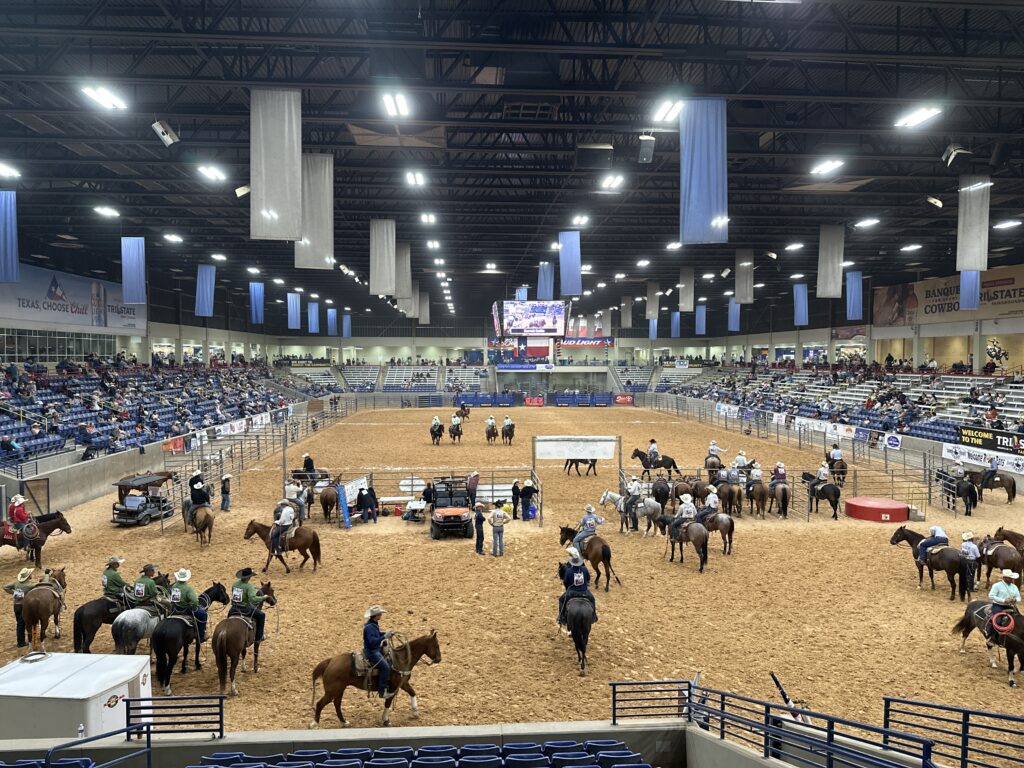
I was not planning to attend the West Texas Ranch Rodeo.
Before arriving in Amarillo, I had asked for that portion of the itinerary to be removed. I care deeply about animal welfare, and I knew there would likely be parts of rodeo culture that would be difficult for me to understand. Still, Amarillo is cowboy country, and I wanted to see this part of the Texas Panhandle through my own lens rather than make assumptions from a distance.
What changed my mind began earlier in the day at the World Championship Blacksmiths competition. Inside the venue, skilled farriers worked under time pressure, shaping horseshoes from bar stock in a team competition that required strength, focus, technique, and precision. I was told that 98 farriers from across the United States and several other countries were competing in Amarillo during the West Texas Ranch Rodeo, building intricate and precise shoes from scratch.
That, in itself, was impressive to watch. It offered a window into the craftsmanship behind ranch life, where skill is not theoretical but practical, earned, and deeply connected to the care and work of horses. When I was told that the rodeo later that evening would also showcase working ranch skills, I decided to go and see it for myself.
The event that stayed with me most was Team Sorting. The announcer called out a series of numbers, and the team had to separate five steers from the herd in sequential numerical order, with the fastest time winning. Watching it in person was fascinating. At moments, the cowboys looked like they were performing a form of Western dressage: horse and rider moving as one, reading the herd, adjusting direction, and responding to the smallest shifts in movement.
There were no ropes or extra tools in that particular event, just riders on horseback guiding the steers with patience, timing, communication, and remarkable precision. The horses seemed to understand the work as much as the riders did, and that relationship between horse and cowboy was striking to watch. I could understand how separating an animal from a herd might be necessary when one needs attention, care, or closer observation.
Other events were harder for me to understand. Stray Gathering and Wild Cow Milking did not sit with me in the same way. I understand that these events are presented as part of ranching tradition, but anywhere an animal appears stressed remains difficult for me, and I do not think animals need to be part of a competition to prove human skill.
What I did appreciate was the wider sense of community around the rodeo. The audience was not enormous when I attended, and many people wandered the perimeter of the venue, visiting vendors selling everything from 4-H items and saddles to baked goods, whisky, clothing, and Western goods. One of the sweetest moments was watching the little ones in cowboy hats chasing each other and trying to rope one another in the holding area.
I left with mixed feelings, but also with more understanding than I arrived with. I may never fully connect with every part of rodeo culture, but I can appreciate the skill, craftsmanship, discipline, and heritage surrounding it. In Amarillo, cowboy country is work, family, tradition, and identity, and seeing it in context helped me understand the place more fully.
American Quarter Horse Hall of Fame & Museum
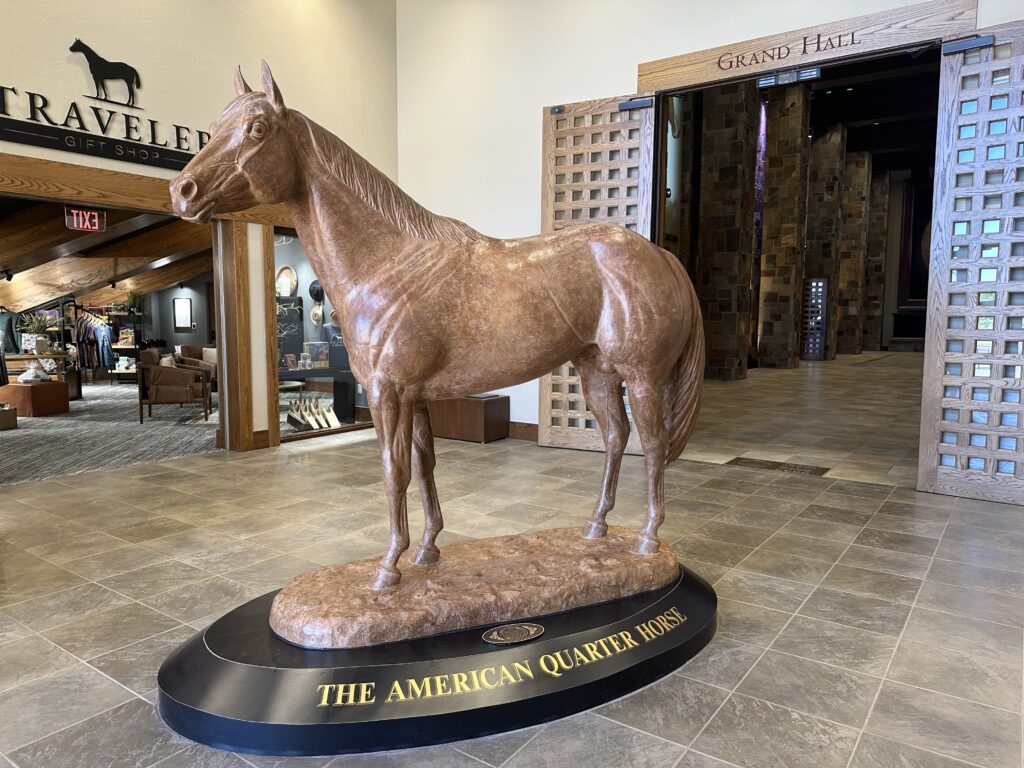
After seeing cowboy and ranching skills in action, the American Quarter Horse Hall of Fame & Museum added another important layer to the Amarillo story.
Located in Amarillo, the museum celebrates and preserves the history of the American Quarter Horse, often described by the American Quarter Horse Association as one of the world’s most versatile horse breeds. The AQHA itself is headquartered in Amarillo, which helps explain why this museum belongs so naturally here. This is not simply a stop for horse lovers; it is a place that helps visitors understand how closely the American Quarter Horse is tied to ranching, racing, rodeo, recreation, and Western identity.
What I appreciated most was how the museum helped connect the dots. After watching farriers shape horseshoes from raw bar stock and seeing the close relationship between horse and rider during Team Sorting, the exhibits gave that relationship more history and meaning. The American Quarter Horse is known for strength, speed over short distances, agility, and a calm working temperament — qualities that made the breed especially important in ranch life.
In Amarillo, horses are not background scenery. They are part of the story of labour, land, sport, skill, and heritage. Visiting the museum after the rodeo experience made me understand that more fully. It offered a quieter, more reflective counterpoint to the arena: less dust and spectacle, more history, preservation, and respect for the animals that helped shape this part of Texas.
Palo Duro Canyon
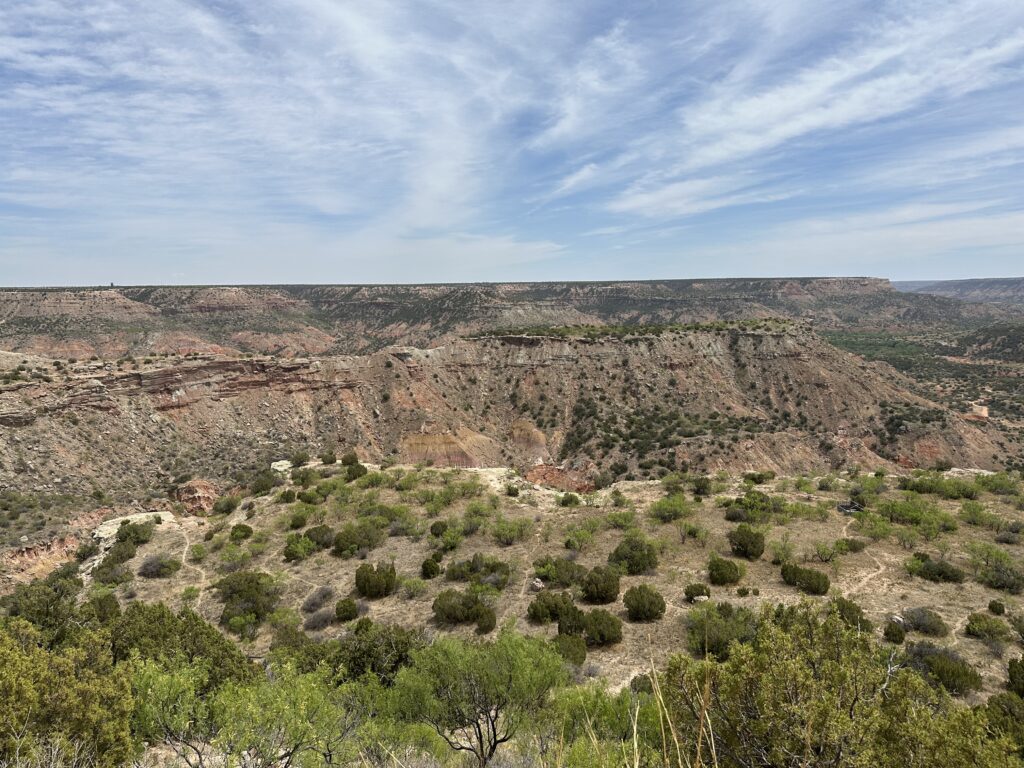
Palo Duro Canyon is a majestic landscape made even more striking by how unexpected it feels.
After experiencing Amarillo’s flat, windy, wide-open Panhandle terrain, the canyon arrived like a revelation. One moment, the land seemed to stretch endlessly toward the horizon. The next, it opened into colour, depth, and scale. It was a complete shift in scenery, and that juxtaposition made the view feel even more dramatic.
Often called “The Grand Canyon of Texas,” Palo Duro Canyon is the second-largest canyon in the United States. It stretches roughly 120 miles and reaches depths of about 800 feet, with layered bands of red, rust, cream, and ochre carved into the earth over time. Texas Parks and Wildlife also notes that the park is home to varied wildlife, including roadrunners, wild turkeys, white-tailed and mule deer, coyotes, bobcats, and threatened species such as the Palo Duro mouse and Texas horned lizard.
There is one main entrance and exit, so lines can be long, especially during busy periods, but it is absolutely worth the wait. Visitors come to camp overnight, spend the day hiking, bird watching, take in the overlooks, explore by bike or horseback, or simply stand still and absorb the view.
I always say nature is the best artist, and Palo Duro Canyon is a canvas you do not want to miss. The colours, textures, shadows, and scale feel almost painted into the Texas Panhandle. After the neon, roadside nostalgia, and cowboy culture of Amarillo, the canyon offered a different kind of wonder — quiet, ancient, and unforgettable.
Downtown Amarillo
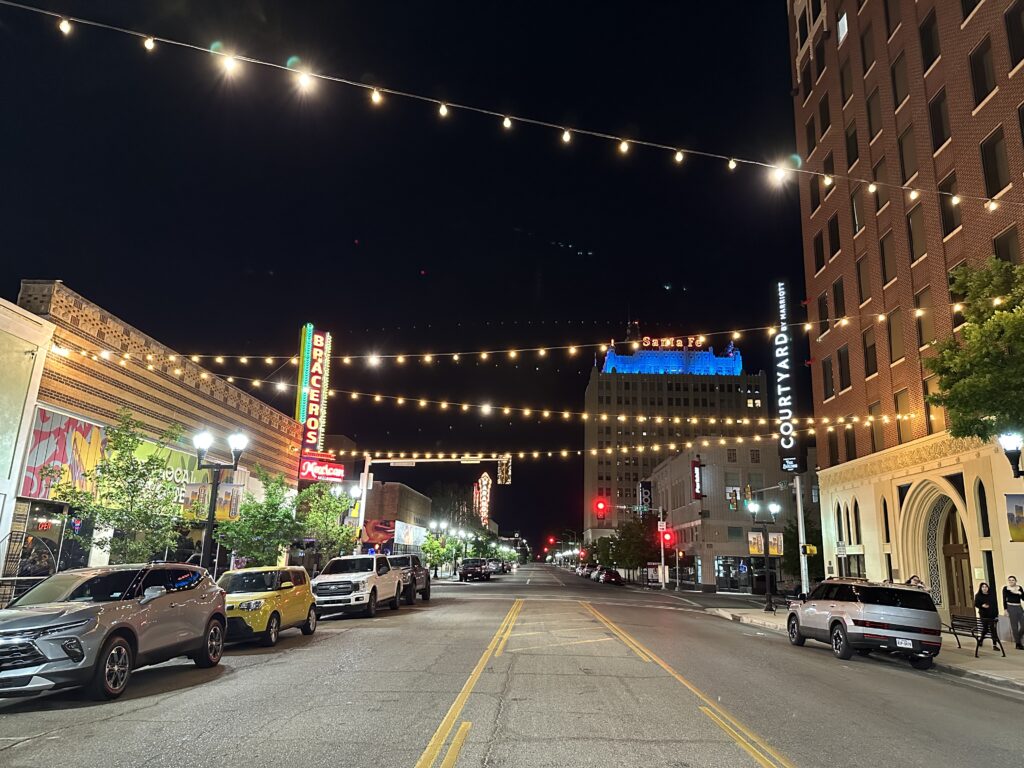
The Barfield gave me a lovely introduction to downtown Amarillo.
Set on Polk Street, in the heart of the city, the hotel offered a polished and welcoming counterpoint to the open landscapes, Route 66 nostalgia, and cowboy country I had been experiencing throughout the trip. After days spent moving between painted Cadillacs, canyon views, roadside stops, and ranch culture, it was wonderful to return to a space that felt bright, comfortable, and full of character.
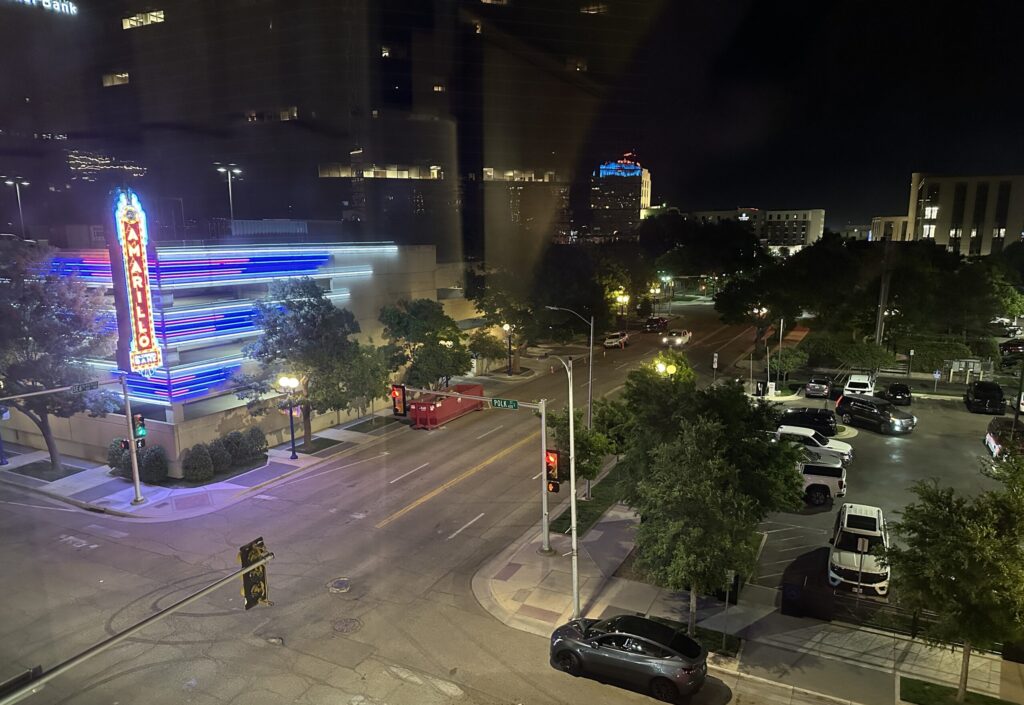
The building itself carries a fascinating story. The Barfield occupies the historic Oliver-Eakle-Barfield Building, originally developed by Melissa Dora Oliver-Eakle, a remarkable Amarillo businesswoman whose legacy still feels ahead of its time. In an era when women were often dismissed in business, she used the initials “M.D.” Oliver-Eakle, allowing her to move through the business world without immediately being identified as a woman. In 1927, she opened the 10-storey Oliver-Eakle Building, later renamed the Barfield Building, which became known as Amarillo’s first office skyscraper.
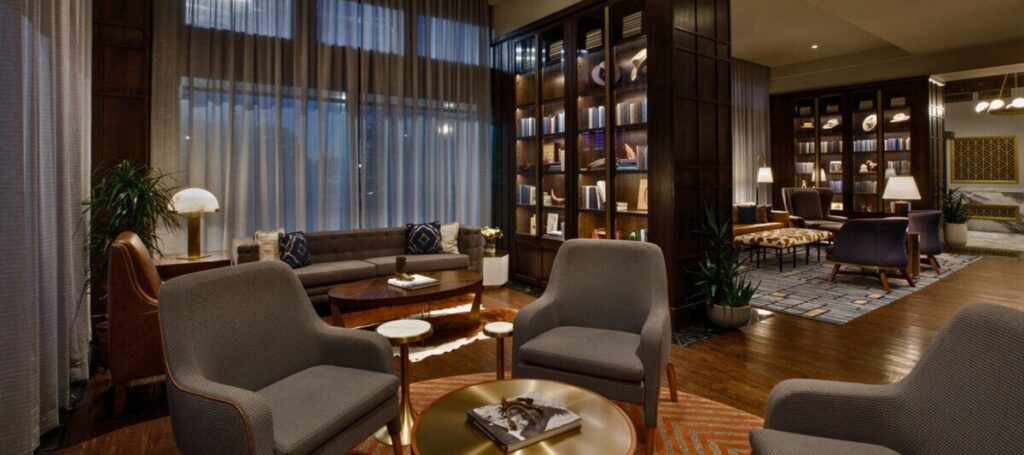
That history adds meaning to the stay. The Barfield is not simply a beautiful hotel in a restored downtown building; it is connected to a woman who understood vision, strategy, and resilience long before the world made much room for women like her. Today, the hotel honours that legacy through details such as The Legacy Library, a tribute to Oliver-Eakle and her role in helping establish Amarillo’s first library.
What I appreciated most was how The Barfield brought together comfort, history, and a sense of place. Downtown Amarillo felt walkable, lively, and easy to enjoy, and the hotel made a graceful home base for discovering this side of the Texas Panhandle. Like so much of Amarillo, it carried more story than I expected — and that made the experience feel richer.
The Takeaway
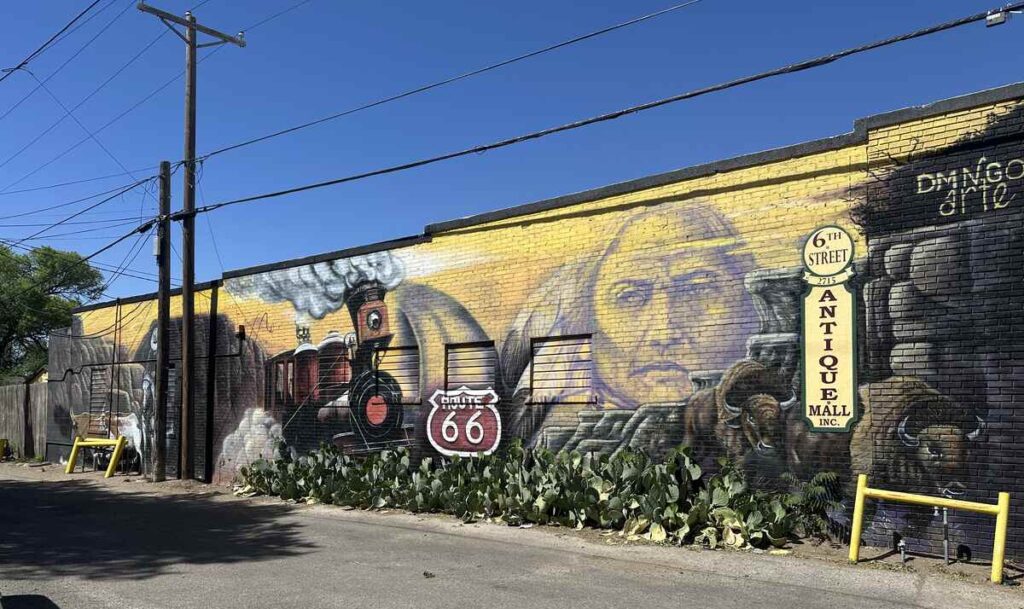
Amarillo took me by surprise. I arrived not knowing quite what to expect, but each day and each experience brought a little more joy.
This part of Texas feels different from other places I have visited in the state. The spaces are wider. The wind feels present. Farming and cowboy culture are woven into daily life. Route 66 nostalgia still has a heartbeat here, especially when you stand at the midpoint in nearby Adrian, stop for a bite at Midpoint Café, and imagine all the travellers who have passed through before you.
What I loved most was how layered Amarillo turned out to be. Cadillac Ranch invited me to leave a small yellow sun behind on a row of paint-covered cars created by artists who understood the power of roadside imagination. The Big Texan Steak Ranch reminded me that spectacle can still have heart when it is rooted in family legacy. The West Texas Ranch Rodeo gave me a more complicated, honest understanding of cowboy country, where remarkable skill can exist alongside questions I still carry about animal welfare.
Then came Palo Duro Canyon, majestic and completely unexpected against the flat Amarillo landscape I had been experiencing. I always say nature is the best artist, and this is a canvas travellers should not miss. Add in the history of downtown Amarillo, including The Barfield and the remarkable story of Melissa Dora Oliver-Eakle, and the city begins to feel less like a stop along the way and more like a place with stories waiting at every turn.
For travellers who think they already know Texas, Amarillo offers another postcard entirely: colourful, hospitable, surprising, and full of character. Give Texas a shot. Amarillo may surprise you too.
This trip was hosted by Travel Texas and Visit Amarillo. All opinions and editorial perspectives are my own.
All photographs by Helen Hatzis unless otherwise indicated.