
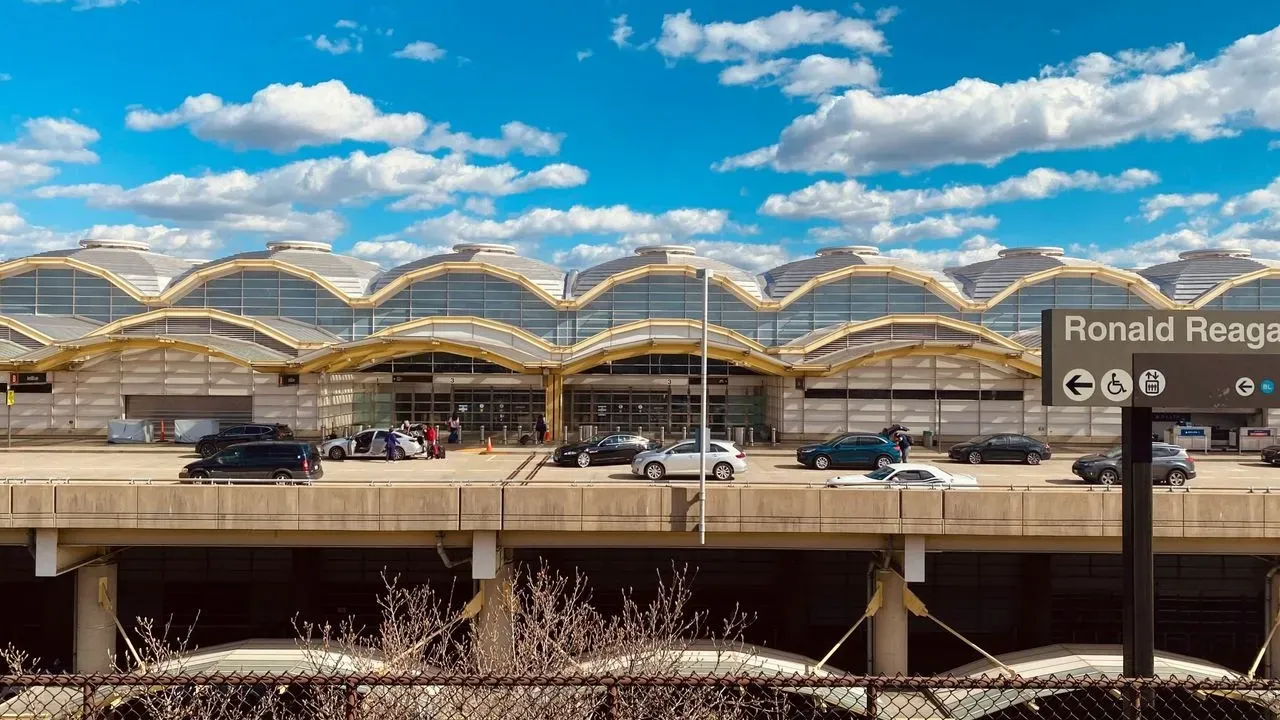

Travelers passing through Ronald Reagan Washington National Airport will eventually navigate a reconfigured Terminal 1 that places check-in closer to the main flow of arrivals and departures. The Metropolitan Washington Airports Authority has released environmental documents outlining a replacement for the aging concourse known locally as the banjo. This project forms part of a longer sequence of improvements that have already reshaped movement through the airport in recent years.
The Project at a Glance
The planned Terminal 1 Replacement Gates Facility will bring nine new gates to replace the midcentury structure that has served passengers since 1970. A separate multilevel processor building will handle check-in and baggage claim on the site currently used for taxi staging between Terminals 1 and 2. The design aims to integrate the historic 1941 terminal building while creating more direct paths once passengers clear security. Southwest Airlines, the primary carrier operating from Terminal 1, stands to benefit most directly, along with Air Canada and Frontier Airlines. The authority has indicated that the new facilities will respect the landmarked portions of the original terminal while removing later additions that no longer meet modern operational needs.
Timeline and Investment
Financial documents from the airport authority point to a possible opening as early as 2031, with an estimated cost of $835 million based on 2025 figures. This follows the completion of the $1 billion Project Journey five years ago, which added the E Gates concourse and relocated security checkpoints inside the main hall. The new work will continue that pattern of incremental modernization at a busy facility constrained by its urban setting. Construction sequencing will require careful coordination to maintain service throughout the multi-year build. Once complete, the banjo concourse and several nonhistoric additions will be removed, freeing space and simplifying the overall layout of Terminal 1.
Changes to the Passenger Journey
Under the current proposal, travelers will check bags in the new processor building rather than in the more distant lobby now in use. After clearing the south security checkpoint in Terminal 2, passengers will proceed through an enlarged corridor, pass the landmarked 1941 lobby now brought inside the secure area, and reach the new concourse. The authority estimates the longest walk from check-in to gate at roughly 2,700 feet. The plans also reserve 10,000 square feet for a future airline lounge, a feature that could expand options for premium travelers once an operator is selected. Southwest has previously signaled interest in developing its own lounge network, though specific commitments remain under discussion with the airport.
Context Within Regional Airport Development
The Terminal 1 work occurs alongside a far larger $22.5 billion redevelopment effort at Dulles International Airport, supported by both the airport authority and major carriers serving that facility. Together the two projects reflect sustained investment in the Washington region’s aviation infrastructure. At Reagan National, the focus remains on improving efficiency within an existing footprint that serves a high volume of short-haul flights. The architecture firm PGAL, already responsible for recent concourse projects at both Reagan National and Dulles, will lead design of the new gates. This continuity should help align the finished product with standards already in place elsewhere on the campus.
Looking Ahead for Frequent Flyers
For passengers who rely on Reagan National for quick trips along the East Coast, the eventual shift in Terminal 1 operations promises more intuitive routing once the new facilities open. The project continues a measured approach to growth that balances operational needs with the airport’s historic character and its role as a convenient gateway to the capital. As planning advances, travelers can expect further details on construction phasing and interim service adjustments in the years ahead.
AI Disclaimer: This article was created with the assistance of AI tools and reviewed by a human editor.