
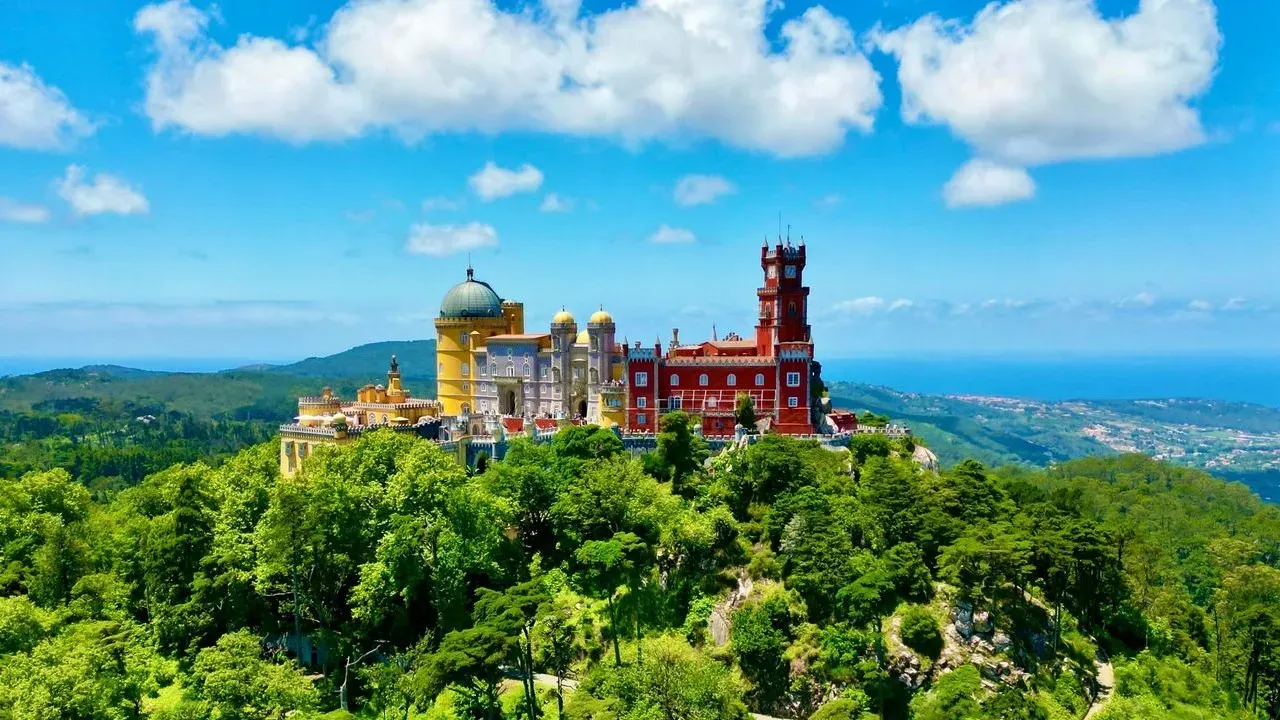

Sintra sits in forested granite hills a short train ride west of Lisbon, and many visitors arrive with a packed list of palaces. A guide from Indie Traveller [1], written by a Lisbon resident who often hosts friends there, argues that the town rewards a little preparation. The central question for many travelers is whether a single day is enough or whether an overnight stay allows the landscape to be seen at a more human pace. ([6])
A Romantic landscape that is more than its palaces
Sintra’s appeal begins with how its buildings, gardens and forest were designed to work together. The Cultural Landscape of Sintra was inscribed by UNESCO in 1995 ([2]), and it was the first European site listed as a cultural landscape. The inscription recognizes an exceptional mix of natural and cultural sites within one framework. Visitors walking between sights are moving through the designed landscape itself, not simply traveling from one attraction to the next.
The planted gardens sit inside a semi-natural oak forest, and the vegetation includes Mexican cypress, Australian acacias, eucalyptus and pine. Granite crests and rock piles cover archaeological remains, which gives the terrain a layered character that many visitors notice on the trails. The area also covers about 960 hectares and forms part of the Sintra-Cascais Natural Park ([3]).
Palaces, gardens and the historic town
Several sites give a sense of the range within the landscape. Each one rewards a slower visit rather than a quick photo stop.
- Pena Palace, whose surrounding park includes forest and gardens with more than 500 tree species from around the world ([3]).
- Quinta da Regaleira, a manor and garden complex where a chapel’s spiral staircase leads down to a monumental well.
- Monserrate Palace, whose gardens are often described as one of the most refined examples of Romantic landscape design in the UNESCO site.
- The Moorish Castle and the historic centre of Sintra town, where the 19th-century Romanticist architecture is concentrated.
The historic centre of the town gives the landscape its human scale. Its villas, estates and royal buildings explain why the area earned its UNESCO recognition in the first place. Visitors who spend time wandering the old streets often find that the palaces make more sense once they have seen the town below them.
Day trip or overnight: how to decide
For many people the decision comes down to time and pace. A day trip from Lisbon is straightforward. The train from Rossio station takes about 40 minutes, and a single fare costs €2.55 ([4]). Trains typically run every half hour, so the journey rarely demands precise timing.
A day trip works best when the plan is clear. Travelers who want more time at Pena Palace, the Moorish Castle or Quinta da Regaleira are generally advised to leave Lisbon early, since the hill sights require planning once you arrive ([5]). An overnight stay removes that pressure. It allows a relaxed morning in the gardens, a long lunch in town and a return to the forest trails after most day visitors have left. The UNESCO landscape is also open all year, closing only on December 25 and January 1 ([3]), so the choice of season can shape the experience as much as the length of stay.
Beaches, the Atlantic and a lighter footprint
Sintra is not only a palace town. The municipality also includes scenic beaches, and the Atlantic coast lies only a few kilometers from the landscape ([2]). A visit that includes the coast can balance the forest hours with an open-air afternoon, though the beaches are a separate outing from the palace circuit and deserve their own time.
Care for the landscape is part of the experience. Those who manage the site carry out periodic forest clearing and cleaning, wall reconstruction, fire monitoring and enhancement of gardens and parks, along with outreach to local residents ([2]). Visitors can support that work by keeping to marked paths, traveling by train where possible and giving the gardens the unhurried attention they were designed to invite.
Whether a traveler chooses one day or several, Sintra tends to reward those who slow down. The palaces are memorable, but the forest, the gardens and the quiet streets of the town often leave the deeper impression. A longer stay, or even a carefully timed day, gives those layers room to emerge.
AI Disclaimer: This article was created with the assistance of AI tools and reviewed by a human editor.