
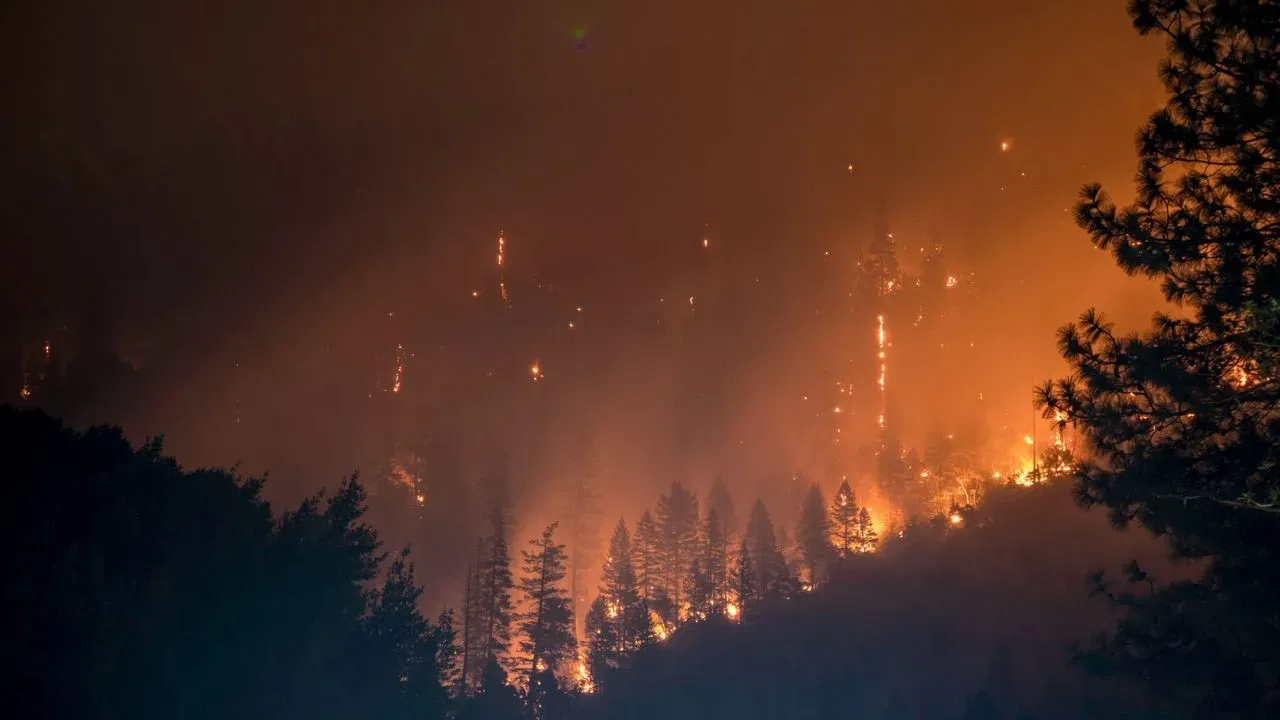

Spokane area, Washington – Light winds and lower temperatures arrived Monday to support crews battling multiple wildfires that have already destroyed at least 600 homes, businesses and other structures while prompting the evacuation of roughly 60,000 residents. The blazes, burning across about 12 square miles near the state’s second-largest city, remained uncontained as smoke filled the sky. Officials stressed that no injuries or missing persons had been reported so far, though the situation remained fluid.
Conditions Shift in Favor of Firefighters
Fire officials noted that Sunday’s strong winds had eased, giving ground crews and aircraft better opportunities to make progress. The Washington State Department of Natural Resources reported the fires at zero percent containment early Monday, with cooler air expected to persist through the day. No precipitation was forecast, yet the reduced wind speeds offered a measure of relief after rapid spread the previous day.
Across the broader state, more than 390 square miles have burned in various incidents, underscoring the strain on resources throughout the West. Investigators continue to examine the causes of the Spokane-area fires, while two unauthorized drone operators received citations for flying over active blazes on Sunday.
Evacuations Protect Residents and Visitors
Authorities established a shelter at Spokane’s main convention center, where about 400 people found temporary refuge by Sunday evening. Spokane Public Schools opened an emergency drop-in camp for children on Monday, and county court proceedings were postponed until the following week. Patients at the local Veterans Affairs hospital were among those relocated.
Video from affected neighborhoods showed structures fully engulfed, with only chimneys left standing in some cases. Officials emphasized that the coming days would remain challenging, with dry conditions expected to continue. U.S. Sen. Maria Cantwell joined local leaders in underscoring the need for sustained vigilance.
Regional Fires Add Pressure on Resources
Similar challenges unfolded elsewhere in the West. A large grassland fire in western Idaho and eastern Oregon, now in its tenth day, has consumed nearly 525 square miles and threatens hundreds of homes and ranches. Lightning sparked that blaze, and crews using bulldozers and helicopters worked to protect structures amid forecasts of rising temperatures later in the week.
In central Utah, another fire more than doubled in size over the weekend to nearly 57 square miles, killing more than 100 cattle and prompting mandatory evacuations south of Fillmore. The National Weather Service issued air-quality alerts across the Northwest along with red-flag warnings for parts of Utah, Montana and western Nebraska.
What Travelers Should Know Now
Those planning trips through eastern Washington or the Spokane region can take several practical steps to stay informed and safe. Conditions can change quickly, so checking official sources before departure remains essential.
- Monitor the Washington State Department of Natural Resources and local emergency management websites for real-time road closures and evacuation zones.
- Review air-quality reports from the National Weather Service, especially for sensitive individuals.
- Confirm hotel and attraction status directly, as some facilities may serve as shelters or face temporary restrictions.
- Allow extra travel time and carry extra water and supplies in case routes shift.
- Respect all evacuation orders and avoid areas where firefighting operations are active.
Communities across the region continue to demonstrate resilience while responders work to protect lives and property. Travelers who remain flexible and attentive to updates can still experience the area responsibly once conditions stabilize.
AI Disclaimer: This article was created with the assistance of AI tools and reviewed by a human editor.