
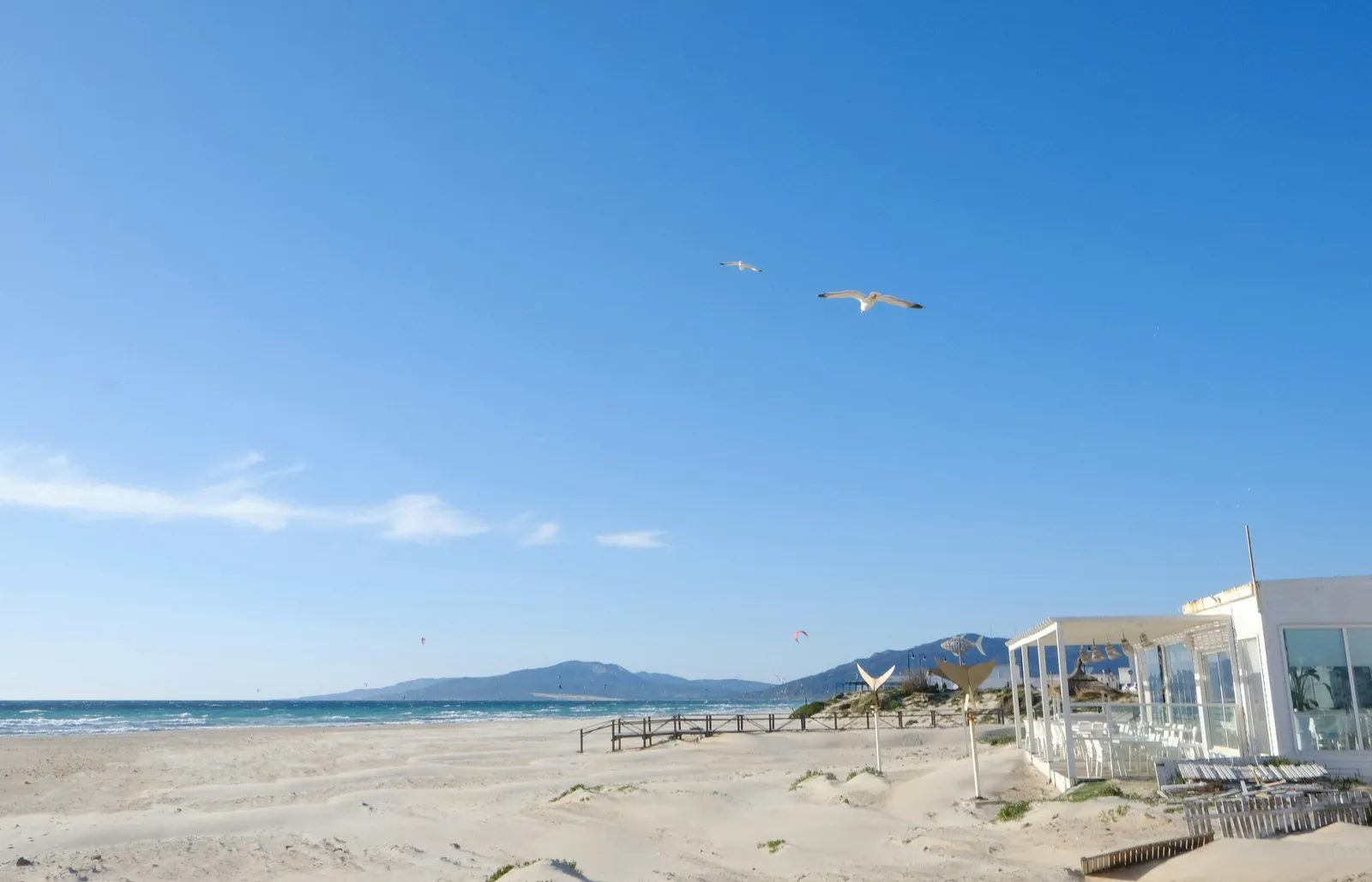

Tarifa sits at the southern edge of Spain where the Atlantic Ocean presses against the Strait of Gibraltar. The town’s compact Moorish old quarter rises above the harbor, its narrow lanes and whitewashed walls holding centuries of layered history. From the same shoreline, steady winds draw travelers year after year, while a short ferry crossing places the North African coast within easy reach.
Walking the Moorish Quarter
The old town rewards slow exploration on foot. Stone archways and tiled courtyards open onto small plazas where local cafés serve strong coffee and fresh pastries. Many buildings retain original Moorish architectural details, including carved wooden doors and geometric tile work that speak to the region’s long connection with North Africa and the wider Mediterranean world.
Residents and visitors alike move through these streets at a measured pace, pausing to admire the view toward the sea or to browse small shops selling handmade ceramics and textiles. The scale of the quarter keeps the experience intimate, allowing travelers to absorb the atmosphere without feeling rushed.
Riding the Atlantic Winds
Tarifa’s position on the Atlantic coast creates reliable conditions for kitesurfing and windsurfing. Strong, consistent breezes sweep across wide beaches that stretch for kilometers, giving riders open space and varied wave patterns. Schools and rental operators line the shore, offering equipment and instruction suited to different skill levels.
Even those who prefer to stay on land find the spectacle compelling. Beachside paths provide clear sightlines to colorful kites against the sky, while the sound of the wind and surf creates a constant, rhythmic backdrop. The same winds that power the sports also shape the coastal landscape, carving dunes and keeping the air fresh.
Crossing to Africa
A regular ferry service departs from Tarifa’s harbor and reaches Tangier in roughly one hour. The short crossing turns the Strait of Gibraltar into a practical link rather than a barrier, allowing day trips or longer stays on the African continent. Passengers watch the European and African coasts draw closer, gaining a tangible sense of the region’s geographic crossroads.
Travelers who make the journey often return with fresh perspective on the cultural exchanges that have defined the area for centuries. The ease of the crossing encourages thoughtful itineraries that combine time in Tarifa with measured exploration across the water.
Practical Considerations for a Thoughtful Visit
Responsible travelers plan around the wind patterns and ferry schedules to minimize impact on local resources. Choosing operators that follow environmental guidelines and support community initiatives helps sustain the qualities that draw visitors in the first place. Respect for the historic fabric of the old town and the natural shoreline remains central to any rewarding stay.
Many visitors find that combining time in the old quarter, hours on the water, and a ferry crossing creates a balanced experience. The town’s compact size makes it possible to move between these elements without long transfers, leaving room for unhurried observation and genuine connection with place.
AI Disclaimer: This article was created with the assistance of AI tools and reviewed by a human editor.