

When the thermometer climbs past 110 degrees and the pavement radiates heat long after sundown, Texans start looking for relief anywhere they can find it. For a growing number of residents across the state, that relief isn’t at the lake or the mall. It’s underground. Tucked beneath the limestone hills of Central Texas lies a world that stays a steady 72 degrees every single day of the year, no matter what kind of summer the surface is suffering through.
The Hill Country’s cave corridor, anchored by attractions like Inner Space Cavern in Georgetown and Natural Bridge Caverns just north of San Antonio, has become one of the state’s most quietly beloved seasonal escapes. What’s drawing people down isn’t just novelty. It’s genuine, measurable relief from summers that have been breaking records year after year.
Texas Summers Have Become Nearly Unbearable
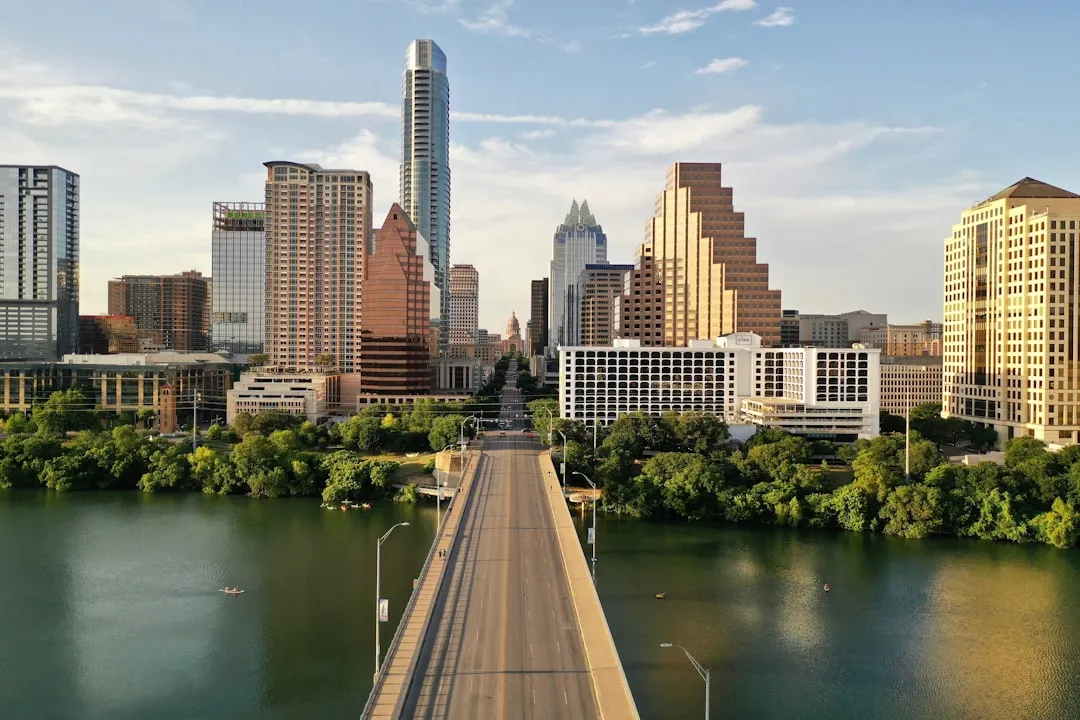
According to records going back to 1898, the summer of 2024 ranked as Austin’s seventh hottest ever recorded, delivering 30 triple-digit days, including an August heat wave that peaked at 109 degrees. That’s not an outlier. The summer of 2023 brought 69 triple-digit days and ended up as the second hottest ever recorded, while 2022 had been the second hottest on record until then, with 67 triple-digit days.
On June 28, 2024, El Paso recorded a staggering 115°F, while Austin and Dallas faced extreme heat waves with temperatures reaching 106°F in mid-July, breaking previous records for those cities. In some urban areas, overnight lows remained uncomfortably above 80°F, meaning Texans could not experience relief even after dark. With summers like these, the appeal of an underground world locked at a constant cool temperature is easy to understand.
The Geology That Makes It All Possible
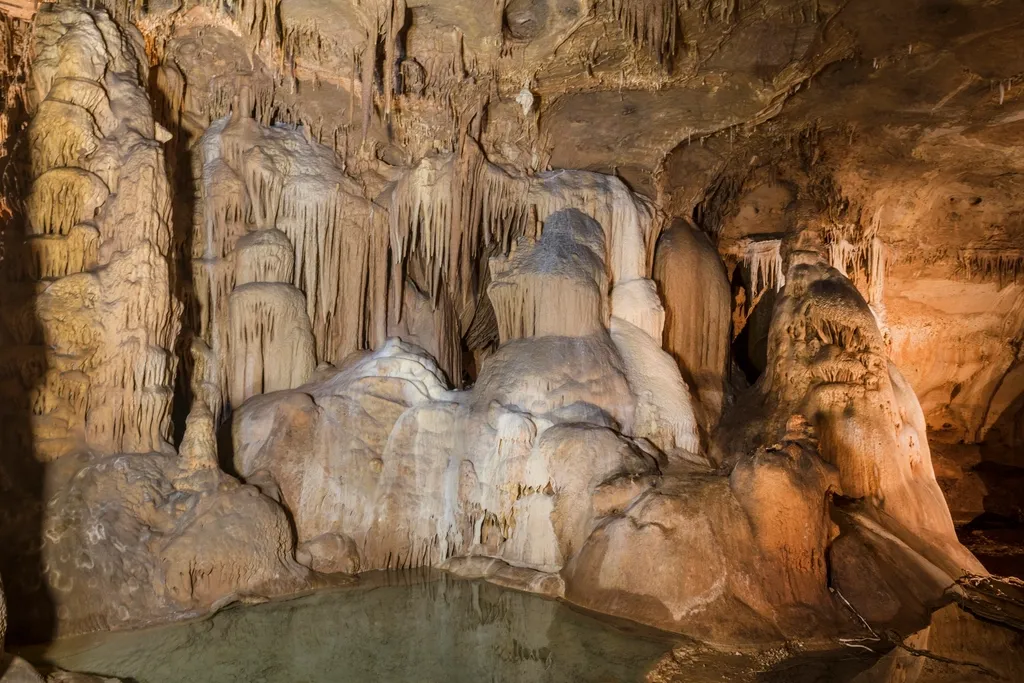
Most Texas caverns are tens of millions of years old, formed by a combination of groundwater and natural acids. Carbonic acid, created when water percolates through soil and collects carbon dioxide, dissolved minerals from the rock over vast stretches of time, creating classic cave formations like stalactites and stalagmites. The result is a subterranean landscape that feels genuinely otherworldly.
According to Travis Wuest, co-owner of Natural Bridge Caverns, there are nearly 3,000 caves in the Hill Country region. Geologists attribute the formation of Inner Space Cavern specifically to the action of underwater currents when the Permian Sea covered the area, and the caverns are estimated to be up to 100 million years old. That kind of geological age is hard to wrap your head around, but you feel it the moment you step inside.
Inner Space Cavern: Georgetown’s Accidental Treasure
Deep beneath Georgetown, Texas, lies Inner Space Cavern, discovered by chance in 1963 during the construction of Interstate 35. The Texas Highway Department was drilling to test ground stability for the new highway when the drill bit suddenly dropped 26 feet. The drilled hole was enlarged and a workman was lowered down, standing on the drill bit, to confirm the discovery.
The caves have yielded 44 species of animal, 11 of which are now extinct, including saber-toothed cats and mammoths. Inner Space Cavern opened to the public for tours in 1966 and has welcomed visitors ever since, maintaining a constant 72 degrees year-round, making it a perfect underground adventure when above-ground temperatures become extreme. That discovery story alone is enough to make any visit feel a little more special.
A Steady 72 Degrees, Every Single Day
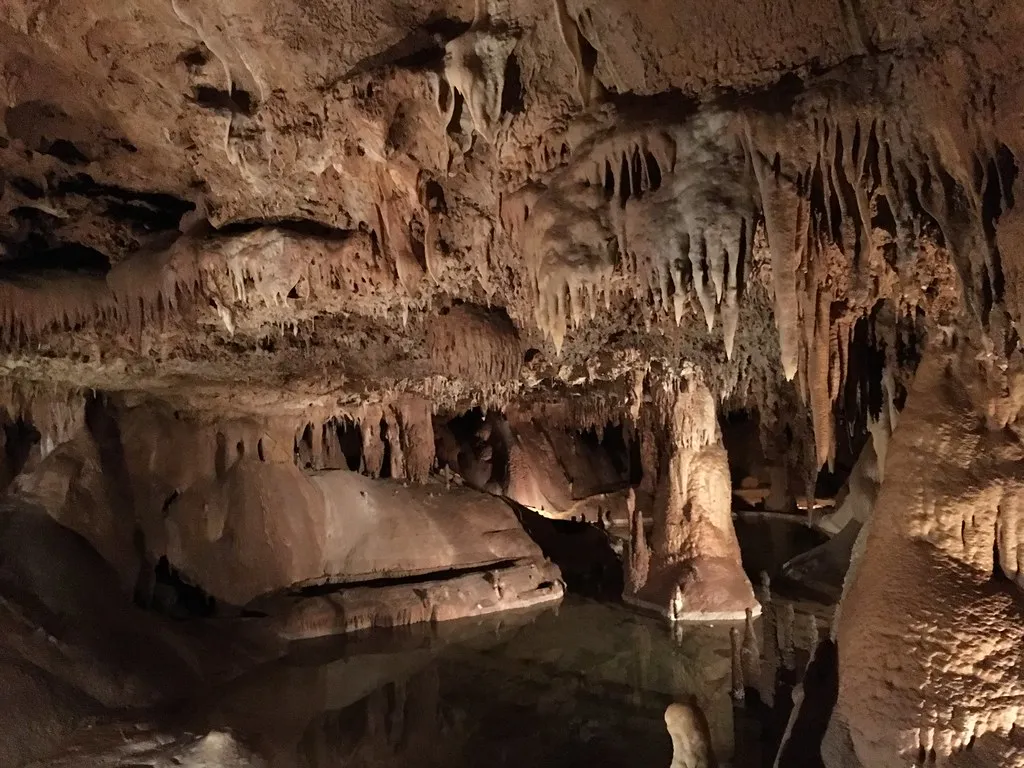
Attendance is up, with a thousand people a day finding relief 70 feet below the surface. The draw is straightforward: once you descend into Inner Space Cavern, the temperature remains a comfortable 72°F year-round. The cave has beautiful formations, large rooms, prehistoric animal bones, and a truly unique discovery story, and it remains a constant 72 degrees year-round.
Despite the lure of 70-degree temperatures providing a break from the summer heat, most of the caverns have a 98% humidity factor. So while it’s genuinely cool, it’s not dry. A light jacket is always a smart idea, and closed-toe shoes are worth the thought before you head out. The combination of cool air and that underground stillness feels nothing like air conditioning – it’s something altogether more grounding.
Natural Bridge Caverns: The Crown Jewel Near San Antonio
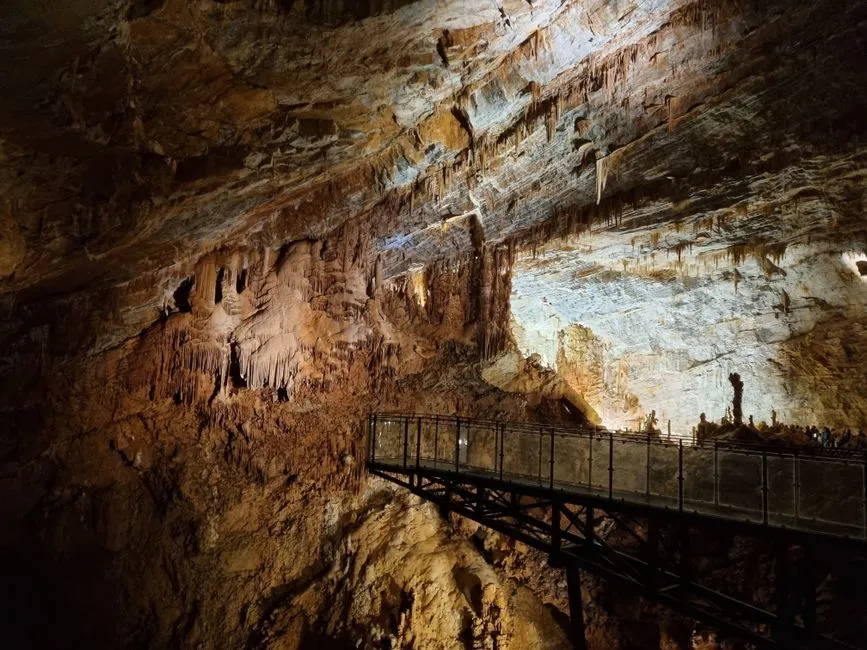
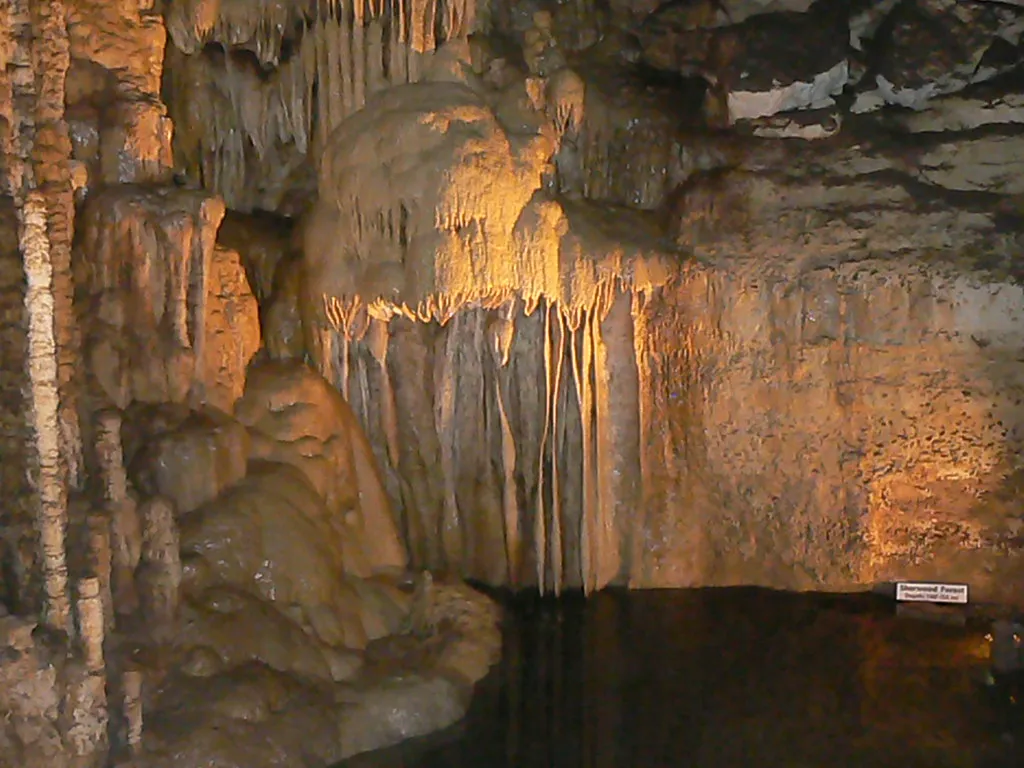
Natural Bridge Caverns, rated the number one paid attraction in San Antonio according to TripAdvisor, is a world-renowned show cave featuring two spectacular caverns, including the Discovery Cavern – the largest cavern in Texas. A sinkhole on the property drew curiosity-seekers for years, but its full splendor wasn’t discovered until 1960, when four students from St. Mary’s College in San Antonio explored a tiny crawlspace and discovered a massive column-filled room now known as Sherwood Forest.
The Discovery Tour takes you through the most spectacular part of the caverns 180 feet underground, while the Hidden Passages tour shows a system of huge underground chambers. The Hidden Wonders tour takes visitors through chambers filled with expertly lit delicate formations, featuring the Belt Assisted Transport, the only conveyor system ride out of a cavern in the world, and a sound and light show designed to tell the geological story of the cavern. It’s become a full-day destination, not just a quick stop.
The Caverns of Sonora: A National Natural Landmark
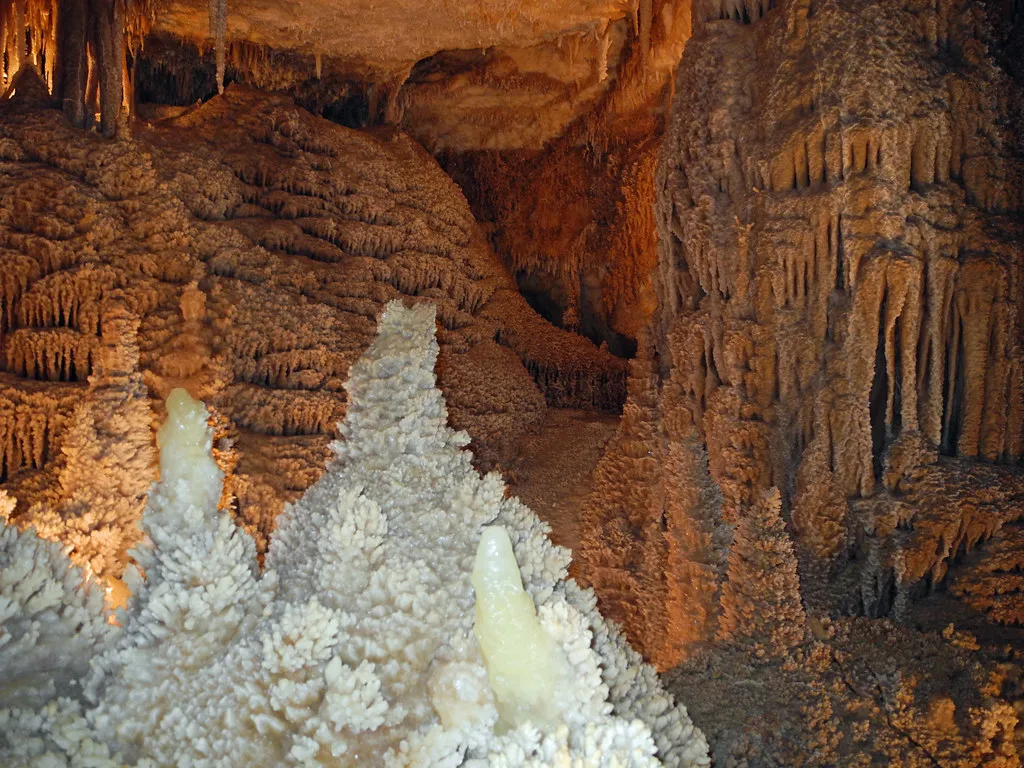
Sitting beneath the rolling hills of West Texas are the Caverns of Sonora, an underground wonder famous for intricate limestone formations, recognized as a National Natural Landmark. The cave stays a comfortable 72 degrees Fahrenheit year-round. Often called one of the most beautiful show caves in the world, the Caverns of Sonora dazzle with crystal formations that look like frozen waterfalls and glass sculptures, stretching for miles beneath the desert and filled with delicate helictites that twist in impossible directions.
The famous Crystal Palace chamber sparkles from floor to ceiling with formations so intricate they seem unreal. Tucked away in the heart of West Texas, Sonora is a charming small town set halfway between San Antonio and the remote beauty of Big Bend National Park, with wide-open skies and rugged landscapes that invite exploration. The Caverns are the town’s undeniable centerpiece and have been drawing geologically curious visitors for decades.
Prehistoric Fossils Hiding in the Dark

Inner Space Cavern is one of Texas’s most accessible caverns, where Ice Age animals were found amid fantastic cave formations. The caverns reveal a subterranean world of stalactites, stalagmites, and the remains of mastodons and wolves. These aren’t replicas or museum reconstructions. The bones were found inside a sealed cave system that had been untouched for thousands of years.
The caverns are estimated to be up to 100 million years old but only opened to the surface about 40,000 years ago, a timeline determined by certain mammoth and saber-toothed cat bones discovered there. The natural entrances to the caverns were closed again about 14,000 years ago. Ancient fossils of mammoths and saber-toothed cats serve as remnants of a time when Texas was a vastly different landscape. Encountering them in their original context, underground and in the dark, is genuinely moving.
Tour Options for Every Kind of Visitor
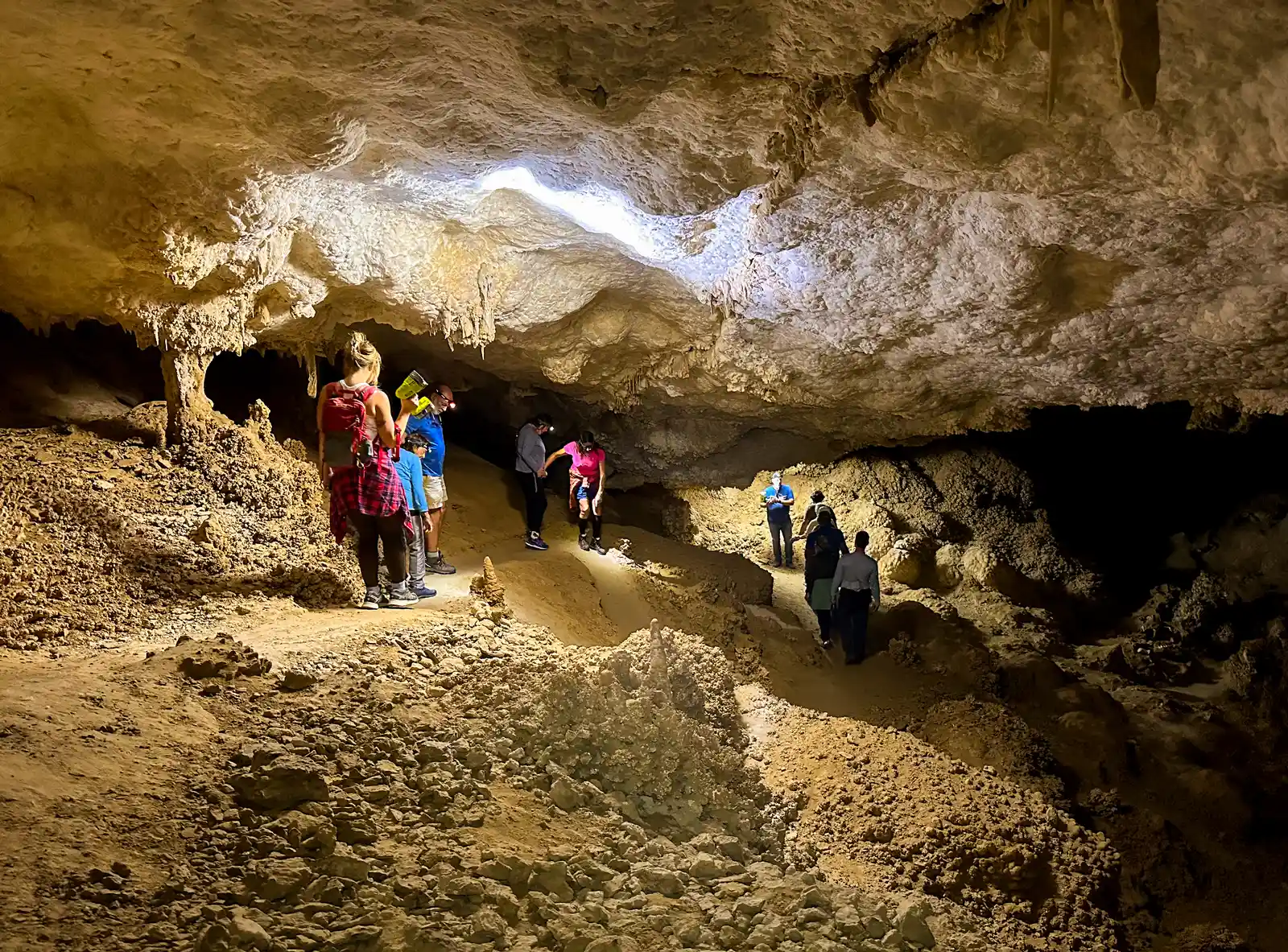
Most visitors take the beginner-level Adventure Tour, a guided informational tour along paved and lit trails to see the largest cavern rooms and formations, covering how the cave was discovered, its formations, and how fossil animal bones were found inside a sealed cave. Those wanting intermediate-level exploring off the paved trail can consider the Hidden Passages Tour for ages seven and older, where guests are provided flashlights to explore formations in an undeveloped area of the cave.
The advanced-level Wild Cave Tour for ages 13 and older requires no previous experience but involves spelunking, getting dirty, and lasts three and a half to four hours, with reservations required one week in advance. Natural Bridge Caverns has emerged as a model for commercially operated cave tourism, integrating adventure ropes courses, zip-line attractions, and educational programming alongside traditional cave tours to create a full-day destination experience. There’s genuinely something here for everyone, from the five-year-old with a flashlight to the serious spelunker.
How the Heat Is Actually Changing the Caves

There are more than 3,000 caves in Central Texas, and they are dealing with the heat in their own way. In what has become increasingly hot summer seasons, caves are seeing an increase in visitors alongside a slowdown in geological growth. Growth in the cavern occurs when water drips from the surface and deposits minerals, a process that can take thousands of years. Droughts slow this process down, causing the drip rate to slow significantly.
Flooding in Inner Space Cavern used to be more common, but now some spaces are bone dry, a change the assistant manager attributed to Georgetown’s rapid development. Caves reflect their climate, and as the planet warms, the caves will likely show that. It’s a reminder that these are not static museums. They are living systems, quietly responding to the same pressures affecting everything above them.
What Climate Projections Mean for Future Visitors
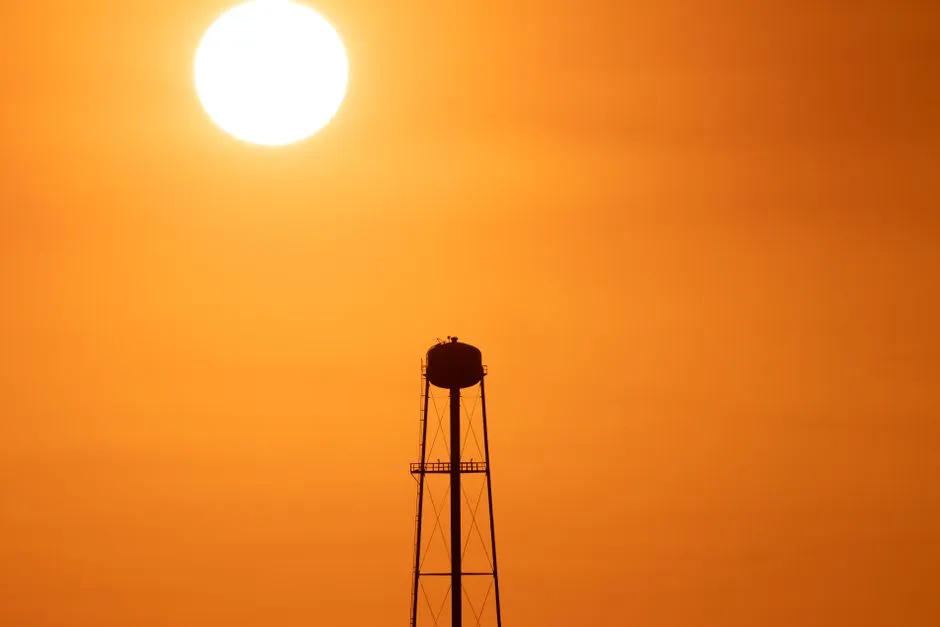
A report from the Texas State Climatologist at Texas A&M University predicted more extreme weather events, noting that clouds produce about four percent more rainfall for every degree Fahrenheit the average temperature increases. By 2036, the chances of a 100-degree-plus day in Texas are projected to be four times what they were in the 1970s and 1980s. That trajectory makes underground destinations not just appealing for novelty but practically necessary for parts of the summer.
Between 2013 and 2023, more than 1,600 days saw a Texas heat record matched or broken at one of the state’s 22 weather stations, and 2023 was the hottest year on record for Texas at an average of 68.1°F. Every year since 2000 has recorded warmer Texas temperatures than the 20th century average. The pattern is clear and consistent, which is part of why cave tourism has moved from a quirky afternoon activity to something closer to a seasonal institution.
The Takeaway
Texas has always demanded a certain resilience from the people who live here. Summers have never been gentle. But the summers of the past several years have pushed that reality into new territory, and residents are responding by getting creative about where they find relief. The caves of the Hill Country – formed over tens of millions of years, untouched for most of human history, and now quietly hosting thousands of visitors a week – offer something rare: genuine cool, genuine quiet, and a perspective shift that only comes from standing 70 to 180 feet below the surface of a scorching earth.
Whether you’re a family looking for an afternoon escape, a geology enthusiast, or simply someone who has run out of patience with the sun, these underground spaces deserve a spot on your summer itinerary. The limestone doesn’t care how hot it is outside. It just keeps doing what it’s done for a hundred million years.
AI Disclaimer: This article was created with the assistance of AI tools and reviewed by a human editor.