


A Northwest Airlines Pilot With a Very Specific Problem
Robert “Bob” Plath was a working commercial airline pilot for Northwest Airlines, spending years physically hauling a standard suitcase through airports on every single trip – a specific, repeated firsthand pain point that most luggage designers never personally experienced at that frequency. That daily friction is what set him apart from anyone else who might have thought about solving the same problem.
In his job at Northwest Airlines, Plath was no stranger to the annoyance of lugging a suitcase through airport terminals. In his garage workshop in Boca Raton, Florida, he affixed two wheels to the short end of his upright suitcase, attached an extendable handle, and a travel game-changer was born.
Before Plath: The First Rolling Suitcase Had Real Limitations
The first rolling suitcase was actually invented decades earlier by Bernard D. Sadow, the former vice president of a Massachusetts luggage company. Sadow’s design allowed travelers to no longer have to carry a heavy suitcase by the handle. Rather, the Rolling Luggage, as Sadow patented it in 1972, sat on top of wheels and could be pulled around the airport by a strap.
Rolling luggage started gaining popularity when Macy’s bought inventory and ran a marketing campaign that called his invention “the luggage that glides.” The design had its flaws, though, often tipping over or bumping the carrier’s ankles. While these annoyances may not have bothered the occasional traveler, it peeved airline crews who were tired of lugging their clumsy carry-on bags through the airport.
The Garage in Boca Raton Where Everything Changed
In 1987, working in his garage in Boca Raton, Florida, Plath took a standard suitcase, turned it upright into a vertical orientation, and attached two wheels at the base along with a retractable, collapsible handle at the top – creating what became known as the Rollaboard, the two-wheeled upright-rolling suitcase design that’s now the default shape for the entire carry-on luggage category.
It all started when Robert Plath changed the physical orientation of luggage from horizontal to vertical, added large wheels and an extension handle, hence inventing the Rollaboard, an entirely new way to transport personal belongings while traveling. The key insight was deceptively simple: stand the bag upright, put the wheels on the narrow end, and give the traveler a handle that doesn’t require bending down.
The Patent That Made It Official
He moved the wheels to the short side of the suitcase and added a telescoping handle, with the invention officially registered as “Wheeled Suitcase and Luggage Support,” Patent number 4,995,487, Robert V. Plath, Lighthouse Point, FL, February 26, 1991.
In 1989, Plath applied for a patent for his model, which he coined the Rollaboard, and he left the aviation business to found his own luggage company, Travelpro. The name “Rollaboard” was a deliberate nod to its origins in airline culture, echoing the language of the cockpit and the boarding gate.
Flight Crews Were the First Customers
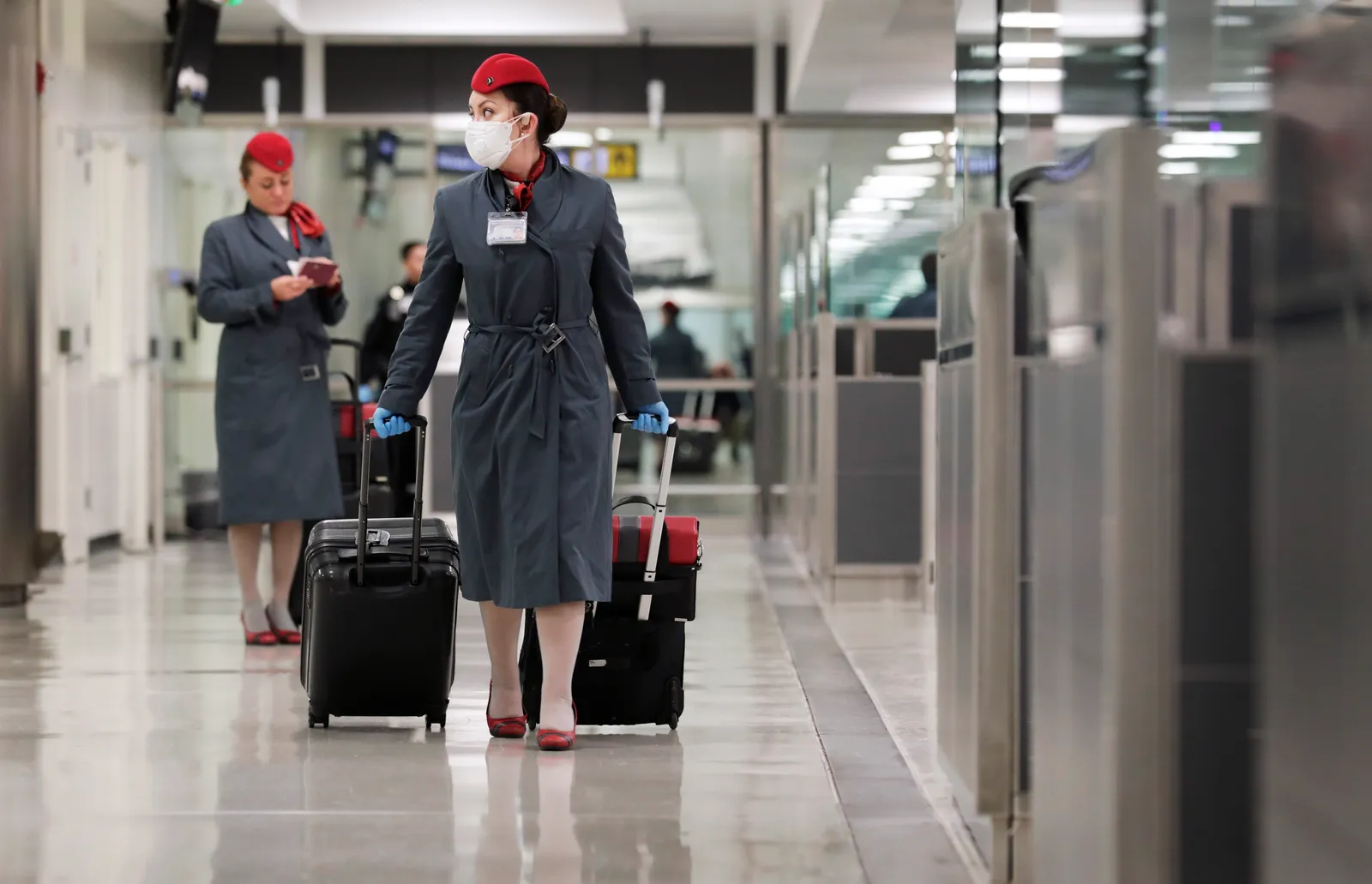
He began making Rollaboards for his fellow pilots and flight attendants, and they quickly gained popularity after members of the public saw flight crews strolling along with these wheeled bags. This word-of-mouth path from crew to curious traveler was organic and entirely unplanned.
Plath’s invention initially spread through airline flight crews and fellow pilots, who had the exact same repeated-carrying problem he did. Travelpro’s early business specifically supplied Rollaboard luggage to airline flight crews before the design caught on with the traveling public more broadly, a genuine grassroots-to-mainstream adoption path rather than a mass-market launch from day one.
From Garage to Warehouse: Demand Took Over
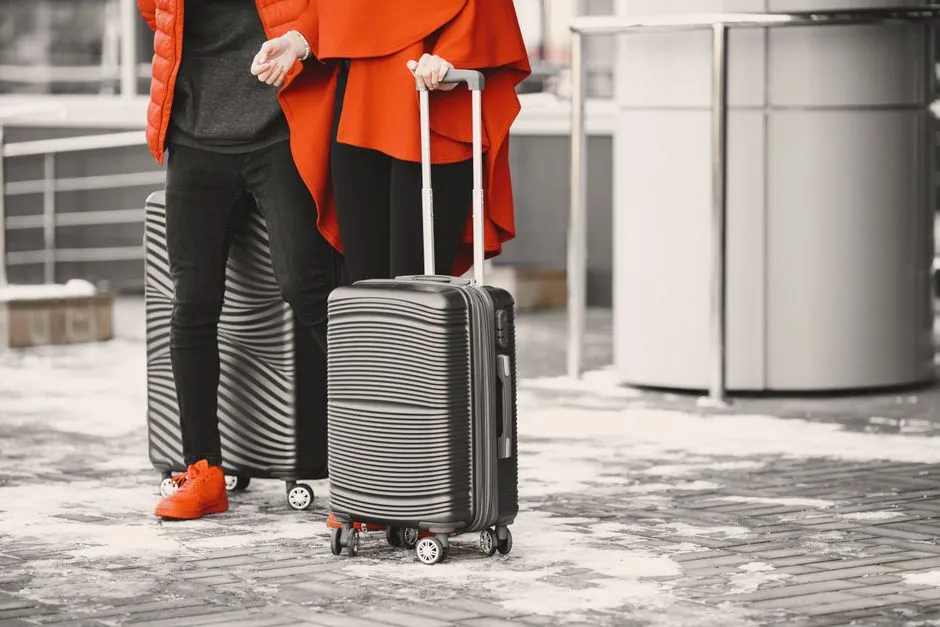
In 1989, demand for Plath’s trademarked Rollaboard became so high he moved operations from his garage to a warehouse. In 1991, Plath retired from the airline to pursue Travelpro, the parent company of his Rollaboard product, full-time. The transition from side project to serious company happened faster than almost anyone anticipated, including Plath himself.
Plath founded Travelpro and began providing Rollaboard luggage to airline flight crews and pilots. The idea was so universally successful with airline crews that Travelpro launched the product commercially through retail stores in the early 1990s and has been changing the way consumers travel ever since.
Why the Public Noticed and Followed Suit
It didn’t take long after dashing, uniformed pilots and attractive flight attendants were seen effortlessly wheeling their bags through airports before civilian air travelers wanted one of those bags for themselves. The visual cue was powerful: if the people who traveled more than anyone else had switched to this bag, it was clearly the smarter choice.
An airline pilot named Robert Plath not only patented a far superior design for rolling luggage, he made it manly and cool. That cultural shift mattered just as much as the mechanical one. Rolling a bag through a terminal went from looking impractical to looking sharp.
Inc. Magazine, the Discovery Channel, and Industry Recognition

Inc. Magazine listed Plath’s Rollaboard invention as one of the top innovations in modern history. That recognition placed a piece of airport furniture on the same shortlist as transformative technologies, which is a striking indicator of how deeply the invention changed everyday life.
In November 2011, in a Discovery Channel program entitled “What’s America Worth?”, the invention was highlighted as one of the leading examples of how innovation adds value to a country’s net worth. Numerous awards followed, including winning the 2009 and 2010 Leading Edge Award from Executive Travel Magazine for Best Carry-on Case. Recognition kept arriving, decades after the original invention.
The Rollaboard Name, Trademarked and Copied
Travelpro company founder Bob Plath coined and trademarked the term Rollaboard to describe his invention of upright wheeled luggage back in 1987. The name stuck so firmly in airline culture that it became a catch-all term in the industry, much like a brand name that outgrows its trademark.
He called it a Rollaboard and trademarked the name. The luggage industry re-christened it the rollerboard and quickly copied it. A trademark search reveals that Rollaboard was first officially trademarked in 1991. Today, virtually every major luggage brand produces its own version of what Plath built in that Boca Raton garage.
A Multi-Billion-Dollar Industry Built on One Pilot’s Frustration

The global rolling luggage bag market is expected to be worth around 28.5 billion dollars by 2034, growing from roughly 14.9 billion dollars in 2024, at a compound annual growth rate of 6.7 percent during the forecast period from 2025 to 2034. That’s an industry scaled from a single prototype built by one tired pilot.
The global rolling luggage bags sales market was valued at around 22.7 billion dollars in 2025 and is projected to expand to 39.2 billion dollars by 2034, reflecting fundamental shifts in consumer travel behavior. Today, rolling suitcases are the norm and many even rotate, spin, or have other special features designed to make traveling easier. The four-wheeled spinner, now a fixture in every airport terminal on earth, is a direct descendant of Plath’s two-wheeled upright design.
The Quiet Legacy of a Practical Mind

There’s something worth sitting with in Robert Plath’s story. He wasn’t trying to disrupt an industry or build a brand. He was trying to make a long, repetitive physical task a little less exhausting. Robert Plath isn’t an inventor by trade. Just by need.
Thanks to innovators like Robert Plath, founder of The Original Rollaboard luggage and former Travelpro CEO, we don’t have to think twice about our bags, which today are more like travel companions rather than bulky nuisances. Thirty years ago, Plath retired from his job as a Northwest Airlines pilot to roll up his sleeves and transform the rolling luggage we tend to take for granted today.
Every time a traveler wheels a bag through a departure hall without breaking a sweat, they’re using something that traces back to a garage, a frustrated pilot, and a very clean solution to a very real problem. That lineage rarely makes it onto the luggage tag.
AI Disclaimer: This article was created with the assistance of AI tools and reviewed by a human editor.