
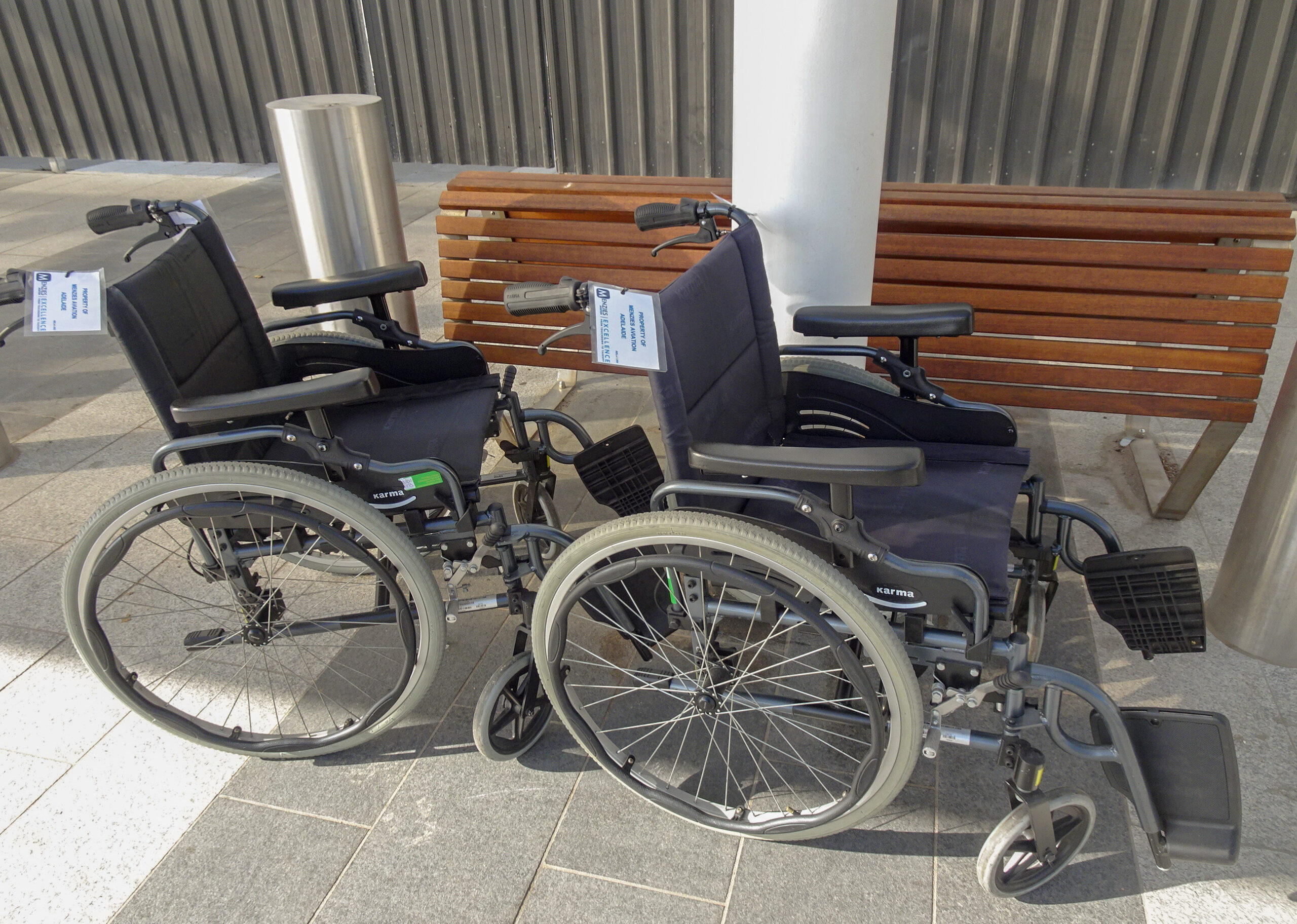

For most travelers, boarding a flight is a minor inconvenience at worst. For passengers who use wheelchairs, it can feel like an obstacle course with very real consequences. A broken power wheelchair isn’t just an inconvenience, it’s a medical event, a loss of independence, and sometimes something far more serious. The good news, slowly and unevenly, is that the industry is shifting. Some carriers are genuinely raising their standards, and regulators are paying closer attention than they have in years.
Here is a closer look at where real progress is being made, which airlines are leading it, and what the numbers actually tell us.
The Scale of the Problem First
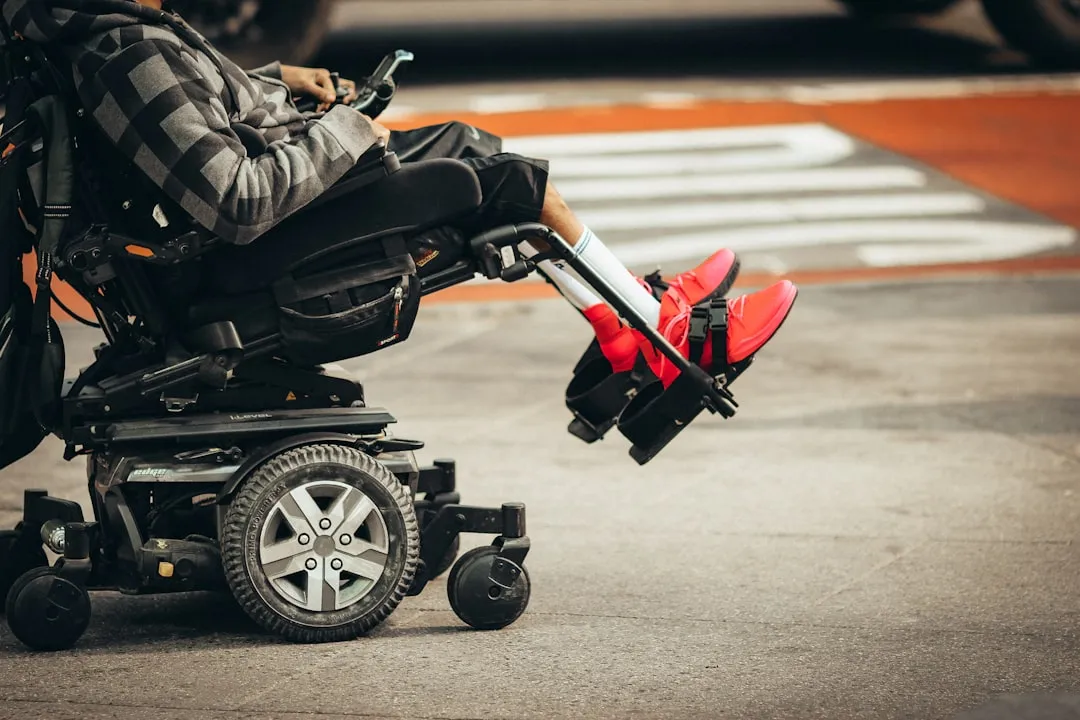
Before crediting progress, it’s worth understanding what the baseline actually looks like. According to the U.S. Department of Transportation, American airlines collectively transported nearly 900,000 wheelchairs and scooters in 2024, of which more than 11,000 were damaged or destroyed in transit. That works out to a mishandling rate of about one in every eighty devices checked.
In 2024 alone, U.S. airlines mishandled over 11,000 wheelchairs and scooters, at more than twice the mishandling rate of other luggage. That disparity is not an accident. Wheelchairs, especially power wheelchairs, are complex, expensive, and difficult to handle without proper training.
Those numbers do represent a slight improvement over 2023, when roughly one in seventy-two mobility devices transported was mishandled. Progress, yes, but fragile and incremental.
Delta Air Lines: Setting the Industry Benchmark
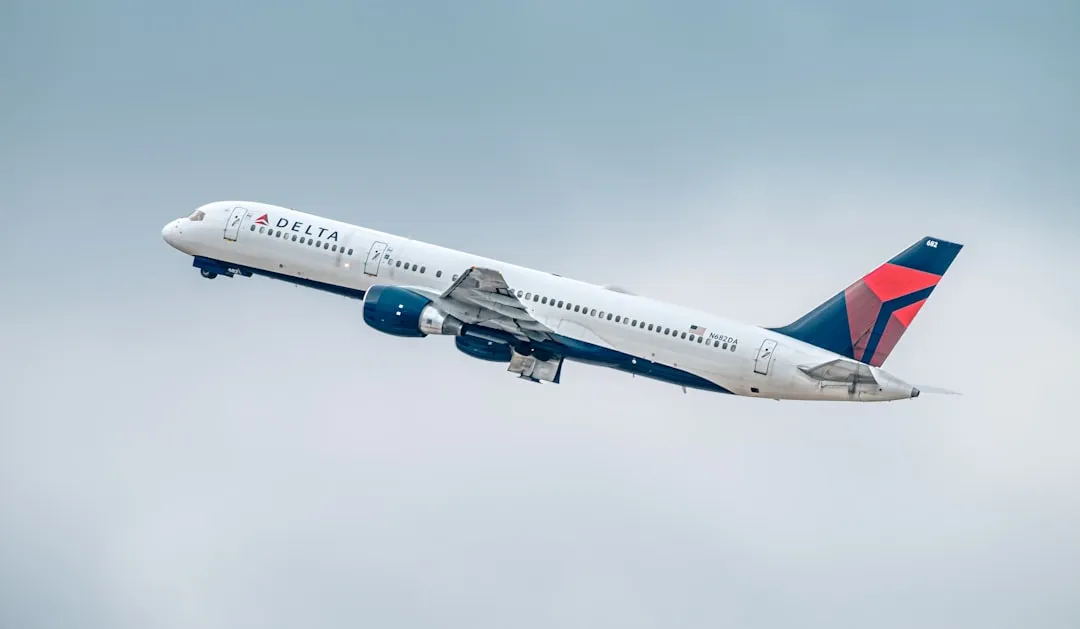
Among major U.S. carriers, Delta’s performance is in a class of its own. Delta Air Lines improved its mishandling rate from 0.63% in 2024 to 0.43% in 2025, a roughly one third improvement and the best rate recorded by any major U.S. carrier in recent memory.
Delta carried nearly 153,000 wheelchairs and scooters in 2025 and mishandled 651 of them. For context, the next best carrier’s rate is nearly double Delta’s. That is a meaningful gap, not a rounding error.
Delta also ranked well in separate 2025 analysis for having the lowest percentage of mishandled wheelchairs, and the airline is in the process of designing a seat that will allow travelers to use their own wheelchairs directly on the plane. That second point is genuinely significant, as it addresses a structural barrier that has existed since commercial aviation began.
Delta’s Wheelchair Seat and Accessible Lavatory Design
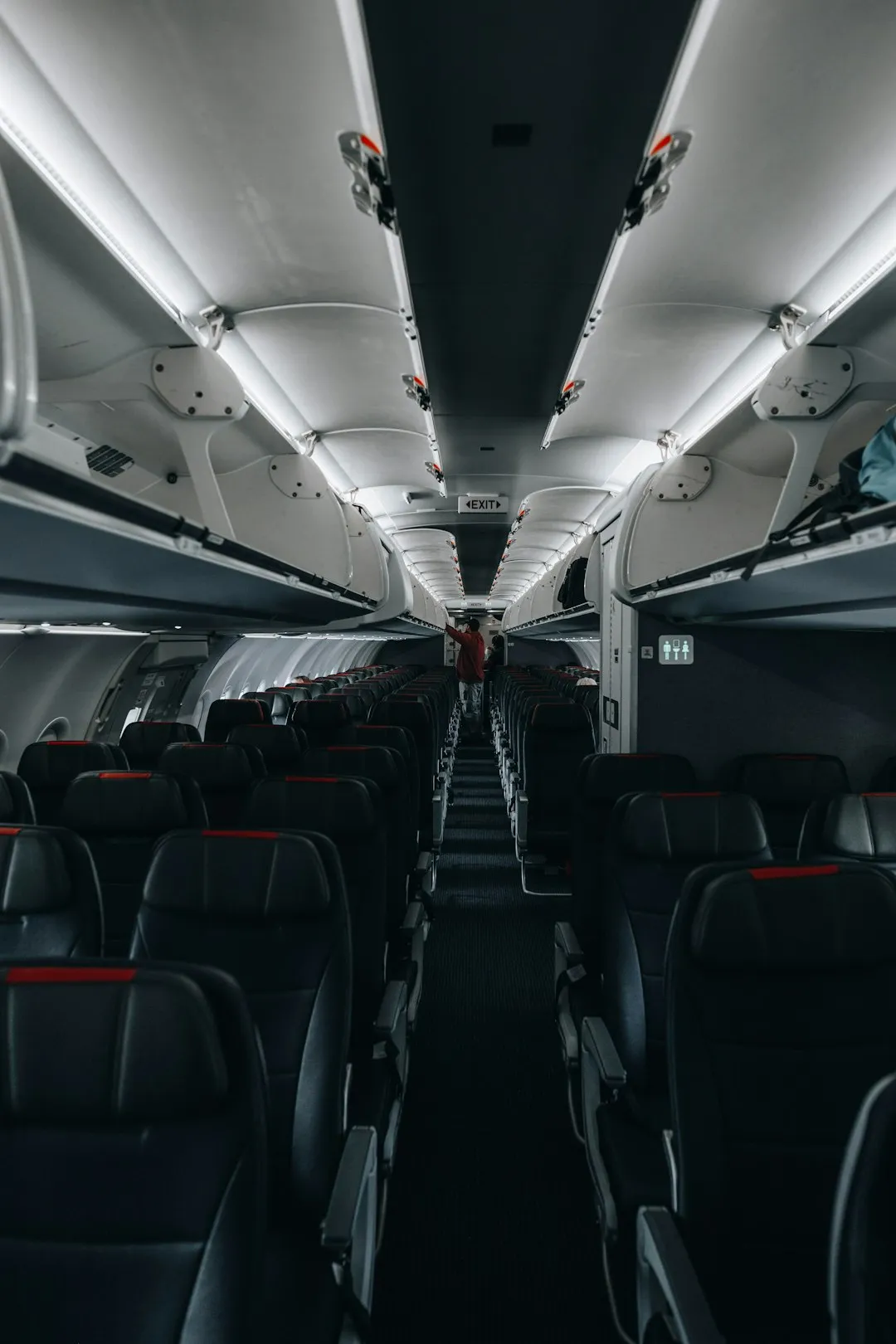
One year after launching a first-class seat option that allows passengers to remain in their wheelchairs during flights, Delta Air Lines introduced an economy version of the seat alongside an accessible lavatory designed to fit an onboard wheelchair and up to two attendants. These are still prototype-stage designs, but the engineering intent is clear.
The seat bottom can fold up against the seatback to accommodate a wheelchair, but it can be converted for standard use when no wheelchair users are flying. The seat, intended for the first row of an aircraft, is passenger-neutral, meaning it does not reduce the number of available seats.
The accompanying lavatory is fully touchless: a wave of the hand deploys the overhead grab bar, raises the toilet lid, and activates the water faucet, soap dispenser, and air dryer. Delta is also exploring a “smart mirror” that would display the text of PA announcements for passengers with hearing impairments, as well as Braille or touchable symbols for those with vision impairments.
JetBlue: Strong in 2024, Slipping in 2025
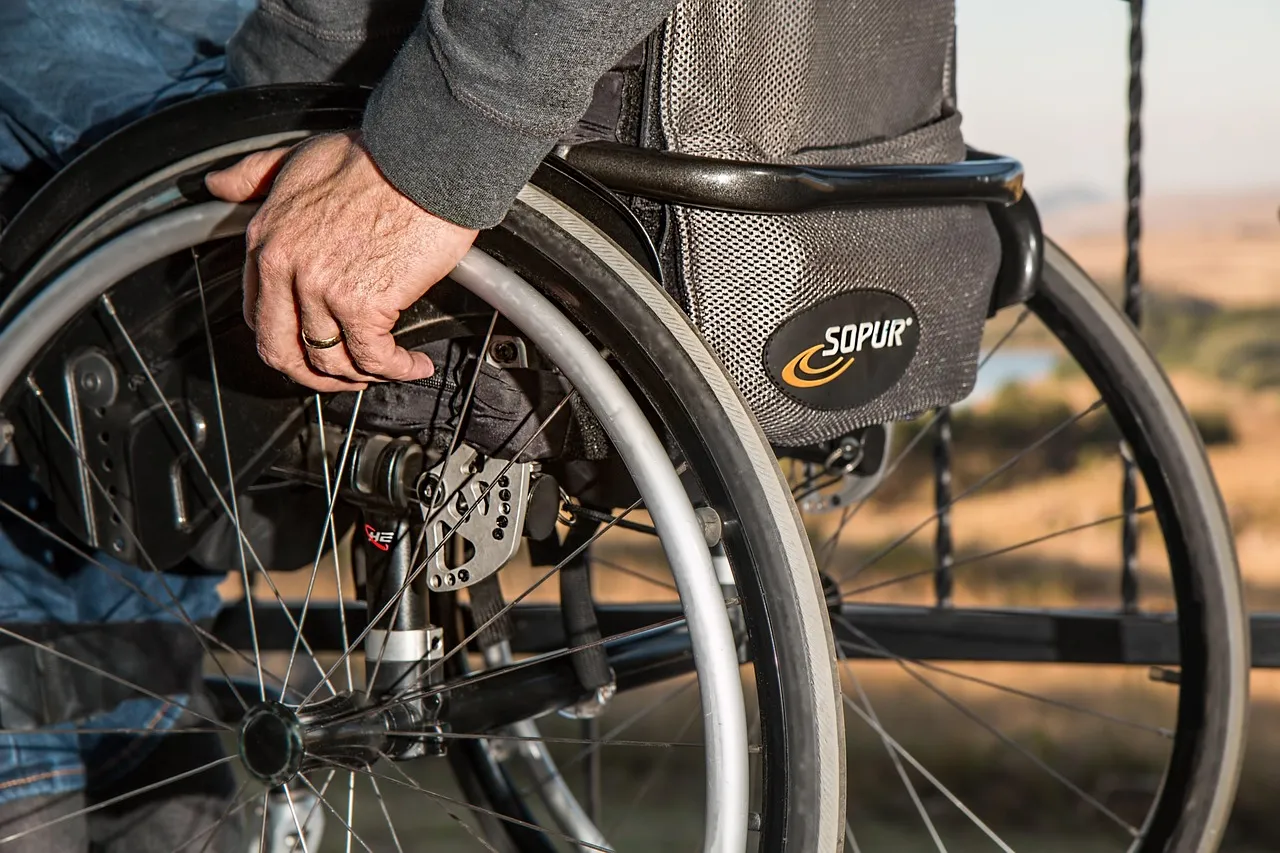
A study by InsureMyTrip, based on Department of Transportation Air Travel Consumer Report data, ranked JetBlue as the top airline for wheelchair accessibility in 2024, based on mishandling rates and overall positive passenger sentiment, which reached 97 percent.
JetBlue enplaned 29,147 wheelchairs and other mobility devices in 2024. That volume, combined with a low damage rate at the time, gave it a strong standing among disability-focused travelers.
However, by the 2025 full-year data, JetBlue had fallen to last place in wheelchair mishandling rankings. After ranking seventh in 2024, JetBlue now occupies the bottom of the list at a 1.44% mishandling rate. Year-to-year swings like this are a reminder that rankings tell only part of the story.
United Airlines: Technology and Policy Reform
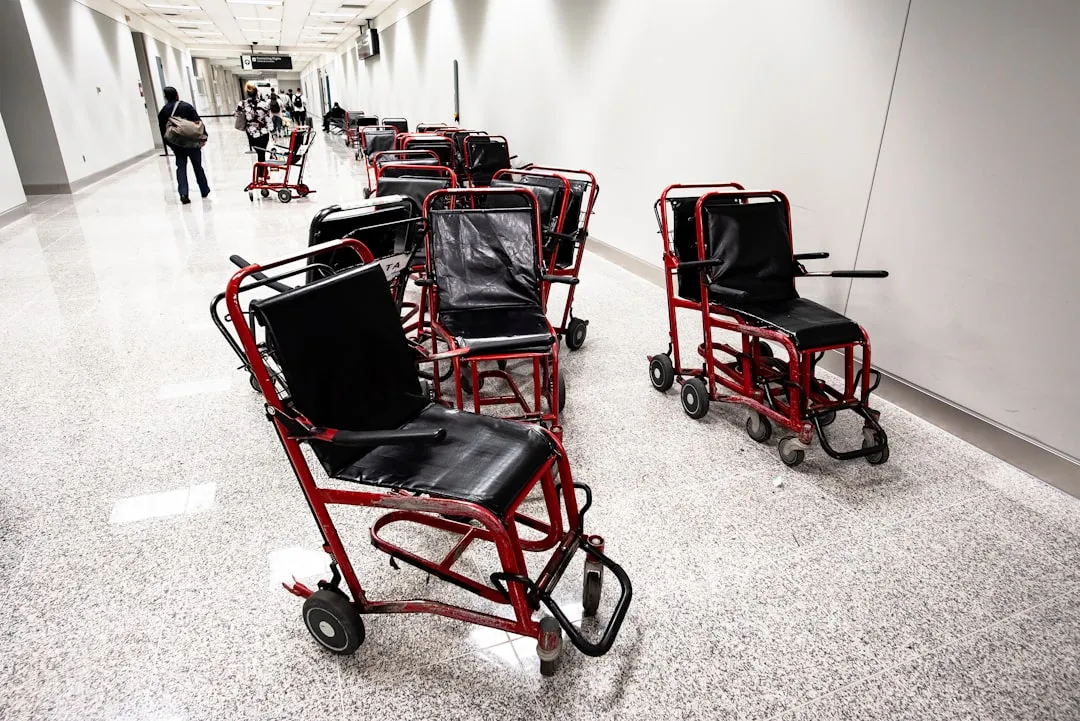
As part of a government settlement, United Airlines rolled out a search function on its website where travelers can find flights on planes that can accommodate their wheelchairs in the cargo hold. If passengers have to book a more expensive flight because their preferred option cannot accommodate the size of their wheelchair, United agreed to refund the difference in fare price.
United has also equipped ramp agents with mobile technology that notifies them when a wheelchair is on board, ensuring they are prepared to handle and load it. This technology prevents agents from closing out a flight until all wheelchairs are confirmed as loaded. That is a simple but meaningful safeguard.
In 2023, United became the first U.S. airline to introduce Braille signage within aircraft cabins, allowing travelers with visual impairments to navigate more independently. United plans to extend Braille signage to its entire mainline fleet by the end of 2026.
The DOT’s Landmark $50 Million Fine Against American Airlines
In October 2024, the DOT demonstrated that its commitment to safer, more inclusive air travel was more than lip service. It levied a $50 million fine against American Airlines for violating laws protecting passengers with disabilities, which was by far the largest disability enforcement action the department had taken. The largest enforcement action before it was only $2 million.
The investigation found that American Airlines damaged or delayed the return of passengers’ power wheelchairs, manual wheelchairs, and scooters, leading to actual or heightened risk of physical harm and significant impacts on passengers’ mobility.
American Airlines disclosed that in 2024 it spent in excess of $175 million on services, infrastructure, training, and new technology to support passengers using mobility devices. Whether that investment translates into improved outcomes for travelers remains the more important measure.
The 2024 Wheelchair Rule: What It Actually Required
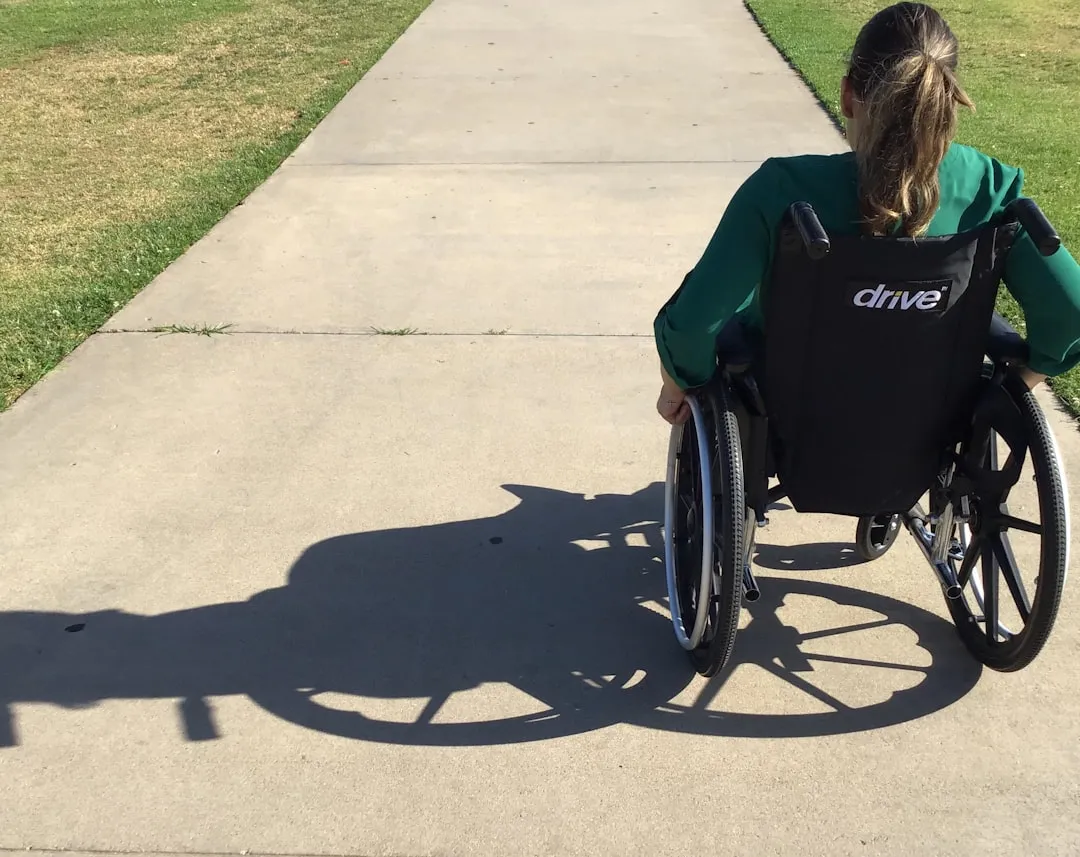
On December 17, 2024, the DOT issued a landmark final rule titled “Ensuring Safe Accommodations for Air Travelers With Disabilities Using Wheelchairs,” published in the Federal Register. It was the most substantial regulatory update in this area in decades.
The 2024 Wheelchair Rule mandates that every frontline employee or contractor who physically assists passengers with disabilities or handles wheelchairs must complete initial hands-on training involving mannequins or demonstration equipment, and pass an annual competency assessment.
By December 17, 2025, the rule also required airlines to notify passengers whether their wheelchairs or scooters have been loaded onto their flights, including whether their device could not fit, before the aircraft cabin door closes, and to notify passengers before they deplane when their device has been unloaded from the cargo compartment. That notification requirement alone addresses one of the most anxiety-inducing moments in accessible travel.
Legal Pushback and the Rule’s Rocky Road
In February 2025, the trade group Airlines for America and five air carriers, including American, Delta, JetBlue, Southwest, and United, filed a lawsuit arguing that some of the DOT’s new rules regarding protections for passengers with wheelchairs are unnecessary and an overreach.
Also in February 2025, the DOT announced that it was rescinding the revised Wheelchair Rule, explaining that a decision to reinstate it would be delayed until the end of 2026. The regulatory landscape, in other words, remains unsettled.
Today, some parts of the rule are still in effect. Airlines are now required to repair damaged devices quickly or reimburse travelers if delays mean extra costs. But the full framework of protections many advocates expected is not yet in force.
Industry-Wide Improvement: The 2025 Data
The industry-wide mishandling rate fell from 1.26% in 2024 to 1.09% in 2025, continuing a multi-year downward trend. That translates to approximately 1,450 fewer mishandled devices year-over-year, which represents real improvement for real people.
Spirit Airlines, which had raised serious concerns in prior years with a mishandling rate that reached over five percent in 2023, largely the result of underreporting the number of devices transported, has now settled into the middle of the pack with a rate of 1.33%, an improvement from 2.07% in 2024.
These gains are real, but they need to be contextualized. The numbers are based solely on consumer complaints, which means travelers who don’t file reports don’t factor into the data at all. The true mishandling rate is almost certainly higher than what the figures suggest.
On-Board Wheelchairs and the Next Frontier

The DOT’s 2024 rule also introduced new performance standards for on-board wheelchairs on twin-aisle aircraft, with requirements for purchases of on-board wheelchairs for use on aircraft with more than 60 seats set to apply after October 2, 2026.
In addition, the DOT has laid the groundwork for a possible future rule that would address passengers staying in their own wheelchairs onboard airplanes. That would be a fundamental shift from the current practice of requiring passengers to transfer out of their personal chairs into a narrow aisle chair.
The Air4All consortium has created a patented design that maintains standard cabin layouts while allowing secure wheelchair accommodations, including adjustable headrests for wheelchair users and adaptable tray tables. Whether airlines invest in that infrastructure at scale is a question that will define the next decade of accessible travel.
What Meaningful Progress Actually Looks Like
Progress in wheelchair-friendly air travel is real, traceable in data, and driven by a mix of regulatory pressure, legal accountability, and genuine engineering investment. It is also uneven, contested, and nowhere near finished. Some carriers, notably Delta, have reached a performance standard that others haven’t matched. Others have committed resources to change practices that were demonstrably harming passengers.
The honest picture is this: the numbers are improving, the design concepts are promising, and the regulatory intent, when enforced, has teeth. But traveling by wheelchair still carries risks that other passengers simply don’t face. That asymmetry deserves continued attention, not just from regulators and airlines, but from travelers who book with accessibility records in mind.
The skies are becoming more accessible. Slowly, with turbulence, and with more work ahead than behind. But the direction is right, and that matters.
AI Disclaimer: This article was created with the assistance of AI tools and reviewed by a human editor.