

There’s a particular kind of quiet you only find after the cell signal drops away completely, somewhere past the last gas station, where the road turns to gravel and then to dirt. New England hides more of these places than most people realize, tucked into river valleys and mountain folds from the Maine woods to the Green Mountains of Vermont.
This is a look at some of the region’s most genuinely remote lodges and cabins, the ones built around solar panels and wood stoves instead of Wi-Fi routers, and what it actually takes to run a place with no grid connection at all.
Why New England Is Becoming a Quiet Capital of Unplugged Travel
The appetite for disconnecting has moved well past niche wellness circles and into mainstream travel planning. Global travelers are increasingly choosing rest over activity, with 56% citing rest and recharge as their top motivation for leisure travel, and more than half of parents initiating no-screen-time periods during family trips. Industry data backs this up too: the 2025 Hilton Trends Report found that more than a quarter of travelers want to reduce social media use during holidays, and the luxury rental platform Plum Guide saw a seventeen percent increase in searches for unplugged stays.
The Global Wellness Summit has been tracking this shift closely, and it named the phenomenon “Analog Wellness,” describing it as a period in which more people are getting deliberate about logging off. New England, with its dense forests, dark sky pockets, and long tradition of rustic sporting camps, happens to have been quietly building this kind of infrastructure for well over a century.
Deep in Maine’s 100-Mile Wilderness: The AMC Wilderness Lodges
The Appalachian Mountain Club operates a network of backcountry lodges tucked into Maine’s legendary 100-Mile Wilderness, and they are about as remote as lodging gets in the eastern United States. These Maine lodges are connected by more than 130 miles of trails, linking properties like Little Lyford, Gorman Chairback, and Medawisla. Little Lyford Lodge and Cabins has provided visitors with a unique Maine outdoor adventure for more than 140 years, located on AMC’s conservation land in the heart of the 100-Mile Wilderness.
Just up the trail system, Mountain Brook Cabin is a secluded, off-grid retreat located deep in AMC’s Maine Woods, offering direct access to paddling, fishing, and stargazing in a certified Dark Sky Park. Guests here paddle for trout, cross-country ski between huts in winter, and sleep by lamplight in cabins that have no cell coverage whatsoever.
Nurture Through Nature: Maine’s First Green-Certified Retreat Center
In the town of Denmark, on the lower slopes of Pleasant Mountain, sits a retreat center with a genuinely rare distinction. Nurture Through Nature Retreat Center is certified as an Environmental Leader by the State of Maine, relying on solar power and off-the-grid sustainability practices. The property runs on more than good intentions: all of its facilities are off the grid relying on solar power for electricity, it uses renewable heating sources from local firewood with no oil or gas, and it relies on composting toilet systems for both kitchen scraps and guest waste.
The Environmental Protection Agency has even taken notice, thanking the retreat for making a significant green power purchase that helps reduce the risks associated with climate change. Cabins and yurts here scatter along a spring-fed brook with long views toward Mount Washington, giving guests the sense of having stepped fully outside the modern grid without giving up basic comfort.
Earth Paradise Eco-Retreat: A Permaculture Homestead in the White Mountains

Not far from the New Hampshire border, near the White Mountain National Forest, a different kind of off-grid property has taken shape on a much larger scale. Earth Paradise Eco-Retreat is a 130-acre, off-grid permaculture homestead nestled in the western mountains of Maine, positioned as a place to unplug and reconnect with nature.
The land supports rental cabins, yurts, and campsites spread across acreage devoted largely to permaculture growing systems rather than manicured grounds. It’s a working homestead as much as a lodging destination, which gives visiting guests a firsthand look at how food, energy, and shelter can function together without utility hookups. For travelers curious about regenerative land practices rather than just a quiet weekend, it offers a more hands-on version of the unplugged experience.
Vermont’s Off-Grid Cabins Near the Kingdom Trails and Green Mountains
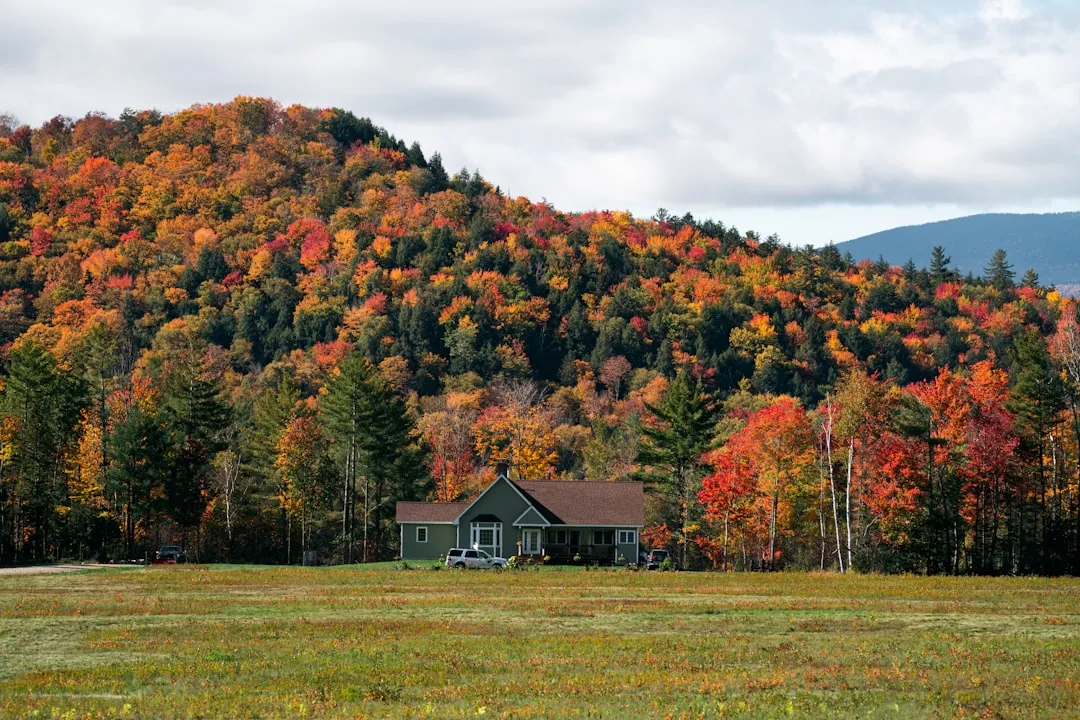
Vermont’s Northeast Kingdom has its own quiet cluster of solar-powered cabins, many built by small farm operations rather than large hospitality companies. Near the famed Kingdom Trails mountain biking network in Sutton, a rustic, authentic off-grid log cabin sits within about 12 miles of the trails, Great Vermont Corn Maze, and Hidden Beach.
Further south, in Roxbury, a hand-crafted off-the-grid cabin at Drift Farmstead invites guests to enjoy the elements on a 37-acre farm, reached by a short walk through gardens. These are working landscapes as much as lodging, and staying in one usually means falling asleep to genuine dark and waking to actual birdsong rather than a phone alarm.
New Hampshire’s North Country: Solar Cabins Along Quiet Rivers

New Hampshire’s far north, near the Connecticut Lakes region, holds some of the state’s most isolated overnight stays. In Clarksville, a solar-powered log cabin called “Dam Right” sits on a river within about 12 miles of the Poore Family Homestead Historic Farm Museum, Beaver Brook Falls Natural Area, and Lake Francis State Park, offering direct trail access.
Similar solar-powered properties turn up around Canaan and the broader White Mountains region, where rustic charm meets sustainability in solar-powered cabins deep in the woods. These are the kinds of places where the nearest paved road might be a fifteen or twenty minute drive, and where the only sounds at night are wind and running water.
The Technology Behind Truly Off-Grid Living

Running a lodge with zero grid connection takes more engineering than most guests ever think about. Solar remains the most common solution, but it has real limitations: solar systems are clean but expensive, weather-dependent, and require costly batteries. A growing number of properties near mountain streams have started supplementing solar with small hydro systems instead, since micro-hydro is especially suitable for valleys or mountain streams, precisely where many eco lodges are located, and a 1kW micro-hydro turbine often becomes the most reliable renewable energy choice in those off-grid settings.
Documented case studies show real results from this approach: one eco lodge that installed a small low-head turbine found that within one week, the system powered three cabins continuously, relegating the diesel generator to backup only and saving roughly $2,000 a year in fuel while improving guest satisfaction with a quieter environment. Composting toilets, wood stoves, and propane cooktops round out the rest of the equation at most New England properties, keeping the footprint small without sacrificing basic function.
Wildlife and Wild Water: The Ecosystems That Surround These Lodges

Part of what makes these lodges feel so remote is the land itself, much of which sits within genuinely rare ecosystems. The Denmark, Maine area around Nurture Through Nature borders the Saco River floodplain, the largest intact floodplain in New England, where spring rains scour the landscape and make room for rare plants and animals.
That same watershed is home to wide-ranging mammals such as fisher and bobcat, along with larger wildlife including Eastern coyote, black bear, and moose. Further north, Maine’s 100-Mile Wilderness protects its own stretch of intact forest, offering the kind of unbroken tree canopy that makes true dark skies possible. Staying in any of these lodges means sharing the landscape with animals that have far more claim to it than any visitor does, and most properties ask guests to move through the land with that in mind.
What a Stay Actually Looks Like
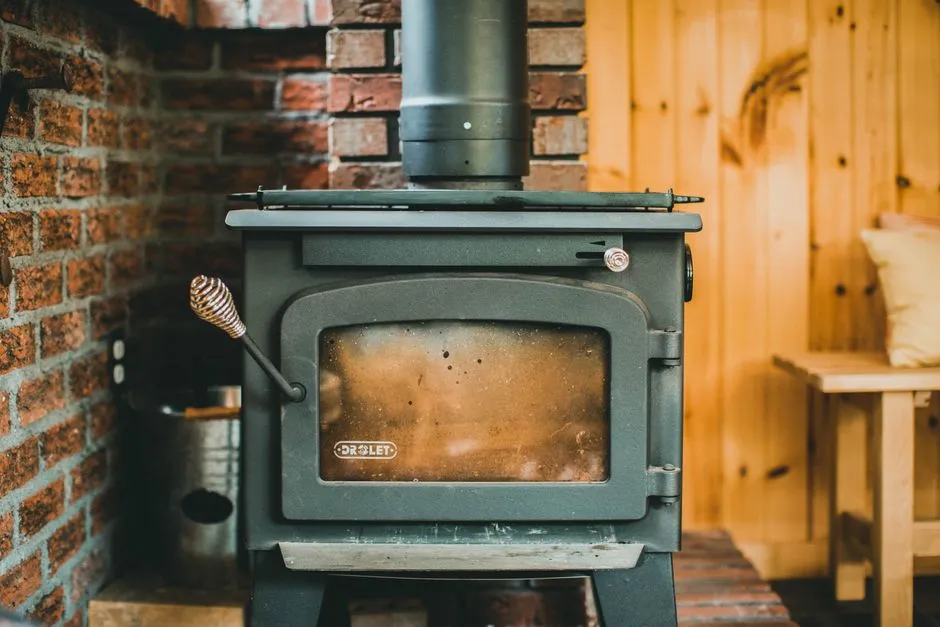
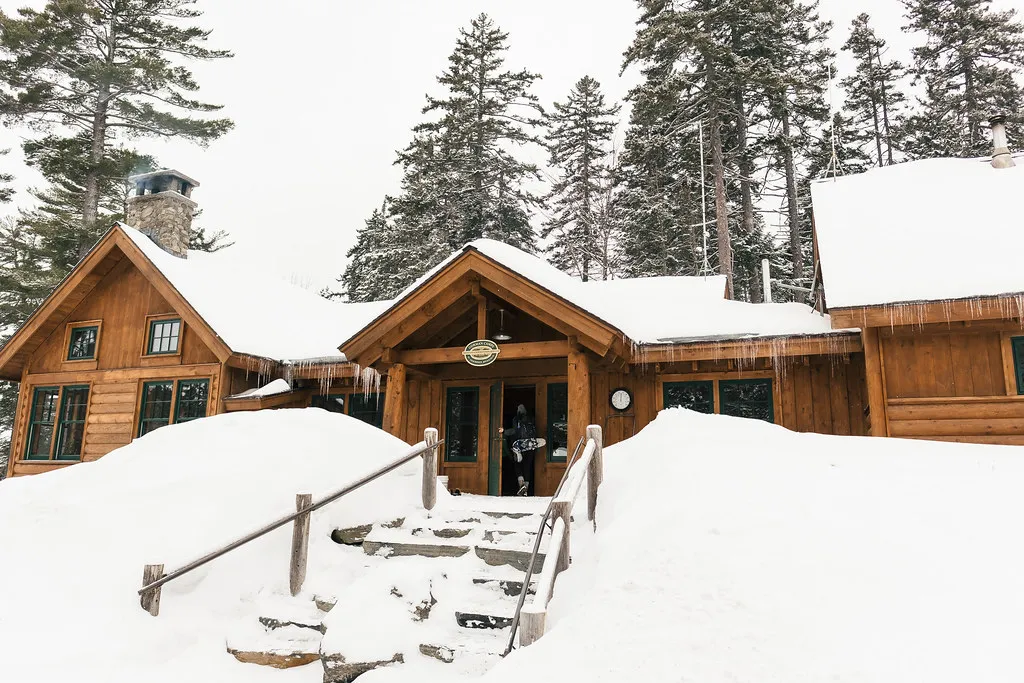
Daily life at one of these lodges runs on a slower, more physical rhythm than a typical hotel stay. At Nurture Through Nature, cabins are heated by wood stove, with staff setting the stove up before arrival though guests are responsible for keeping the fire going, and firewood is left near each cabin along with newspaper, matches, and kindling.
Each cabin offers a two-burner propane stove along with pots, pans, and basic kitchen supplies, so cooking becomes part of the experience rather than an afterthought. Many properties, including the AMC’s backcountry lodges, still offer opportunities to paddle and fly fish remote trout ponds, pedal endless gravel, and see the stars like never before. The lack of screens tends to push the day toward simpler things: splitting kindling, reading by lamp, or just sitting by a brook.
Practical Guidance for Travelers Seeking to Unplug in New England
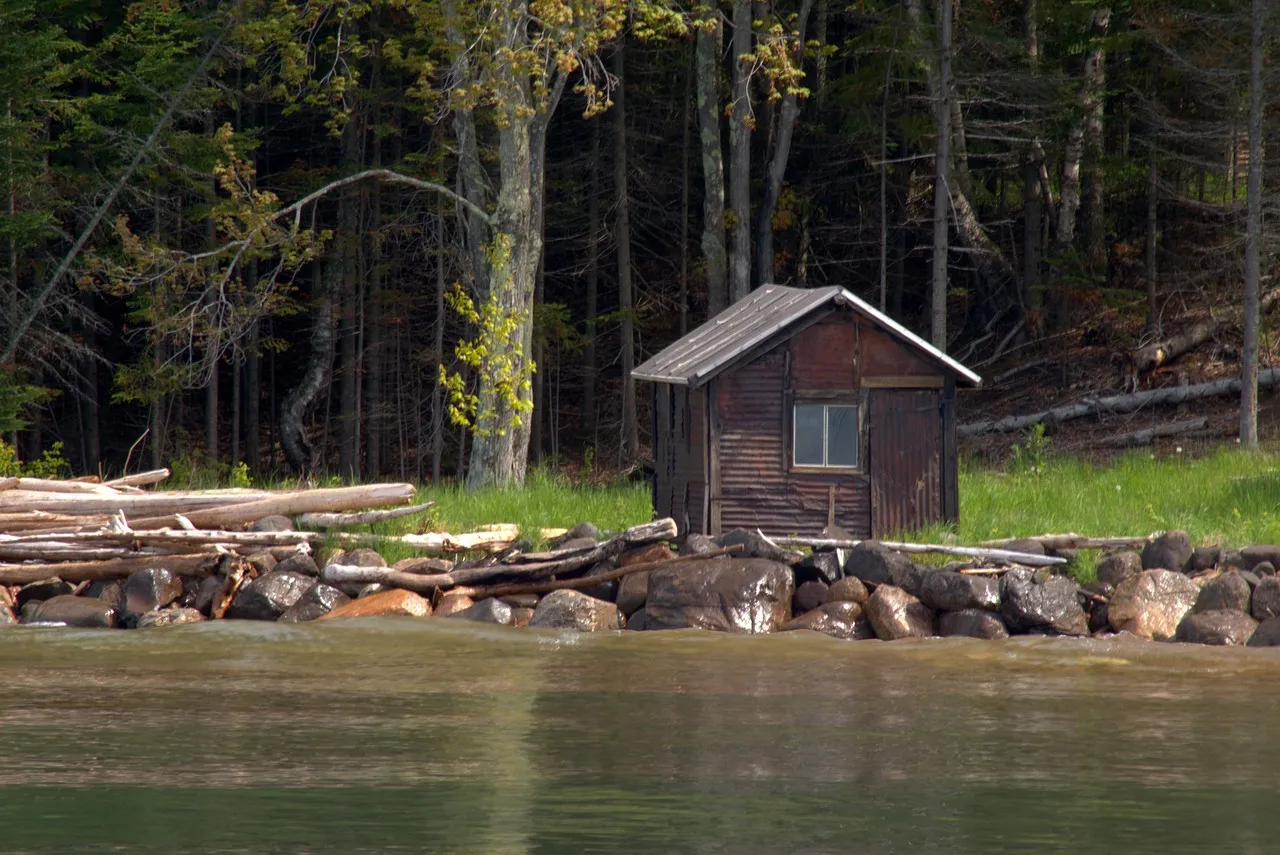
Anyone planning a genuinely off-grid stay should go in with realistic expectations about what “remote” actually means. Many properties, including Nurture Through Nature, are upfront that while their ethos is to disconnect from daily pressures, cell service and Wi-Fi are sometimes available at a main lodge, and guests using a phone are asked to be respectful of others hoping to disconnect from the grid. Booking early matters too, since interest keeps climbing: the global digital detox tourism market reached about $1.42 billion in 2024 and is projected to grow at a compound annual rate of 8.6% through 2033. Packing right also makes a real difference at unheated or partially off-grid cabins, from warm layers and a good headlamp to simply telling family or colleagues ahead of time that you’ll be unreachable for a few days.
New England’s remote lodges aren’t trying to sell an escape from reality so much as offer a return to a simpler one, where a wood stove and a good book do most of the heavy lifting. What stands out across Maine, Vermont, and New Hampshire is how much thoughtful engineering goes into making that simplicity possible, from micro-hydro turbines tucked into mountain streams to composting systems that quietly close the loop. The next time a cabin listing mentions no Wi-Fi and a half-mile hike in, it’s worth reading that as an invitation rather than an inconvenience.AI Disclaimer: This article was created with the assistance of AI tools and reviewed by a human editor.