
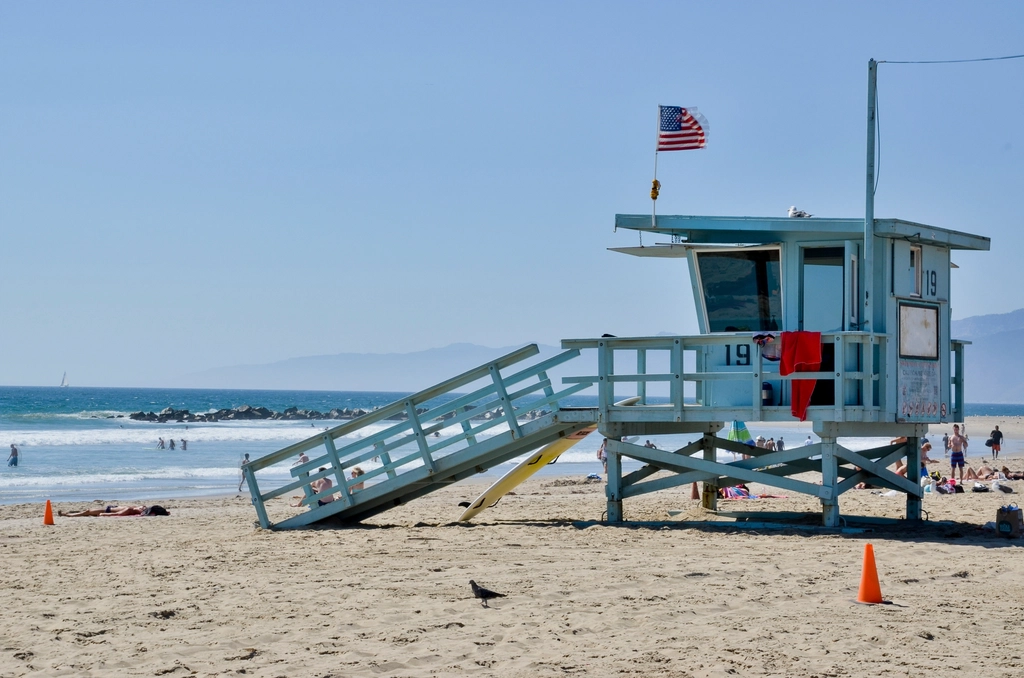

Every summer, millions of people arrive at coastal beaches armed with sunscreen, beach chairs, and absolutely no idea what the colored flags near the lifeguard stand actually mean. The flags are right there, flapping in the sea breeze, designed specifically to communicate critical safety information. Most visitors walk past them without a second glance.
That gap in awareness has real consequences. Understanding the beach flag system takes about ten minutes to learn and could genuinely change how safe your next beach trip turns out to be. Here’s what each flag is telling you, and why it matters more than you might expect.
Where the System Comes From
The International Life Saving Federation developed a set of standardized guidelines for flag usage in 2004, and those guidelines have since been endorsed and implemented by the United States Lifesaving Association (USLA). Before that, flags varied so widely between locations that a visitor moving from one beach to another had no reliable way to interpret the signals.
Warning flags are posted by many coastal communities, but the flags used to identify different tide and surf conditions vary from place to place – and those differences in flag colors, size, and symbols can confuse beachgoers, thereby decreasing the effectiveness of public safety efforts. The move toward a universal standard was a direct response to that confusion. Although the different flag colors carry the same meaning no matter where you see them displayed, it’s important to remember that the conditions they describe may differ from one beach to the next.
Green: Safe, but Not Risk-Free

A green flag is the best one you can see. It means calm conditions, low surf, and minimal current, and swimming is considered safe for most people. That said, green does not mean the ocean has been converted into a swimming pool.
“Low hazard” is not the same as “no hazard.” The ocean is still the ocean, and waves can surprise you while conditions can shift during the day. Some localities fly a green flag to indicate the water is safe, though the international body decided not to officially adopt the color because “there is always a potential hazard present,” and the view that it is best to notify people when conditions are unusually challenging, rather than suggesting they are ever completely safe.
Yellow: Caution Is the Right Word
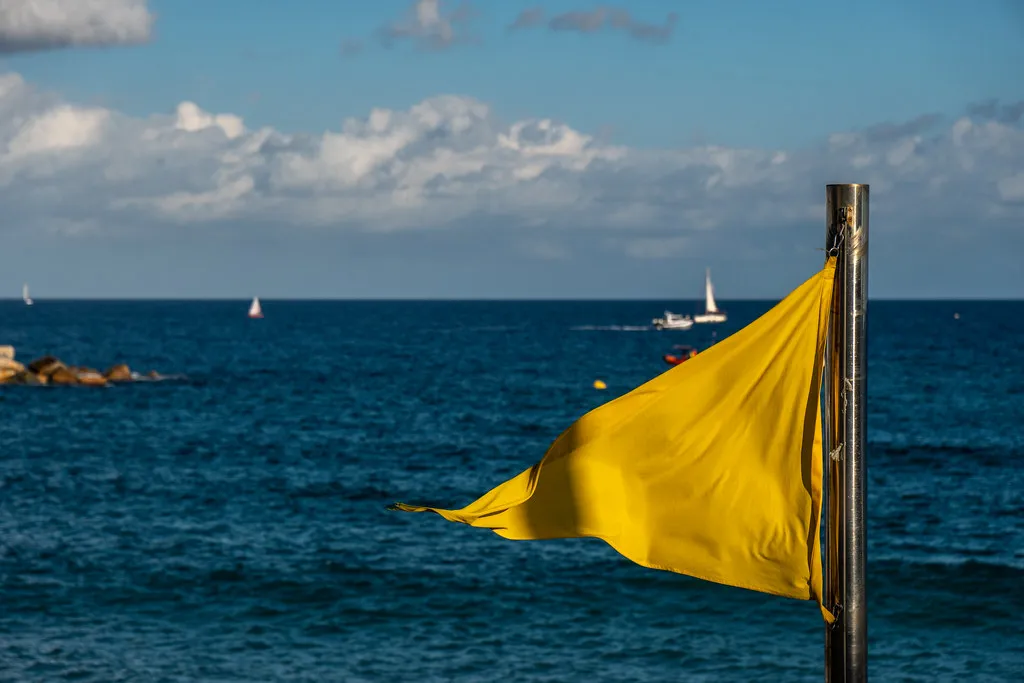
Yellow beach flags indicate that there is a “medium hazard” at the beach, with the ocean exhibiting moderate surf conditions and/or currents. This is the flag that tourists most commonly underestimate. The surf may look approachable from the shore, but currents can be deceptive.
When a yellow flag is up, weak swimmers should refrain from going into the water, while others should exercise “enhanced care and caution.” Yellow is not a green light for casual swimmers who haven’t been in open ocean before. If you’re unfamiliar with how tides and currents behave, yellow is a moment to pause and assess honestly.
Single Red: High Hazard, Real Danger

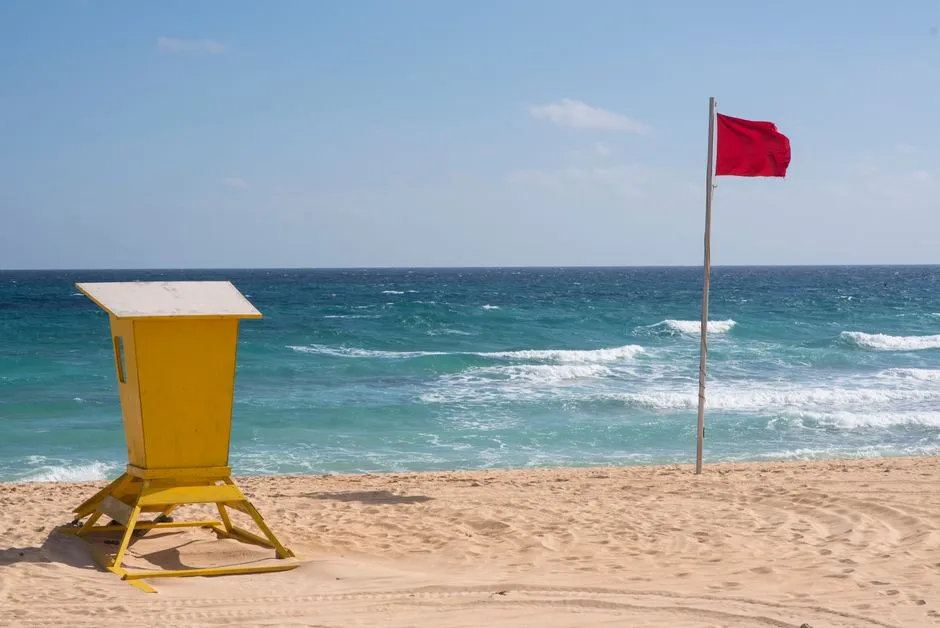
A single red flag signals high hazard conditions. Surf is rough, currents are strong, and the risk of being swept out is substantially elevated. This is not a flag that should be dismissed because the water “doesn’t look that bad” from the shore.
Many public beaches use a system of color-coded flags to notify swimmers of conditions, such as dangerous rip currents, and to communicate other hazards lurking underwater. A single red flag is one of the clearest communications that system can make. The United States Lifesaving Association estimates rip currents are responsible for about 100 drownings each year in the United States and over 80 percent of lifeguard rescues. Red flag conditions are often the environment that creates exactly those rip currents.
Double Red: Stay Out of the Water
The double red flag is hard to miss. A red over red flag acts as an order for everyone to evacuate the beach, as the water is highly dangerous and closed to the public. In some U.S. jurisdictions, swimming under a double red flag is not just inadvisable – it carries an enforceable fine.
The consequences of ignoring double red flags are documented and devastating. From June 15 to 24 in 2023, six tourists died after swimming in the Gulf of Mexico off the coast of Panama City Beach – five happened under double red flags, and one occurred during single red flag conditions, with another double red drowning occurring on an unincorporated Bay County beach outside the city’s limits. Local officials said that beachgoers failing to follow the flag warning system is the “city’s greatest challenge on the sandy beach.”
Purple: The Flag Most People Don’t Recognize

Unlike the other colors, a purple flag doesn’t warn about rough waves or strong currents. Instead, it alerts visitors to something living beneath the surface. The purple flag can indicate the presence of any type of dangerous marine life, including but not limited to high concentrations of jellyfish, sea lice, stingrays, harmful algae bloom, Portuguese man o’ war, and sharks.
A jellyfish can be nearly transparent. A stingray can disappear beneath a thin layer of sand. Even detached tentacles drifting in the water may still contain venom powerful enough to cause injury, and many people don’t realize they’ve encountered one until the pain begins. A purple flag typically flies in conjunction with a green, yellow, or red flag that indicates surf conditions, so the two pieces of information work together.
Black and White: Watercraft Zones Explained

Surfers will want to keep an eye out for black-and-white flags. These flags, which have those colors quartered, are used when an area is designated only for surfboards and other nonpowered watercraft, and swimmers need to stay out of those areas to prevent injuries or other issues. This is a separation system, not a hazard warning, and it exists to protect both swimmers and surfers from collisions.
A yellow flag with a black circle in its center carries the opposite message – if surfers and paddleboarders see this flag, it means that surfboards and other nonpowered watercraft can’t be used at all. These two flags are frequently confused with each other, which is exactly the kind of mix-up the flag system was designed to prevent.
The Red and Yellow Paired Flags: A Lifeguard Zone
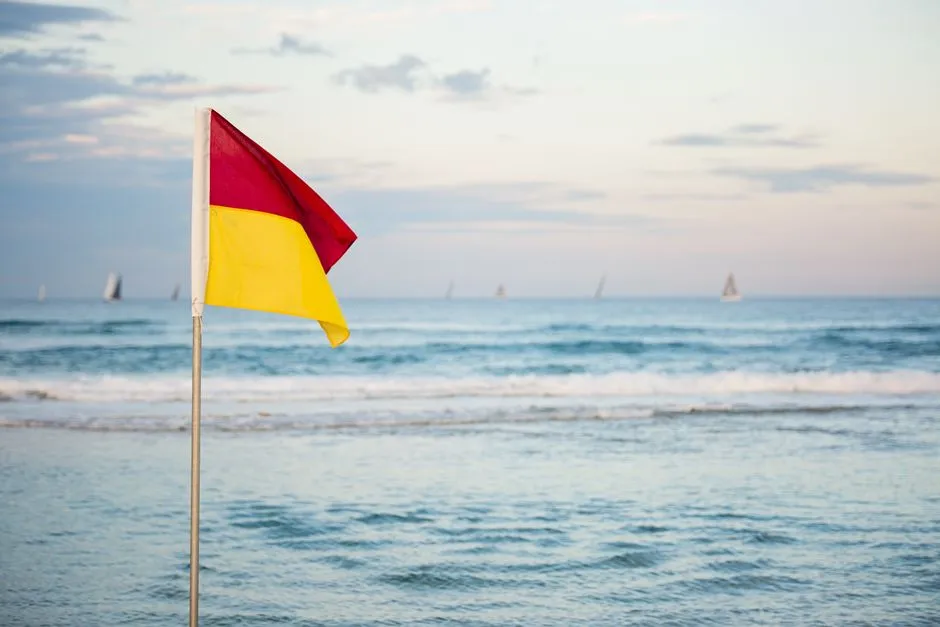
The red-and-yellow halved flag indicates that the area is protected by lifeguards. These flags may be used in pairs spaced apart to indicate a designated zone where swimming and body surfing is permitted and where the area is most closely supervised, or singly to indicate that swimming is permitted in front of the area where the flag is flown under qualified lifeguard supervision.
This system is instilled into Australian children from a young age through Surf Life Saving programs – “swim between the red and yellow flags” is a cultural mantra – but tourists frequently ignore it. Drowning statistics in Australia consistently show that the majority of ocean drowning victims were swimming outside the flagged area. The red-and-yellow pair is not decorative. It marks the exact stretch of water where help can reach you if something goes wrong.
Rip Currents: The Invisible Threat the Flags Are Designed to Signal
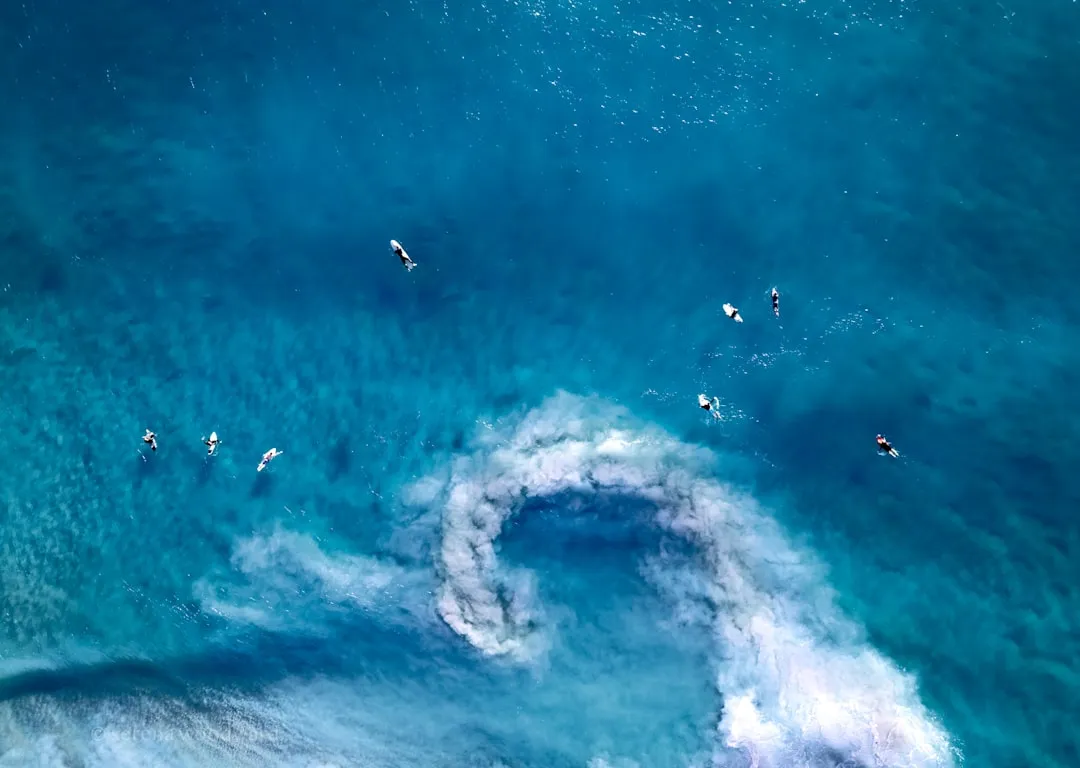
Flags warn about rip currents indirectly, but they deserve specific attention. Rip currents are responsible for about 80 percent of ocean rescues, and they can form on any beach, any day, even when conditions look calm from shore. Rip currents are powerful, narrow channels of fast-moving water flowing from the shore and out to the ocean and can move at speeds of up to eight feet per second.
Research published in a peer-reviewed study found that only 44 percent of American adult participants were aware that rip currents are the major cause of drownings in the United States. The same study found that less than half of respondents reported reading and following posted beach signs with safety information, while only around one quarter reported swimming near lifeguards. If you’re ever caught in one, the advice is consistent: swim parallel to the shore, not against the current, until you’re free of the pull.
The Global Gap: Flags Aren’t the Same Everywhere
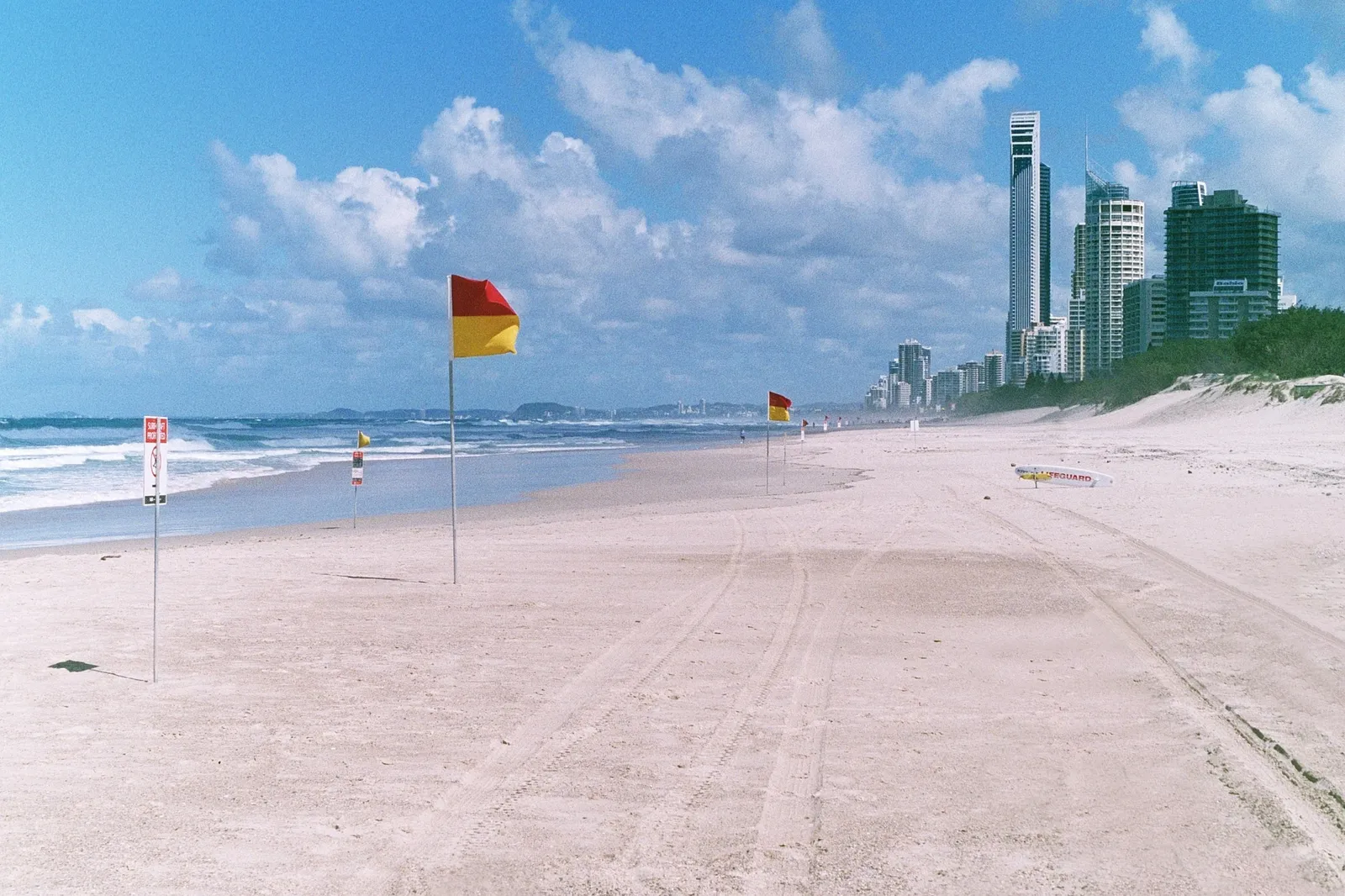
Beach flag systems vary slightly between countries and even between U.S. states, but the core colors are universal enough that learning them once will keep you safer at almost any coastline. Still, regional differences exist and they’re worth noting before you travel internationally. Japan uses a red flag system at most monitored beaches, but the signage is primarily in Japanese with limited English translation even at popular tourist beaches – a red flag means swimming is prohibited and yellow means caution.
In Europe, the Blue Flag indicates water quality and environmental standards, not swimming safety, which surprises many visitors who assume it signals something about surf conditions. Recent data from Royal Life Saving Australia and Surf Life Saving’s National Drowning Report shows 357 people drowned between July 2024 and June 2025, a figure 27 percent higher than the 10-year average. Understanding what flags mean in the country you’re visiting – not just the country you’re from – is a meaningful part of responsible travel preparation.
The Quiet Lesson Behind Every Flag

Beach flags are one of the most efficient public safety communication systems in the world. A few colored pieces of fabric, posted in the right place, can convey more useful information than any app or website in the moment when it actually matters. The trouble is that they only work when people take the time to understand them before wading in.
Taking two minutes to look at the flags when you arrive at a beach – and to find the sign near the lifeguard stand that explains them – is one of the simplest, most proportionate things a traveler can do to stay safe. Oftentimes, there is a sign near where the flag is raised that will explain the meaning. The ocean rewards attention and punishes overconfidence. The flags are already doing their job. The rest is up to you.
AI Disclaimer: This article was created with the assistance of AI tools and reviewed by a human editor.