


Every summer, the same avoidable scene plays out on beaches across the country. A sudden gust picks up, and a beach umbrella that seemed perfectly fine moments ago tears loose from the sand and becomes a fast-moving projectile aimed at anyone unlucky enough to be nearby.
The injury numbers are not small, and the physics behind these incidents are well understood. What’s less understood is how often a simple anchoring mistake is the root cause – and how easy it is to correct.
The Scale of the Problem Is Larger Than Most People Realize

Nearly 3,000 people are injured in umbrella-related accidents every year in the United States, according to the Consumer Product Safety Commission (CPSC). That figure tends to surprise people who think of beach umbrellas as harmless gear.
A CPSC report cites that from 2009 to 2018, 32,764 umbrella-related accidents were reported in the United States. That’s a decade-long pattern, not a run of unusual bad luck.
A handful of people have even died after being struck by a flying umbrella, including a woman in 2016 on Virginia Beach. These incidents can also be fatal, as seen when Tammy Perrault was killed after being impaled in the chest by a beach umbrella in Surfside Beach, South Carolina. The danger is real, documented, and largely preventable.
The One Mistake Most Beachgoers Make: Planting Too Shallow
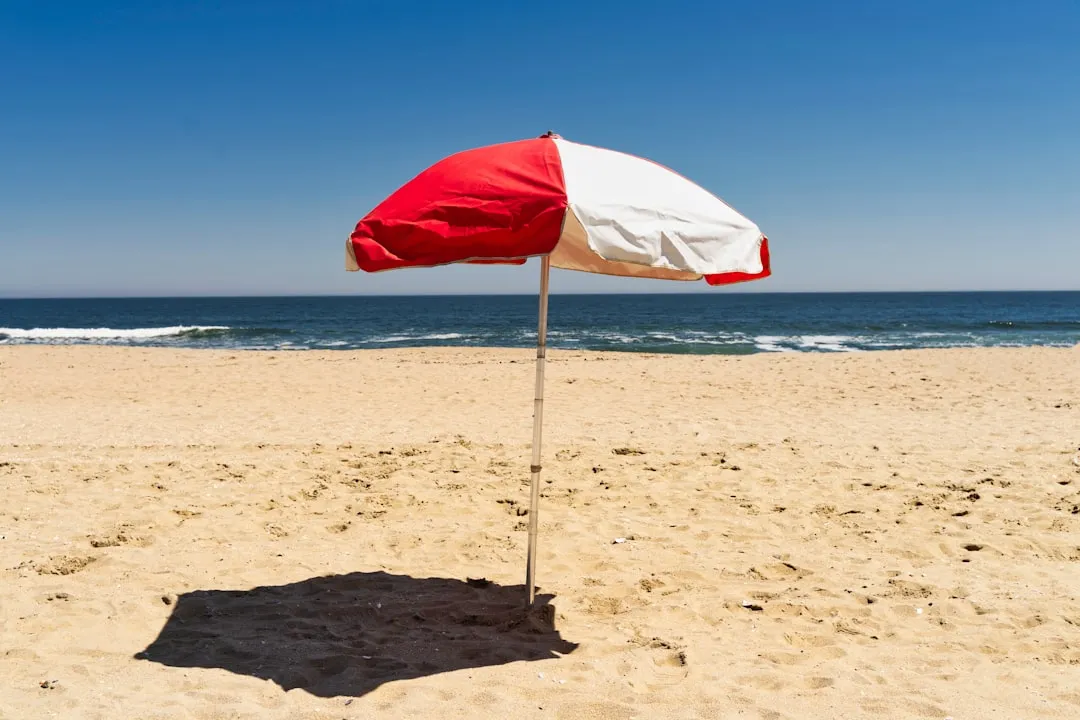
The mistake most people make is depending on the anchor to hold the umbrella fast to the sand by just dipping it some inches into the sand. In such cases, any beach umbrella will be easily displaced by wind.
The key is getting your anchor deep enough – usually 18 to 24 inches minimum – and angling the umbrella into the wind. Most people fall well short of this, often pushing the pole just six or eight inches into the sand and considering the job done.
Most beach umbrella failures come down to rushing the setup or using the wrong technique for the sand conditions. A few extra minutes of careful setup can mean the difference between a relaxing afternoon and a trip to the emergency room.
Why Tilting Away from the Wind Is Dangerously Wrong

A common mistake: people intuitively tilt the umbrella away from the wind, thinking they’re “sheltering” it. This creates an airfoil effect that generates lift – exactly what you don’t want.
Beyond about 10 mph, wind tilts the beach umbrella beyond 15 degrees from a vertical position. After about 15 degrees of tilt, wind flows under the canopy, creating lift on an underside. The process of tilting and lifting results in wind forces pulling or dislodging the beach umbrella from the sand.
Tilt the canopy into the wind – the step almost everyone gets backwards. Angled into the wind, gusts press the canopy down; angled away, it becomes a wing generating lift. The physics here are unforgiving, and instinct usually points people in the wrong direction.
Loose, Dry Sand Defeats Even a Deep Anchor
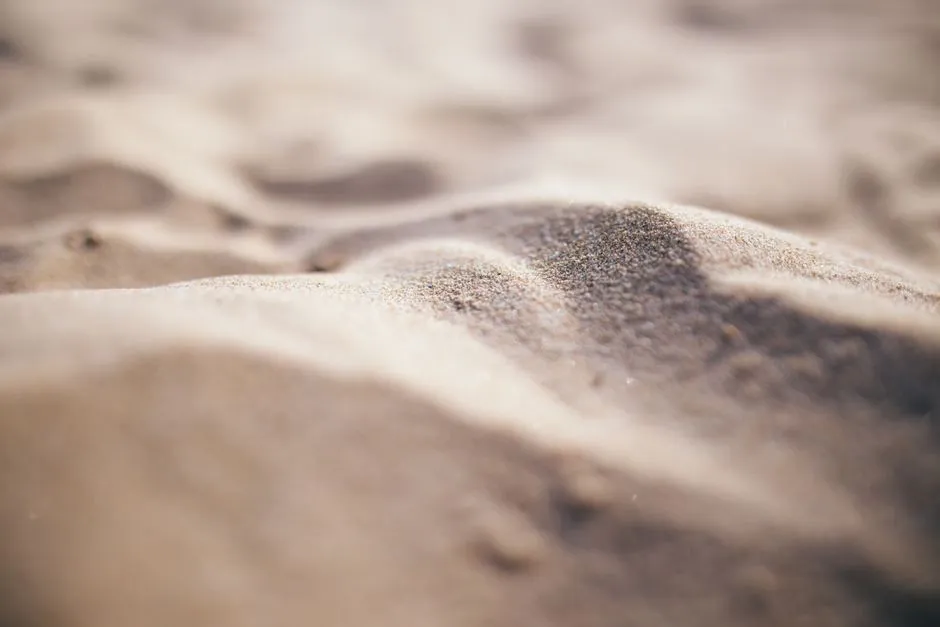
Most umbrella failures come down to one or more of three problems: planted too shallow, wrong angle, or wrong sand conditions – fine, dry, loose sand near the top of the beach has almost no holding power; compacted or damp sand much lower on the beach holds significantly better.
Look for sand that is firm and slightly damp rather than dry and loose. Loose, powdery sand near the dune line offers very little grip. Wet, compacted sand closer to the waterline holds much better, but avoid areas where the tide could reach you.
Sand is constantly shifting, wind direction changes throughout the day, and surfaces may range from soft dunes to compact shoreline areas. Picking the right spot on the beach is as important as the anchoring technique itself.
The Rocking-In Method Is Not the Right Technique

Hold the pole vertical and twist a sand auger clockwise – don’t rock it back and forth, which loosens the hole. This is a detail that nearly every casual beachgoer gets wrong, because rocking feels intuitive when you’re trying to work something deeper into sand.
Screw-in anchors twist into sand, creating significant resistance. The spiraling motion compacts surrounding sand, multiplying holding power with each turn. Straight push-in or rocking methods do the opposite, loosening the sand around the pole rather than compacting it.
Once the pole is set, test it. Give the pole a firm lateral shake in multiple directions. If it moves easily or wobbles significantly, it’s not in deep enough. Remove it and go again, deeper, or find a spot with better-compacted sand. A properly planted umbrella should feel firmly gripped by the sand with only minor movement under a firm shake.
Ignoring the Canopy Vent Is a Hidden Risk Factor

Most quality beach umbrellas have a vent at the top of the canopy – a small opening or flap that allows air pressure to escape through the top rather than pushing up under the canopy. Make sure this vent is open and not folded in. The vent dramatically reduces lift force on the canopy.
An umbrella without a vent – or with the vent blocked – acts like a sail and generates significantly more upward force in wind. Many people never notice the vent at all, let alone check whether it’s functioning correctly.
Aerodynamic design can reduce the upward lift force by as much as 30% during 20 mph gusts. That’s a meaningful margin when conditions are building toward the danger zone, and it costs nothing to simply check that the vent is open before settling in for the day.
The New Safety Standard That Changed the Benchmark
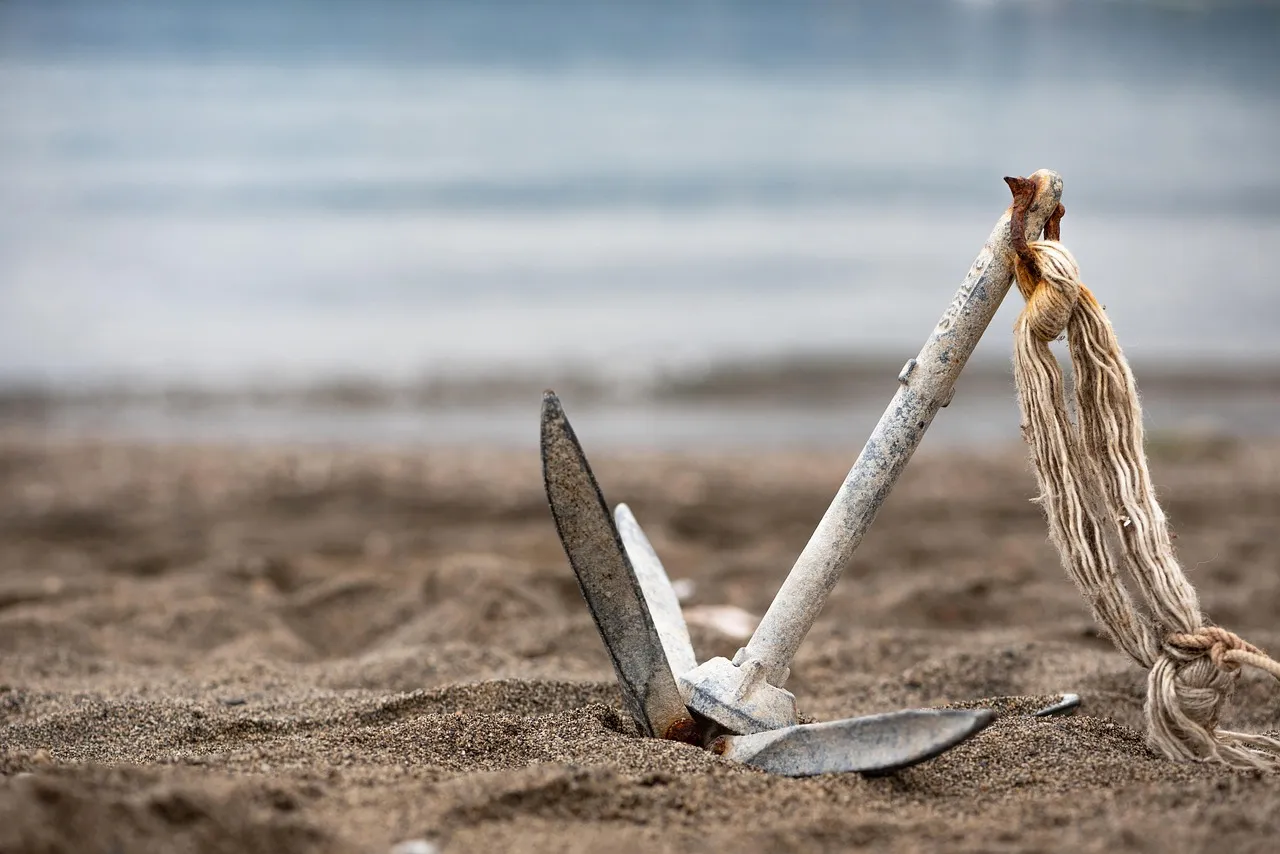
In 2024, the Consumer Product Safety Commission introduced ASTM F3681-24, the first true performance standard for residential and commercial beach umbrellas. Prior to this, wind-rating claims were essentially unregulated marketing language.
The new standard requires that beach umbrellas be able to resist at least 75 pounds of upward force or must remain secure in wind speeds up to 30 miles per hour when installed in the sand. Most umbrellas alone are not compliant with the ASTM standards. They must be integrated with or secured to an anchor that meets the ASTM F3681 standards.
Before this standard, every “wind rated” claim was whatever the marketing department felt like. Now there’s a label to check – and some municipalities are beginning to require compliant anchors on public beaches.
When to Bring the Umbrella Down Entirely
In moderate winds of 10 to 20 mph, a properly anchored umbrella can hold with 24-inch depth, tilted into the wind, and secondary anchoring. In sustained winds over 25 to 30 mph, no amount of anchoring makes a beach umbrella safe. The force simply exceeds what sand can resist.
No portable umbrella should be described as safe in every wind condition. Users should close the canopy immediately if the umbrella becomes unstable or sudden gusts develop. This seems obvious in hindsight, but in practice most people wait too long, hoping the gusts will pass.
Lower the height of the umbrella when the wind picks up or if you’re leaving it unattended for a while. Avoid opening the canopy to full extension on breezy days. Less exposed surface means the umbrella catches less wind. On genuinely windy days, shade is best found in other ways.
Secondary Anchoring as a Backup, Not a Shortcut
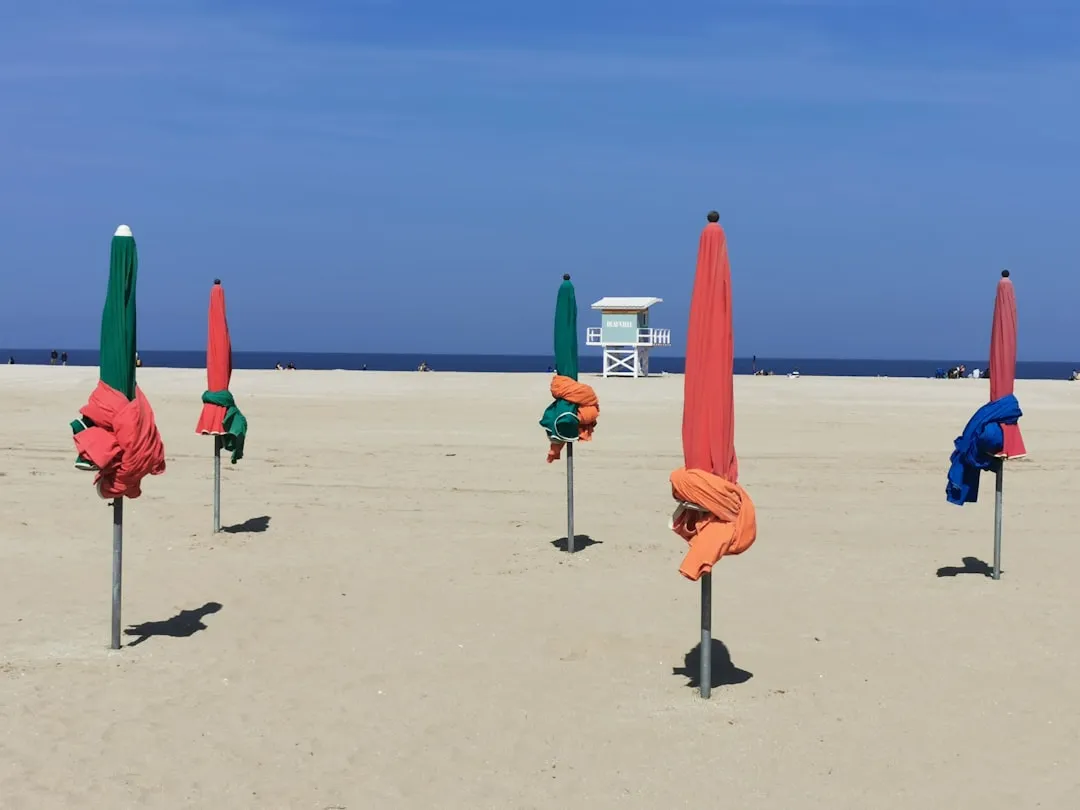
Even with proper depth and angle, secondary anchoring provides crucial backup security, especially on windy days. Sand bag weights – filled mesh bags or purpose-built umbrella weights with sand – attach to the pole base or lower spokes and add downward force that resists lifting.
Sand bags attach to the umbrella pole and add downward weight to resist lift. They work as supplements rather than primary anchors. Fill them at the beach, drape over the pole base, and they add 15 to 30 pounds of holding force. That extra weight is meaningful when a gust arrives unexpectedly.
In wind speeds exceeding 15 mph, secondary anchors like sandbags can provide the necessary counterweight to keep the umbrella stationary. The key word here is “secondary” – these additions work alongside proper depth and angle, not instead of them.
Real-World Consequences: What Happens When It Goes Wrong
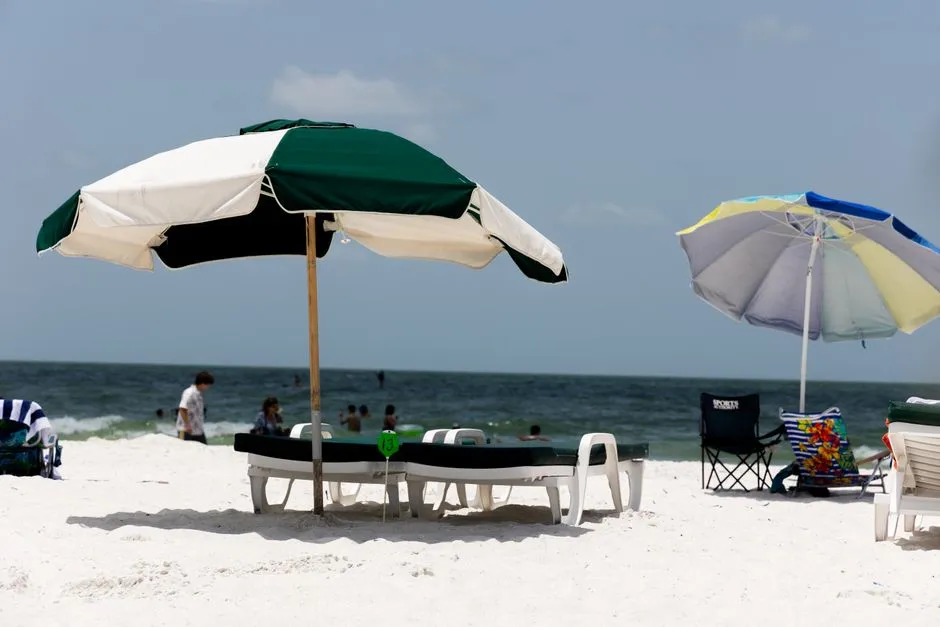
A rental umbrella dislodged from the sand and impaled a woman’s leg at Cocoa Beach in 2024. Authorities were promptly alerted to the scene, and first responders needed to use bolt-cutters to remove the umbrella’s canopy from the pole, as the umbrella kept moving while lodged in the woman’s leg.
A guest at a resort suffered eye injuries when a gust of wind blew an umbrella out of its table and sent it flying towards him. He received $295,000 in damages after suing the resort. Liability is a real dimension of this problem, extending well beyond personal safety.
Despite the rise in injuries, most beach umbrellas sold and rented today are built the same way they were 30 years ago, and umbrellas are often secured with generic screw anchors – or nothing at all. The gap between what we know and what actually happens on most beaches remains wide.
The Takeaway

Beach umbrella safety comes down to a handful of decisions made in the first few minutes of setting up: choosing compacted sand, going deep enough with a twist-in anchor, angling into the wind rather than away from it, and confirming the canopy vent is open. None of it is complicated. All of it matters.
The Consumer Product Safety Commission reports that approximately 3,000 people visit emergency rooms annually due to umbrella-related injuries. Most of these injuries happen when umbrellas are lifted by wind and strike bystanders – a completely preventable scenario with proper anchoring. The beach is one of the most genuinely restorative places a person can spend a day. A few minutes of careful setup is a reasonable trade for keeping it that way.
AI Disclaimer: This article was created with the assistance of AI tools and reviewed by a human editor.