
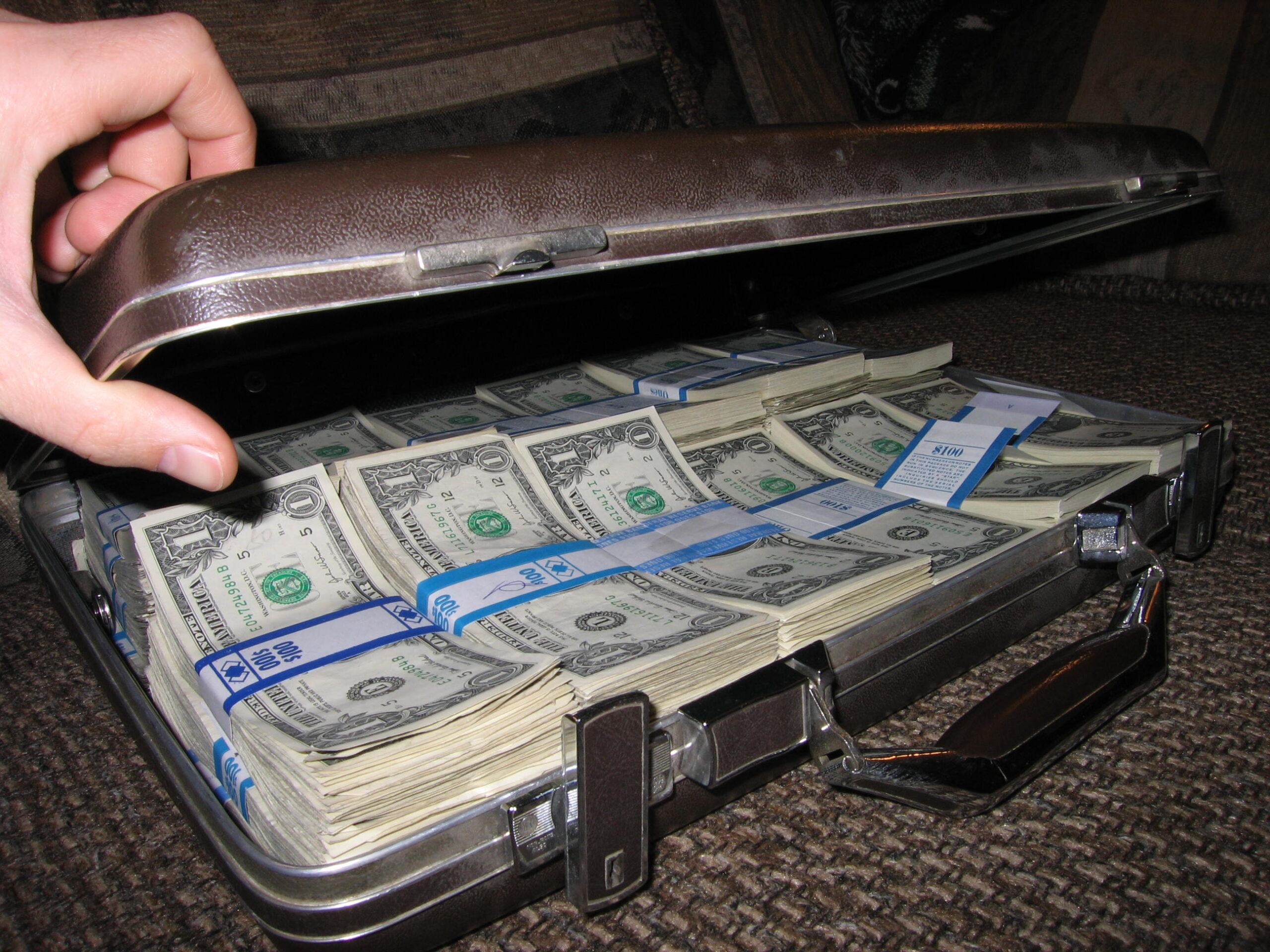

The $10,000 Threshold: What It Actually Means

There’s no legal maximum on the amount of cash you can bring into or take out of the United States. However, if the total value exceeds $10,000, or the equivalent in foreign currency, you’re legally required to declare it to US Customs and Border Protection.
The $10,000 threshold is a declaration trigger, not a cap. There’s no tax or fee on the money itself, and a truthful declaration carries no penalty. This is a distinction worth emphasizing: carrying large sums of cash across the border is perfectly legal. The only obligation is transparency.
Federal law requires anyone transporting more than $10,000 in currency or monetary instruments into or out of the United States to report it to US Customs and Border Protection. The rule exists to help the government track large cross-border money movements, not to discourage carrying cash, which is entirely legal in any amount.
The Legal Basis: Bank Secrecy Act and 31 USC 5316

The reporting requirement is established by 31 USC 5316, part of the Bank Secrecy Act. The report required by that statute is FinCEN Form 105, officially titled the Report of International Transportation of Currency or Monetary Instruments, also known as a Currency and Monetary Instrument Report or CMIR.
The regulations require each person who physically transports, mails, or ships, or causes to be physically transported, mailed, or shipped, currency or other monetary instruments in an aggregate amount exceeding $10,000 at one time from the United States to any place outside the United States, or into the United States from any place outside the United States, to file a CMIR.
The requirement applies equally to travelers entering the United States and those departing. Many people assume the rule only applies when arriving in the US. It doesn’t. The obligation goes both ways.
What Counts as “Cash” Under the Rules
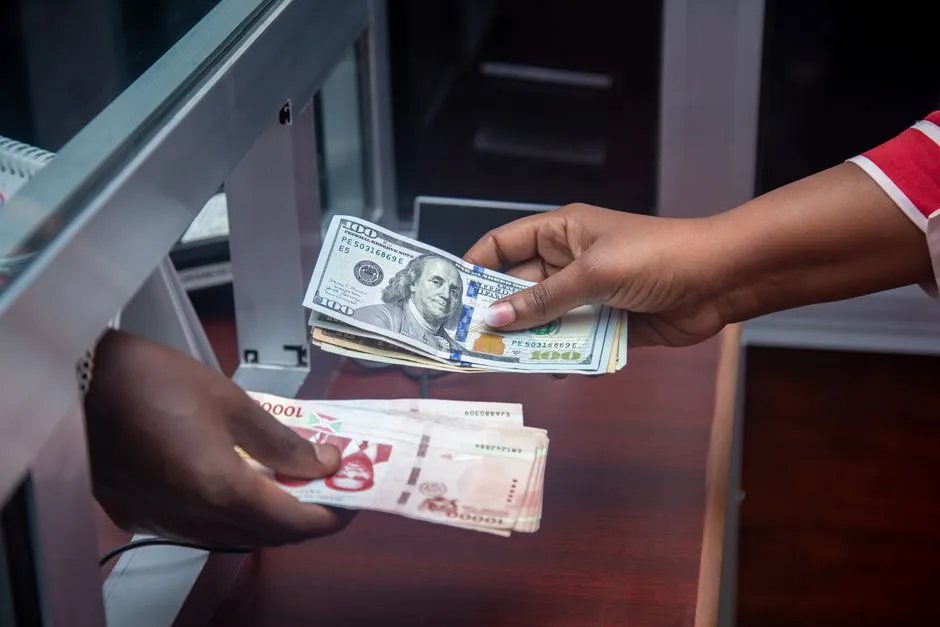
You must declare to customs if you are carrying cash, traveler’s cheques, money orders, or negotiable bearer instruments totaling above the threshold when entering or leaving the United States.
The statutory trigger is the physical transportation, mailing, or shipping of currency or “other monetary instruments” in an aggregate amount exceeding $10,000 at one time. Items like personal checks made out to a named payee, most debit and credit cards, and purely electronic wire transfers are typically excluded from CMIR reporting.
The rule does not include personal checks made out to a named payee that have not been endorsed in blank, most credit and debit cards, or purely electronic wire transfers that do not involve physically moving cash or instruments across the border. So if you’re wiring funds internationally through your bank, no form is required.
How to File: FinCEN Form 105 and CBP Form 6059B

To declare cash, travelers complete FinCEN Form 105 and present it to CBP officers at the port of entry. The form is available at airports and border crossings, or can be downloaded from the CBP website.
CBP implemented a web-based platform for the electronic completion of CMIRs by travelers transporting their own currency or monetary instruments. Travelers using this platform must still present evidence of the electronic completion of the report to the CBP officer in charge at any port of entry or departure. The platform is available at fincen105.cbp.dhs.gov.
CBP notifies travelers of the reporting requirement through signs posted at airports and border crossings, and through CBP Form 6059B, the customs declaration form distributed on international flights. Once the report is complete and accurate, you keep your cash and continue on your way. In the ordinary case, declaring adds a few minutes to your border crossing and nothing more.
The Group Rule: Families and Travel Companions

CBP treats people travelling together as transporting a combined total. This is one of the most commonly misunderstood aspects of the rule, and it catches groups off guard more often than you’d expect.
CBP treats a family or group as transporting a combined total, so four travellers with $4,000 each are treated as carrying $16,000, and a report was required.
Any individual family member personally carrying more than $10,000 must also file a separate FinCEN Form 105. In other words, even within a group filing, individual thresholds still apply if one person alone is carrying enough to trigger a declaration.
Foreign Currency Counts Too

The threshold is $10,000 in US dollars or the foreign equivalent. Euros, pesos, and pounds are added at their dollar value, and a traveller carrying nothing but foreign notes can be well over the line without holding a single dollar.
This is a detail that frequently surprises international travelers. There’s no exemption for non-US currencies. If the combined value of whatever physical monetary instruments you’re carrying converts to over $10,000 in US dollars, the declaration is required.
Everything aggregates: currency plus travelers checks plus qualifying instruments, in any combination, counted together. The math is done on the total, not on each category separately.
What Happens If You Simply Don’t Declare

When a traveler carries more than $10,000 without reporting it, CBP can seize the entire amount, even when the money was earned and owned legitimately, because the violation is the failure to report, not anything about the money itself.
CBP can seize the entire amount of unreported currency over $10,000, even if the money is legitimate, because the violation is the failure to report. It can also carry criminal exposure if the cash was concealed or structured.
CBP has the authority to seize all your money, not just the amount over $10,000. That’s a critical point. The whole sum is at risk, not just whatever sits above the threshold.
The Structuring Trap: Splitting Cash to Stay Under $10,000
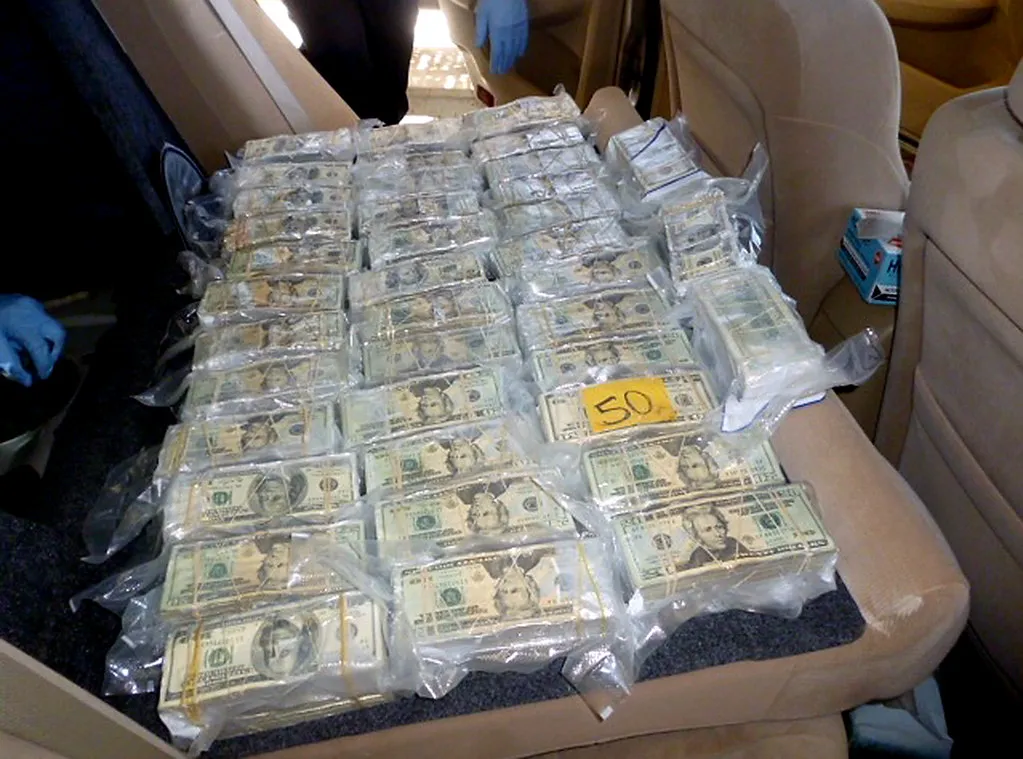
Deliberately dividing $30,000 in cash among three travelers to avoid triggering the $10,000 threshold can be treated as evidence of willful evasion of the reporting requirement, rather than as compliance.
Breaking up cash into smaller amounts to avoid reporting thresholds is illegal and can lead to seizure. Structuring happens when money is divided between two or more travelers so no one person crosses $10,000. Structuring carries a high penalty and is a standalone violation.
If the structured amount exceeds $100,000 in a 12-month period, penalties may double under the aggravated structuring provisions of 31 USC 5324. The law treats intent to evade as seriously as the evasion itself.
Bulk Cash Smuggling: When Concealment Escalates the Charge

While Section 5316 punishes the simple failure to report, Section 5332 elevates the offense to bulk cash smuggling when there is affirmative, intentional concealment. There’s a meaningful legal difference between forgetting to file a form and hiding cash in a jacket lining.
Concealment is the element that distinguishes bulk cash smuggling from simple failure to report, and CBP is willing to characterize relatively modest hiding, such as cash in an envelope inside a checked bag, as smuggling.
The penalties for bulk cash smuggling could include imprisonment for a period of time up to 5 years. Prosecutors routinely layer multiple related charges, such as money laundering or structuring, on top of bulk cash smuggling. When the charges stack, the exposure grows considerably.
CBP Seizure Data: Enforcement Is Rising

Currency and other monetary instrument seizures by CBP totaled $45 million in fiscal year 2024 and $66.6 million in fiscal year 2025. That upward trend reflects tighter enforcement rather than simply more travelers carrying cash.
CBP’s Currency and Other Monetary Instrument Seizures show $48.5 million in total seizures as of June 2026. The numbers make clear that this isn’t a theoretical risk: CBP actively intercepts undeclared currency at airports, land border crossings, and seaports.
In recent months, CBP has arrested several travelers who failed to declare currency. CBP has noted that criminal organizations often rely on bulk cash smuggling to move illicit proceeds across international borders, which explains why the agency has sharpened its focus on currency enforcement across all points of entry.
The Simple Takeaway for Travelers
Declaring cash is not taxed and carries no fee. The FinCEN Form 105 simply reports the movement of the money to CBP. There is no charge for carrying or declaring any amount of cash across the border.
The declaration process, in practice, takes only a few minutes. Filing the form honestly costs nothing and changes nothing about your trip. Not filing, on the other hand, can cost you everything you’re carrying and potentially far more in legal exposure.
The rule is built around transparency, not restriction. Carry whatever you need to carry, declare it truthfully, and cross the border without issue. That’s genuinely all there is to it.
AI Disclaimer: This article was created with the assistance of AI tools and reviewed by a human editor.