
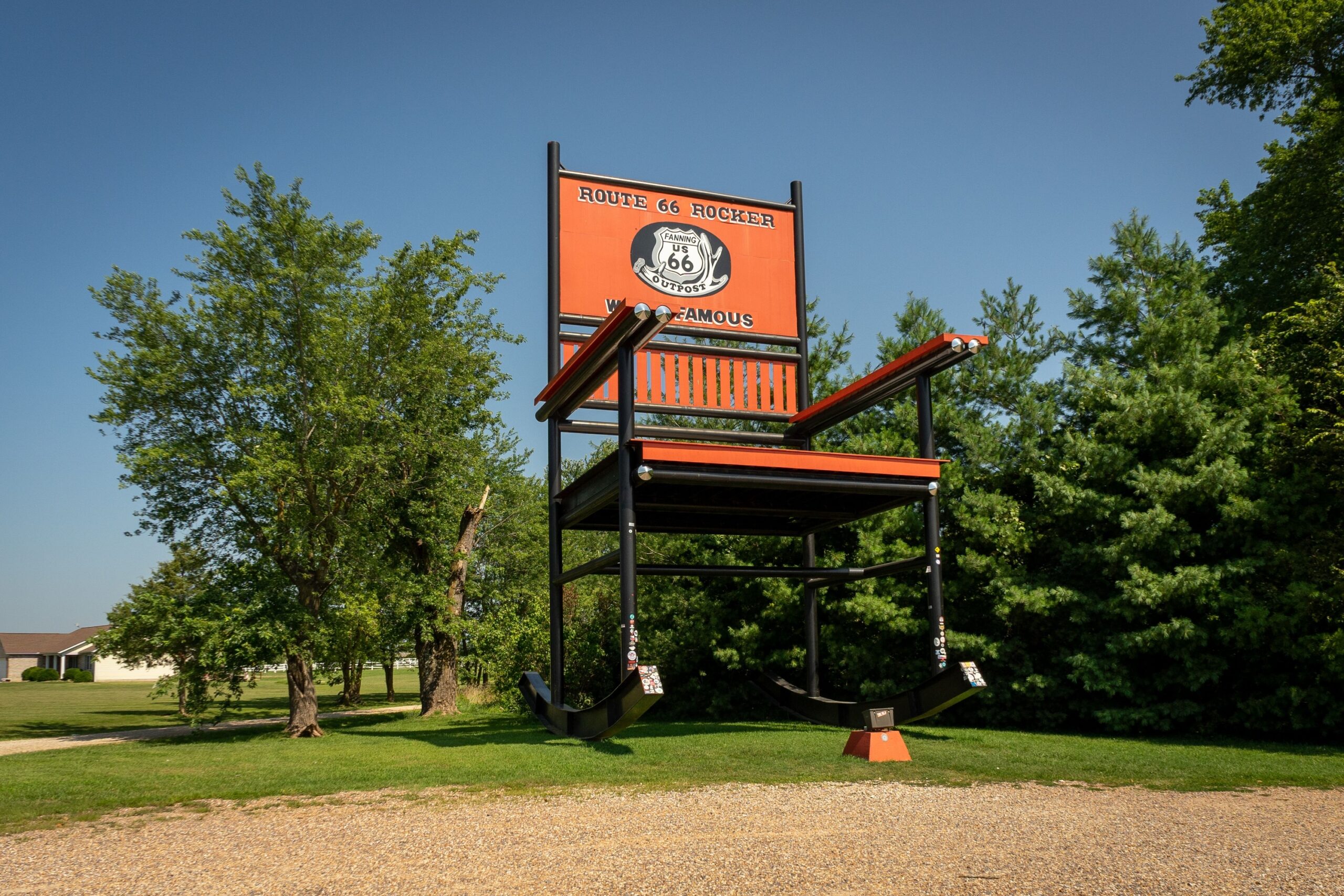

There’s something quietly thrilling about cruising a two-lane road through Indiana or Kansas and suddenly spotting a 20-foot fiberglass giant staring back at you from the roadside. These weren’t accidents. They were calculated, charming, and deeply American. Roadside attractions became the heartbeat of family travel in the mid-20th century, turning ordinary highway miles into genuine adventures.
The rise of the interstate system in the 1960s and 1970s led to faster travel times, and many roadside attractions fell by the wayside. Decades passed. Fiberglass faded. Small towns got quieter. Now, in the 21st century, there’s a new wave – some of these places have been preserved, others reimagined, but all are bringing a sense of joy and discovery to road-trippers everywhere. What’s driving that wave deserves a closer look.
The Gemini Giant of Wilmington, Illinois: A $275,000 Rescue Story
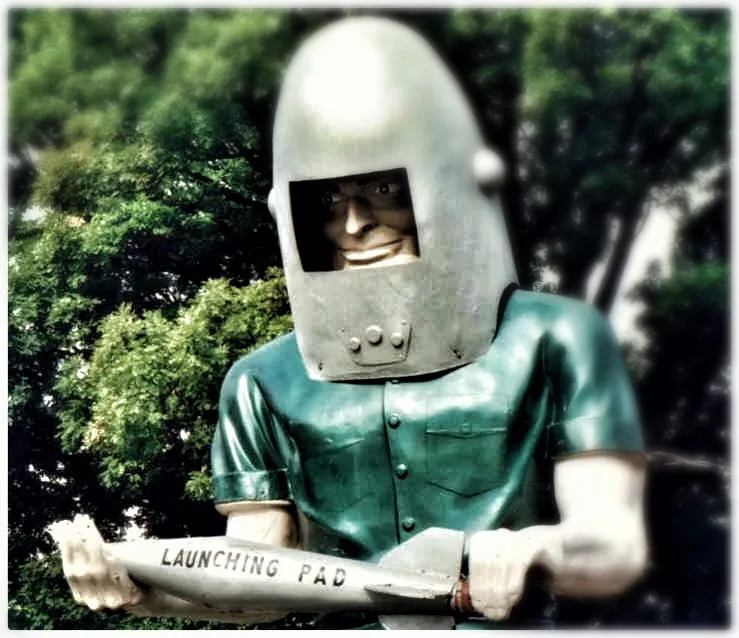
Few stories capture the stakes of roadside preservation better than what happened to the Gemini Giant in Wilmington, Illinois. The Gemini Giant is a fiberglass roadside statue located in Wilmington along historic U.S. Route 66, depicting a helmeted astronaut holding a rocket and representing a variation of the “Muffler Man” figures popularized in the 1960s.
The Gemini Giant and contents of the restaurant were auctioned off on March 20, 2024. The Giant sold for $275,000, with the winning bid made by the Joliet Area Historical Museum utilizing funds provided by a state grant. The price alone signals how much these relics have come to matter.
After removal, the Route 66 landmark was sent downstate for restoration. It was installed at its new home, the entrance to South Island Park in Wilmington, on November 29, 2024. The next day, the City of Wilmington hosted a Gemini Giant Homecoming party celebrating its return. A visitor center called The Landing Pad opened nearby in May 2025, named after the Gemini Giant’s former home.
The American Giants Museum: Atlanta, Illinois Steps Up
The American Giants Museum in Atlanta, Illinois, was created in 2024 by Bill Thomas of the Atlanta Betterment Fund and collector-historian Joel Baker, and it is devoted entirely to the fiberglass figures. It’s a small-town effort with an outsized impact on how people think about roadside heritage.
The installation of a Texaco Big Friend giant was the capstone of the museum’s grand opening in May. The museum is one of the last places you can see the great genre of roadside kitsch: Muffler Men, the 20-foot-tall fiberglass figures that loomed over Studebakers and Stingrays in the 1960s and 70s.
Everything on display, from International Fiberglass pricing documents to the Muffler Men installed outside, are on loan from Baker’s personal collection, with plans for a Viking, a cowboy, a Native American, and a Uniroyal Gal to join them by 2026, Route 66’s centennial. The museum is genuinely building toward something.
Muffler Men: The Fiberglass Giants That Defined an Era
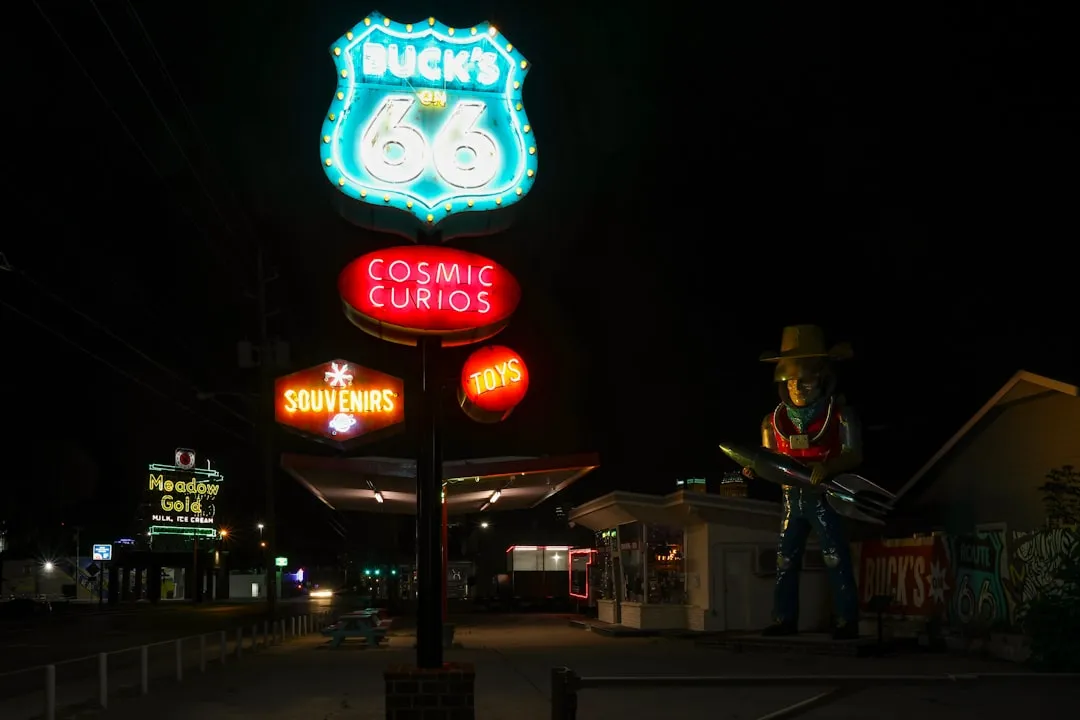
Muffler Men are large molded fiberglass sculptures placed as advertising icons, roadside attractions, or for decorative purposes, predominantly in the United States. Standing approximately 18 to 25 feet tall, the first figure was a Paul Bunyan character designed to hold an axe. Derivatives of that figure were widely used to hold full-sized car mufflers, tires, or other items promoting various roadside businesses.
Thousands of the oversize figures were deployed in a little over a decade at a typical cost of one thousand to twenty-eight hundred dollars each. Increases in costs to deliver the lightweight but oversized figures proved problematic, and business declined with the 1973 oil crisis. International Fiberglass was sold and closed permanently in 1976.
Now they’re rising again – a battalion of restored and replica specimens, beloved by road-trippers, kitsch aficionados, artists, preservationists, and savvy entrepreneurs. There’s an entire economic community emerging around their restoration, replication, sales, transport, and display.
New Giants Rising Along Route 66 in Illinois
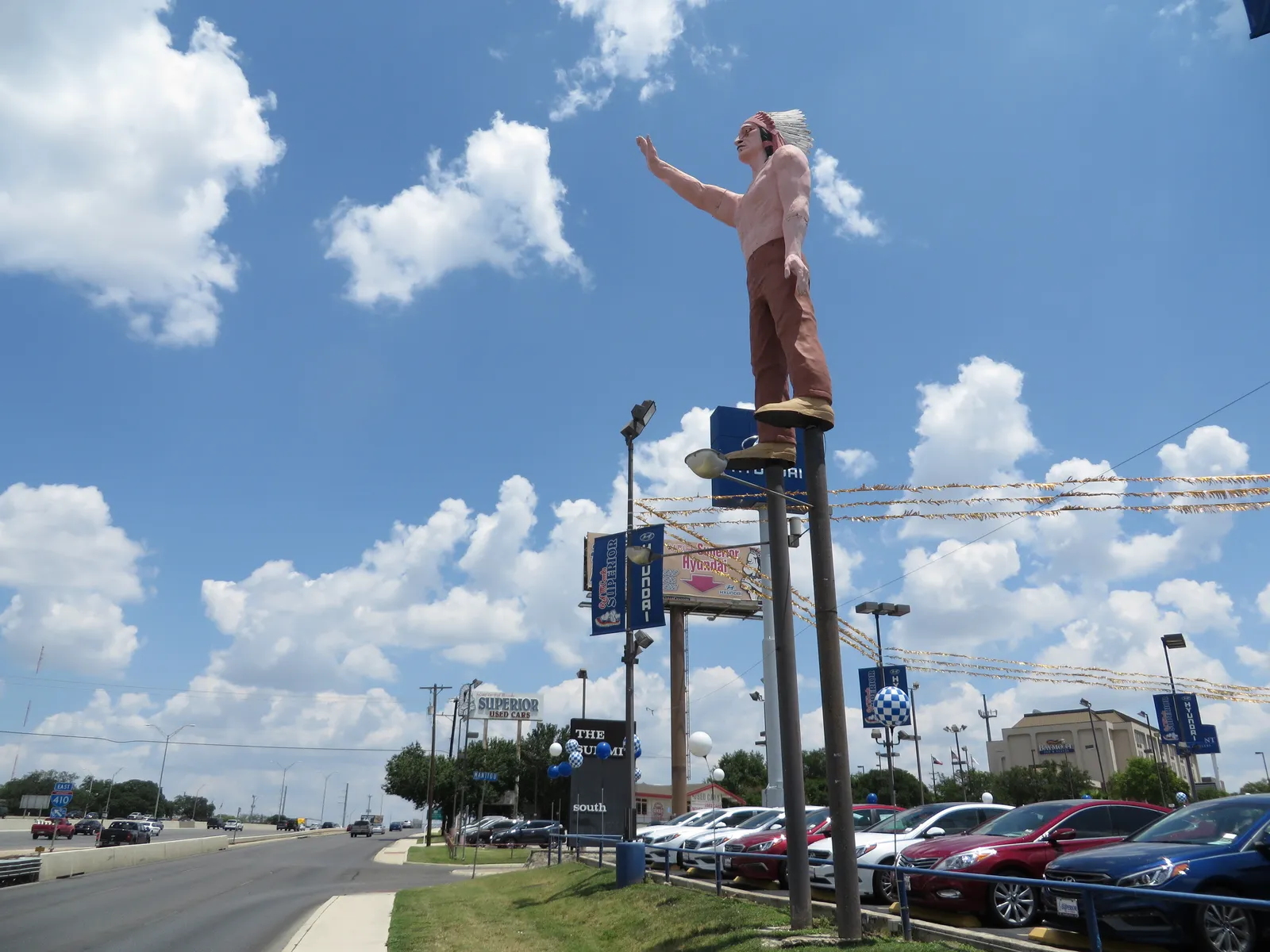
Illinois hasn’t stopped at preserving old figures. Communities are actively commissioning new ones. Two new Muffler Men were erected in Granite City, Illinois, joining Route 66’s pre-centennial frenzy. Mark Cline created “Earl,” a 14-foot custom character for O’Brien Tire and Auto Care, and a 20-foot giant cast from original molds, described as “a sentinel of the working class.”
A permanent Route 66 Experience exhibit at the Illinois State Fairgrounds in Springfield now features a stylized sculptural tribute to the Muffler Men of the Mother Road. The centennial of Route 66 in 2026 is clearly pushing Midwestern communities to reclaim and celebrate this history with real intention.
The enthusiasm isn’t just local. While Muffler Men are scattered across the country, collector Joel Baker feels that the best road trip for giant-spotting is a spin down Route 66. For travelers who want to step off the predictable path, Illinois offers a remarkable and often free outdoor gallery stretching across the state.
The World’s Largest Ball of Twine: Kansas’s Most Unlikely Community Project
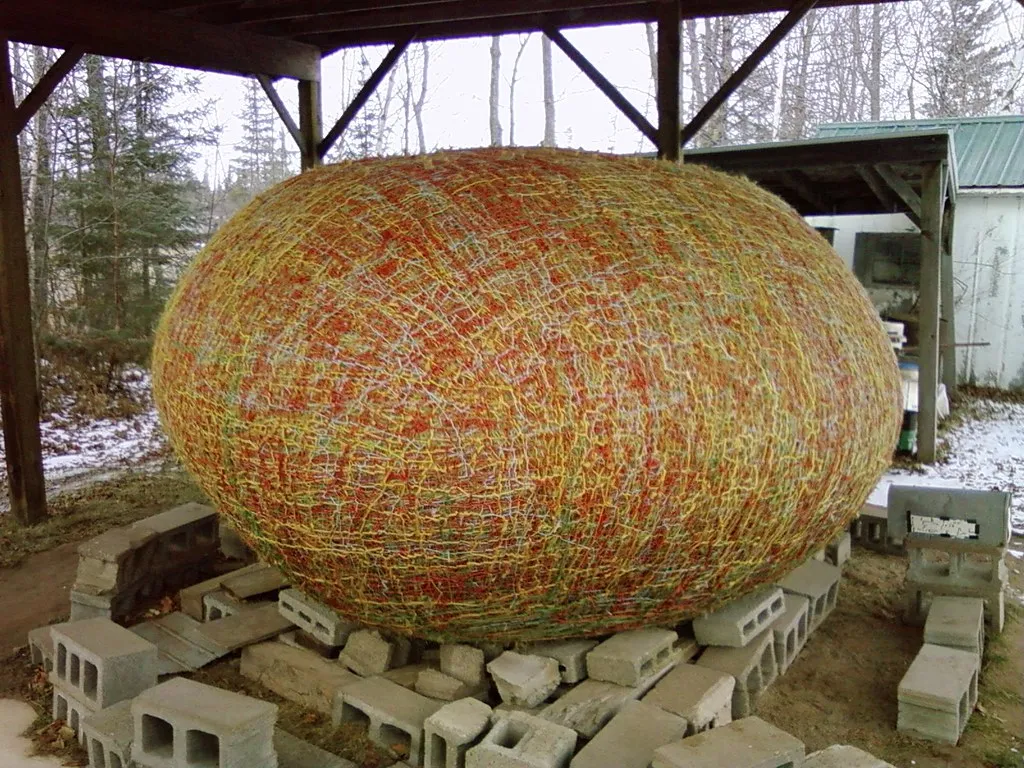
On Christmas Eve, 1953, Kansas farmer Frank Stoeber got tired of all the old twine littering the floor of his barn. The way to get rid of twine on a farm was to sweep it up, haul it outside, and burn it – but that was a lot of work and Frank was 62 years old. So he began rolling it into a ball. Nobody could have predicted what it became.
By 2025, the ball had reached epic proportions: 14.6 feet in diameter, 46 feet in circumference, and weighing over 27,000 pounds – all from sisal twine, wound by hundreds of hands over decades. Cawker City built an open-air gazebo over Stoeber’s ball where every August a “Twine-a-thon” is held and more twine is added.
Many visitors highlight the ability to add twine to the ball itself, making the experience interactive and memorable. Visitors can contribute to the ball’s ever-growing size, leaving their mark on this community project. The attraction is free, adding to its appeal as a budget-friendly diversion. There’s something refreshingly unpolished about all of it.
Wisconsin’s Heaviest Twine Ball Gets a New Home
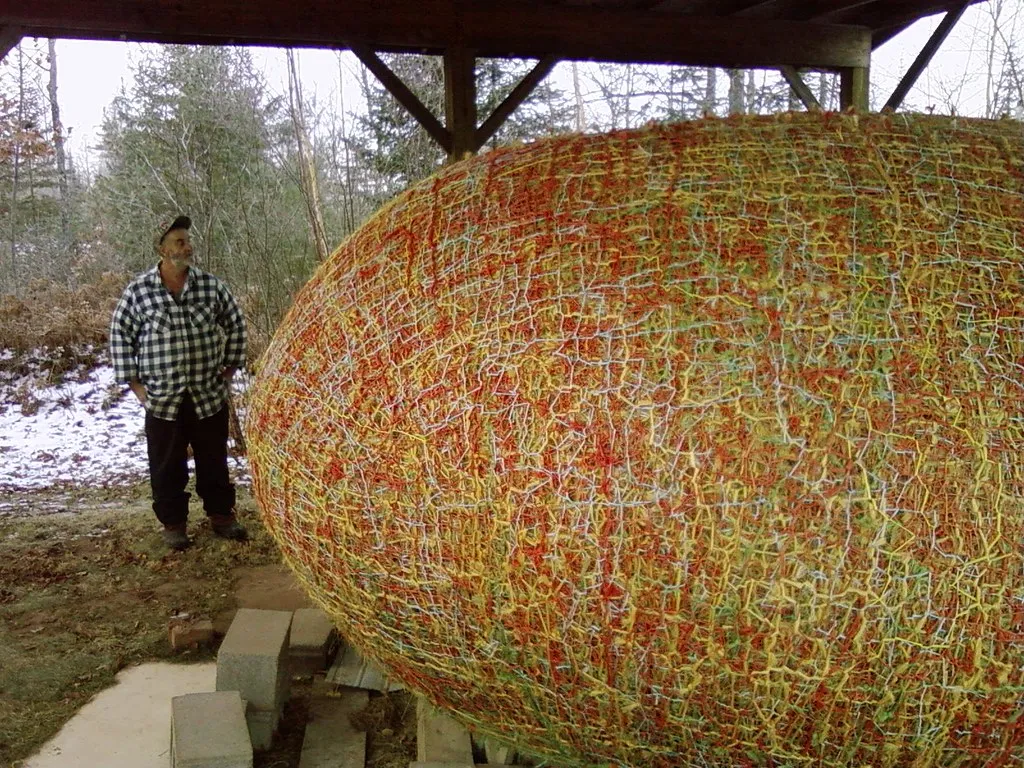
Kansas may claim the largest circumference, but Wisconsin holds its own record. In Lake Nebagamon, Wisconsin, James Frank Kotera created the heaviest ball of twine ever built. Kotera started working on the ball in 1979 and continued until his death in January 2023. The weight of the ball was estimated at 24,160 pounds.
During Kotera’s life, the ball was housed in an open-air enclosure in his yard. After his death, a former neighbor organized a fundraiser to relocate it, and in 2024 it was moved to a concrete slab near the Highland Town Hall, where volunteers constructed a shelter to protect it.
This kind of grassroots preservation effort is exactly what’s keeping Midwest roadside culture alive. Neighbors stepping up for a neighbor’s legacy, with shovels and donations rather than bureaucratic processes. It captures the spirit of the region honestly and without pretense.
Michigan’s Mushroom Houses: Earl Young’s Enduring Architectural Oddity
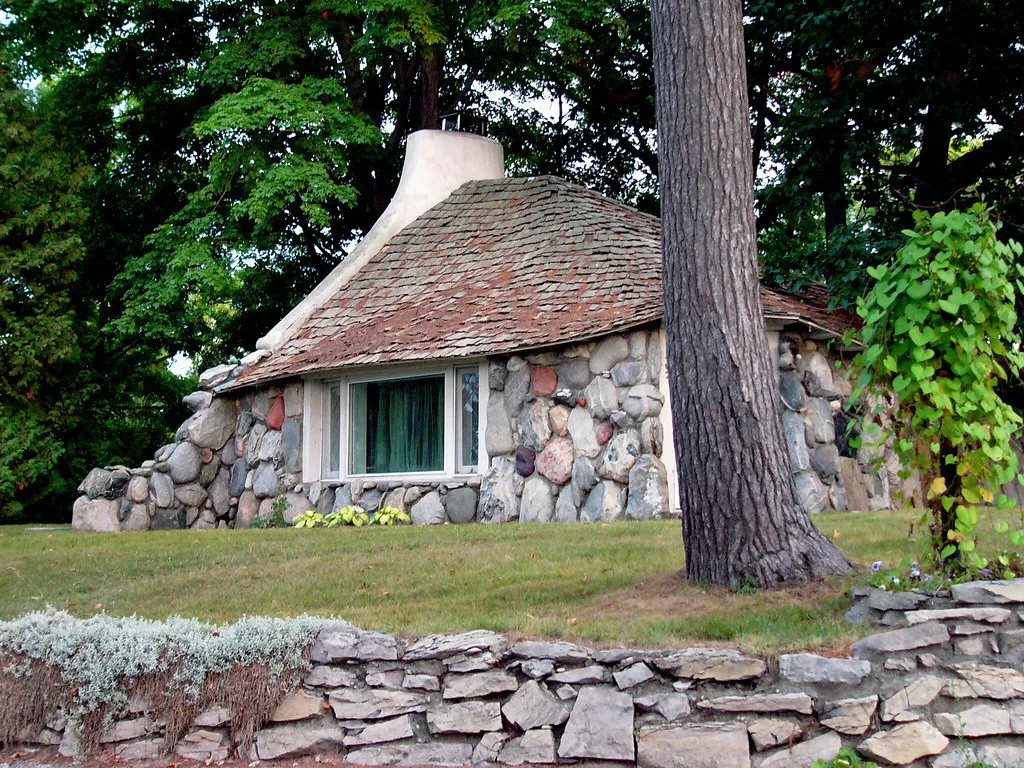
Earl Young, a self-taught architect with strong opinions about boring buildings, created 28 “mushroom houses” between 1918 and the 1970s using Lake Michigan stones. They look like something from a storybook, but they were always real, lived-in homes set within actual Charlevoix neighborhoods.
TripAdvisor now ranks mushroom house viewing as Charlevoix’s number one activity. While visitors can’t go inside – they remain private residences – self-guided walking tours let curious travelers explore freely. Some houses are even available as vacation rentals for those wanting the full experience.
Young never intended to create a tourist destination. He was simply building the way he believed buildings should be built. That authenticity is precisely what draws people now, decades after the last stone was laid.
Minnesota’s Giant Statues and the Towns That Built Them
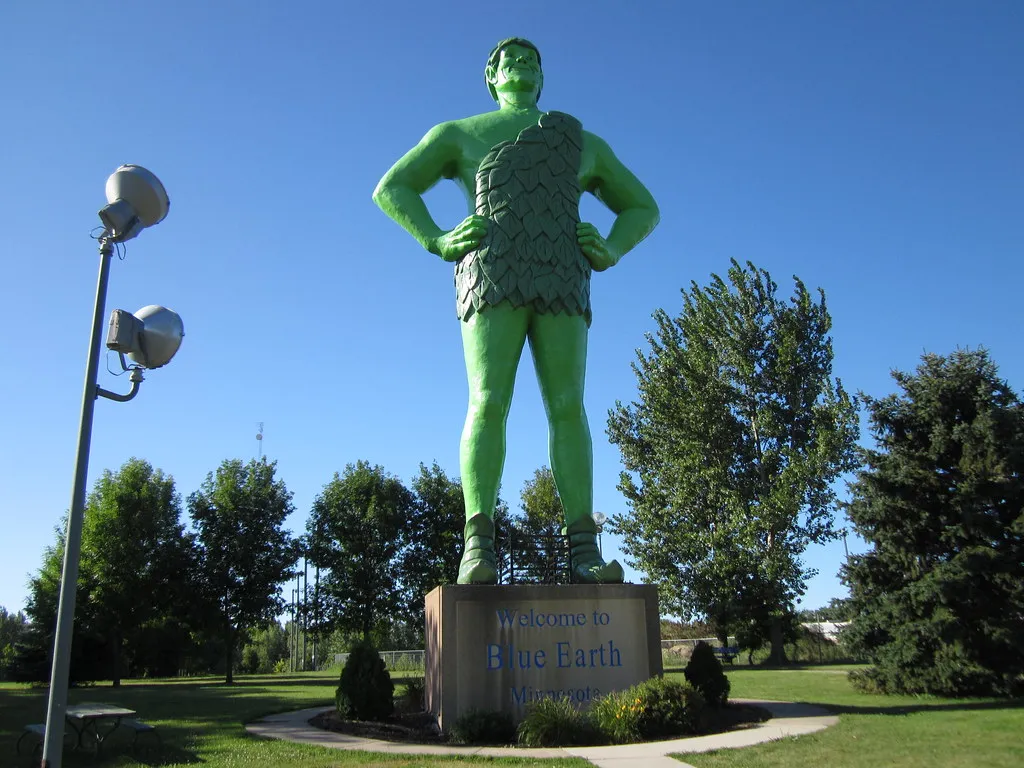
Minnesota has a particularly strong tradition of building enormous things, and the reasoning behind it is surprisingly practical. Shrinking small towns have built roadside attractions to “foster civic pride,” “make our own fun, especially in the middle of winter,” and “make it interesting for people to come and move here.”
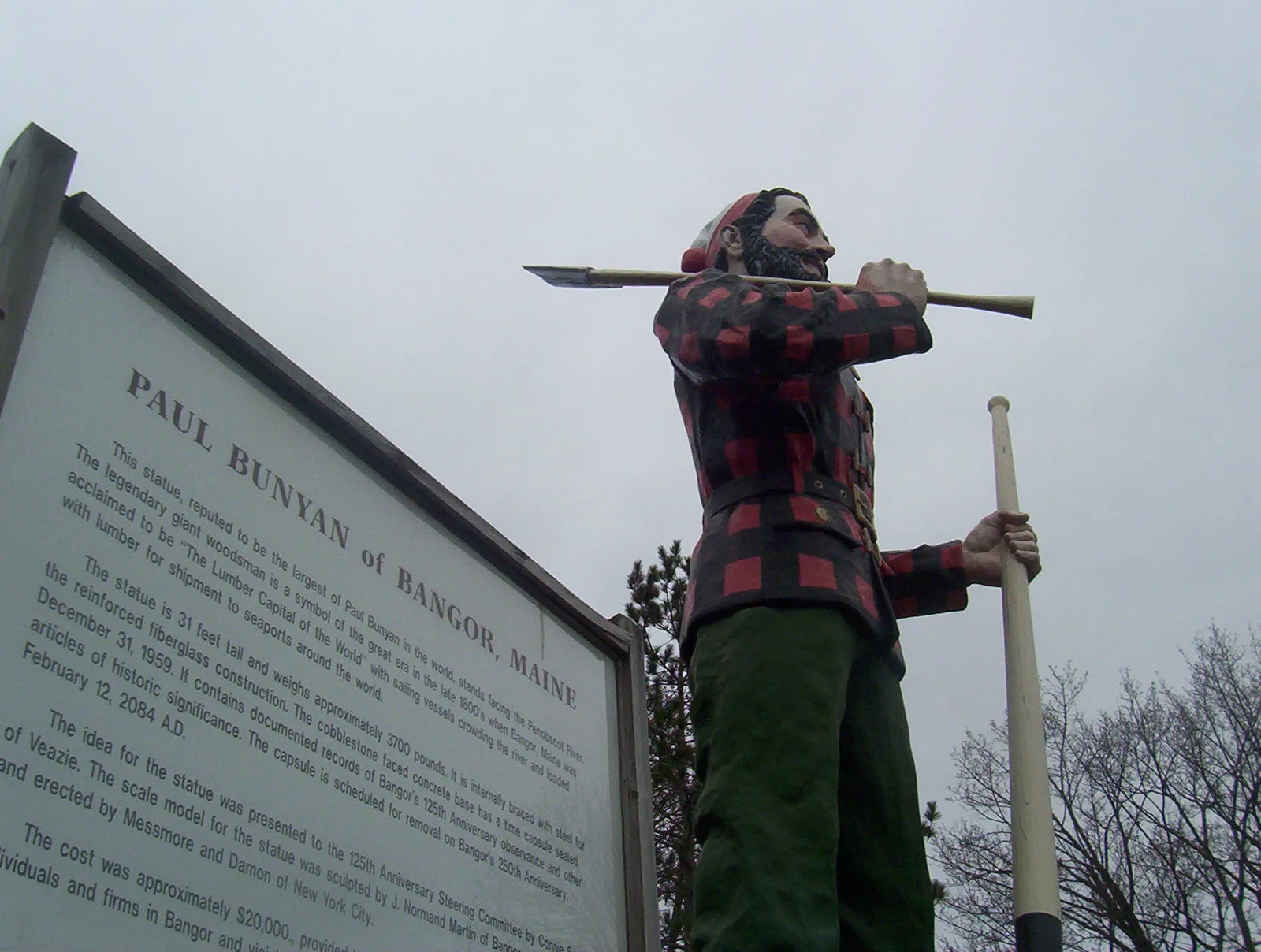
Examples include Big Tom, a 22-foot-tall turkey in Frazee, Minnesota, a collection of giant items including a wind chime, mailbox, golf tee, and pitchfork in Casey, Illinois, and a giant sugar beet in Halstad, Minnesota. Other Minnesota supersized attractions include a giant loon, otter, prairie chicken, crow, pelican, and three Paul Bunyans.
These weren’t built for irony or as Instagram bait. They were acts of civic optimism in places that needed something to talk about. That underlying sincerity gives them a warmth that no corporate attraction can replicate.
Social Media, Road Trips, and Why All of This Is Happening Now
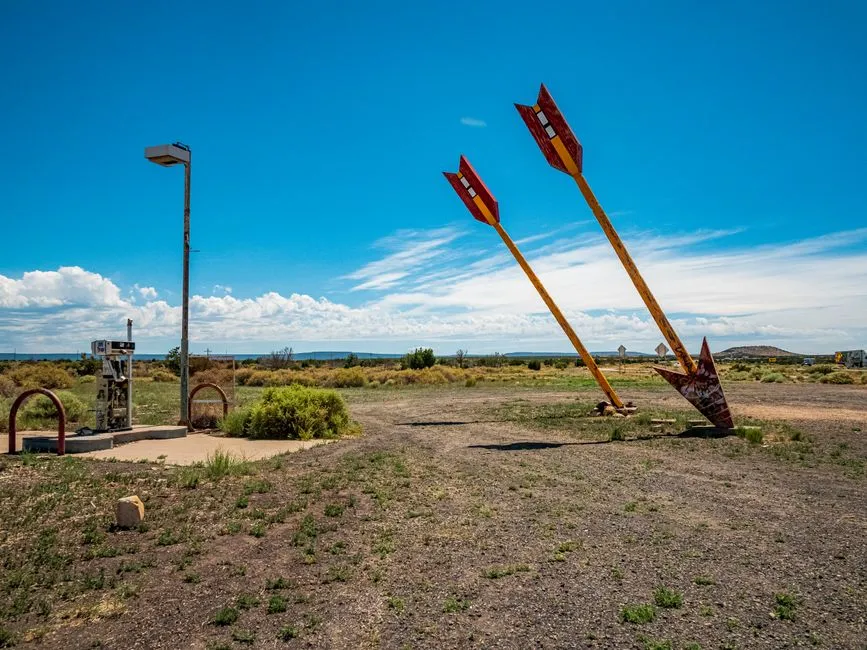
Social media has played a significant role in the roadside attractions revival. Instagram-worthy spots have become popular destinations, with travelers eager to share their unique finds, helping to bring attention to these quirky and often overlooked attractions.
With roughly three out of five travelers looking to venture out solo in 2024 – double the previous year’s rate – and road trippers projected to spend $52 billion nationwide, Midwest roadside oddities offer perfect pit stops for anyone seeking authentic moments without the crowds.
Thanksgiving 2024 alone saw a record 80 million travelers, with the vast majority driving – the highest road travel volume ever recorded. More people on the road means more eyes on the strange, the giant, and the wonderful. The timing, it turns out, is just right.
The Economic Case for Saving These Places
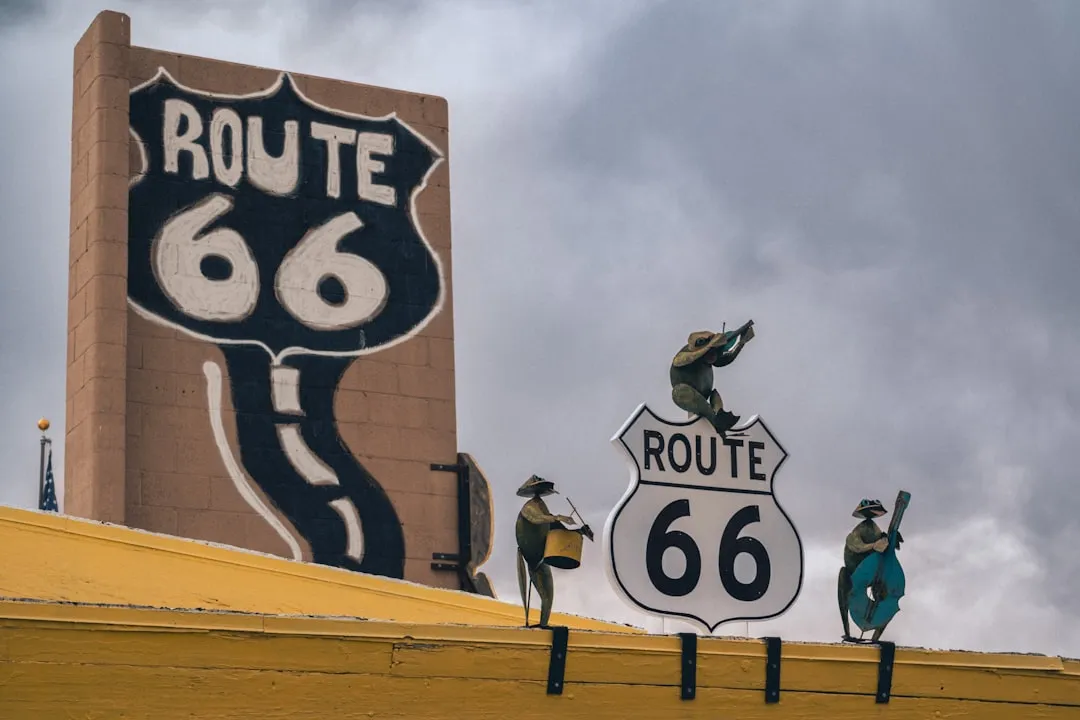
Roadside attractions are more than just fun stops on a road trip. They also have a significant economic impact on local communities. These attractions often serve as a source of income for small towns and rural areas, boosting their economies.
In Michigan alone, tourism employs over 300,000 people across the state, meaning a detour to see a giant grasshopper statue actually helps support local communities. That’s not a trivial point. Every tank of gas, every diner meal, every souvenir magnet adds up in a small town.
The desire for more authentic travel experiences is another driving factor. Roadside attractions offer a glimpse into local culture and history, providing an alternative to mainstream tourist spots. They’re often family-owned and operated, adding to their charm and authenticity. In an era of predictable travel, that distinction matters more than ever.
A Road Worth Slowing Down For
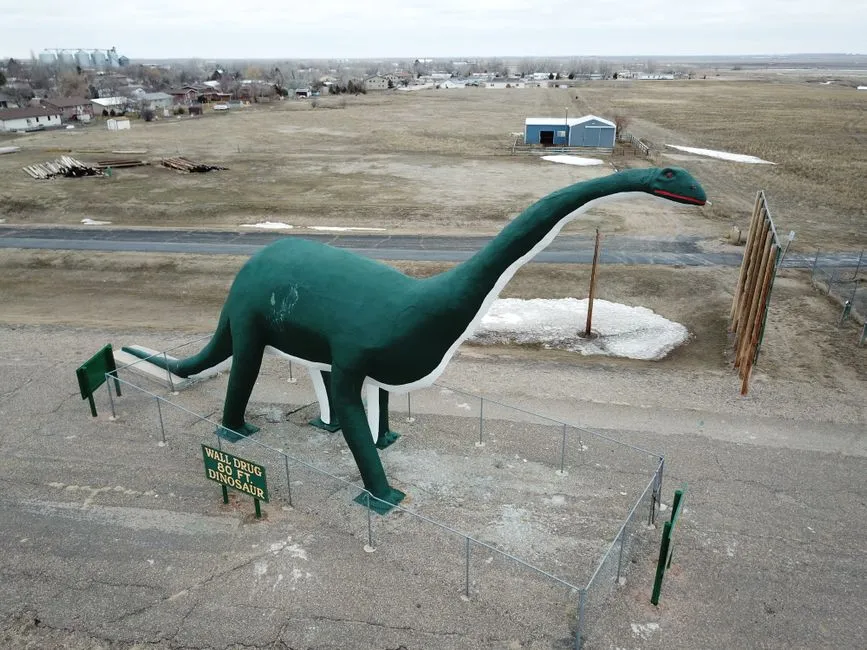
The Midwest has never needed neon signs and admission fees to be worth visiting. What it has always had is character – in the towns, the people, and yes, the gloriously odd things someone once decided to build beside the highway.
These attractions survived decades of neglect not because they were trendy, but because they were genuinely loved. The ball of twine keeps growing. The fiberglass giants keep being restored. Communities keep choosing to celebrate their quirks rather than quietly pave over them.
These attractions remind us of a time when road trips were an adventure, a chance to stop and marvel at something out of the ordinary. That impulse hasn’t changed. If anything, the hunger for it has only grown stronger. The open road is waiting, and somewhere out there, a 20-foot astronaut is holding a rocket and looking back at you.
AI Disclaimer: This article was created with the assistance of AI tools and reviewed by a human editor.