
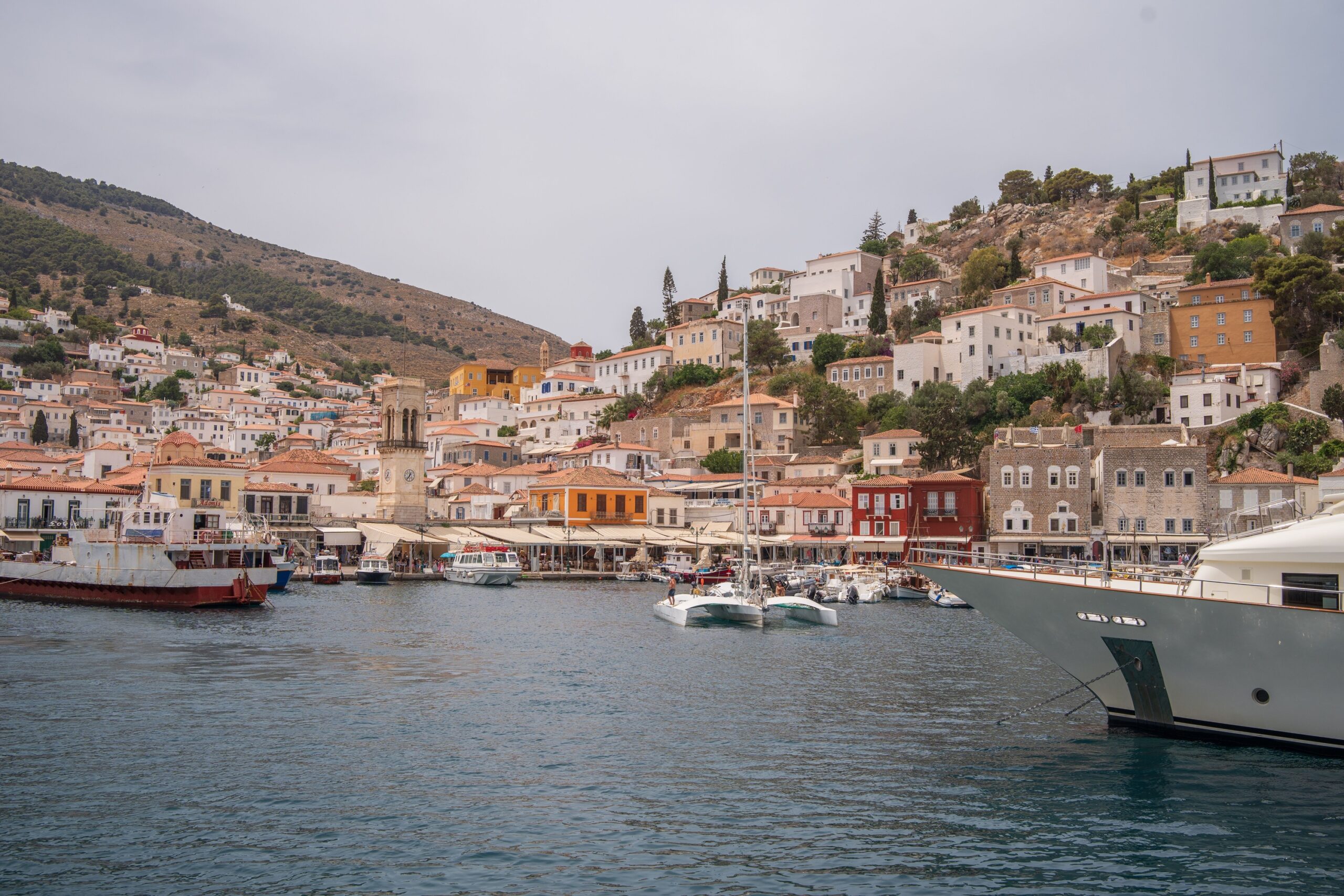
Most Greek islands greet you with the growl of a scooter and the swerve of a rental car. Hydra greets you with the quiet clop of hooves on cobblestone. It’s a distinction that sounds small until you’re standing on the harbor and you realize there isn’t a single engine running anywhere on the island.
This is not a nostalgic quirk preserved for tourists. It’s simply how Hydra has always worked, and how it intends to keep working. The rules here are different, and that difference changes everything about how a place feels.
A Complete Ban on Wheels

Wheeled vehicles are not permitted on the island, including cars, motorcycles, scooters, bicycles, and e-bikes. That list covers just about every form of personal transport the modern world has normalized. A ban on motorized vehicles, with the exception of fire and refuse trucks and ambulances, is enshrined in local legislation. So the enforcement is real, not symbolic.
It is not a gimmick for visitors. The ban has held for decades, and it is why the island still looks and sounds the way it does. When you walk its lanes, there’s no ambient traffic hum, no exhaust, no background noise that most of us don’t even notice anymore until it’s gone.
How the Rule Came to Be
In the 1950s, Hydra implemented a ban on cars and bicycles to preserve the island’s original character. The ban is based on a presidential decree in force since the 1950s, which prohibits all wheeled vehicles, including cars, motorcycles, bicycles, and quads. The only exceptions are a few municipal vehicles authorized by the relevant ministry in Athens, such as garbage trucks, ambulances, and fire-fighting vehicles.
The topography makes the ban almost natural, since the village is built like an amphitheater on a steep slope, and the stepped alleys that climb from the harbor would make any wheeled vehicle practically useless. The island’s geography and its law arrived at the same conclusion independently.
Around 500 Working Animals Keep Things Moving
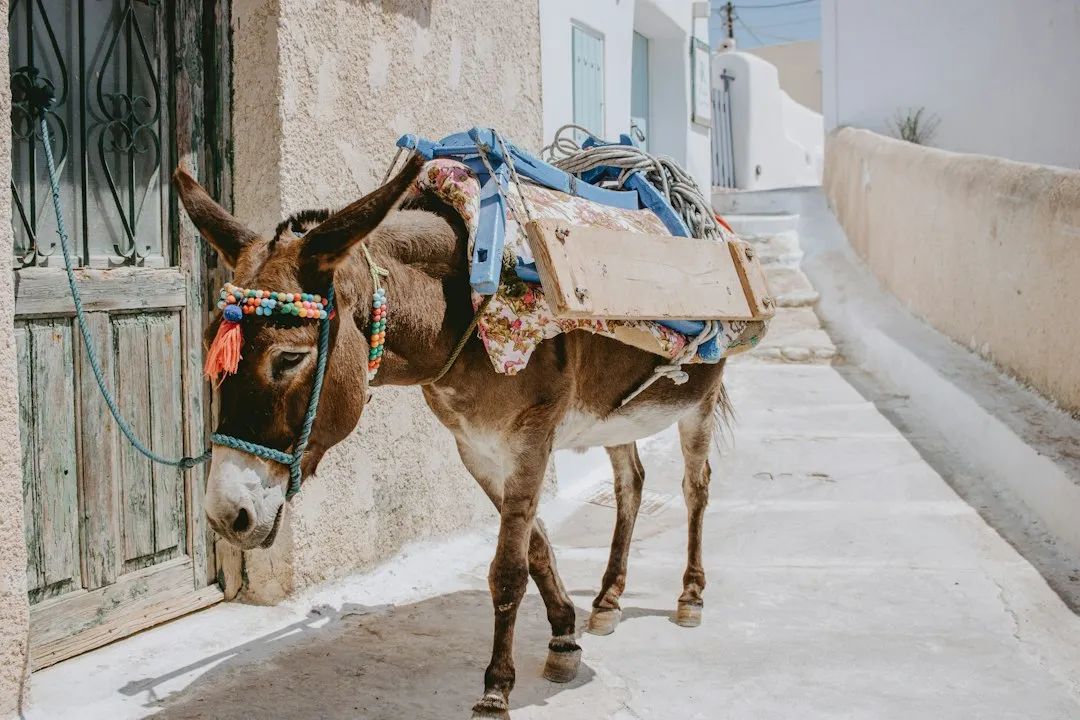
Hydra has around 500 working donkeys and mules moving luggage from the port to houses, with the ban on cars and motorbikes making them essential transport. These animals are not decorative. They are the island’s logistics network, its delivery system, its moving company.
Everything is transported by donkeys: tourists’ suitcases, building materials, garbage, food, and furniture. The animals are part of everyday life. You’ll see them at the harbor, during shop construction, or on their way to the market in the morning. It’s a working relationship that has remained essentially unchanged for centuries.
Mules, Donkeys, and Horses: Not All the Same
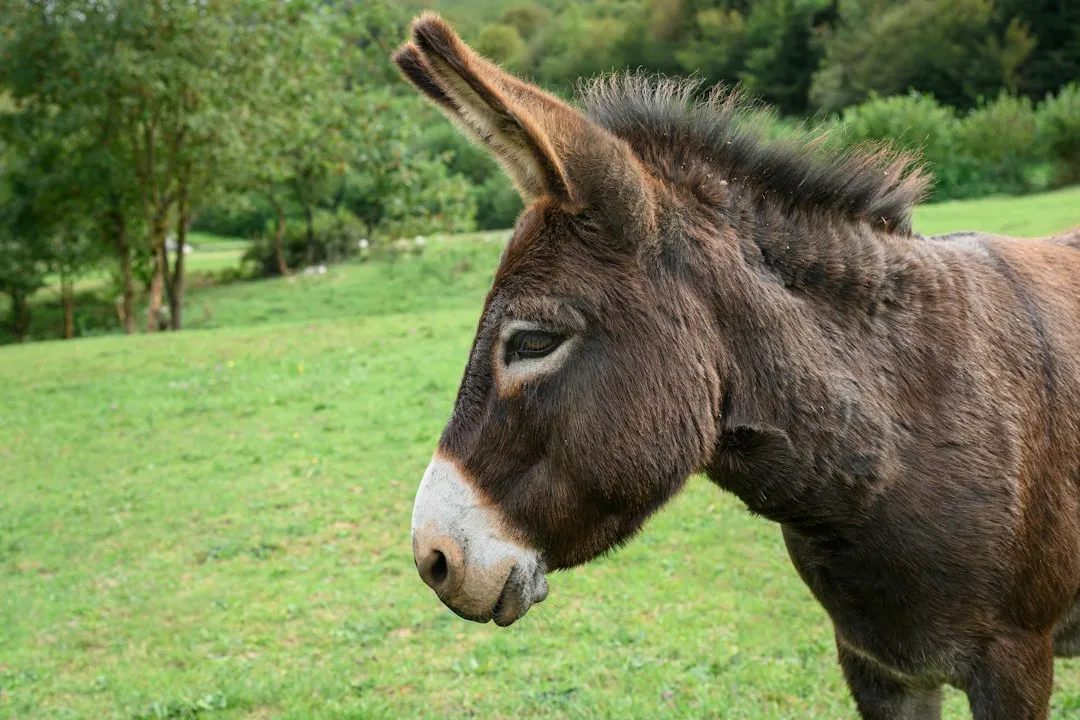
A mule has bigger ears than a horse, while donkeys have the biggest ears but are the shortest and have a cross over their shoulders. Donkeys aren’t as many on Hydra as they used to be and tend to be kept as pets or for personal transportation, as they can’t carry the enormous loads that mules can.
A mule is a crossbreed of a male donkey and a female horse, stronger, larger, and more enduring. On Hydra, mules rather than pure donkeys are the primary working animals. The distinction matters if you’re hiring one to haul a suitcase up a steep hillside path in summer heat. For heavy loads, a mule is the practical choice every time.
The Practical Reality of Hiring One
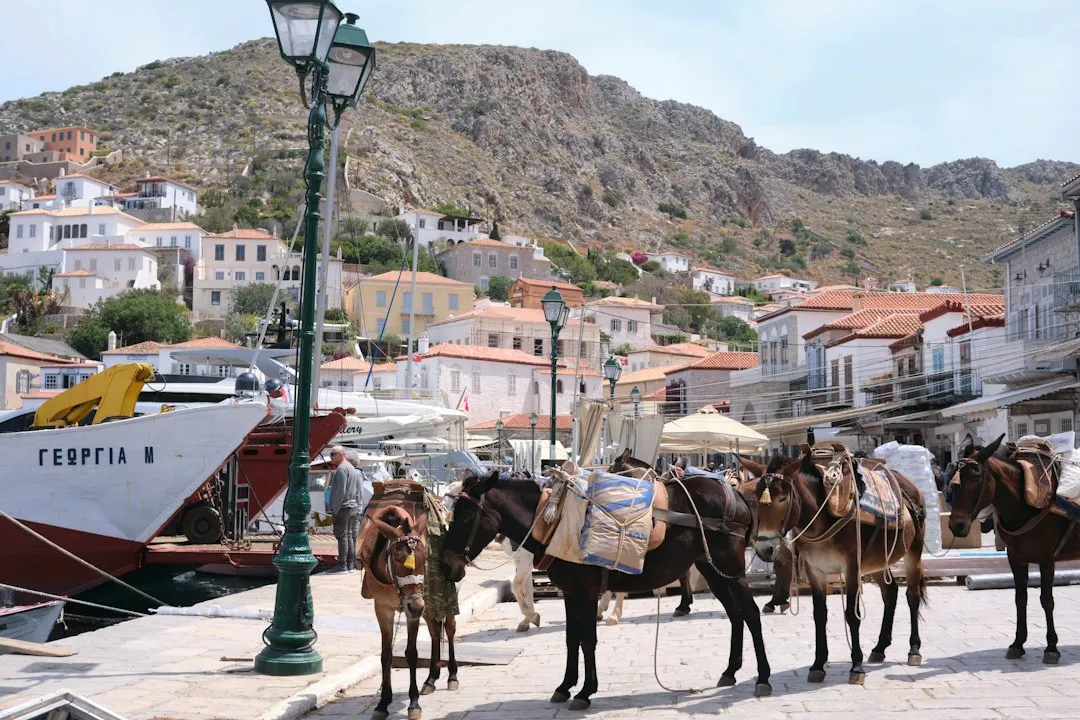
The mules and horses available to ride or to transport luggage are found in the east corner of the harbor. The rates charged for various destinations, whether to carry bags to a hotel or for a ride around town, are published on a notice board near the harbor.
Luggage transfer costs roughly between ten euros for nearby zones and twenty euros per mule for more distant ones. Note that even though the posted sign suggests four pieces of luggage per mule, it effectively means two suitcases and two pieces of hand luggage, so a group of four will likely need two mules. It’s a small cost for a service that arrives reliably, without apps or waiting rooms.
The Welfare of the Animals
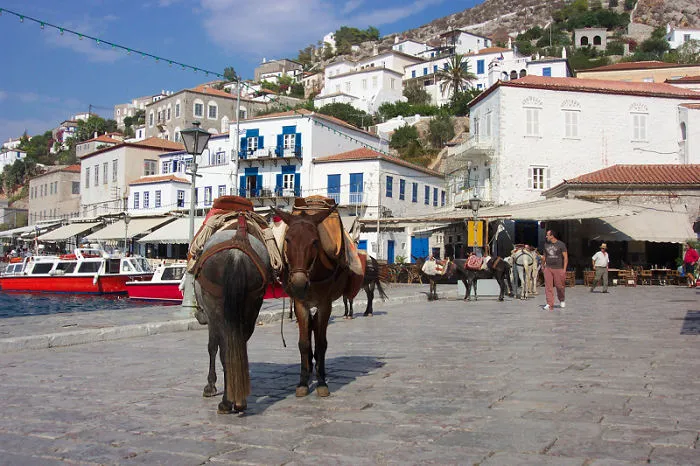
The donkeys of Hydra are considered the best cared for in Greece, with veterinarians and animal welfare associations paying close attention to their wellbeing. This is worth noting, because it reflects a wider ethic on the island. The animals aren’t just tolerated as a transportation quirk. They’re genuinely part of the community.
Visitors who come expecting a spectacle sometimes leave with a different feeling. Watching a mule navigate a steep cobbled lane with practiced calm, guided by a keeper who clearly knows the animal well, reads less like a tourist attraction and more like a partnership built over generations.
Getting to Hydra
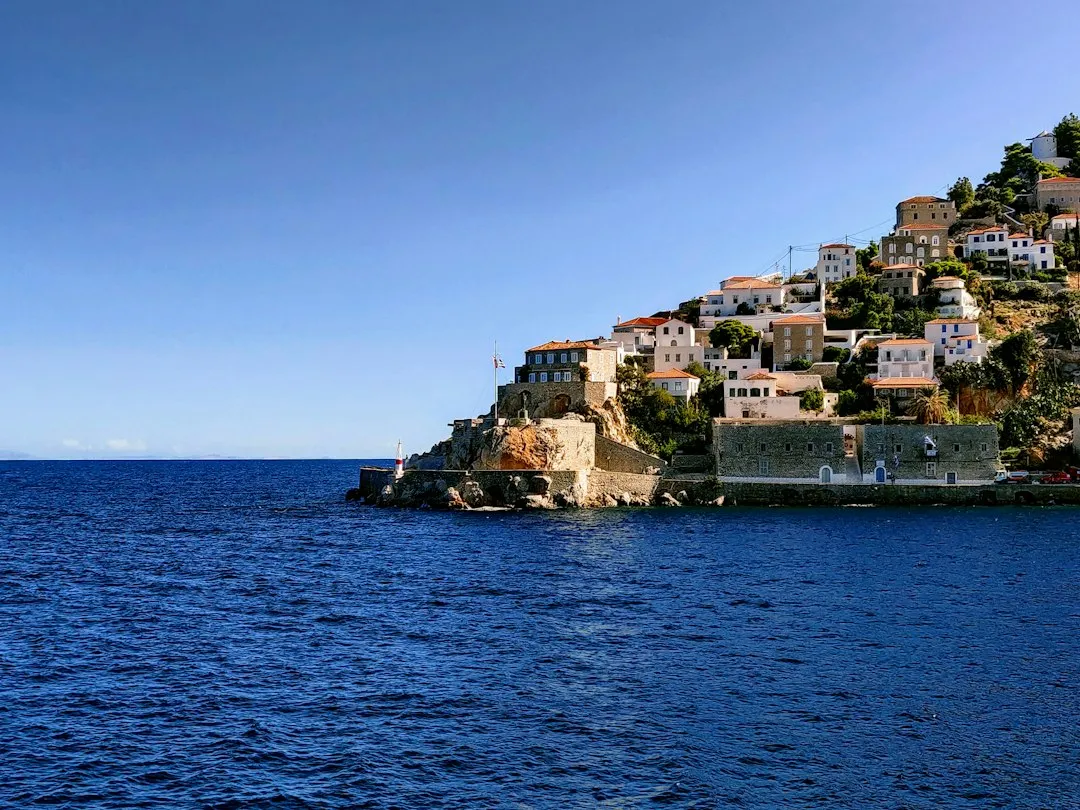
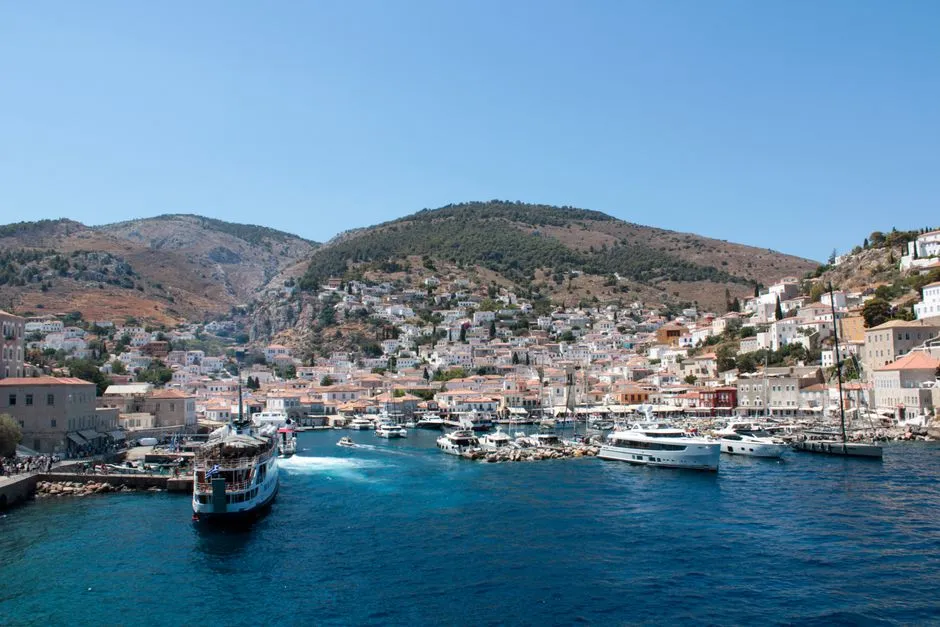
Hydra sits in the Saronic Gulf, about two hours from Athens by ferry. The main town climbs up a natural amphitheater around the harbor, where 18th-century stone mansions line the waterfront. There’s no airport, which means every visitor arrives by sea. That approach by water is itself part of the experience.
The port is small, accommodating only smaller yachts and fast ferries. The largest vessels that call here are the transport boats that bring essential supplies from the mainland. Once dockside, those goods are then transported by donkeys throughout the island. From ferry ramp to harbor square, the transition from the modern world to something genuinely older happens fast.
The Artists and Creatives Who Made It Famous
The absence of cars has contributed to the island’s undeniable tranquility, drawing in creatives from all over, including renowned Italian actress Sophia Loren, who fell in love with Hydra while filming “Boy on a Dolphin” in 1957. That film introduced the island to an international audience that had no frame of reference for a place with no roads.
Leonard Cohen arrived on Hydra in 1960, at the age of 26. He soon bought a house on the island for just 1,500 dollars, using a bequest from his recently deceased grandmother. Cohen’s song “Bird on the Wire” was written in response to the sudden appearance of telephone lines on the island, making Hydra’s very stillness the catalyst for one of his most enduring works.
A Rating That Reflects Its Rarity
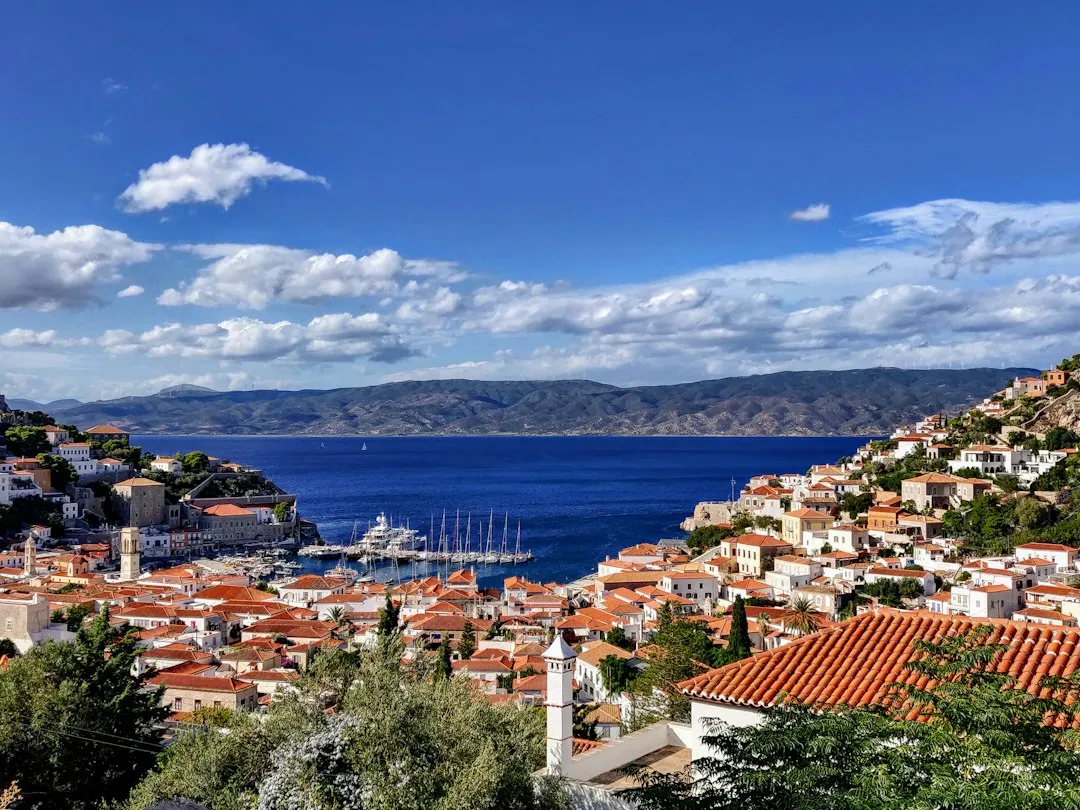
In 2007, a National Geographic Traveler panel of 522 experts rated Hydra the highest of any Greek island, ranking it 11th out of 111 islands worldwide, as a unique destination preserving its “integrity of place.” That phrase, integrity of place, is precisely what the vehicle ban protects. It’s not just an absence of cars. It’s the preservation of a sensory environment.
By relying on donkeys and foot travel, Hydra has created an eco-friendly tourism model that offers a unique experience while respecting the island’s environment. In an era when sustainable travel has become a framework many destinations aspire to, Hydra has simply been living it since the 1950s without calling it anything in particular.
What It Feels Like to Actually Be There
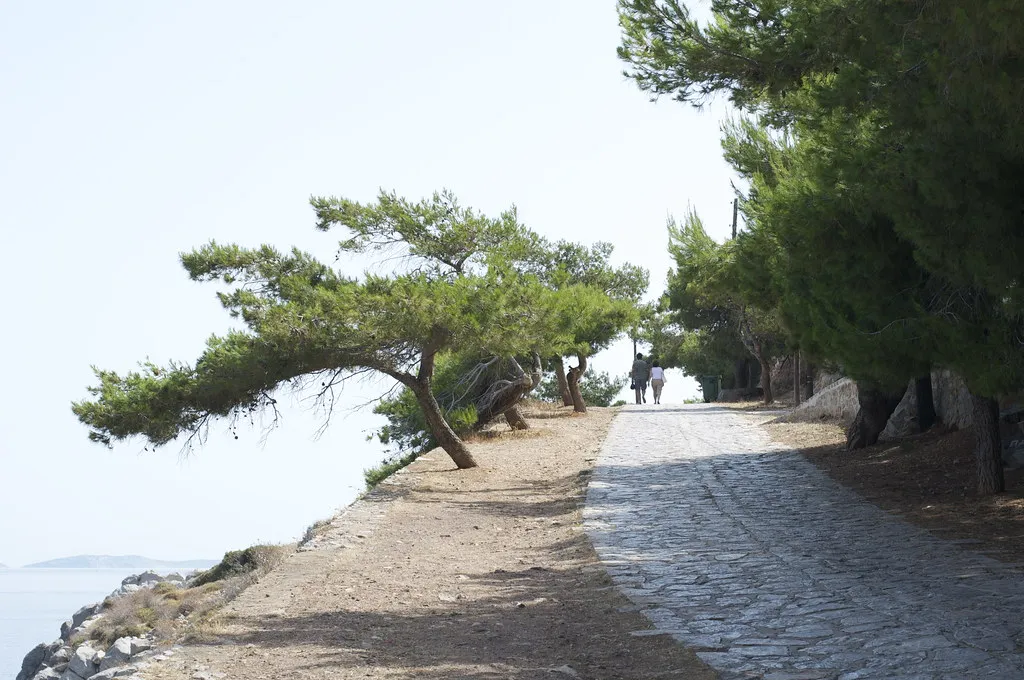
Without cars or motorcycles, donkeys carry supplies through narrow alleys while visitors walk past white churches and blue-domed chapels. The pace of movement on Hydra is set by foot speed and hoof speed. No one is rushing because rushing isn’t really possible, and after a few hours, that stops feeling like a limitation.
The lack of cars also means fewer distractions, allowing visitors to truly immerse themselves in the island’s natural beauty and historical appeal. The quiet is genuine. Sound carries differently here. You notice the water, the wind, conversations from across a courtyard. Hydra kept the rule that every other Greek island gave up, and it is the reason the island still feels like itself.
A Slower World That Still Works
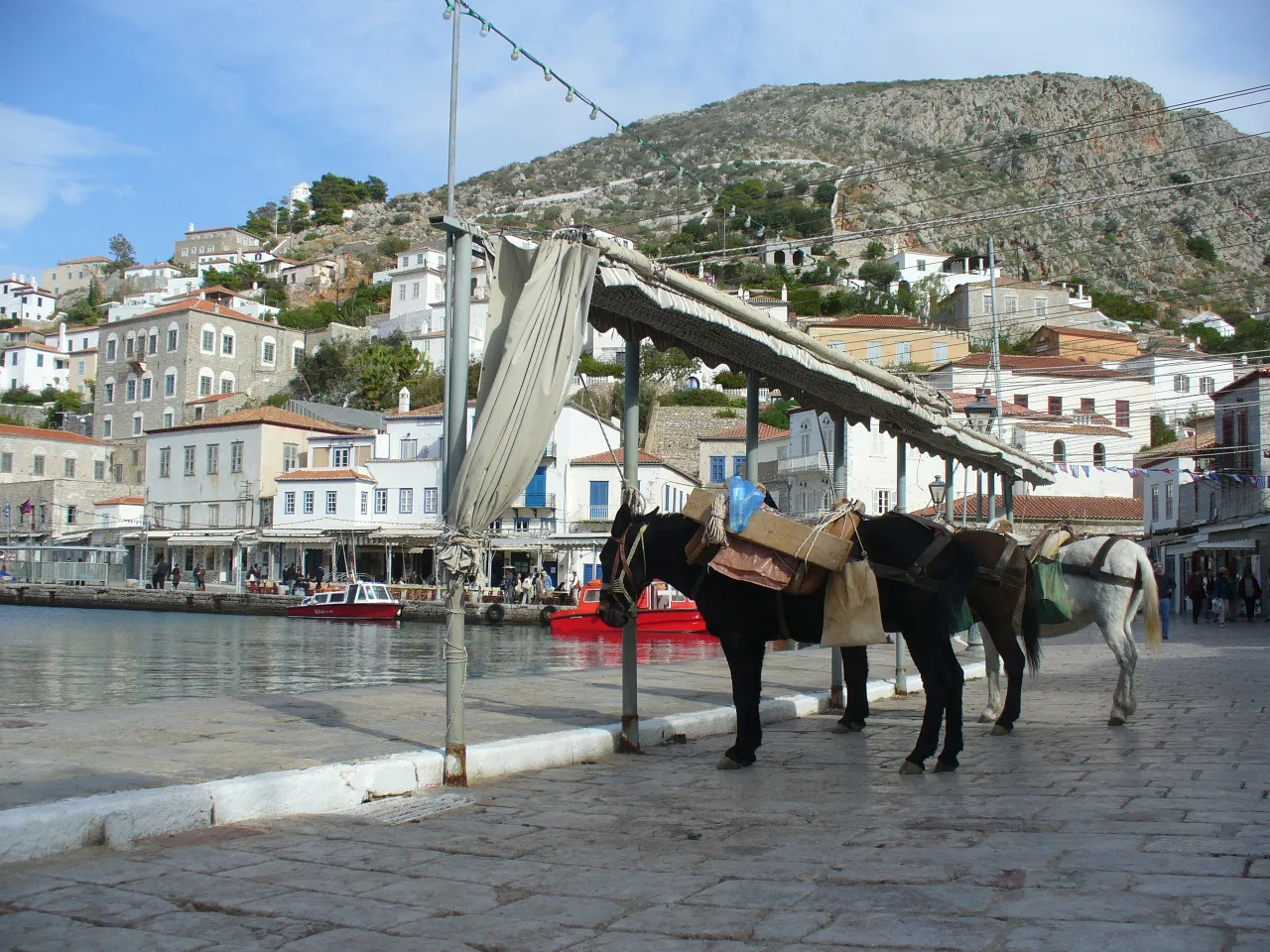
What Hydra demonstrates, quietly and without ceremony, is that a place can be entirely functional without adopting every tool modernity offers. Supplies arrive. Luggage reaches hotels. Buildings go up. Businesses run. All of it moves on four legs or two feet.
Hydra offers a rare glimpse into a simpler, more tranquil way of life, where the only vehicles are donkeys and the pace is set by foot. In 2026, that is not a small thing to offer. It may, in fact, be one of the rarest things a destination anywhere in the world can still genuinely deliver.
AI Disclaimer: This article was created with the assistance of AI tools and reviewed by a human editor.