


Most people picture a desert as something empty. Miles of baked earth, heat rising off the highway, not much reason to slow down. That assumption is exactly why so many remarkable places get missed entirely.
Tucked between sand seas, ancient trade routes, and forgotten back roads, some of the world’s most extraordinary landscapes are hiding in plain sight. These are not secret in the conspiratorial sense. They’re just overlooked, and that gap between what travelers expect and what actually exists out there is wider than you’d think.
A World of Desert Travel That’s Growing Fast
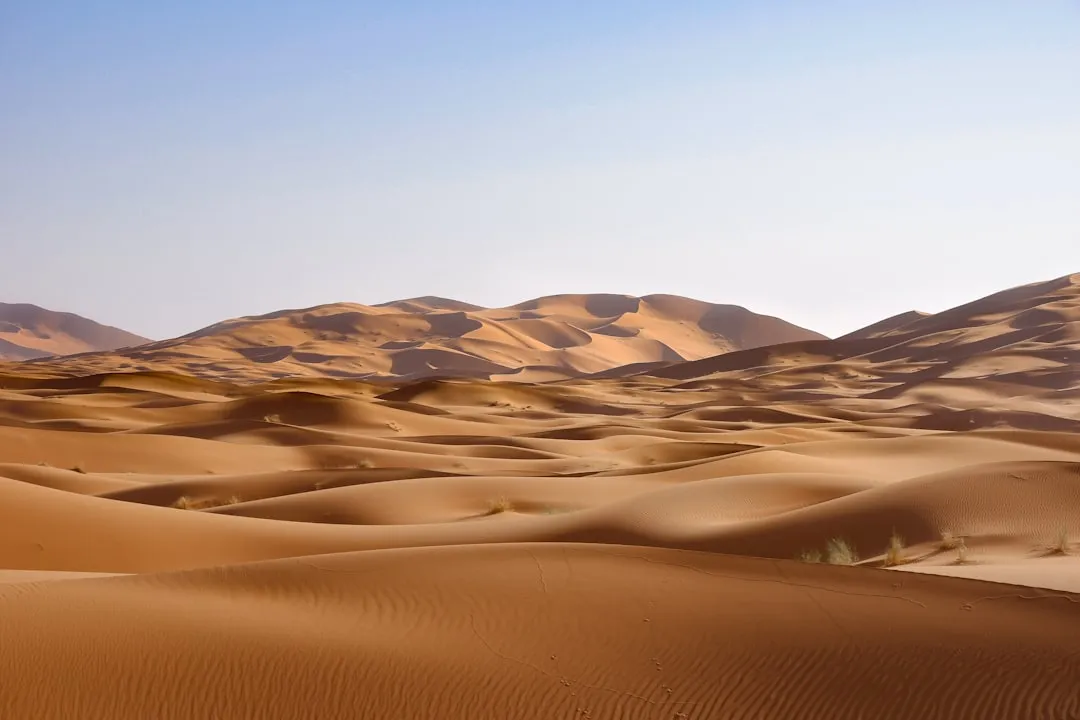
Desert tourism is no longer a niche pursuit. Desert tourism market revenue was valued at 12.5 billion USD in 2024 and is estimated to reach 25 billion USD by 2033, growing at a compound annual rate of 8.5 percent from 2026 to 2033. That’s not fringe territory. That’s a global industry expanding at a pace most sectors would envy.
Today, desert tourism caters to a diverse clientele: adventure seekers, luxury travelers, cultural enthusiasts, and eco-conscious tourists, with key destinations including the Sahara, Arabian deserts, the Mojave, and Australian Outback. The irony is that most visitors cluster at the famous nodes and completely skip what lies between them.
The current growth surge is driven by increasing global travel demand, rising disposable incomes, and a desire for authentic, off-the-beaten-path experiences. People are actively searching for something different. They just don’t always know where to look.
Siwa Oasis, Egypt: The One Alexander the Great Knew About
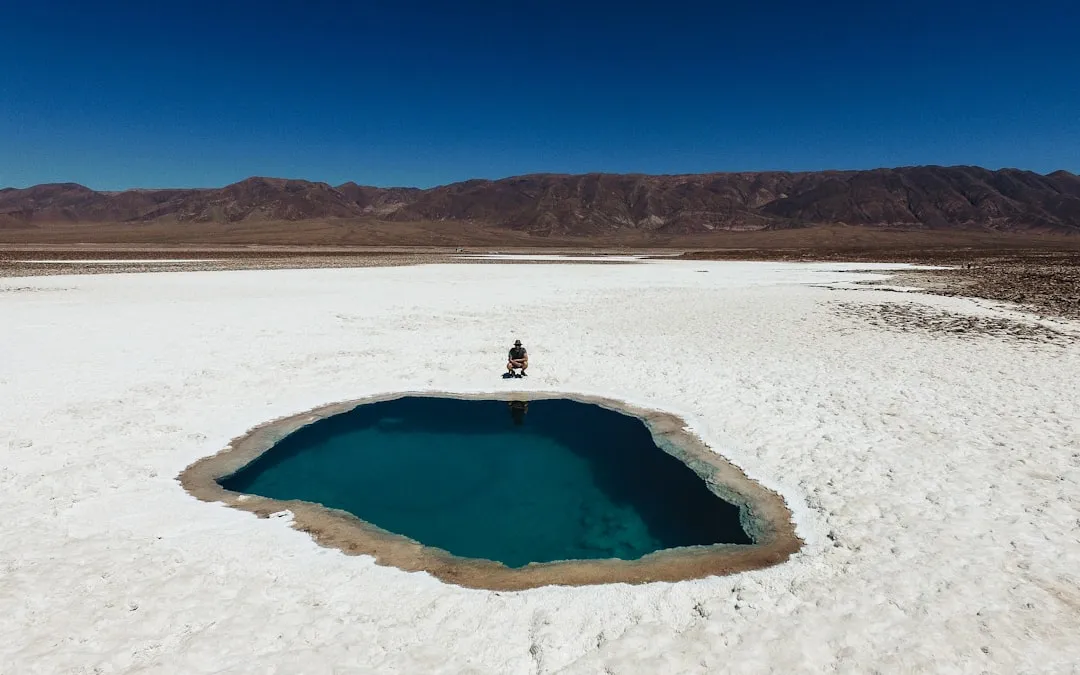
Siwa Oasis, located between Egypt’s Western Desert and the Libyan border, is a captivating destination rich in natural beauty, ancient history, and Berber culture. Most visitors to Egypt never get within 500 kilometers of it. They fly into Cairo, see the pyramids, and leave. Siwa sits quietly in the background, waiting.
Alexander the Great came to Siwa to consult with the oracle about his fate, whether he was the son of Zeus or not. When a place was considered sacred and strategic enough to draw one of history’s most ambitious conquerors, that’s worth paying attention to.
The Siwa Oasis is steeped in history dating back thousands of years. The ancient Egyptians established the area around 10,000 BC, and it was later known to the Greeks as the land of palm trees and olive groves. It carries layers of civilization that most tourists walk past without a second thought.
Siwa’s Salt Lakes: A Floating Experience Unlike Anything Else
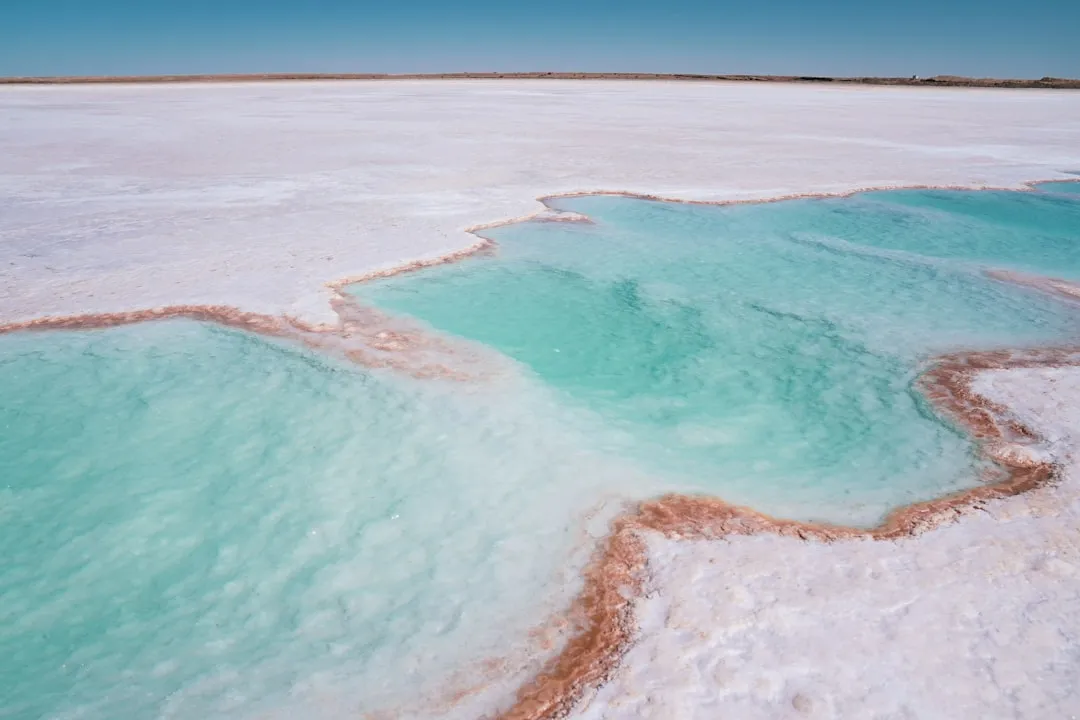
In late 2024, a series of viral Instagram reels and TikTok videos showed influencers floating effortlessly in the hyper-saline lakes of Siwa. The lakes, bluer than sapphire and framed by stark desert whites, looked almost digitally enhanced. Travelers who had once never heard of Siwa suddenly bookmarked it as Egypt’s new surreal escape.
Unlike the Dead Sea, which has long been saturated with tourism infrastructure, Siwa’s lakes remain relatively untouched. Many are accessible only by 4×4 or donkey cart. That inaccessibility is genuinely part of the appeal. The effort filters out the crowds.
The mineral-rich waters allow effortless buoyancy, much like the Dead Sea. The crystal-clear surface reflects the desert sky, creating an illusion of walking on glass. Besides their beauty, the lakes are believed to have therapeutic benefits, drawing wellness seekers from across the globe.
Siwa’s New Life as a Wellness Destination
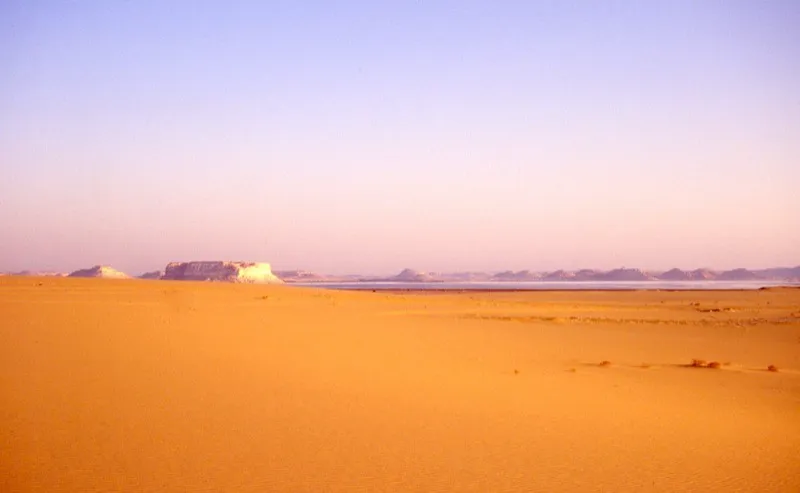
In 2025, retreat groups from Berlin, Seoul, and Melbourne started booking entire ecolodges for week-long experiences centered on stillness, meditation, and elemental living. Salt scrubs, desert hot springs, sound baths under full moons, and herbal detox teas made from desert plants now complement more traditional spiritual practices.
Siwa Oasis has increasingly become a center for ecotourism, with an emphasis on sustainability and preserving local culture. Eco-lodges, built using traditional methods and materials, offer a sustainable and authentic way to experience the oasis. These lodges often run on solar power and use locally sourced ingredients for their meals.
In 2025, archaeologists working with the Egyptian Ministry of Tourism began new conservation efforts at several lesser-known Siwan sites. These include ancient tombs tucked into hillsides and forgotten springs believed to have healing properties. The place is still being discovered, in more ways than one.
Huacachina, Peru: The Only Desert Oasis on an Entire Continent
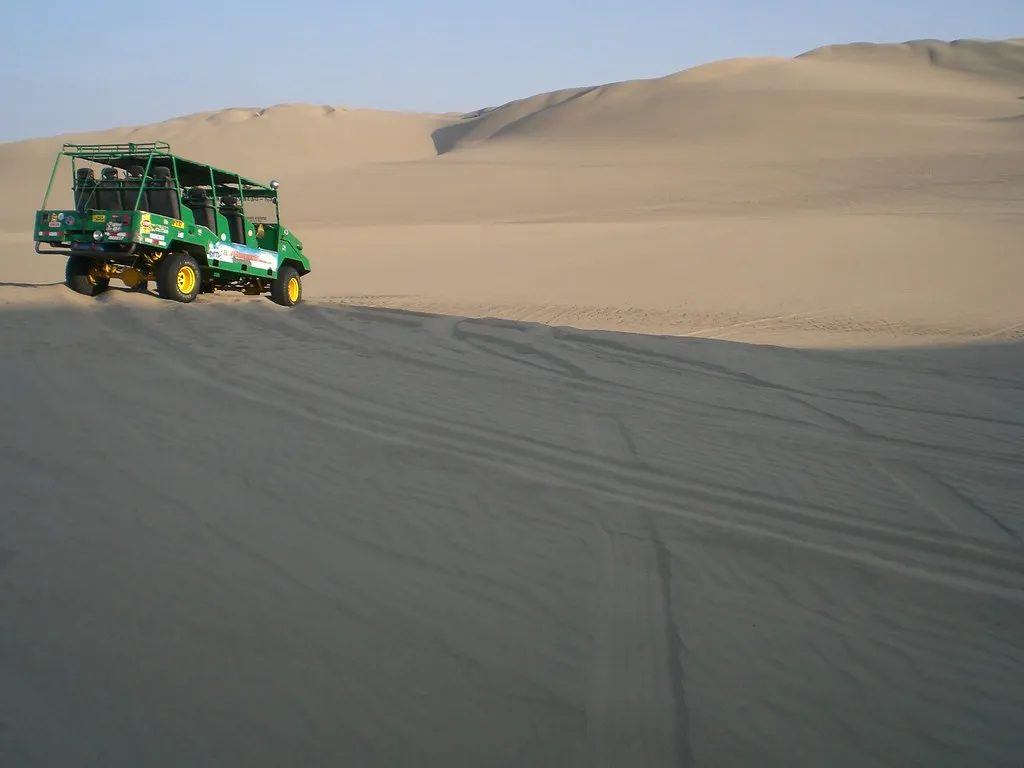
Huacachina is the only desert oasis in South America, and its waters were once believed to have healing powers. That fact alone should stop most travelers in their tracks. A continent-wide singular phenomenon, and most people either don’t know it exists or treat it as a quick photo stop on the way to somewhere else.
The Huacachina Oasis is a stunning natural desert oasis located in southwestern Peru, near the city of Ica, about 300 kilometers south of Lima. This small village is built around a small natural lake in the middle of the desert and is surrounded by towering sand dunes that stretch for miles in every direction.
Traditionally, the waters of the oasis were believed to have therapeutic properties, and it became a health resort for the Peruvian elite in the early 20th century. Today, Huacachina serves as a haven for adventure sports enthusiasts, offering activities such as sandboarding and dune buggy rides on the massive sand dunes that encircle the oasis.
The Water Crisis Behind the Postcard Image
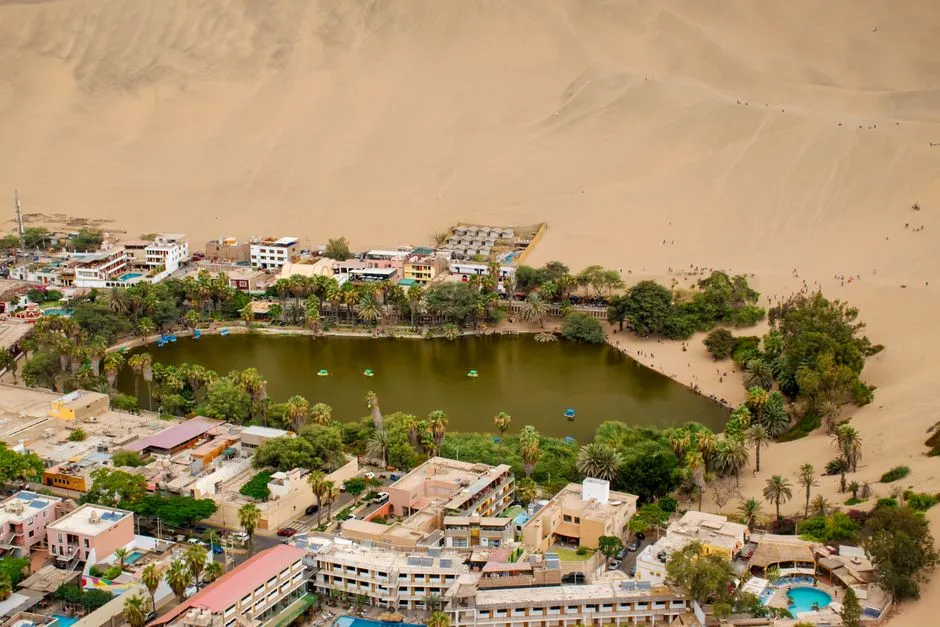
Huacachina is a real oasis located in the Ica Desert of Peru. Historically, it formed naturally around a freshwater spring. However, due to over-extraction, water levels started dropping significantly. Today, the lagoon is artificially maintained to support tourism, using water pumped in periodically to sustain its appearance.
Beginning in the 1930s and peaking in the 1950s, the Huacachina oasis, once naturally sustained, began to decline due to the overexploitation of the Ica-Villacuri aquifer. By the late 1960s, there were approximately 780 groundwater extraction wells in the Ica-Villacuri valley, withdrawing an estimated 346 million cubic meters of water annually, thereby surpassing the sustainable extraction volume.
Its rare ecosystem, surrounded by eucalyptus, carob, and palm trees, makes it one of the continent’s most extraordinary natural wonders, and one that Peru is working hard to preserve against climate change and water depletion. The conversation around visiting places like Huacachina is increasingly about how to do so responsibly.
What Casual Travelers Keep Getting Wrong About Deserts
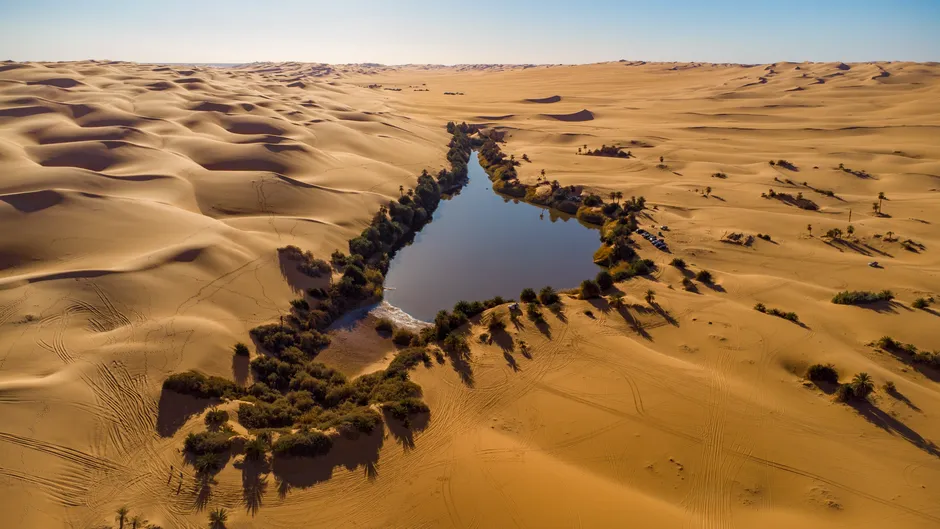
There’s a certain magic to the desert, a landscape many mistake for empty but which is full of secrets, history, and incredible resilience. Beyond the endless dunes and stark horizons lie some of the planet’s most secluded communities: hidden desert and oasis villages that seem a world away from modern civilization. These are not just places on a map; they are pockets of time, where ancient traditions persist against all odds.
The highway mentality doesn’t help. Discovering a true desert oasis is an adventure that makes you question everything you thought you knew about the desert. Most tourists zoom past without even knowing it exists, which is honestly part of its magic.
Solo travelers are drawn to the serene and contemplative nature of deserts, while couples tend to favor romantic and adventurous outings together. What unites all of them is a desire for something that feels earned, not just handed over at a crowded attraction entrance.
The Overtourism Push That’s Redirecting Travelers
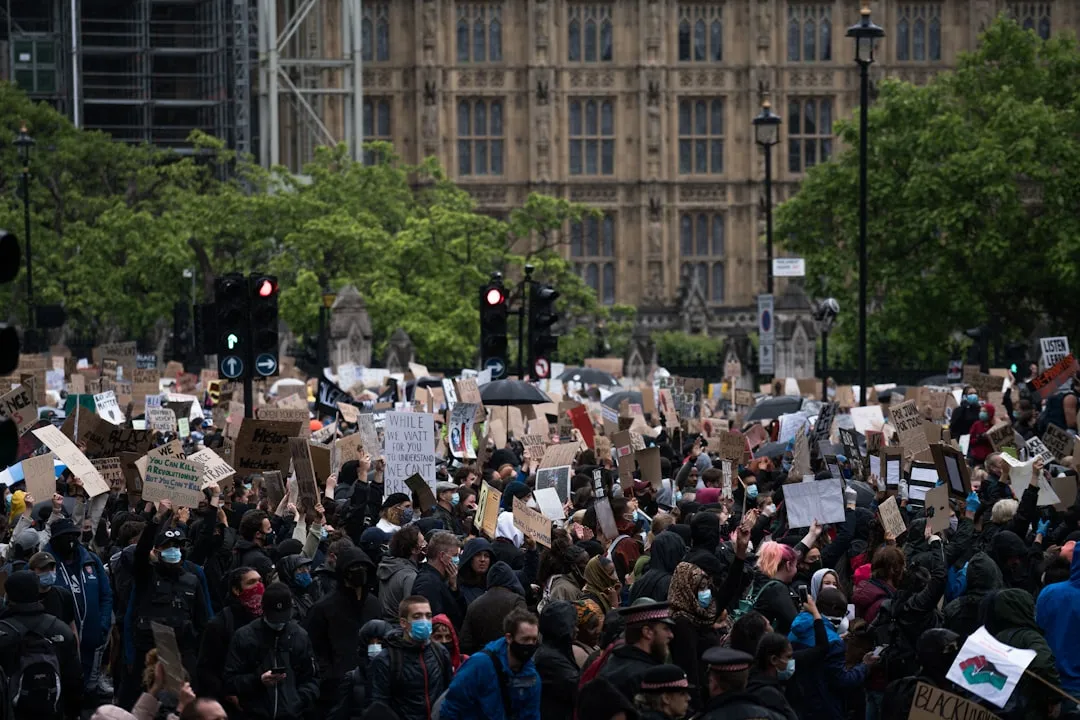
The irony of the current travel moment is that overcrowded destinations are actively creating interest in quieter ones. The UNWTO’s panel of experts has cautioned that “balancing growth and sustainability will be critical” and advised “the discovery of lesser-known destinations.” That’s a formal recommendation from the world’s leading tourism body to go somewhere unexpected.
Spain, the world’s second most visited country, saw major anti-tourist movements in 2024, including protests in Barcelona and Seville. In Italy, which had nearly a quarter more year-over-year visitors, popular cities like Venice and Florence banned large tour groups. The backlash against overtourism is real, and it’s nudging thoughtful travelers in a different direction.
Trends in recent times reflect the increasing demand for immersive cultural encounters, where tourists actively participate in local traditions and lifestyles. Regional collaborations and investments in infrastructure, such as eco-lodges and sustainable tourism initiatives, further boost the global desert tourism scene.
The Experience That Desert Oases Actually Offer
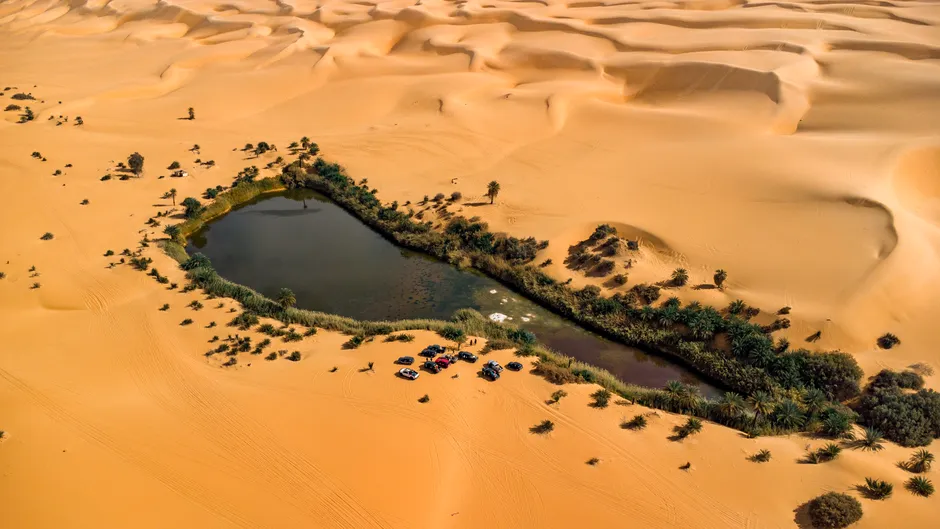
A desert oasis is a hidden wonder of nature, with a range of attractions from vast sand dunes to salt lakes, palm groves, and natural springs. At places like Siwa, visitors can swim in Cleopatra’s Eye, one of the oasis’s freshwater pools, or float in the salt lakes. Hikers can climb Jabal Mousa for stunning views or take a trip to the White Desert National Park for a unique outdoor experience.
Desert safaris at oasis destinations aren’t to be overlooked either. It’s an immersive desert experience with some of the most thrilling adventures, from 4×4 tours through the Great Sand Sea to sandboarding the dunes. These aren’t watered-down tourist simulations. They’re genuine encounters with landscape.
Desert tourism refers to travel and tourism activities in desert regions, attracting tourists interested in experiencing the unique natural beauty, cultural heritage, and outdoor recreational opportunities offered by arid environments. It encompasses a wide range of activities such as desert safaris, camel trekking, sandboarding, stargazing, and cultural tours. The range is broader than most people expect.
Why the Ones Who Find These Places Rarely Forget Them
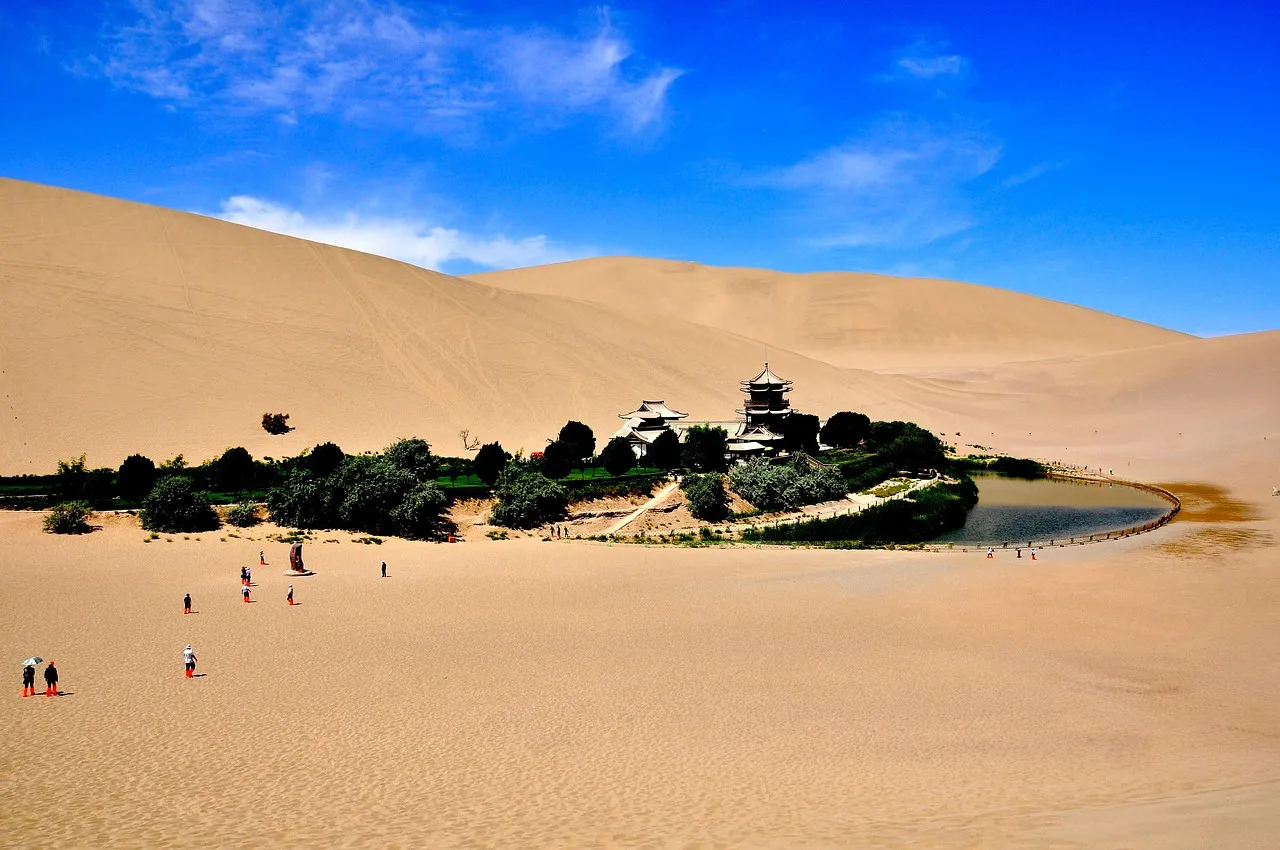
The oasis experience isn’t just photogenic, it’s deeply meditative. Floating alone in one of these crystalline pools with nothing but desert silence around is, according to many visitors, a near-spiritual experience. Behind the rise of places like Siwa is a larger trend: travelers are seeking quiet.
The very essence of a desert oasis lies in its tranquil simplicity and untouched landscapes. The breathtaking sight of lush palm groves against the backdrop of golden sand dunes is a stark contrast that epitomizes the oasis’s serene beauty. That contrast is the point. It’s what makes these places feel so improbable and so memorable.
The expansion of luxury travel brands into desert regions, the proliferation of adventure tourism infrastructure, and the rising importance of experiential travel in consumer decision-making are pivotal forces reshaping the industry. Yet the best desert oases still reward the traveler willing to go a little further, stay a little longer, and resist the pull of the obvious.
There’s something quietly satisfying about the fact that these places still exist the way they do, largely unhurried, genuinely ancient, and waiting at the edge of roads most travelers never bother to turn down. The highway runs straight through. The oasis is always just off to the side.AI Disclaimer: This article was created with the assistance of AI tools and reviewed by a human editor.