
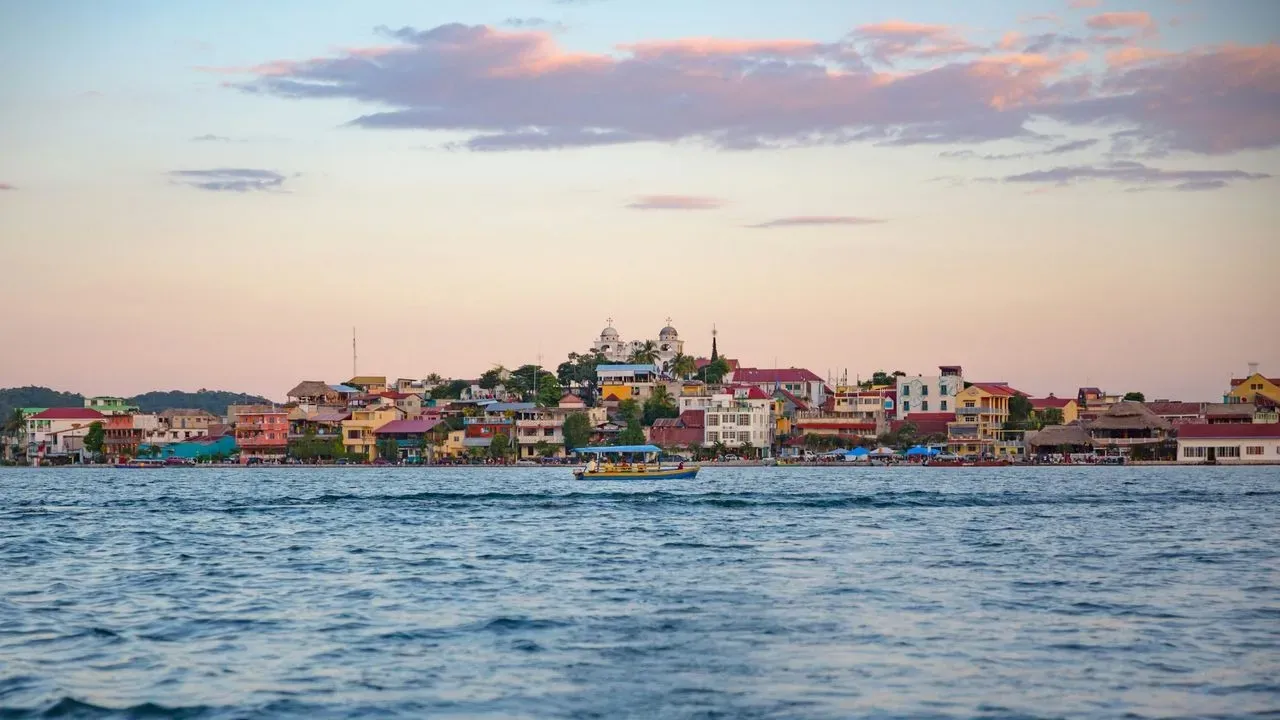

Flores, Guatemala – Flores sits on a small island in the middle of Lake Petén Itzá, and many travelers see it only as a stop on the way to the ruins. The original guide makes a case for staying longer, and the town gives good reasons to do so ([1]). Flores Island is not the Flores in Indonesia, a separate place with the same name. This one is a colonial-era town with a character all its own. ([1])
A town shaped by water
Flores sits on a compact limestone island in Lake Petén Itzá, located in the flat karst basin of northern Guatemala’s Petén department. The island rises gently, reaching about 127 meters above sea level at its center. Its surroundings are equally distinctive. The lake itself is a deep geological depression in the limestone shelf, fed by subterranean aquifers rather than major rivers.
A causeway links the island to the mainland, so the town feels both secluded and connected. This natural freshwater lake almost entirely surrounds the town of Flores, built on an island connected to the mainland by a causeway. Small boats add another layer of daily life. Small boats and lanchas cross the lake to villages like San Andrés or San José, where Itzá communities live.
Slow mornings and lakeside evenings
Much of the charm of Flores comes from walking. The narrow cobblestone streets, the main square and the small colonial church are all easy to explore on foot. The waterfront promenade along the shores of Lake Petén Itzá is genuinely lovely to explore at a slow pace. Visitors who want a change of pace can also find cafés and restaurants clustered along the waterfront.
Evenings tend to draw people outdoors. The town is recognised for its picturesque island setting, with cobblestone streets, colourful colonial-style buildings, and stunning sunsets. Boat trips on the lake are another common choice, and many visitors find that the atmosphere encourages them to stay longer than they planned.
Key points for visitors
- Flores is a compact island town that works well as a base for the region.
- Tikal is roughly 1.5 hours away by road, according to one regional guide.
- Flores has its own airport, Mundo Maya, with flights to Guatemala City.
Tikal and the Maya cities nearby
The reason most travelers come is Tikal, which sits deep in the forest. As the gateway to Tikal National Park, Flores is the perfect base for exploring the monumental ruins of the Classic Maya civilization hidden in the northern rainforest. Tikal is one of three UNESCO World Heritage sites in Guatemala, a fact that gives the area an international profile while leaving its local communities at the center of the story.
The region holds more than one archaeological destination. Visitors often add Yaxhá, another Maya site in the Petén, to their plans. A guide to the area notes that Flores is the perfect base for exploring Tikal, Yaxhá and the Mayan cities of northern Guatemala. Many visitors plan one day for Tikal, one for the island and lake, and a third for extra time in the area. Travelers who value a relaxed rhythm can build the trip around that pace.
Planning a visit with care
Timing matters in this part of the country. November to April is the dry season and the best time to visit Flores and the Petén region. Visitors should still expect the tropical environment, with its heat and humidity, and plan accordingly.
Responsible travel here means treating the lake and the villages with the same care given to the ruins. Taking a boat to the Itzá villages, hiring local guides and respecting the rules at archaeological sites all help to keep the benefits of tourism in the community. Visitors who arrive with curiosity and patience tend to leave with the strongest memories.
Flores shows that a small island town can be more than a waiting room for the ruins. Its lake, its streets and its people give the journey to Tikal a setting worth lingering in.
AI Disclaimer: This article was created with the assistance of AI tools and reviewed by a human editor.