
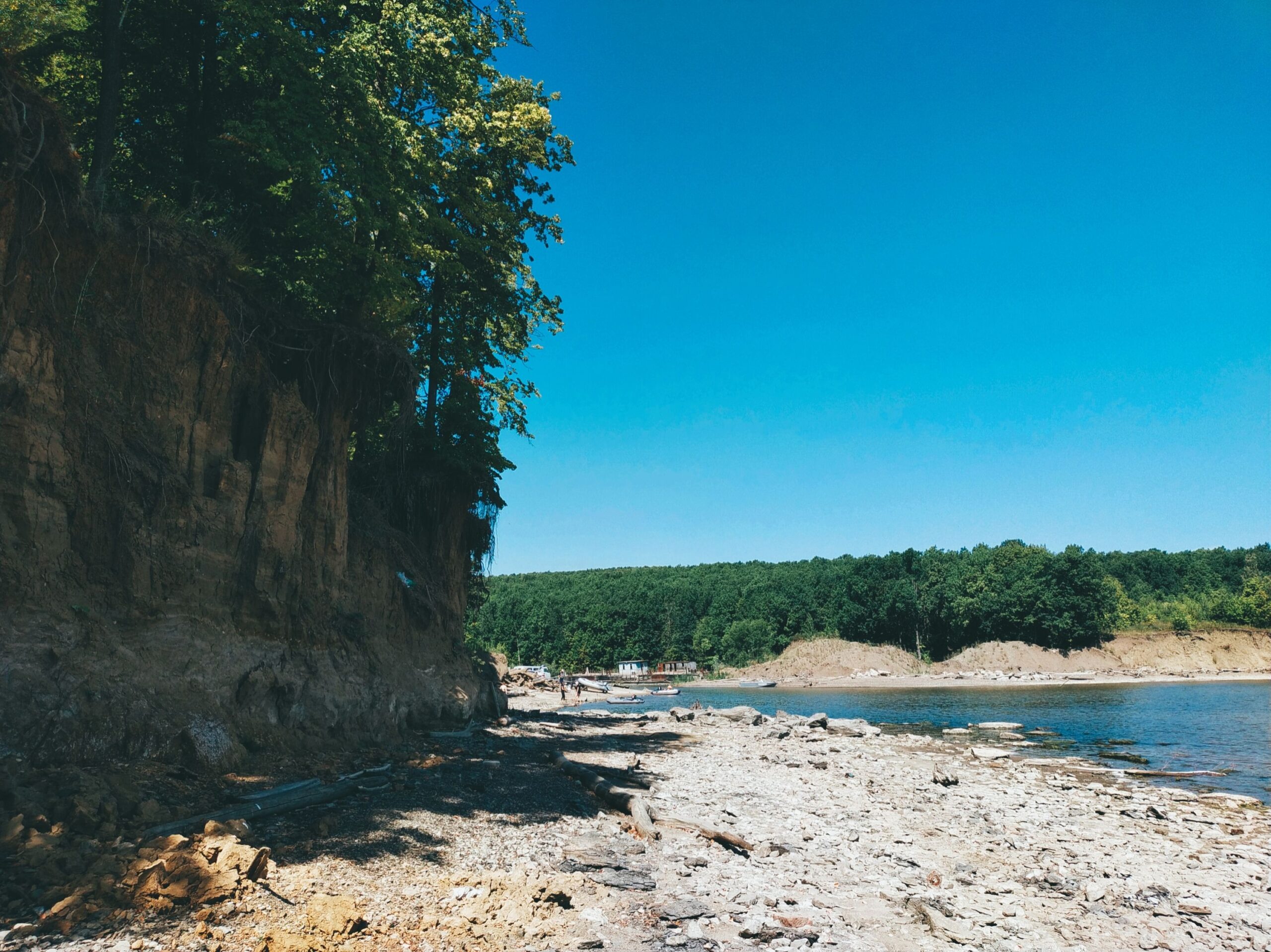

There is a stretch of shoreline in southern Maryland where ordinary visitors regularly walk away holding something that once lived during the age of giant sharks. No special permit, no expensive equipment, no scientific credentials required. Just a sieve, a patient eye, and a low tide.
The Calvert Cliffs rise along the western shore of the Chesapeake Bay in Calvert County, and they have been giving up their ancient contents to curious beachcombers for generations. What makes this place genuinely remarkable is not the scenery alone, but the sheer age and variety of what the sediment holds – and the fact that anyone can participate in finding it.
A Shoreline Unlike Any Other on the East Coast
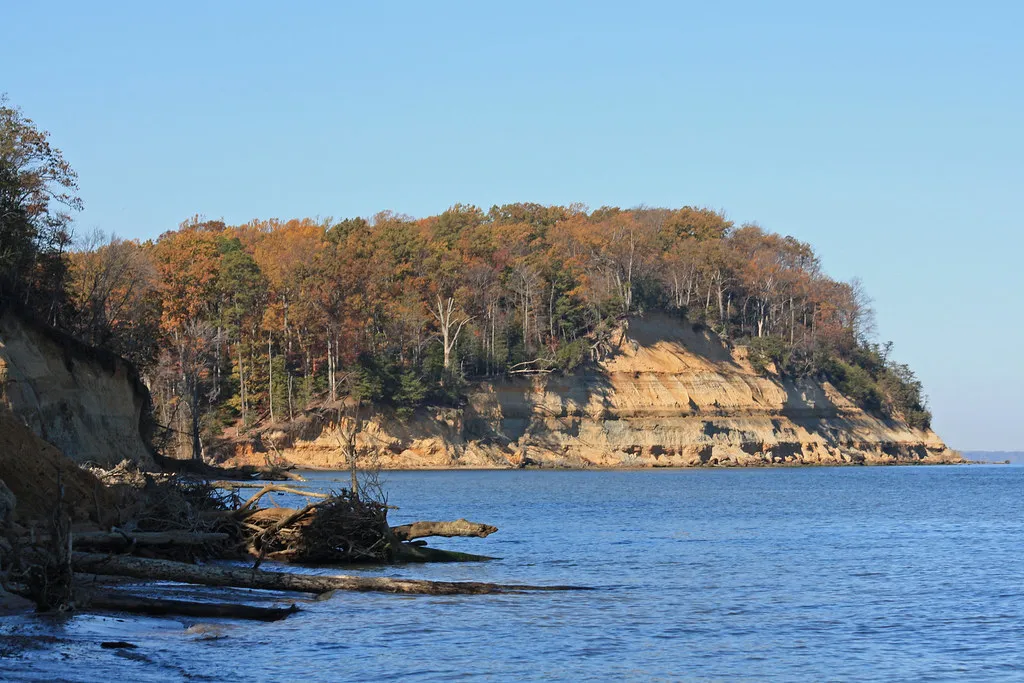
The Calvert Cliffs run for about 24 miles along the western shore of Chesapeake Bay in Maryland, exposing Miocene marine beds that shed shark teeth, shells, and whale bone onto the beaches below. That combination of scale and fossil density is genuinely rare. The cliffs are the most extensive assemblage of Miocene fossils in the eastern United States.
The cliffs stretch roughly 24 miles from Chesapeake Beach to Drum Point in Calvert County, and over 600 species of plants and animals have been documented there, including marine mammals like dolphins, whales, seals, sea turtles, and sea cows. That is an extraordinary record preserved in relatively accessible sediment, and scientists continue to study it closely.
How Old Are These Fossils, Really?
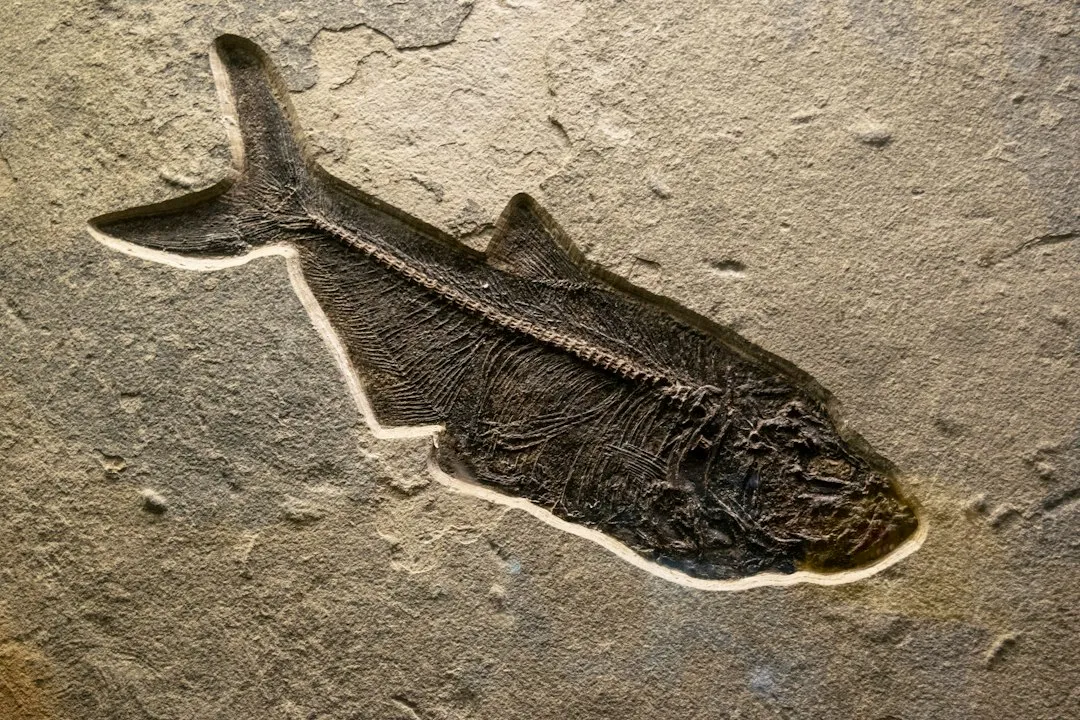
The age of the cliffs spans the early to middle Miocene, roughly 23 to 8 million years old, and the rock units belong to the Chesapeake Group, including the Calvert, Choptank, and St. Mary’s formations. To put that into perspective, that predates the appearance of modern humans by tens of millions of years.
During parts of the Early, Middle, and Late Miocene, a shallow arm of the Atlantic Ocean occupied the Salisbury Embayment, occasionally extending as far west as Washington, D.C., and fluvial sediments transported from the Appalachian Mountains into this vast basin are now exposed as wave-eroded bluffs known as Calvert Cliffs. What visitors walk along today was once a productive, warm seafloor.
The Ancient Sea That Built It All
The Miocene marine deposits formed when the Chesapeake Bay region was home to a warm, productive sea filled with sharks, rays, bony fishes, marine mammals, turtles, crocodilians, and invertebrates. It was a biologically rich environment, not unlike a tropical shallow-water system seen in parts of the world today.
During the early to middle Miocene, the Salisbury Embayment was likely a calving ground for early dolphins and whales, and it attracted large predatory sharks, including Otodus megalodon, which fed extensively in the area. The fossils beachcombers find are direct physical evidence of that ecosystem, still arriving on the beach through natural erosion.
The Geology Behind the Constant Supply of Fossils
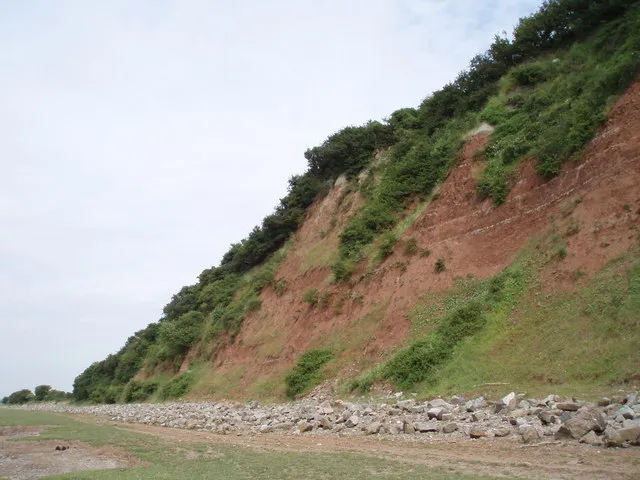
The mechanism is simple and relentless: the cliffs are soft, unconsolidated marine sediment, the bay undercuts them, and they collapse. Every collapse delivers shark teeth, shells, and occasionally whale bone onto the narrow beach below, where wave action cleans and concentrates them. This cycle repeats continuously, season after season.
The cliffs rise over the Bay over 100 feet and are slowly eroding at the rate of almost 3 feet per year, ensuring a constant supply of new fossils to discover. From a practical standpoint, this means every storm and every high tide potentially exposes material that no one has ever touched before.
What You Can Actually Find on the Beach
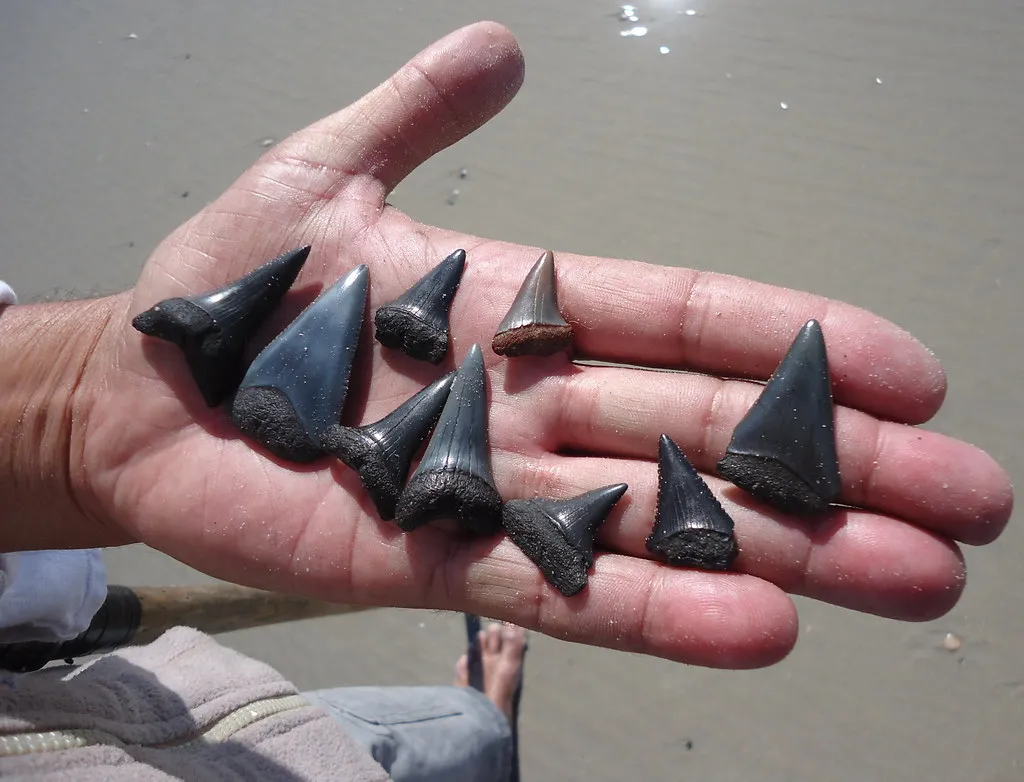
Those who sift through the beach’s sand can find teeth from tiger sharks, hammerhead sharks, sand sharks, and even the storied megalodon. Most teeth are small, but the variety across a single morning of searching can be impressive. Many species occur across the Miocene beds, and the teeth are dark and glossy against the pale sand, with most in the quarter-inch to inch range.
Most collectors search the beach gravel and surf line for fossil shark teeth, but the cliffs also produce rays, shells, marine mammals, reptiles, fish, and rare land mammal fossils. More unusual still, land mammals such as peccaries, mastodons, woolly rhinos, and camels are occasionally found. Finding a land mammal tooth here feels almost absurd, given that you’re standing at the edge of a bay.
Maryland’s State Fossil Calls This Place Home
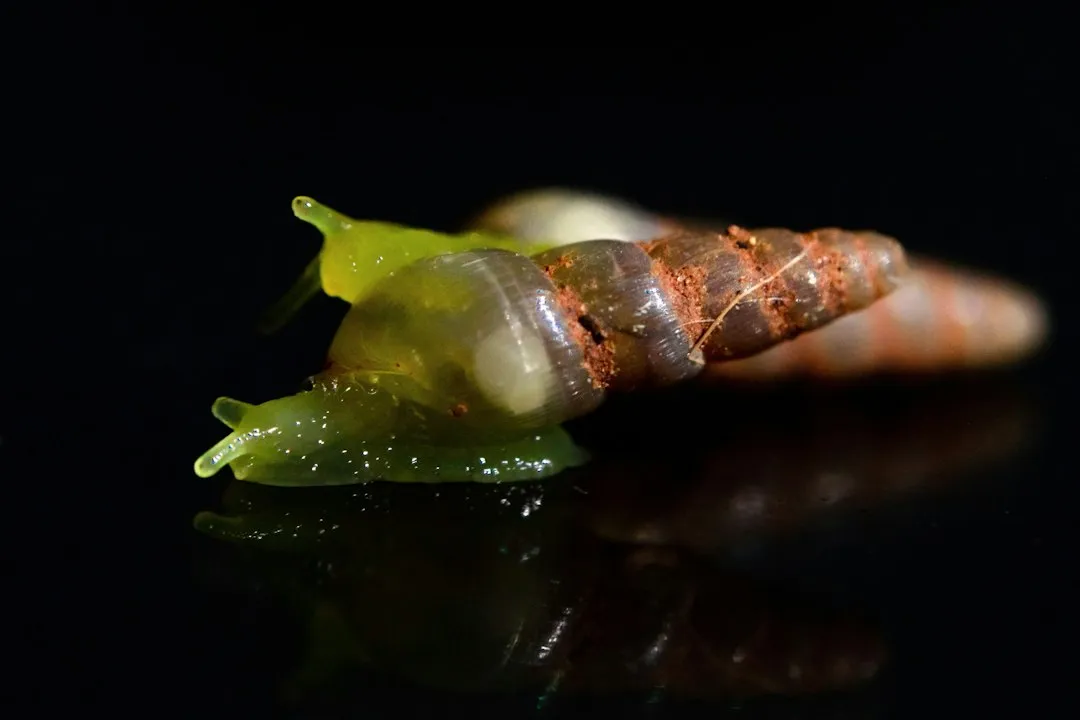
More than 600 Miocene species have been identified, representing nearly every animal phylum, and that includes some 400 species of mollusks, like the iconic Ecphora gardnerae gardnerae, a caramel-colored spiral snail shell that is now Maryland’s state fossil. That snail has become something of a symbol for the entire site.
The accessible strata at Calvert Cliffs provide a good record of the Middle Miocene Climate Transition and document a minor mass extinction event known as the Middle Miocene disruption. This is not simply a pretty beach with old shells. It is a scientifically significant geological record that researchers from around the world have studied for well over a century.
Where Visitors Can Actually Go
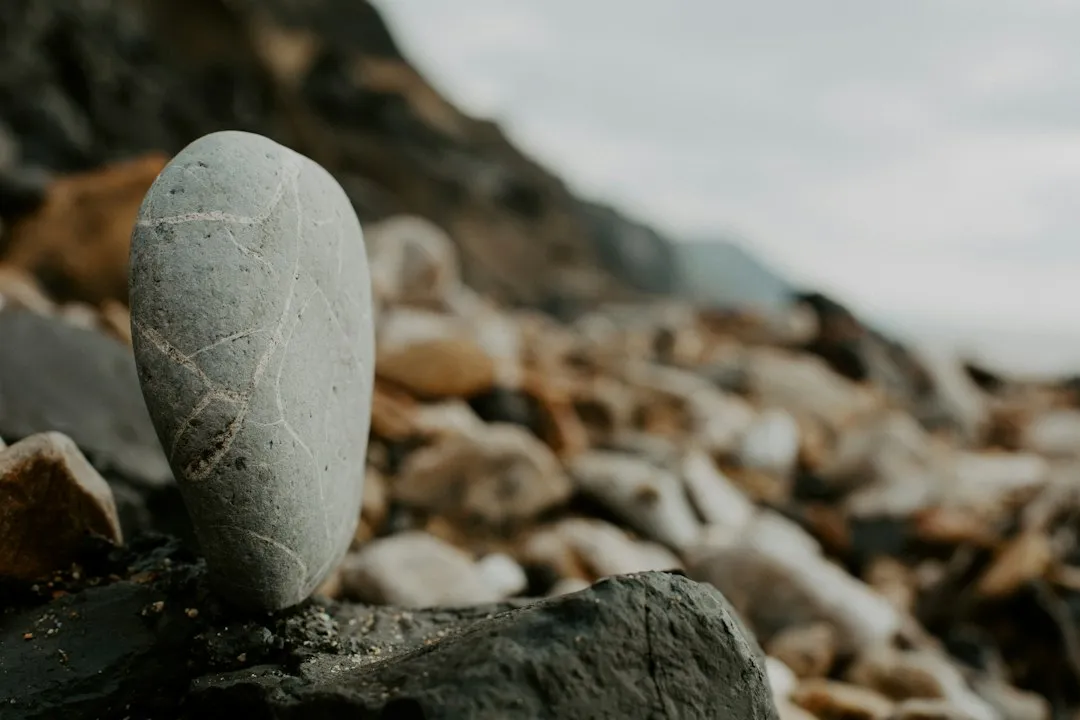
Located at 10540 H.G. Trueman Road in Lusby, Calvert Cliffs State Park is Maryland’s premier fossil-hunting destination, and its 1,400-acre expanse includes a 1.8-mile hike along the red trail from the parking lot to a public beach where collectors can sift for shark teeth. It is a genuine hike, not a stroll, so comfortable shoes matter.
Flag Ponds Nature Park in Lusby, managed by the Calvert County Department of Parks and Recreation, is also a popular area for fossil hunting, with beaches just a short half-mile hike from the parking lot through an expansive trail network that winds past ponds and Chesapeake overlooks. For families with young children or visitors with limited mobility, Flag Ponds is often the more practical choice.
The Rules That Keep This Place Accessible
State and federal regulations, enforced by agencies like the Maryland Department of Natural Resources and the Bureau of Land Management, restrict collecting to beach shorelines, prohibiting any disturbance of cliffs or riverbanks to preserve geological integrity and ensure safety. These rules exist for good reason, and they are enforced.
The park’s trademark features, the cliffs themselves, must be avoided by visitors, as landslides pose a real risk, and fossil-collecting underneath the cliffs is strictly prohibited. The good news is that surface collecting from the beach is fully permitted, and what you find is yours to keep. Significant vertebrate finds are a different matter: an isolated shark tooth is an ordinary find, but articulated whale bone or a substantial skull is scientifically important, and the Calvert Marine Museum wants to know about it.
Visiting Smart: Tides, Timing, and Tools
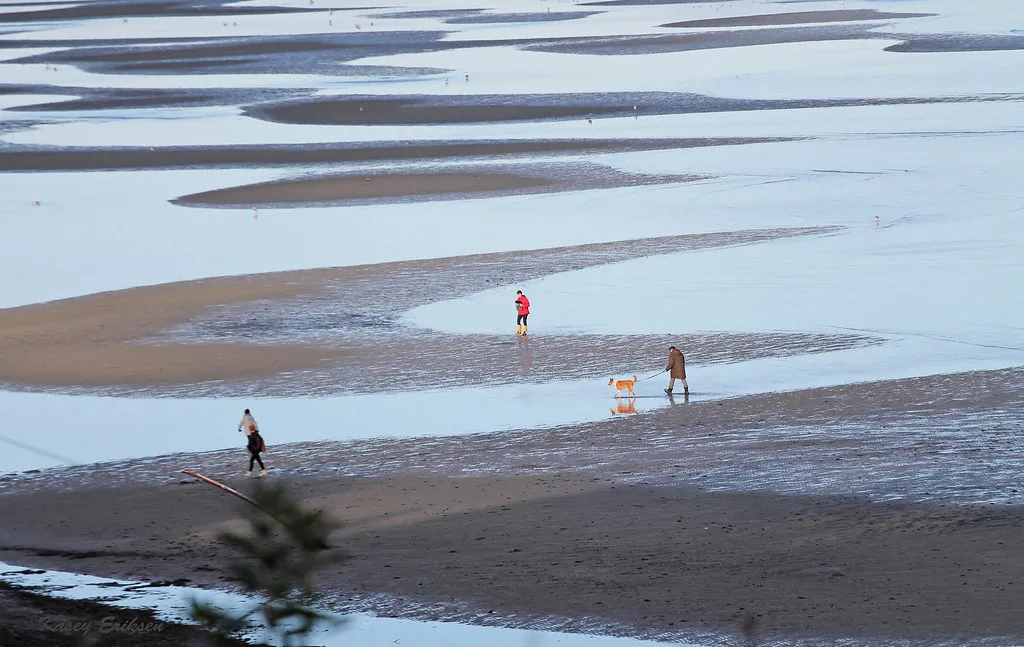
The safest and most productive collecting is usually beachcombing below the high-tide line, especially where waves concentrate shell hash, pebbles, and small gravel. Timing your visit around low tide genuinely increases what you will find. Searching for fossils during low tide along the exposed beach yields better results than high tide, and the best collecting usually occurs after a storm.
Sieves and shovels can be used to sift the sand for fossils. Experienced collectors often bring fine-mesh screens to work through loose gravel near the waterline, where smaller teeth gather naturally. The investment in a basic sieve makes a real difference, particularly for finding the smaller species that are easy to overlook with the naked eye alone.
The Calvert Marine Museum: Where the Biggest Finds Live
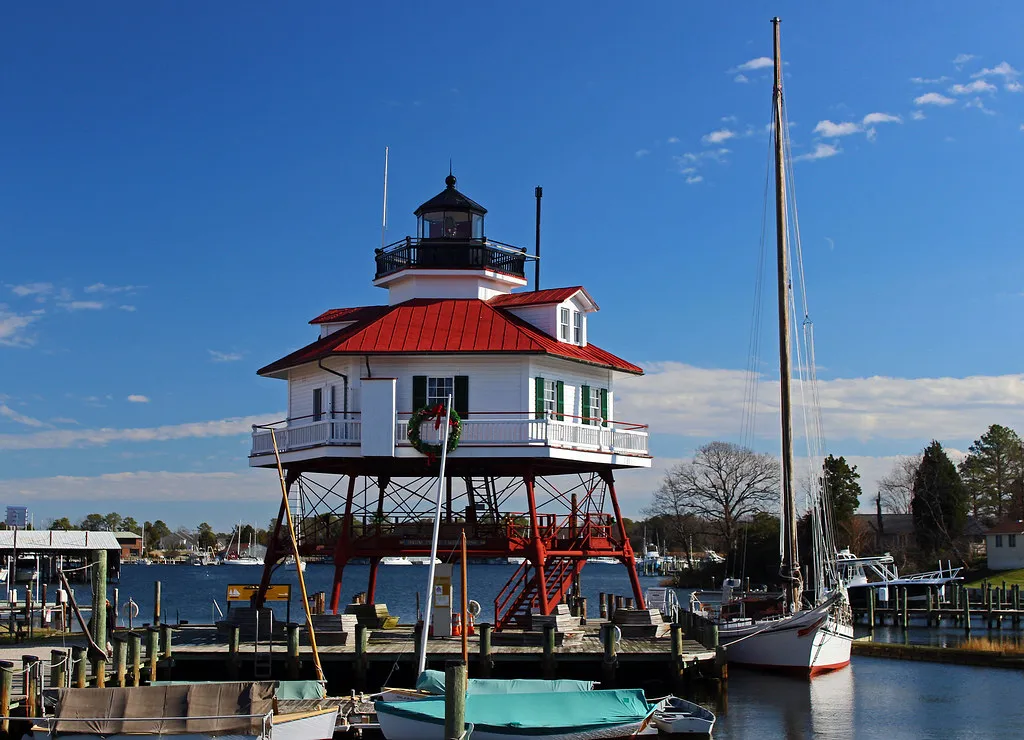
The nearby Calvert Marine Museum has an extensive exhibit dedicated to some of the most spectacular discoveries by paleontologists over the years, and true to the open-access spirit of the cliffs, the museum also provides a free paleontologist-on-call service for amateur fossil hunters who need help identifying their finds. That kind of direct connection between professional science and public curiosity is rare and worth appreciating.
In 2024, the park recorded 90,000 visitors, with fossil hunters contributing significantly to foot traffic. The museum gives that community somewhere to bring their questions, their unusual finds, and their enthusiasm, turning a casual beach trip into something that occasionally produces genuine scientific value. The partnership between amateur collectors and researchers here has shaped much of what is known about Miocene life on the East Coast.
A Living Geological Classroom
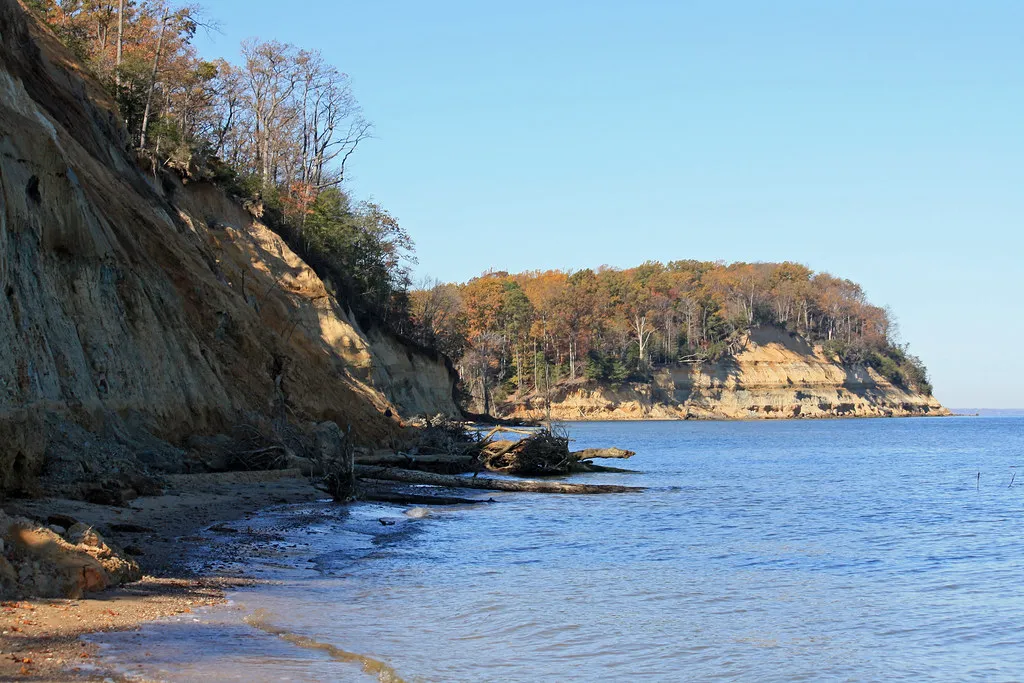
There are very few places in the world where a person with no scientific training can walk along a shoreline and pick up something 15 million years old. Calvert Cliffs is one of them. The accessible strata provide a good record of the Middle Miocene Climate Transition and document a minor mass extinction event, making this site extremely important for both paleoclimatology and paleontology.
What the cliffs offer is a kind of tactile connection to deep time that very few landscapes can provide. Each tooth that washes out of the sediment represents an animal that lived and died in a warm sea long before the Chesapeake Bay existed in any form recognizable today. That thought alone makes the 1.8-mile walk from the parking lot feel entirely worth it.
A Place Worth Protecting and Returning To
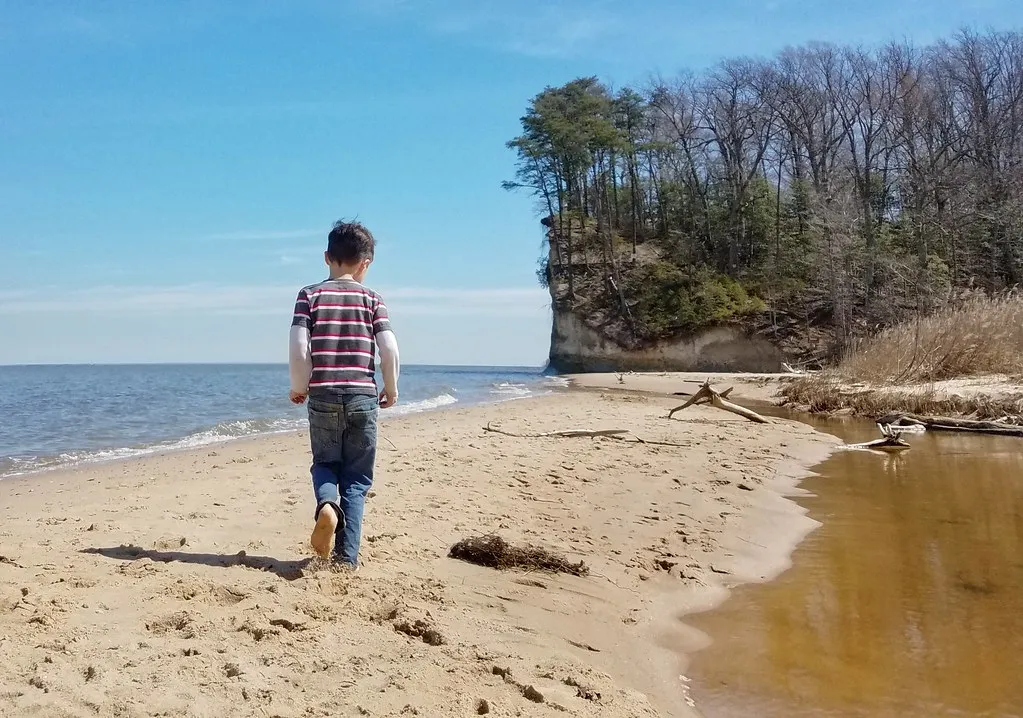
Calvert Cliffs draws tens of thousands of visitors each year not because of manufactured attractions, but because the earth itself keeps producing something genuine. The erosion that slowly retreats the cliffline is the same force that delivers fresh fossils to the beach, and that cycle will continue long after any single visitor’s trip.
Responsible collecting here means understanding the rules, respecting the landscape, and recognizing that what you take home is a 10- to 20-million-year-old piece of a lost world. Treating that with a little humility feels appropriate. For anyone drawn to natural history, deep time, or simply the quiet focus of searching a tideline, the Maryland cliffs offer something few other places on the East Coast can match.
AI Disclaimer: This article was created with the assistance of AI tools and reviewed by a human editor.