
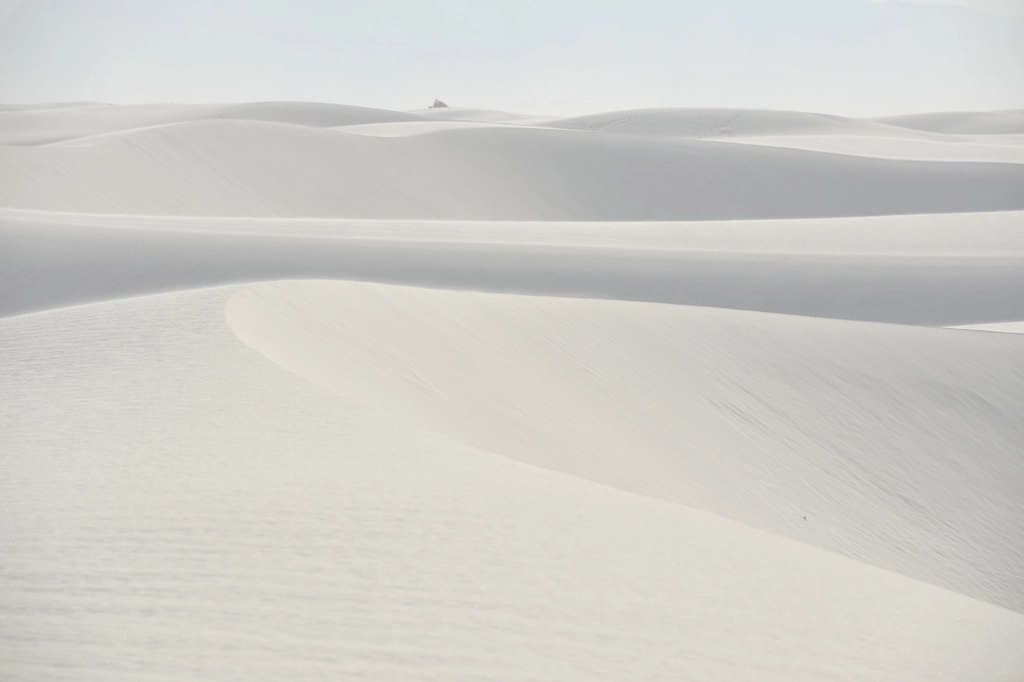

A Mineral That Normally Disappears
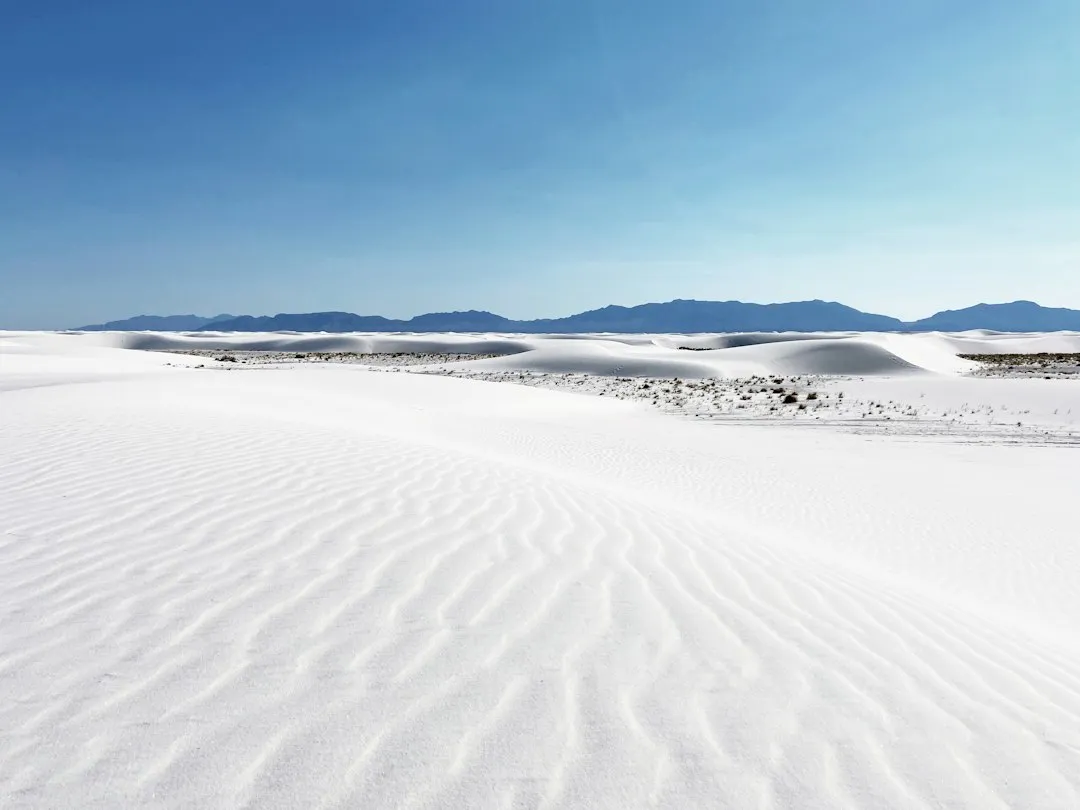
The “sand” at White Sands is made primarily from gypsum, a soft mineral composed of calcium sulfate and water. Gypsum is common in rocks around the world, but large gypsum dunefields are extremely rare.
Because gypsum dissolves relatively easily in water, rainfall usually carries it through streams and rivers and eventually toward the ocean. Under normal circumstances, it simply never gets the chance to pile up into dunes.
Its dunes are made of gypsum, a soft mineral that is rare in dune form because it dissolves in water and almost always gets carried out to sea before it can pile up. The Tularosa Basin has no outlet to the ocean, so the gypsum stays put. That single geographical fact changes everything.
How an Ancient Sea Left Its Mark
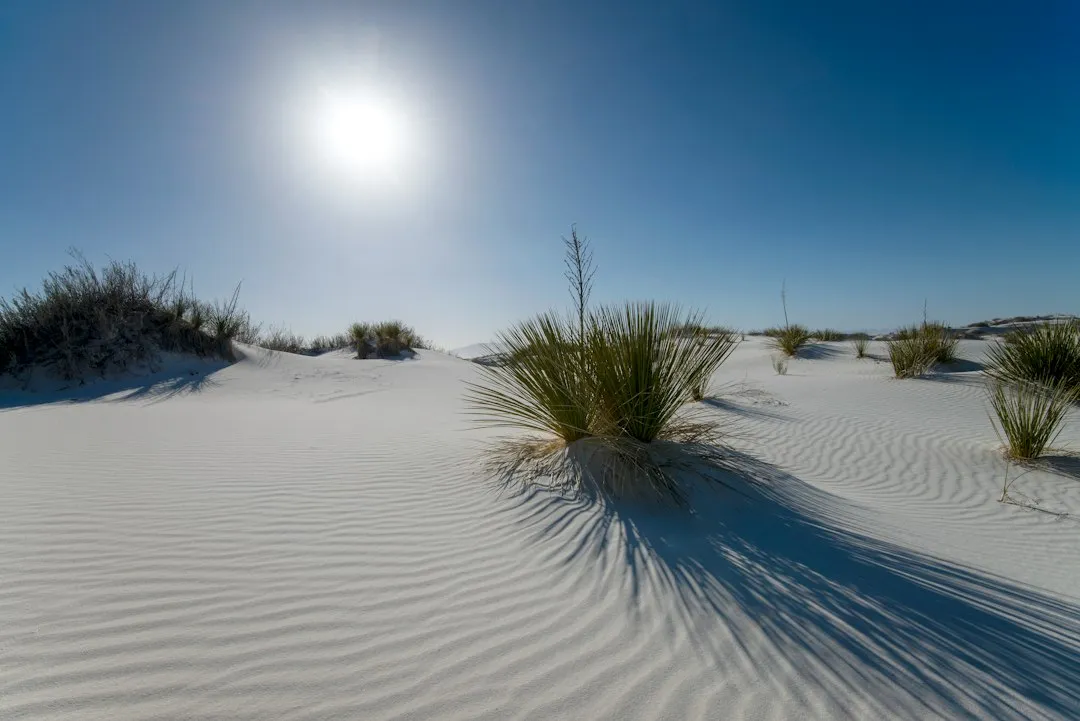
Over 250 million years ago, the area that is now White Sands used to be a body of water called the Permian Sea. When the sea dried up and disappeared, the gypsum seabed eventually broke down into smaller particles. Gypsum is a mineral that technically dissolves in water, but since the area is so dry, bright white hills of tiny crystals formed.
When rain falls on the nearby mountains, it slowly dissolves layers of gypsum, carrying the mineral downhill with the flowing water. Because the Tularosa Basin and its dunes form a completely enclosed system with no outlets for water, all the dissolved gypsum stays trapped here. Over time, it settles and builds the dazzling white sands that make this park so extraordinary.
The Largest Gypsum Dunefield on Earth
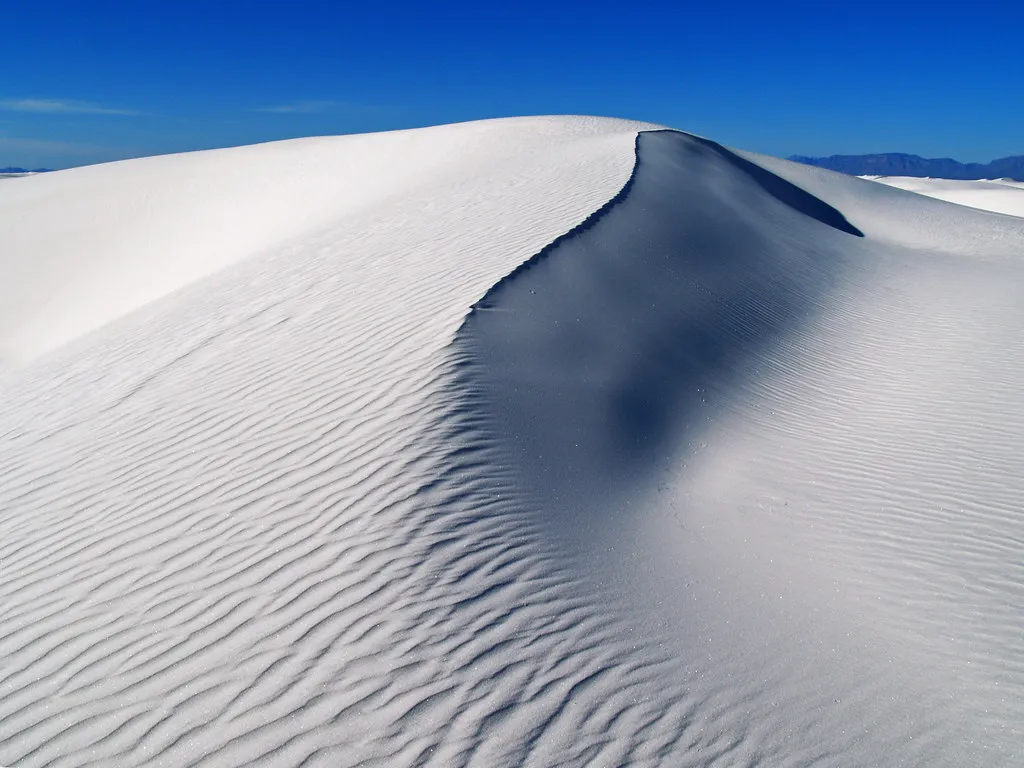
The result is the largest gypsum dunefield on the planet, covering about 275 square miles, with the park protecting roughly 145,800 acres of it. To put that in perspective, that is an expanse larger than many small countries.
The dunes can reach up to 60 feet high, and about 4.5 billion short tons of gypsum sand create a mesmerizing and unique landscape. The sheer volume of mineral deposited here over millennia is staggering.
White Sands is unusual not only because of the color of its dunes but also because gypsum rarely forms extensive sand dunes. Finding one dunefield of this scale, anywhere on Earth, is essentially a geological miracle of circumstance.
Why the Dunes Look Blindingly White
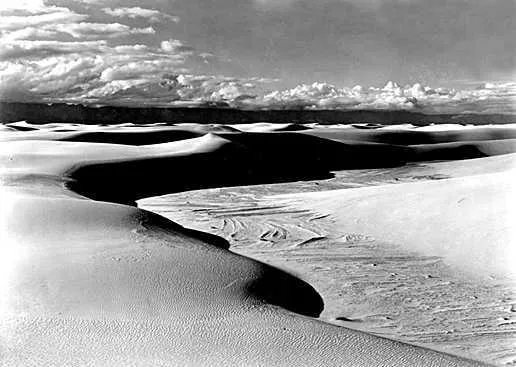
Gypsum itself is actually clear, but the dunes look bright white – almost like snow – because the tiny gypsum grains are constantly rubbing and bumping against each other. This creates tiny scratches on their surfaces that reflect sunlight, giving the dunes their brilliant white glow.
Gypsum is actually a clear crystal, but because the particles are always blowing around and bumping into each other, the scratched surfaces make it appear white. The whiteness, in other words, is mechanical. It is the physics of abrasion at work across millions of years.
The Science Behind Cool Sand in a Hot Desert
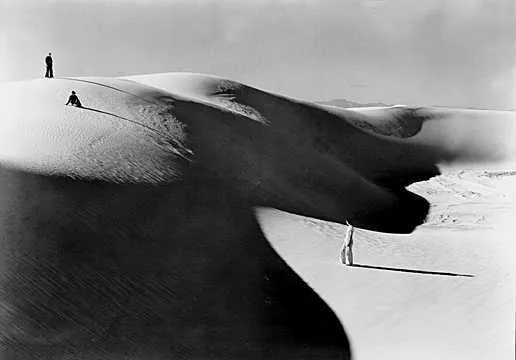
Quartz sand on a typical beach can scorch your bare feet. Gypsum behaves differently. It reflects rather than absorbs most of the sun’s energy, so the dunes stay cool to the touch even when summer afternoons climb past 100 degrees.
Unlike quartz sand, which absorbs heat and becomes painfully hot underfoot, gypsum sand remains cool even under intense desert sun because it reflects sunlight and does not conduct heat efficiently. For a place that regularly exceeds 100 degrees Fahrenheit in summer, this is an almost counterintuitive comfort.
Compared to other dune types, gypsum dunes remain moist during the longest droughts. This moisture prevents the dunes from blowing away. That retained moisture is a quietly essential feature of what keeps the dunefield intact and stable enough to support life.
Lake Lucero: Where the Dunes Begin
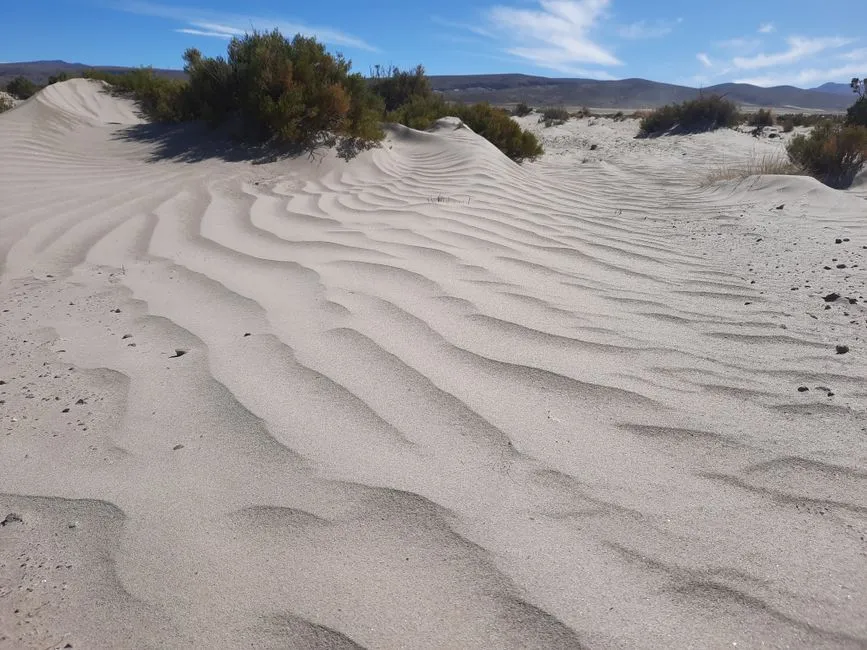
Lake Lucero, a dry lake bed at the park’s southwestern corner, is the primary source of gypsum for the dune field – selenite crystals growing in the dry lake bottom are broken by wind and frost, transported as sand by the prevailing southwest winds, and deposited as dunes northeast of the source.
Dome-like structures up to 3 meters in height, composed predominantly of coarse crystals of selenite gypsum, occur on the surface of Alkali Flat, a saline playa lake in White Sands National Monument, New Mexico. These formations represent an intermediate stage in the long journey from raw mineral to windblown dune grain.
The lake bed is open to the public only on monthly ranger-led tours. For those who want to trace the dunes back to their source, this guided visit is worth planning around.
Dunes That Never Stop Moving

Driven by strong southwest winds, the largest dunes here can creep as much as 30 feet a year. That is a slow but completely relentless migration across the desert basin.
Near the dune field’s margins, dome dunes of relatively stable gypsum crystals give way to parabolic dunes with vegetated arms that anchor the trailing edges while the nose advances, and finally to the towering barchan and transverse dunes of the interior where only the most specialized plants can survive. The dunes’ active faces are steep and unstable, slumping rhythmically as particles cascade down the slip face – a sound audible on calm days as a faint hiss.
Wildlife That Evolved to Disappear
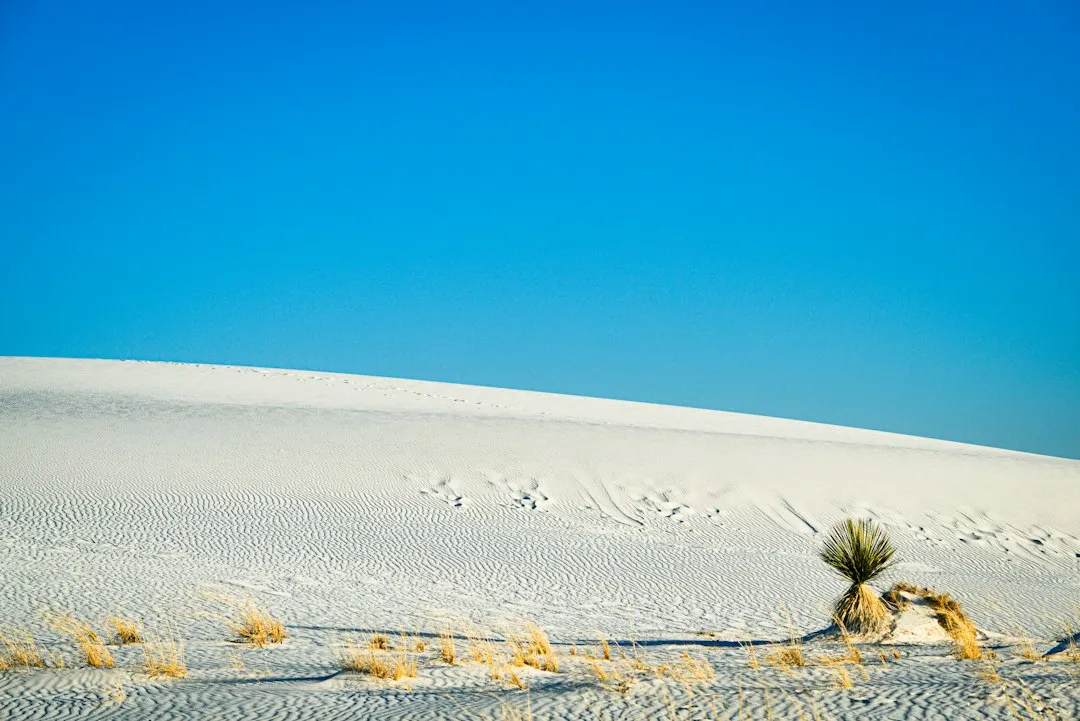
Many animals have developed specialized adaptations that help them survive extreme temperatures and limited water availability. Several species exhibit lighter coloration than their relatives elsewhere, allowing them to blend into the white gypsum environment.
A tiny lizard found nowhere else on Earth calls the white gypsum dunes of southern New Mexico home. The Bleached Earless Lizard is one of the park’s most specialized residents, adapted so thoroughly to the bright white dunes that it nearly disappears into the landscape. The Bleached Earless Lizard is a subspecies of the Common Lesser Earless Lizard and is endemic to White Sands, meaning it exists naturally only within the unique dune ecosystem surrounding the park.
White Sands National Park’s ecosystem is incredibly diverse, boasting over 800 species of insects. These insects have developed specialized adaptations to thrive in the gypsum sand. The park also provides a critical refuge for endangered species like the white sands pupfish and the dunes sagebrush lizard, highlighting its importance for conservation.
A Landscape That Researchers Keep Coming Back To
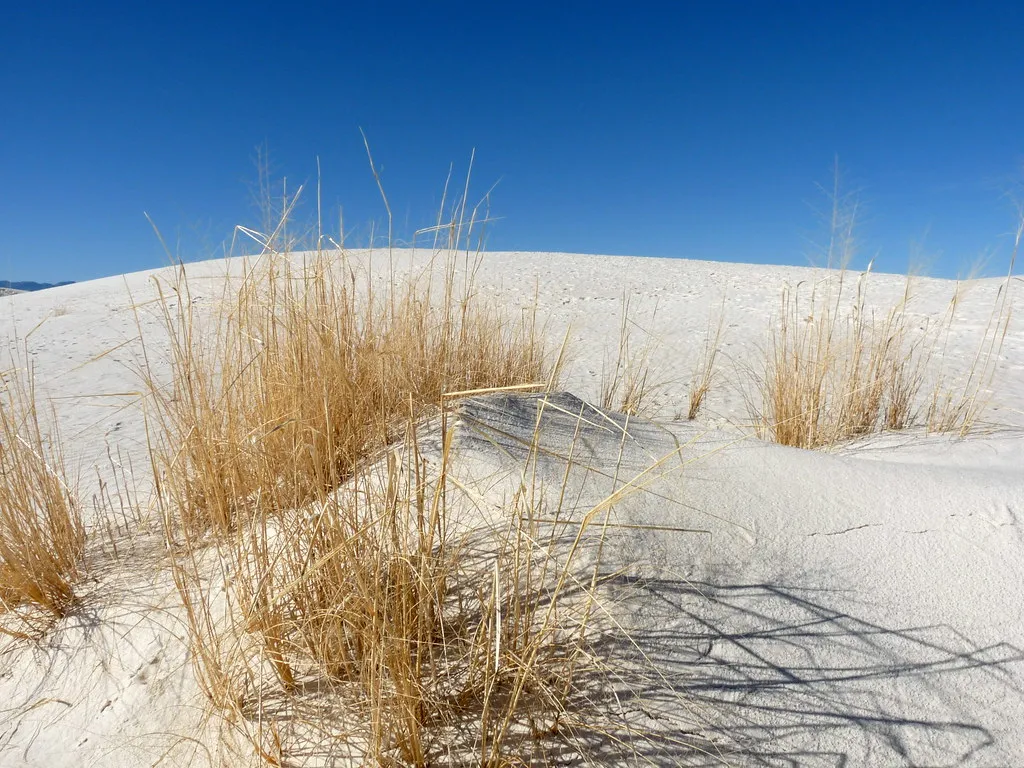
Many arid landscapes are notable sources of windblown dust, but some areas produce dust more frequently than others. White Sands in New Mexico is one such persistent dust source with a unique composition composed primarily of the soft mineral gypsum and other salt minerals. Researchers have studied the dry lake beds and windblown dunes at White Sands to determine the characteristics that result in such a potent and persistent dust source.
The characteristic mineral of White Sands is gypsum, which in its pure form is a hydrate of calcium sulfate (CaSO₄·2H₂O). That precise chemical identity is what makes the dunes so useful as a natural laboratory, not only for Earth sciences but also for planetary research.
Scientists have drawn direct comparisons between White Sands and gypsum dune systems observed on Mars, making this New Mexico dunefield a reference point for understanding other worlds.
Human History Within the Dunes
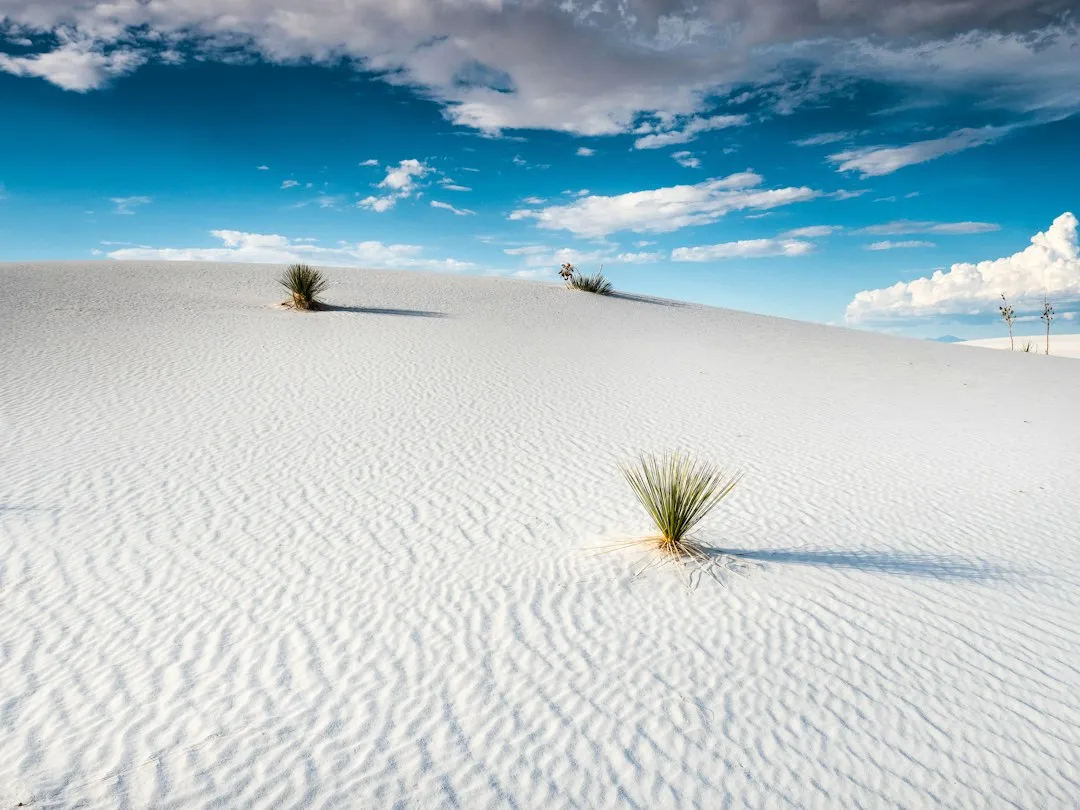
The Mescalero Apache tribe and Native Americans, such as the Jornada Mogollon, have a long history of living in the White Sands region. They developed a deep understanding of the land and its resources, adapting their lifestyle to the harsh conditions. Archaeological evidence suggests that they used the dunes for shelter and as a source of gypsum for tools and pottery.
White Sands was established as a National Monument on January 18, 1933, and redesignated as a National Park on December 20, 2019. That redesignation reflected growing recognition of the site’s extraordinary natural significance, far beyond what the word “monument” alone seemed to capture.
The Takeaway

White Sands is one of those rare places where a single geological quirk – a landlocked basin with no drain to the sea – produces an entire world that operates by different rules. The ground stays cool when it should burn. The sand glows white when gypsum is naturally clear. Animals evolve pale skin and fur not as decoration, but as survival.
It is a reminder that the most extraordinary landscapes on Earth are often the product of patient, quiet accumulation. Not drama, just time, minerals, wind, and a basin that refused to let go.
AI Disclaimer: This article was created with the assistance of AI tools and reviewed by a human editor.