
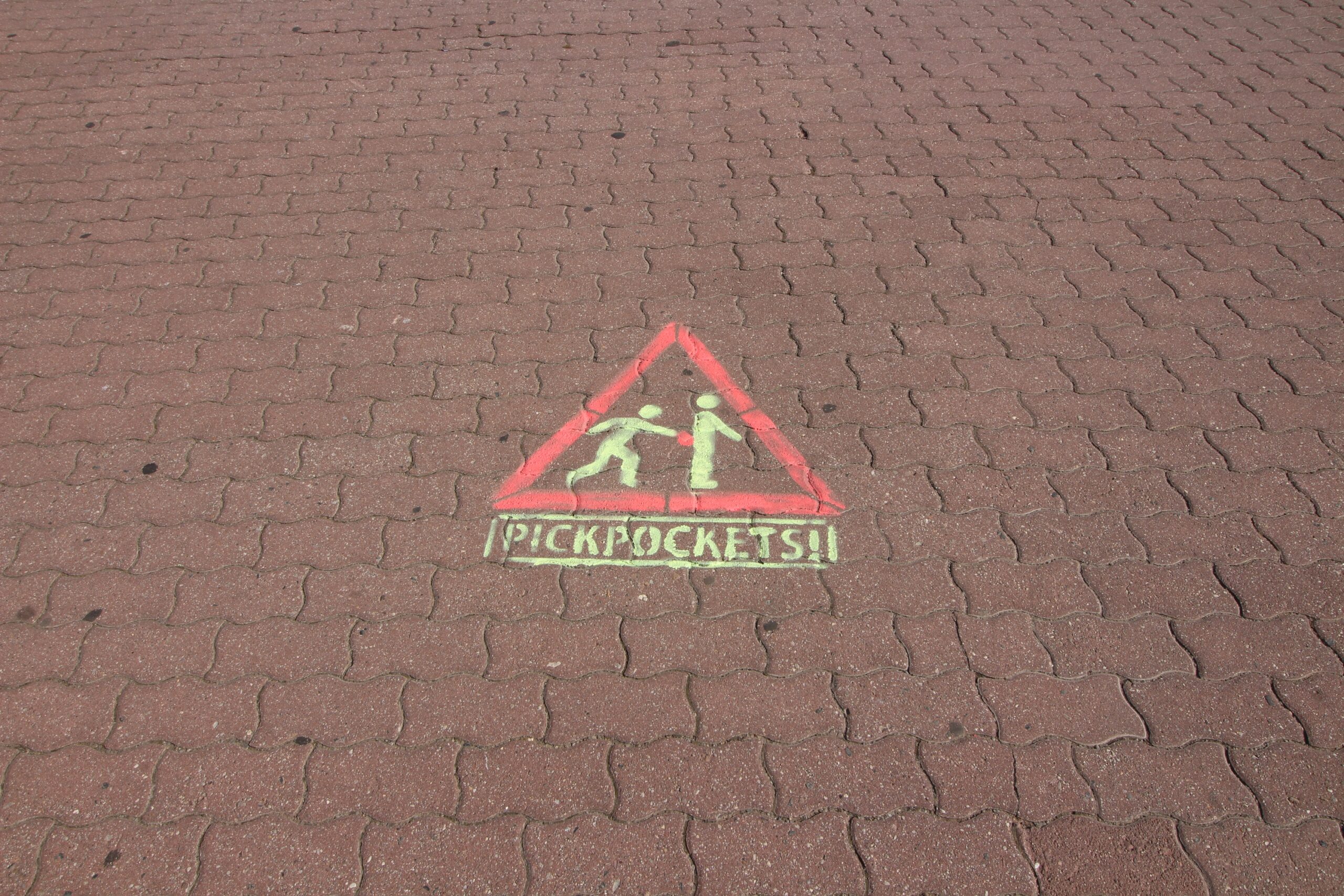

Every seasoned traveler has a story. A phone left on a café table. A wallet that vanished somewhere between the metro turnstile and the platform. A bag unzipped in a crowd, contents gone before anyone noticed. The story almost always begins the same way: a moment of distraction.
Distraction is not just a contributing factor in tourist theft. Across cities from Rome to Bangkok, it is the single most consistent variable that thieves rely on. Understanding how it works, and where it tends to happen, is the most practical thing a traveler can know before packing a bag.
The Core Mistake: Letting Your Guard Down in a Crowd

Tourists can be targeted by criminals because they’re often distracted and they’re in unfamiliar surroundings, which makes them especially vulnerable to common types of crime. The root cause is simple: the excitement of being somewhere new overrides the environmental awareness that most people maintain in their own city.
You’re checking maps constantly, fumbling with unfamiliar currency, and your attention is everywhere except on your back pocket. Cultural misunderstandings also play a role, as tourists from countries with lower crime rates might unintentionally exhibit behaviors that increase their risk, like displaying valuables openly in crowded areas.
Pickpockets target people who seem distracted, and they also target those who seem vulnerable. They strike when attention wavers, or when someone leaves their valuables unguarded. This pattern repeats with remarkable consistency across every continent where tourist theft is documented.
The Distraction Technique Is More Organized Than You Think

One person asks for directions. Another spills something nearby. A third person takes advantage of the distraction. Pickpocketing often involves multiple people working together. What looks like a coincidence in the moment is frequently a rehearsed sequence.
Contrary to the image of the solitary trickster, pickpockets often team up in large groups to get their victims. Usually, one of the gang will distract the mark, often with a fake tourist survey or petition, or by “accidentally” spilling something on them.
Some pickpockets will carry food or drinks with them and purposely pour it on you when they bump into you, or try to knock off the things you’re carrying so they spill to the ground. While you’re distracted cleaning up or gathering your belongings, their accomplice is already rifling through your pockets.
Paris: The City With the Highest Pickpocket Rate in the World

Paris is the pickpocket capital of the world, accounting for 16.5% of all theft-related reviews analyzed in the past year. That figure comes from a study by luggage storage company Radical Storage, which examined over 13,000 Google reviews for theft-related keywords published between October 2024 and November 2025.
Paris remains infamous for pickpockets targeting tourists, with the U.S. State Department’s May 2025 advisory warning that pickpocketing and phone theft are common in crowded areas, while about 2,000 American travelers report their passports stolen or lost in Paris each year.
Common scams include the “friendship bracelet” trick, fake charity or petition approaches, and distraction thefts such as the “dropped ring.” Most of these work because they create a brief social obligation or moment of confusion that temporarily pulls your focus away from your belongings.
Rome’s Numbers Tell a Startling Story

Greater Rome recorded 33,455 pickpocketing incidents in 2024, marking a 68% increase compared to 2019, while street robberies reached 2,014, a 51.3% rise. That works out to nearly 100 pickpocketing cases every single day in Rome alone.
The European Pickpocketing Index 2024, compiled by Quotezone, shows that by mentions of pickpocketing per million visitors, Italy leads with 478, followed by France with 251. These numbers reflect reported and reviewed incidents, which means the true total is likely higher still, since many thefts go unreported.
Researchers behind the European Pickpocketing Index were able to identify the top theft hotspots within each country, pinpointing locations such as the Trevi Fountain in Rome, the Eiffel Tower in Paris, and La Rambla in Barcelona as the top of these lists. These are precisely the spots where visitors are most photographing, most excited, and least attentive.
Barcelona: Where Theft Accounts for Nearly Half of All Crime

In 2023, Barcelona recorded 100,944 pickpocketing incidents, and theft accounted for 48.1% of all crime in the city. That is not a rumour or a traveler’s exaggeration: it comes from the Barcelona City Council’s own crime statistics. For context, the city welcomes around nine million tourists a year, which means the odds of being targeted are real but not inevitable.
Barcelona saw a dramatic surge in tourist-targeted theft, with the city’s police reporting a 25% increase in pickpocketing incidents during the first half of 2024 compared to the previous year. The Las Ramblas district and the Sagrada Familia area have become notorious hunting grounds for organized theft rings that specifically target distracted visitors taking photos.
In Barcelona, theft still accounts for about 6 in 10 crimes in the city, with a large share occurring on streets and public transport, according to the Catalan Interior Ministry’s 2024 data. The profile of the typical victim is consistent: someone distracted, camera raised, backpack unzipped behind them.
Bangkok Has Become the Global Leader in Tourist Scams

Bangkok has officially been ranked the world’s number one pickpocket and scam hotspot for 2025, with Bangkok recording 9.82 scam and pickpocket mentions per 1,000 reviews, as the Thai capital’s tourism boom has created perfect hunting grounds for criminals, with the Grand Palace ranked as the worst site in the world for tourism crime.
Foreigners are vulnerable in numerous ways: travelers can get lost easily, making them vulnerable to a thief offering directions, and someone not from the area would be less likely to know the areas that thieves and pickpockets frequent. In Bangkok, this unfamiliarity is expertly exploited through seemingly friendly overtures that rapidly turn into elaborate cons.
London’s Phone-Snatching Surge

Between July 2023 and July 2024, suspects across the UK managed to steal 83,900 mobile phones from victims, with 65,600 of these thefts occurring in London. This form of snatch theft has grown sharply and differs from traditional pickpocketing, because it often happens in plain sight.
In the UK, an estimated 78,000 people were victims of snatch theft in 2024, representing a 153% increase versus the year to March 2023, with London accounting for the lion’s share. The spike is directly tied to the visible use of phones in public, particularly near tourist landmarks, on buses, and at pedestrian crossings.
While phone-snatching is a common way of being robbed on the streets of London, many sleight-of-hand artists still successfully rely on old-timey tricks like street magic or games like cups and balls to fleece bystanders. Pickpocketing is also possible in these settings, where your attention is diverted.
Back Pockets and Loose Backpacks: The Easiest Targets

Thieves target tourists who appear distracted or uncertain: people consulting maps in the open, phones or wallets in back pockets, backpacks worn on the back in crowds, solo travelers, and anyone with expensive items visibly on their wrists.
A practiced pickpocket can remove an item from a back pocket in under a second. Never use your back pocket in a high-theft environment, for anything. The same applies to backpacks that hang loosely behind you, which offer easy, discreet access for anyone walking close by.
Front pockets for phones, a money belt or hidden pouch for your passport and backup card, and a cross-body bag worn in front rather than swinging at your side will eliminate most of the easy opportunities. Small adjustments in how you carry things make a genuine difference, not in theory, but consistently in practice.
How Cognitive Overload Makes You Vulnerable

Pickpockets look for victims in high-traffic areas because these are usually areas of transition where people are most disoriented when they move from one environment to the other, like walking out of a movie theater where you go from low-light and loud audio to bright sunshine. A busy train station exit, a crowded landmark entrance, a street market with competing noise and color: all of these create what researchers call cognitive overload.
Environmental stimuli from the physical learning environment can impose a load on working memory, with noise taking limited resources away from cognitive processes. In plain terms: when you’re overwhelmed by your surroundings, you process less of what’s happening around you, and that’s precisely when theft is most likely to occur.
When everyone around you slows down or bunches together, while you’re focused on moving through the crowd, someone else is focused on your pockets or backpack. The crowd itself becomes the cover. The chaos is the tool.
What Actually Protects You
Most people who visit high-theft cities return home with everything they left with. The tourists who get hit are almost always caught off guard. The difference between those two groups is not luck, it’s a handful of consistent habits that reduce opportunity.
Split your money and cards. Never carry everything in one place. Leave your passport in the hotel safe when you don’t need it. Keep one card accessible and a backup locked away. A single theft won’t strand you. These are small logistical choices that make theft far less catastrophic even if it does happen.
When someone offers help with luggage, tickets, directions, or transportation: most people are genuinely kind, but some are looking for access to your valuables. A quiet, polite awareness of that possibility costs nothing, and is probably the single most protective mindset a traveler can carry.
The Takeaway

The one mistake that gets tourists robbed, time after time, is simply not being present. Not inattentive in some dramatic way, just slightly elsewhere: lost in a photo, flustered by a stranger, overwhelmed by the noise of a new place. That gap in awareness is what every thief in every city is waiting for.
Visitors who arrive in Europe’s busiest hubs without a clear strategy for protecting their belongings face significantly higher odds of losing more than they expected to. The good news is that the strategy doesn’t have to be complicated. Stay aware of your immediate surroundings, carry less, secure what you do carry, and trust your instincts when something feels off.
The world’s great cities are still worth every moment of the journey. They just reward the traveler who arrives not only with curiosity, but with a quiet, grounded alertness.
AI Disclaimer: This article was created with the assistance of AI tools and reviewed by a human editor.